28点计划

Search documents
把俄打疼才能和平,欧洲口出狂言!普京:一帮鼠辈,放马过来吧
Sou Hu Cai Jing· 2025-12-06 09:42
Group 1 - The core viewpoint of the article is that Europe is struggling to assert its influence in the Russia-Ukraine conflict, often appearing ineffective and sidelined in negotiations and military actions [1][3][5] - EU Foreign Minister Kallas stated that Russia will not come to the negotiation table without being "hurt," raising questions about Europe's ability to inflict such pain on Russia [1][3] - The recent joint statement by ambassadors from the UK, France, and Germany accused Russia of being the root cause of the Ukraine war, highlighting a perceived double standard in their diplomatic approach [3][5] Group 2 - The current situation in the Russia-Ukraine conflict is awkward for Europe, as its military aid has not significantly altered the battlefield dynamics, and it finds itself excluded from major negotiations led by the US and Russia [5][9] - NATO Secretary General Stoltenberg has called for European countries to prepare for potential conflict with Russia, while Hungarian Prime Minister Orban warned of the consequences of accepting a Russian victory [5][9] - Discussions about sending troops to Ukraine have shifted towards post-war peacekeeping, but the recent "28-point plan" proposed by Trump has effectively stripped European nations of their role in such efforts [7][9]

特朗普特使夜访克宫:会前吃米其林、逛红场,谈判桌上多出4份新文件,普京对部分措辞“不掩饰批评”
Xin Lang Cai Jing· 2025-12-03 06:36
Core Points - The meeting between Russian President Putin and US representatives, including special envoy Witkoff and Jared Kushner, focused on the "peace plan" for Ukraine and lasted nearly five hours, with discussions on territorial issues but no public disclosure of the substantive content [1][10] - Russian Assistant Ushakov indicated that there is currently no compromise solution for the Ukraine issue, with some US proposals being acceptable while others are not suitable for Russia [1][10] - The negotiations appear to be challenging, with Russia outlining three non-negotiable pillars regarding territorial control, military limitations, and sovereignty recognition [16][18] Group 1: Meeting Details - The meeting took place in the Kremlin and was described as constructive and beneficial, with discussions on territorial issues [1][10] - Prior to the meeting, the US representatives had lunch at a Michelin-starred restaurant and took a brief walk in Red Square [3][12] Group 2: Negotiation Documents - The negotiations centered around a previously circulated "28-point plan," but multiple documents were presented during the talks, including a modified version with 27 points [5][14] - Ushakov mentioned that the US submitted four new documents during the meeting, which were discussed in terms of their essence rather than specific wording [5][14] Group 3: Russian Stance - Russia's three non-negotiable demands include: 1. Full control of the Donbas region by Russia [8][17] 2. Limitations on the size of the Ukrainian armed forces, with a preference for a cap lower than the previously discussed 600,000 [8][17] 3. Formal recognition of Russia's sovereignty over its controlled territories by the US and Europe under international law [8][18] - Ushakov emphasized that without a resolution to the territorial issues, the Kremlin believes there is no solution to the crisis [18] Group 4: Ukrainian Response - Ukrainian President Zelensky confirmed that the US's new version of the peace agreement has been reduced from 28 points to 20, with eight points removed after several rounds of negotiations [10][18] - Zelensky expressed willingness to continue dialogue with US representatives, emphasizing that any agreements must involve Ukraine directly and cannot be decided without its participation [19]
伟伟道来 王不见王,俄乌和平进程正紧张推进中
Jing Ji Guan Cha Wang· 2025-12-01 07:47
Core Points - The recent developments in the Russia-Ukraine peace process indicate a shift towards a more structured negotiation framework, with the U.S. proposing a 28-point plan that was later condensed to a 19-point plan during discussions in Geneva [1][2] - The discussions emphasize the importance of maintaining the current "contact line" as a consensus among the U.S., EU, and Ukraine, which could potentially lead to a ceasefire [3] - The proposal from the EU for Ukraine to commit to not using military means to reclaim occupied territories suggests a strategic move to isolate Russia further while maintaining pressure for territorial integrity [3] Summary by Sections U.S. and International Involvement - The U.S. has been actively involved in the peace negotiations, with President Trump approving a 28-point plan that was quickly modified to a 19-point plan following discussions with European and Ukrainian representatives [1][2] - The U.S. Secretary of State Rubio described the recent U.S.-Ukraine talks as constructive, although specific outcomes were not disclosed [2] Key Agreements and Proposals - A significant consensus appears to be the maintenance of the current "contact line," which may be acceptable to Russia, laying the groundwork for a potential ceasefire [3] - The EU's proposal for Ukraine to refrain from military actions to reclaim occupied territories is seen as a tactical maneuver to continue sanctions against Russia while pushing for territorial return [3] Future Considerations - The discussions around the establishment of a "reassurance force" led by the UK and France indicate ongoing international military support for Ukraine post-conflict, although the specifics remain unclear [2][3] - The potential for a UN-led peacekeeping force to monitor the ceasefire could emerge as a counterproposal from Russia, highlighting the complexities of international military involvement [4]
伟伟道来|王不见王,俄乌和平进程正紧张推进中
Jing Ji Guan Cha Wang· 2025-12-01 07:47
Core Points - The recent developments in the Russia-Ukraine peace process indicate a shift towards a more structured negotiation framework, with the U.S. proposing a 28-point plan that was later condensed to a 19-point plan during discussions in Geneva [2][3] - The discussions have been characterized by a tight schedule, with significant information being leaked, leading to a lack of transparency regarding the specific contents of the 19-point plan [3] - Key agreements include the reaffirmation that any future agreements must fully uphold Ukraine's sovereignty, and the proposal from the EU suggesting Ukraine should not use military means to reclaim occupied territories [5][6] Group 1 - The U.S. 28-point plan initially required Ukraine to withdraw from the Donbas region and for Russia to relinquish control of several territories, but the current situation shows both sides are unwilling to concede territory [6] - The consensus among the U.S., EU, and Ukraine appears to be maintaining the status quo along the "contact line," which could lay the groundwork for a ceasefire [6][7] - The proposal for a "reassurance force" led by the UK and France aims to provide security guarantees for Ukraine post-conflict, although its feasibility remains uncertain [5][7] Group 2 - The discussions have highlighted the reluctance of both Ukrainian President Zelensky and former President Trump to meet directly, indicating a complex political landscape where sensitive issues are deferred to higher-level negotiations [8] - The potential for a UN peacekeeping force to monitor the ceasefire has been suggested, which could involve a diverse composition of nations rather than solely Western countries [7][8]
美方表态“取得巨大进展”,欧洲搞“反提案”又生悬念,美乌“28点计划”谈判成果不明
Huan Qiu Shi Bao· 2025-11-24 22:38
Core Points - The meeting in Geneva between US and Ukrainian representatives aimed to bridge differences regarding the US-proposed "28-point plan" to end the Russia-Ukraine conflict, with discussions on modifying the plan [1][2] - US Secretary of State Rubio expressed optimism about the progress made during the talks, indicating that unresolved issues are not insurmountable [2][3] - A joint statement from the US and Ukraine highlighted the commitment to a revised peace framework that respects Ukraine's sovereignty and aims for lasting peace [3] Group 1: Meeting Outcomes - The US and Ukraine are working on an updated peace framework agreement, with both sides agreeing to expedite discussions in the coming days [3] - Rubio's comments suggested a positive outlook on the negotiations, with European representatives also expressing satisfaction with the outcomes [3] - The European nations prepared a "counter-proposal" to the US plan, suggesting modifications such as increasing the limit on Ukraine's military size and addressing territorial negotiations based on current frontlines [4] Group 2: European Involvement - European countries have been criticized for their lack of a strong voice in the peace process, but they have now proposed amendments to the US plan [4][5] - The EU has set key standards for any peace agreement, emphasizing that borders should not be changed by force and that Ukraine's sovereignty must be maintained [4] - There are differing opinions within Europe regarding the approach to the negotiations, with some leaders urging support for the US plan as a significant opportunity to end the conflict [5] Group 3: Challenges and Perspectives - The ongoing conflict has seen significant territorial gains by Russian forces, raising concerns about Ukraine's prospects and the urgency for a peace agreement [6] - Experts suggest that a structured and confidential negotiation process is essential for a successful resolution, which is currently lacking [7] - The core issues, including the expansion of Western military alliances and Ukraine's demilitarization, must be addressed for a lasting peace to be achieved [7]
特朗普发出“最后通牒”,乌克兰面临“艰难选择”,美乌就“28点计划”展开磋商
Huan Qiu Shi Bao· 2025-11-23 23:01
Core Viewpoint - The article discusses the ongoing negotiations regarding Trump's "28-point plan" to end the Russia-Ukraine conflict, highlighting the differing reactions from Ukraine, Russia, and European leaders, as well as the potential implications for future diplomatic efforts [1][3][5]. Group 1: Negotiation Dynamics - The U.S. and Ukraine representatives met in Geneva to discuss Trump's proposed peace plan, with Trump emphasizing that Zelensky must accept the plan by the deadline of the 27th or face continued conflict [1][3]. - Zelensky has indicated that Ukraine will propose alternative options to Trump's plan, reflecting the pressure Ukraine is under to make difficult choices [4][5]. - Russian President Putin has expressed that the plan could serve as a basis for a final peace solution, although he noted that the U.S. has not yet secured Ukraine's agreement [4][6]. Group 2: European Response - European leaders welcomed the U.S. efforts but stated that the plan requires further refinement, emphasizing the importance of not altering international borders through force [5][6]. - European media have criticized the plan, labeling it as a "surrender plan" for Ukraine and expressing concerns over U.S. disregard for European interests [5][6]. - The joint statement from European leaders reflects a cautious approach, acknowledging the need for unity while also recognizing the complexities introduced by the U.S. proposal [5].
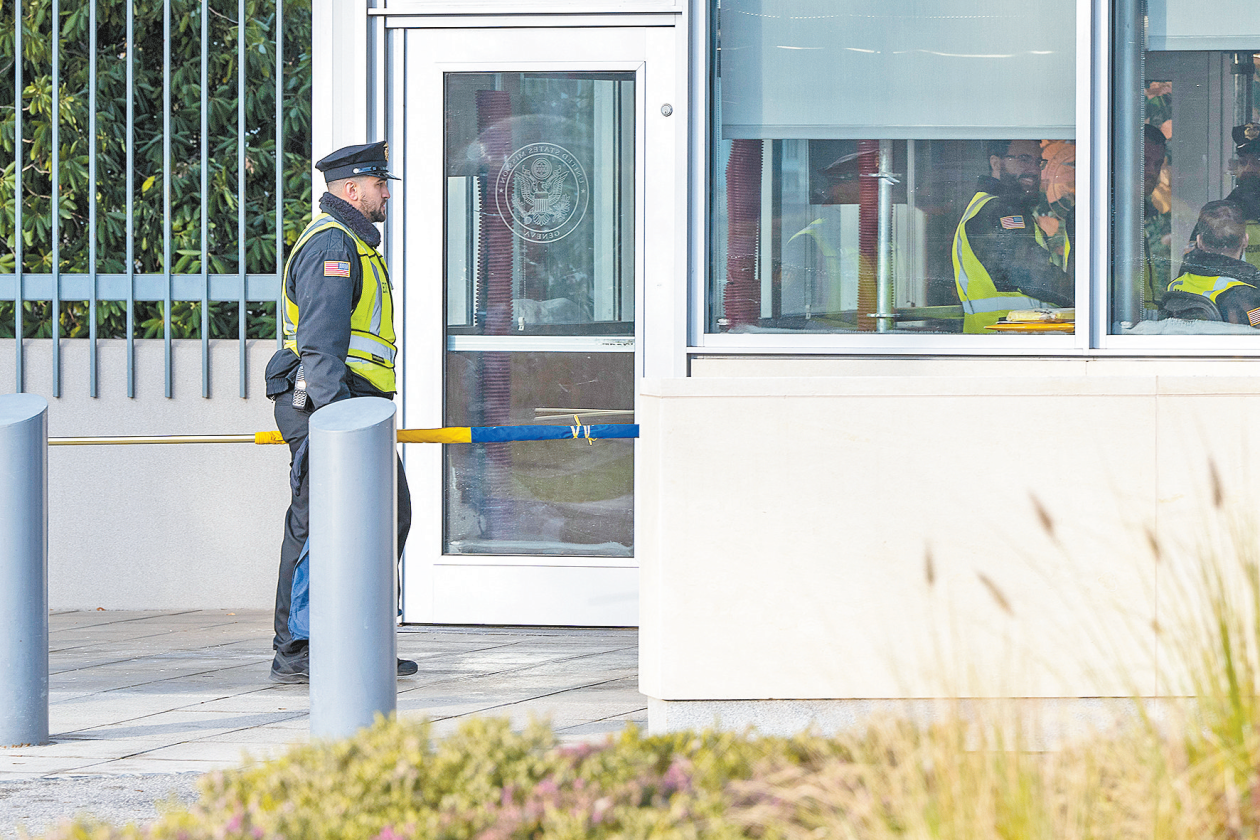
美乌今日会谈 特朗普:泽连斯基必须同意!欧盟回应美国新计划:仍需完善!乌军:击落俄军米-8直升机
Mei Ri Jing Ji Xin Wen· 2025-11-23 03:01
Group 1 - Ukraine's President Zelensky has approved a delegation to participate in negotiations in Switzerland regarding the "28-point" new plan aimed at ending the conflict with Russia [1] - U.S. officials, including Middle East envoy and Secretary of State, are set to meet with Ukraine in Geneva to discuss the plan [1][2] - European leaders, including national security advisors from the UK, France, and Germany, will also attend the talks in Switzerland [2] Group 2 - President Trump expressed hope that Ukraine would accept the U.S. proposal by the 27th of the month, indicating a potential delay if necessary [2] - Trump emphasized that if Zelensky does not agree to the U.S.-backed peace plan, the conflict will continue, highlighting the unprecedented scale of casualties since World War II [3] - The "28-point" plan, drafted by the White House, includes demands for Ukraine to withdraw from certain areas in Donetsk, which Ukraine has previously rejected [3] Group 3 - Zelensky acknowledged the difficult choices Ukraine faces, stating that they must either lose dignity or risk losing key partners [3] - Following discussions with U.S. Vice President, Zelensky agreed to collaborate with the U.S. and Europe on national security matters to make peace viable [3] - Experts suggest Ukraine is in a challenging diplomatic environment, particularly regarding territorial and security guarantees [3] Group 4 - The EU leaders issued a joint statement recognizing the "28-point" plan as a basis for future discussions but noted the need for further refinement [4] - Concerns were raised about proposals in the plan that could limit Ukraine's military capabilities, potentially jeopardizing its long-term security [4] - European countries are reportedly evaluating the plan and developing alternative proposals to ensure a sustainable peace process [4] Group 5 - The EU is discussing the establishment of "compensation loans" using frozen Russian state assets, with approximately €140 billion held in Belgium [5] - The discussions around the "28-point" plan may complicate the EU's consensus on the loan mechanism, potentially increasing financial risks for European taxpayers [5] - The ongoing discussions indicate a new complex phase in the Ukraine crisis, intertwining regional security, European strategic autonomy, and major power relations [5] Group 6 - The Russian Defense Ministry reported advances in military operations, with Russian forces capturing multiple buildings in eastern Ukraine [6] - Ukrainian armed forces have successfully repelled numerous attacks from Russian troops in various regions [6] - Ukrainian special forces claimed to have shot down a Russian helicopter using a drone in the Rostov region [6]
俄军再下一城?泽连斯基表示“28点计划”可以谈
Xin Hua She· 2025-11-21 09:18
Group 1 - Russian military claims to have taken control of the eastern Ukrainian city of Kupiansk, marking a significant advance in their offensive [1][2] - Ukrainian President Zelensky expresses willingness to discuss the "28-point plan" proposed by the US and Russia to end the conflict, indicating a potential shift in diplomatic efforts [1][6] - The Russian military reports that approximately 15 Ukrainian battalions are encircled around Kupiansk, with many soldiers considering surrender [4] Group 2 - The "28-point plan" may involve significant territorial concessions from Ukraine, a reduction in military size, and restrictions on long-range weaponry, although specific details remain undisclosed [6][8] - The US supports the new plan, with ongoing revisions, while the Russian side has not provided new information regarding the initiative [8]