3D Gaussian Splatting(3DGS)

Search documents
摩尔线程算法一鸣惊人,图形学顶会夺银!已开源
量子位· 2025-12-17 09:07
Core Viewpoint - Moore Threads won the silver medal at the 3D Gaussian Splatting Reconstruction Challenge (3DGS Challenge) during SIGGRAPH Asia 2025, showcasing its advanced algorithm capabilities and hardware-software optimization in next-generation graphics rendering technology [1][2][13]. Group 1: 3D Gaussian Splatting Technology - 3D Gaussian Splatting (3DGS) is a revolutionary 3D scene representation and rendering technology proposed in 2023, achieving an exceptional balance between image quality, efficiency, and resource usage [4]. - Compared to traditional Neural Radiance Fields (NeRF), 3DGS significantly enhances rendering efficiency by hundreds to thousands of times while maintaining realistic rendering quality, demonstrating strong adaptability in ray tracing, VR/AR real-time rendering, and multi-modal fusion [4][6]. - 3DGS is becoming a key foundational technology in embodied AI training scenarios, providing reliable support for accurate world modeling, enhancing path planning, environmental perception, and complex task execution [7][8]. Group 2: Competition and Performance - The 3DGS Challenge required participants to complete high-quality 3DGS reconstruction within 60 seconds using real terminal video sequences and SLAM point clouds, with PSNR and reconstruction speed as evaluation metrics [9][10]. - Moore Threads achieved an average PSNR of 27.58 and a reconstruction time of 34 seconds, ranking third overall and significantly outperforming many teams [15][16]. Group 3: LiteGS Development - Moore Threads developed the LiteGS foundational library to optimize the training process of 3DGS, achieving a significant reduction in training time and parameter count while maintaining high reconstruction quality [17][20]. - LiteGS can achieve up to 10.8 times training acceleration and reduce parameter count by over 50%, while also exceeding mainstream solutions in PSNR by 0.2–0.4 dB [20][21]. - LiteGS has been fully open-sourced on GitHub to promote collaboration and continuous evolution in 3D reconstruction and rendering technology [23]. Group 4: Strategic Implications - The success at the international graphics competition reflects Moore Threads' ability to grasp global technology trends and lead the future direction of graphics computing technology [23][25]. - The company will host the first MUSA Developer Conference on December 20-21, 2025, to discuss how technologies like 3DGS can shape the future and empower fields such as embodied intelligence [25].


RoboTidy即将开源:让机器人在家庭场景“游刃有余”
具身智能之心· 2025-11-29 02:07
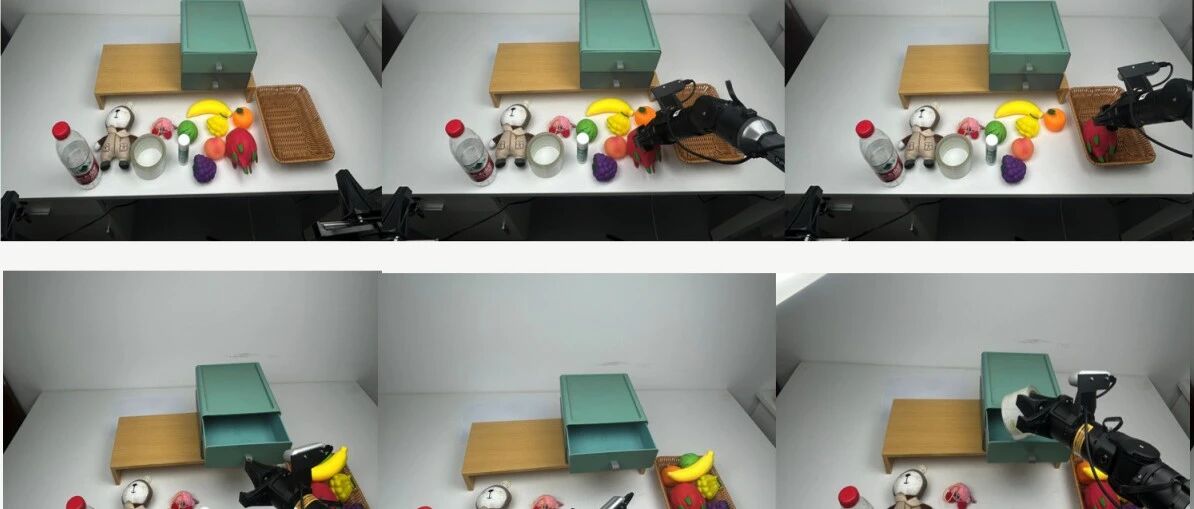
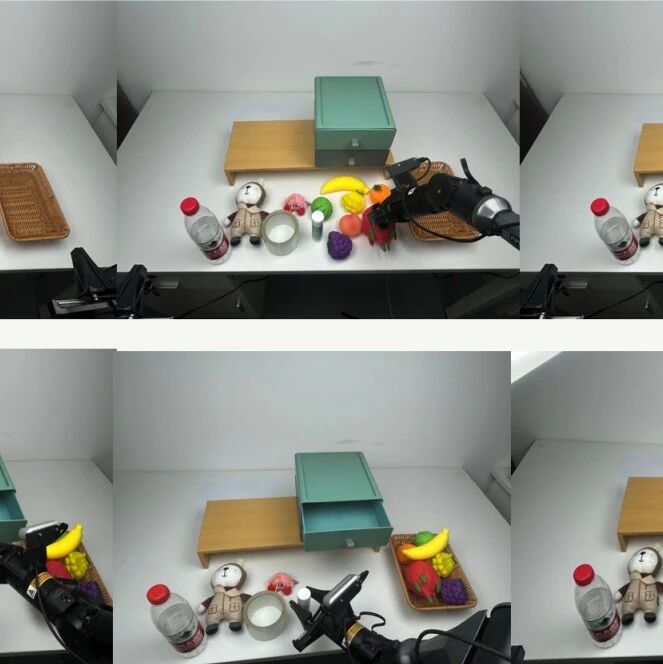
Core Insights - The article discusses the advancements in Embodied AI, particularly through the introduction of RoboTidy, which utilizes 3D Gaussian Splatting (3DGS) technology to create realistic interactive 3D environments for training robots [4][8][20]. Group 1: Importance of 3DGS - Embodied AI research has been hindered by the "simulation paradox," where traditional 3D modeling methods result in low-fidelity environments that do not accurately represent real-world complexities [7]. - RoboTidy's breakthrough lies in its use of 3DGS, which allows for high-speed rendering (over 100 FPS) of photorealistic scenes, enhancing the training environment for robots [9][11]. - The research team scanned 500 real household scenes, enabling robots to experience realistic lighting and textures, which significantly improves the robustness of visual encoders [11][12]. Group 2: Redefining Organization Tasks - Organizing a room is a complex long-horizon planning challenge for robots, requiring semantic understanding and common-sense reasoning [14]. - RoboTidy provides a large dataset of over 8000 expert demonstration trajectories, capturing the implicit logic of how humans organize spaces [14][15]. - The framework includes a "Semantic Planner" and "Low-level Policy," allowing robots to learn organization tasks in a human-like manner [15]. Group 3: Sim-to-Real Validation - The collaboration with Yuanli Infinite focuses on bridging the Sim-to-Real gap, addressing a significant industry challenge [17]. - Experiments show that models trained in RoboTidy's high-fidelity environment achieve a task success rate improvement of 29.4% in real-world robot tests compared to traditional methods [17][18]. - This demonstrates that high-quality simulation data can be effectively translated into real-world productivity [18]. Group 4: Standardization and Open Source - Prior to RoboTidy, there was a lack of standardized evaluation metrics for household organization tasks, making it difficult to compare results across different research labs [20]. - RoboTidy establishes a standardized evaluation system and leaderboard, inviting global developers to contribute to the evolution of household service robots [20][22]. - The initiative aims to create a more realistic and rigorous starting point for advancing the field of Embodied AI [22][27].
3DGS杀入具身!港大×原力无限RoboTidy即将开源:让机器人在家庭场景“游刃有余”
具身智能之心· 2025-11-27 00:04
Core Insights - The article discusses the advancements in Embodied AI, particularly focusing on the RoboTidy project, which aims to enhance the capabilities of robots in household tasks through realistic training environments [3][4]. Group 1: Introduction to RoboTidy - RoboTidy is the first benchmark based on 3D Gaussian Splatting (3DGS) technology, creating 500 photo-realistic interactive 3D environments and providing over 8000 expert demonstration trajectories [4]. - The project demonstrates significant potential in real-world applications, with a nearly 30% increase in task success rates for real robots after training in the RoboTidy environment [4][16]. Group 2: Importance of 3DGS - Traditional simulation environments often suffer from low fidelity, which hampers the performance of robots in real-world scenarios [7]. - 3DGS offers high rendering speeds (over 100 FPS) and realistic scene reconstruction, addressing the limitations of previous methods [8][10]. Group 3: Redefining Organization Tasks - Organizing a room is a complex long-horizon planning challenge for robots, requiring semantic understanding and common-sense reasoning [13]. - RoboTidy provides a large and high-quality dataset that captures the implicit logic of human organization, enabling robots to learn effective planning strategies [14]. Group 4: Sim-to-Real Validation - The collaboration with Yuanli Infinite focuses on bridging the Sim-to-Real gap, a critical industry challenge [16]. - Experiments show that models trained in the RoboTidy environment outperform traditional methods, especially in handling unseen objects and complex backgrounds, with a task success rate improvement of 29.4% [16][17]. Group 5: Standardization and Open Source - RoboTidy establishes a standardized evaluation system and leaderboard, addressing the lack of uniform assessment criteria in household organization tasks [19]. - The project invites global developers to contribute to advancing household service robots on a more realistic and rigorous platform [21]. Group 6: Conclusion - The emergence of RoboTidy signifies a paradigm shift in Embodied AI research, emphasizing the need for stronger algorithms and more realistic environments [23]. - The collaboration between industry and academia, exemplified by Yuanli Infinite and top academic institutions, is seen as a catalyst for the evolution of general-purpose humanoid robots [23][24].