A股减持

Search documents
询价转让不能从根本解决股东减持问题
Guo Ji Jin Rong Bao· 2025-11-25 08:35
Core Viewpoint - The recent inquiry by Huang Shilin, co-founder and third-largest shareholder of CATL, to transfer 1% of his shares has drawn significant market attention, highlighting the "inquiry transfer" method of share reduction, which allows for a substantial cash-out without causing severe stock price fluctuations [1] Group 1: Inquiry Transfer Mechanism - Huang Shilin plans to transfer 45.6324 million shares at an estimated price of 376.12 yuan per share, potentially cashing out nearly 17.2 billion yuan, setting a new record for inquiry transfers in the A-share market [1] - Since the introduction of the inquiry transfer mechanism, 223 companies have completed 322 transactions, with a cumulative market value exceeding 170 billion yuan, and 147 companies have executed 162 transactions this year alone, amounting to 99.879 billion yuan [1] - The inquiry transfer mechanism was initially piloted on the Sci-Tech Innovation Board in 2020 to attract institutional funds for original shareholders' reductions, thereby mitigating the impact of large sell-offs on market stability [1] Group 2: Market Impact and Limitations - Following the announcement of Huang Shilin's share transfer, CATL's stock price only dropped by 2.76% on the next trading day, with subsequent declines of 3.3% and 1.48%, indicating that the inquiry transfer helped stabilize the stock price compared to traditional reduction methods [1] - Despite the positive reception of the inquiry transfer, it does not eliminate the underlying issue of share reductions in the A-share market, as it merely postpones the selling pressure due to a six-month lock-up period for the acquired shares [2] - To fundamentally address the challenges of share reductions, it is suggested to optimize the equity structure by limiting major shareholders' holdings to below 30% and controlling the total amount of locked shares to 50%, along with upgrading reduction rules to prevent selling under adverse conditions [2]

近千亿元,A股询价转让“井喷”
Zheng Quan Shi Bao· 2025-11-20 09:00
Core Viewpoint - The article discusses the rise of inquiry transfer as a preferred method for shareholders to exit their investments in the context of a recovering market, highlighting its market-oriented and standardized characteristics, which have reshaped the A-share reduction ecosystem [1][3]. Group 1: Inquiry Transfer Overview - Inquiry transfer has become a popular mechanism for indirect share reduction among listed companies, with 147 companies conducting 162 transactions this year, totaling approximately 998.79 billion yuan [3]. - The inquiry transfer mechanism allows original shareholders to transfer shares to specific institutional investors through non-public inquiries, primarily used in the Sci-Tech Innovation Board and the Growth Enterprise Market [4]. - Since the pilot implementation of the inquiry transfer system in August 2020, 223 companies have conducted 322 transfers, with a cumulative transfer value exceeding 1.7 trillion yuan [4]. Group 2: Market Impact and Participation - The inquiry transfer has significantly reduced the impact of large-scale reductions on stock prices, with regulations ensuring that the transfer price cannot be lower than 70% of the average trading price over the previous 20 trading days [4]. - The average discount rate for inquiry transfers this year has increased, with an average discount of 84% compared to 88% and 90% in 2024 and 2023, respectively [5]. - Institutional participation in inquiry transfers has surged, with an average of over 17 institutions involved in each transfer this year, compared to 14 in 2024, indicating heightened interest from institutional investors [7]. Group 3: Benefits for Investors - Inquiry transfers facilitate a smoother transition from early investors to long-term investors, helping to alleviate pressure on the secondary market and boost investor confidence [6]. - The mechanism allows for a more efficient reduction process, with the ability to complete pricing within one day and the option for multiple parties to transfer or acquire shares [7]. - For long-term investors, the inquiry transfer offers a higher discount floor compared to traditional placements, enabling quicker accumulation of shares [8].
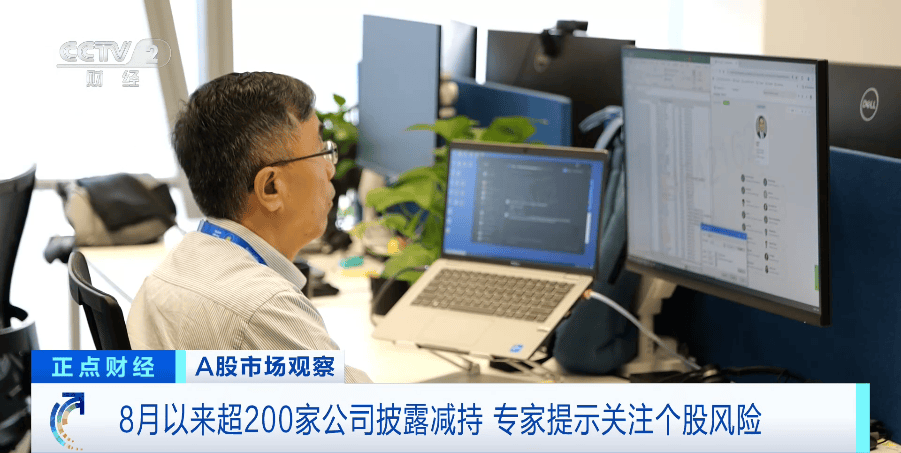
8月以来超200家公司披露减持,专家提示:关注个股风险
Sou Hu Cai Jing· 2025-08-14 12:30
Core Viewpoint - The recent surge in the Shanghai Composite Index, which has increased by over 10% in the past three months, has led to a notable rise in stock prices for various sectors, including electronics, pharmaceuticals, and new materials, while also highlighting a significant trend of share reductions among listed companies [1][3]. Group 1: Share Reduction Trends - In July, 436 listed companies announced shareholder reductions, and this trend continued into August with over 200 companies disclosing reduction plans by August 13 [3]. - The primary reasons for these reductions include the upcoming mid-year report disclosures, prompting executives and shareholders to sell shares before entering a quiet period, and an increased desire to cash out due to significant stock price increases [3][5]. - Controlling shareholders and actual controllers remain the main contributors to these reductions, with over 100 actual controllers announcing share reductions since July [3]. Group 2: Market Analysis and Expert Opinions - According to experts, the recent stock price increases have provided venture capital funds with exit opportunities, particularly for projects that went public three to four years ago [5]. - Concerns arise regarding whether the reductions by major shareholders indicate potential changes in the fundamentals of the listed companies, which could affect investor sentiment [7]. - Despite the notable market gains, the overall market trend is characterized as a "slow bull" or a gently upward-moving market, suggesting that the impact of share reductions on the broader market is limited [7]. Group 3: Investment Strategies - Investors are advised to focus on individual stock risks and consider investing in related ETFs to capture sector opportunities while avoiding stock volatility [7]. - It is recommended to be cautious of stocks that have seen significant short-term price increases, those with performance detached from fundamentals, and those not aligned with the country's long-term development goals [10].