AI+银发

Search documents
适老化智能家居成爆款年货,“AI+银发”催生增量
Xin Jing Bao· 2026-02-10 08:41
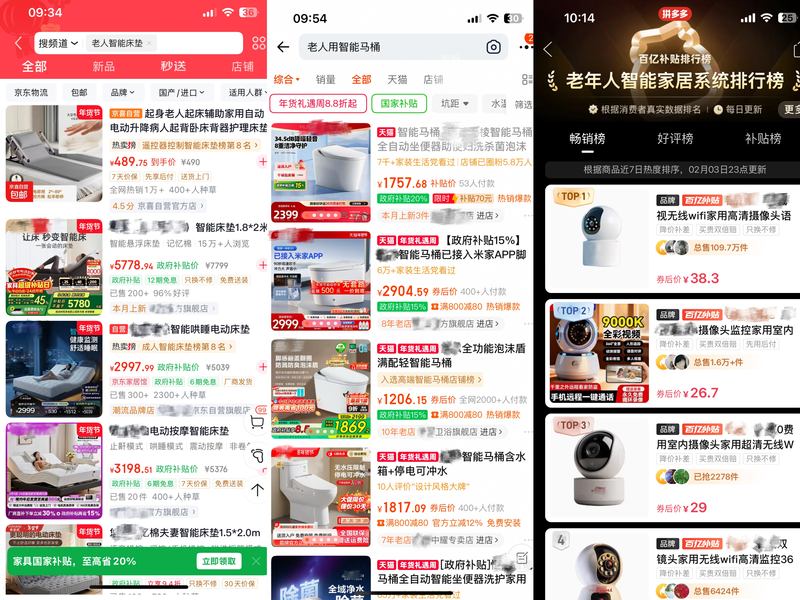
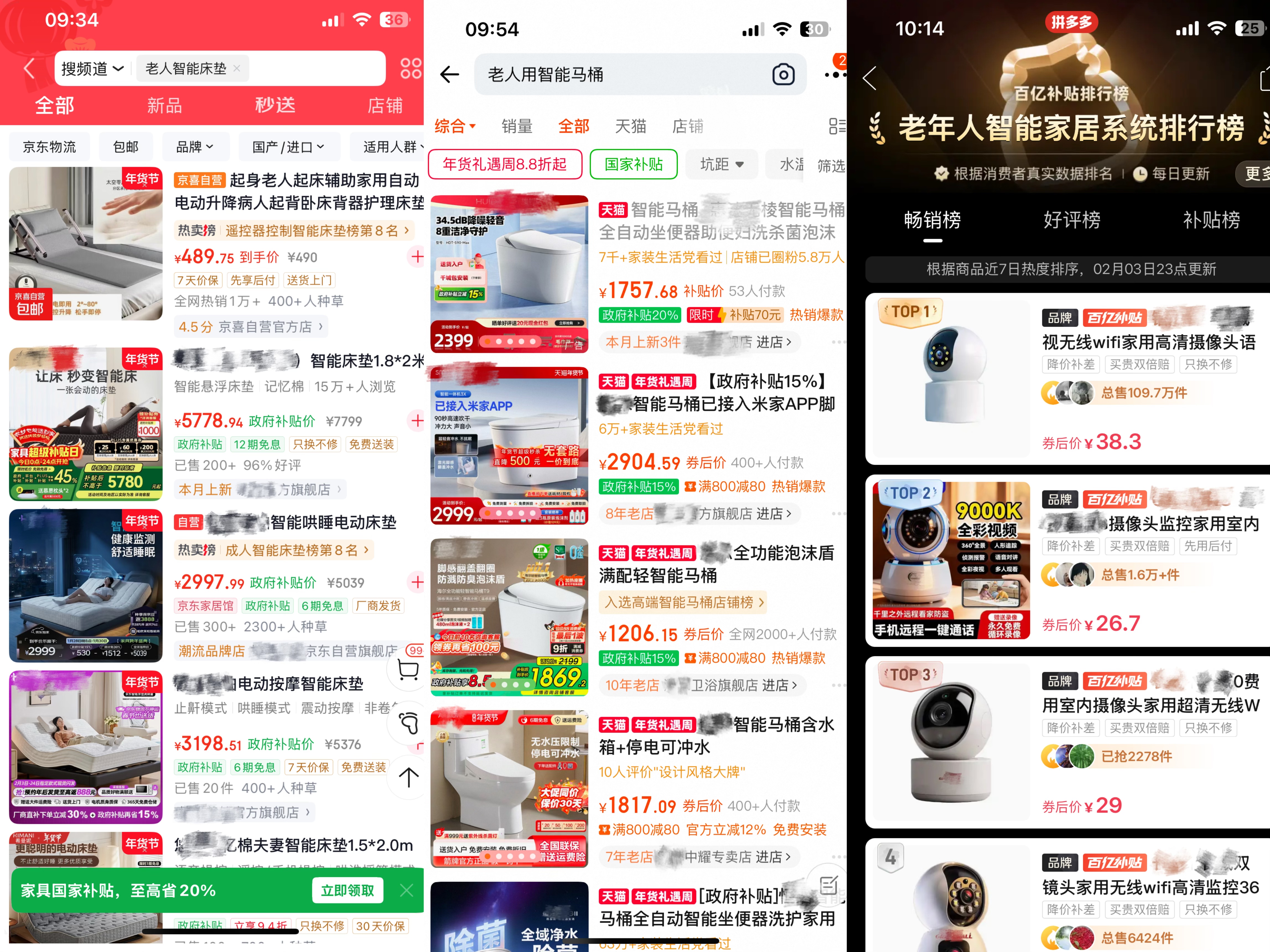
Core Insights - The acceptance and purchase willingness of elderly-friendly smart home products are increasing as they are optimized with "technology adapting to the elderly" rather than the other way around [1][4] Group 1: Market Trends - The demand for elderly-friendly smart home products is rising, driven by the "AI + silver hair" trend and effective consumer stimulation policies [1][5] - During the Spring Festival shopping season, products like smart mattresses with heart rate and sleep monitoring features have become popular, with significant sales increases on major e-commerce platforms [1][5] - The elderly population in China is projected to reach 310 million by 2024, accounting for 22% of the total population, creating a substantial market opportunity for elderly-friendly products [7] Group 2: Product Development - Smart locks are being upgraded to address issues faced by elderly users, such as fingerprint recognition failures due to wear, with features like vein recognition and long battery life being introduced [2][3] - The development of elderly-friendly smart home products follows a logic of "technology adapting to the elderly," incorporating features like AI monitoring and health tracking to enhance user experience [4][9] - Smart mattresses can monitor key health indicators and provide real-time alerts for potential health risks, while AI-enabled devices facilitate health management through online consultations [4][9] Group 3: Consumer Behavior - Consumers are increasingly recognizing the value of elderly-friendly smart products, but there is a misconception that simply having smart features equates to being suitable for the elderly [9][10] - The focus on purchasing over service can lead to poor user experiences, as improper installation or calibration of smart devices may result in abandonment of their use [10] - Industry experts recommend prioritizing essential features that cater to elderly needs, such as emergency alerts and fall detection, while avoiding unnecessary complexities [10]

适老化智能家居成爆款年货,“AI+银发”催生增量|年货新趋势
Bei Ke Cai Jing· 2026-02-10 08:37
Core Insights - The acceptance and purchase willingness of elderly-friendly smart home products have increased as they are optimized with "technology adapting to the elderly" rather than the other way around [1][5] - The surge in demand for elderly-friendly smart home products is driven by the "AI + silver hair" trend and effective consumer stimulation policies, transitioning from niche to mainstream necessity [2][14] Group 1: Market Trends - The popularity of elderly-friendly smart home products during the New Year shopping season is evident, with items like smart mattresses and AI-interactive appliances seeing significant sales growth [1][6] - Data from the National Bureau of Statistics indicates that by 2024, the population aged 60 and above will reach 310 million, accounting for 22% of the total population, creating a substantial market for elderly-friendly products [14] Group 2: Product Development - Smart locks are being upgraded to address common issues faced by elderly users, such as fingerprint recognition failures and complex interfaces, with features like vein recognition and long battery life being introduced [4][5] - The development of elderly-friendly smart home products is guided by the principle of "technology adapting to the elderly," focusing on comprehensive recognition and AI monitoring to enhance safety and usability [5][16] Group 3: Consumer Behavior - Consumers are increasingly recognizing the value of elderly-friendly smart home products, with significant sales growth reported on platforms like Taobao and Tmall, where sales of vein recognition locks increased by nearly 150% year-on-year [14] - There is a growing trend of purchasing these products as gifts for elderly family members, emphasizing the emotional value beyond the product itself [17] Group 4: Policy Impact - Recent consumer stimulation policies have expanded the range of subsidized products to include smart home devices, which is expected to meet the diverse needs of consumers seeking improved living standards [15] - The implementation of these policies is seen as a way to enhance the accessibility of smart home products for the elderly, reflecting a commitment to improving quality of life [15]
深入布局AI+银发,分音塔科技获近亿元A轮融资
机器人圈· 2025-12-24 09:11
Core Viewpoint - FenYinTa Technology, founded by Tsinghua University's AI team, has completed nearly 100 million RMB in Series A financing, focusing on AI solutions for the elderly, including health companion robots and home security systems [2][4]. Group 1: Company Overview - FenYinTa Technology's core team comes from Tsinghua University's National Key Laboratory of Artificial Intelligence, specializing in voice detection, sound event detection, voiceprint recognition, and machine translation, with over 60 national patents filed [3]. - The company has developed several pioneering products in China, such as the first AI translator and the first home safety alarm for the elderly, filling significant market gaps and receiving coverage from major national media [4]. Group 2: Market Focus and Product Lines - The company is strategically focused on three main areas: AI for the elderly, AI translation, and AI security, with a primary emphasis on the elderly care sector [5]. - Key products include: - AI for the elderly: health companion robots, home safety alarms, and AI caregivers [6]. - AI translation: translation devices and conference translation systems [6]. - AI security: campus anti-bullying alarms and smart alarm systems [6]. - These products not only lead the Chinese market but are also being exported to countries like the USA, Canada, Japan, and South Korea, effectively combining China's AI capabilities with global supply chain advantages [6]. Group 3: Technological Innovation and Achievements - FenYinTa Technology has established a long-term technical cooperation with Tsinghua University's AI laboratory, ensuring continuous technological advancements [6]. - The company has created a closed-loop system for technology application, ensuring rapid adaptation to real-world needs in sectors like elderly care and public safety [6]. - The company has received multiple awards, including gold at the China Elderly Welfare Product Innovation and Entrepreneurship Competition and recognition as one of the "Top 50 AI Companies in China" [6].
红松集团黄雄飞解读“AI+银发”的三大趋势洞察
Huan Qiu Wang Zi Xun· 2025-06-09 08:25
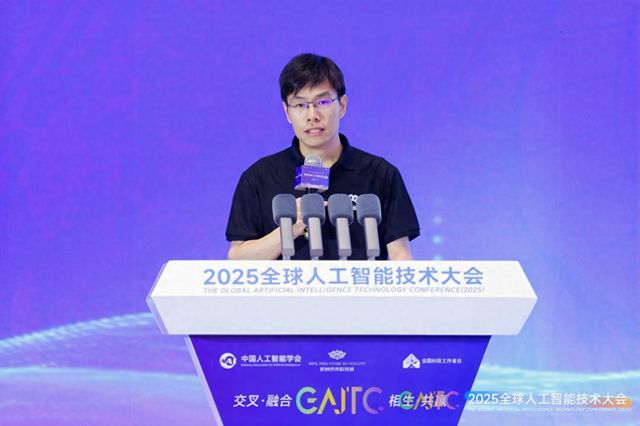
Group 1 - The 2025 Global Artificial Intelligence Technology Conference (GAITC2025) concluded in Hangzhou, focusing on the theme of "crossing, integration, co-existence, and win-win" with over 200 global experts and nearly 1,000 participants sharing cutting-edge reports [1] - The conference highlighted the innovative applications of AI in the silver economy, with a significant emphasis on personalized learning, life companionship, and service quality upgrades for the elderly [3][4] - The silver economy in China is projected to grow from approximately 70 trillion to 300 trillion in the next decade, reflecting a shift in demand from basic material needs to multidimensional spiritual needs [3] Group 2 - Huang Xiongfei, Vice President of Hongsong Group, emphasized that the elderly are not technology weaklings but rather deep users of AI, with 60% of elderly mobile users nationwide having engaged with AI, and 89.4% of elderly users on the Hongsong platform having received AI education [3][4] - The company has launched AI-driven products tailored for the elderly, including AI teachers and learning assistants, which provide real-time interactive learning guidance and personalized companionship [5]