AI假图治理

Search documents
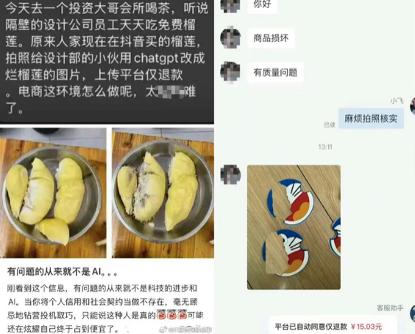
用AI图仅退款,这批羊毛党把商家薅麻了
3 6 Ke· 2025-12-08 00:13
Group 1 - The rapid rise of AI has led to significant misuse, with individuals exploiting AI-generated content for fraudulent refunds and misleading representations in e-commerce [1][3][22] - Merchants are facing increased refund requests, with some reporting a 20-30% rise in refund claims compared to the previous year, largely due to customers using AI to fabricate product defects [4][5][21] - The fashion industry is particularly affected, as AI-generated images are replacing traditional product photography, leading to a loss of authenticity and increased operational challenges for small businesses [16][17][19] Group 2 - The phenomenon of AI-generated content has blurred the lines between reality and illusion, making it difficult for consumers to distinguish between genuine and fake products [15][29] - E-commerce platforms are attempting to combat the misuse of AI-generated images by implementing stricter regulations, but enforcement remains challenging and relies heavily on user compliance [29][31] - The ongoing struggle between merchants and consumers over AI-generated refund claims has created a tense environment, with some merchants contemplating closing their businesses due to the overwhelming challenges [21][31]

淘宝,大动作!
券商中国· 2025-03-27 08:12
Core Viewpoint - Taobao has officially released new regulations prohibiting the use of AI-generated images that significantly distort actual product information, aiming to protect consumer rights and prevent misleading representations [1][4]. Group 1: Regulations and Initiatives - This is the first time an e-commerce platform has introduced regulations specifically targeting AI-generated false images [2]. - The "Taobao Product Release Specifications" clearly state that product images must not contain content that causes user discomfort and must not be distorted [3]. - Taobao has issued an industry-wide initiative to standardize the use of AI-generated images, ensuring the authenticity of product information and calling for comprehensive governance against AI-generated false images [4]. Group 2: Specific Scenarios of Distortion - The regulations outline specific scenarios that are considered distortions, including: - Scenario 1: Product quality or style distortion (e.g., AI causing material representation distortion) [5]. - Scenario 2: Exaggerated product effects (e.g., AI overly beautifying images) [5]. - Scenario 3: Distorted or non-existent scenes leading to misleading product displays [5]. - Scenario 4: Poor image quality resulting in product display distortion [5]. Group 3: Industry Context and Challenges - The rapid development of AI technology has led to an increase in e-commerce merchants using AI to create product images and videos, resulting in widespread issues of distortion and forgery [6]. - AI-generated images and videos have become a significant problem in the industry, harming consumer rights and reducing barriers for bad merchants to plagiarize styles and images [6]. Group 4: Government Regulations and Future Outlook - The Chinese government has repeatedly addressed issues related to AI forgery this year, with new regulations set to take effect on September 1, 2025, aimed at promoting healthy AI development and protecting legal rights [7]. - Taobao has implemented measures such as an AI image recognition model, which has intercepted nearly 100,000 AI-generated false images [9]. - The new regulations signify a systematic approach to governance against AI-generated false images, potentially curbing the prevalence of such practices on Taobao [9].