
AI创造

Search documents
智者勇进 接续奋进新江苏|百度秒哒上线以来创造价值超50亿元 未来三年将扶持100万创造者创收
Yang Zi Wan Bao Wang· 2025-12-21 04:50
Core Insights - The article discusses the transition of AI development from a "toy" phase to a monetizable stage, highlighting the launch of Baidu's no-code application platform "秒哒" which has generated over 500,000 commercial applications in just eight months [1][2] Group 1: Platform Development and Impact - The "秒哒" platform has seen a daily increase in new applications by over 150%, with half of these applications featuring backend capabilities, covering over 200 scenarios including education, business, content creation, and enterprise services [1][2] - The platform has created economic and efficiency value exceeding 5 billion yuan, indicating a significant impact on the market [1][3] Group 2: Creator Support Initiatives - Baidu announced the "创造者筑梦计划" aimed at supporting 1 million creators over the next three years through traffic support, revenue sharing, and technical assistance, with plans to identify 15 high-potential projects for significant investment [1][2] - This initiative aims to bridge the gap between AI generation and monetization, facilitating the transformation of creative ideas into sustainable business outcomes [1][2] Group 3: User Demographics and Application Types - 81% of "秒哒" users are non-programmers, primarily from workplace and academic backgrounds, with applications serving over 10 million users and nearly 100,000 daily users [3] - The applications fall into three main categories: direct monetization tools like e-commerce mini-programs, business software for internal systems, and AI efficiency applications for various life scenarios [3] Group 4: Case Studies and User Experiences - Users from various industries shared success stories, such as engineers creating cost-saving design systems and content creators developing AI tools for niche markets, demonstrating the platform's versatility [4] - Young creators have also utilized "秒哒" to develop innovative applications, showcasing the platform's potential to enhance creativity and practical skills among youth [4] Group 5: Industry Trends and Future Competition - As no-code platforms mature, a diverse range of individuals are participating in innovation and commercialization at lower costs, suggesting that future competition will focus on building a comprehensive application ecosystem covering creation, distribution, and monetization [5]

百度秒哒商业应用生成数突破50万个 未来三年将扶持100万创造者创收
Zheng Quan Shi Bao Wang· 2025-12-17 07:44
Core Insights - Baidu's no-code application building platform "MiaoDa" has generated over 500,000 commercial applications within 8 months, with a daily increase in applications exceeding 150% [1] - The "Creator Dream Plan" aims to support 1 million creators over the next three years, facilitating revenue generation and identifying 15 high-potential projects for significant investment by 2026 [1] - The platform's goal is to bridge the gap between AI application generation and monetization, transforming creative ideas into sustainable business outcomes [1] Group 1 - Baidu's Executive Vice President, Shen Dou, emphasized that AI creation is becoming accessible to a broader audience, allowing anyone with ideas to become a creator [2] - MiaoDa, launched in November 2024, is China's first "conversational" application development platform, enabling users to create applications without coding [2] - The product manager, Zhu Guangxiang, explained that MiaoDa aims to liberate application development from professional developers, allowing more people to build usable and monetizable applications through natural language [2] Group 2 - MiaoDa operates through a collaborative model of demand, code, and UI, creating a data flywheel that continuously evolves and builds a quality code, UI, and demand library [3] - Currently, 81% of MiaoDa users are non-programmers, primarily from the workforce and academic sectors, with applications serving over 10 million users [3] - The applications generated by MiaoDa fall into three categories: direct monetization tools, business software for internal systems, and AI efficiency applications, collectively creating over 5 billion yuan in economic and efficiency value [3] Group 3 - The rise of no-code platforms and creator ecosystems is enabling individuals from diverse backgrounds to participate in innovation and commercialization at lower costs [4] - The next phase of competition in the AI era may focus on building a complete application ecosystem that encompasses creation, distribution, and monetization rather than solely on model capabilities [4]
普通人也能用AI赚钱了,百度沈抖:人人都是创造者
Yang Zi Wan Bao Wang· 2025-12-16 10:00
Core Insights - The era of AI is transforming creation from being a privilege of a few to a right accessible to many [1] - AI is now integral to production and decision-making processes, allowing anyone with ideas to become a creator [3] - The development of technology has led to new entrepreneurial models where the creation of value precedes the establishment of a company [3] Group 1: AI and Creation - AI significantly lowers the barriers to production, enabling employees and entrepreneurs to create value directly [3] - The shift in creation dynamics allows for a more democratized approach to innovation, where anyone can contribute [3] Group 2: Business Model Transformation - The traditional sequence of establishing a business before creating a product has been reversed; now, products can be developed and monetized first [3] - The focus is on creating tools that generate sustainable income from day one, rather than just simple applications [3] Group 3: Baidu's Initiatives - Baidu's no-code application platform, Miaoda, has generated over 500,000 commercial applications in eight months, creating economic value exceeding 5 billion [3] - The "Creator Dream Plan" aims to support 1 million creators over the next three years through various forms of assistance [4] - Baidu anticipates that Miaoda will generate at least 10 billion in value in the coming year [5]

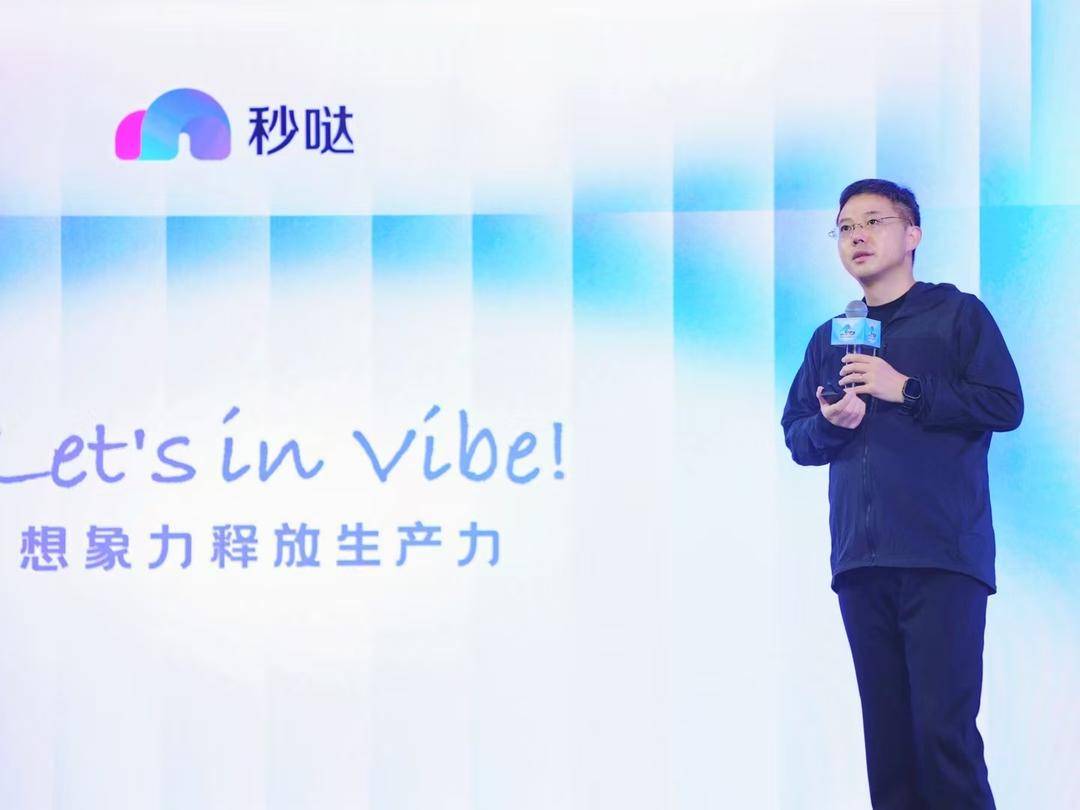
百度:秒哒商业应用生成数突破50万个,创造价值超50亿
Xin Lang Cai Jing· 2025-12-16 06:02
Core Insights - Baidu's no-code application building platform "MiaoDa" has generated over 500,000 commercial applications within 8 months, with a daily increase in applications exceeding 150% [1][2] - The platform has created economic and efficiency value exceeding 5 billion yuan, covering over 200 scenarios including education, business, content creation, and enterprise services [1][2] - Baidu announced a long-term support plan called the "Creator Dream Plan," aiming to assist 1 million creators in generating income over the next three years [1][2] User Demographics and Engagement - 81% of MiaoDa users are non-programmers, primarily from the workforce and university groups [3] - The applications generated by MiaoDa have served over 10 million users, with nearly 100,000 daily users solving real problems [3] - Over 20,000 applications have integrated payment capabilities, completing more than 80,000 real transactions, indicating a shift towards scalable revenue generation for AI applications [3] Strategic Vision - Baidu's Executive Vice President, Shen Dou, emphasized that in the AI era, creation is becoming accessible to the majority rather than being limited to a few experts [3] - The source of creation is shifting from technical departments to users and scenarios, allowing anyone with ideas and a desire to create value to become a creator [3] - True AI creation is defined as developing tools that generate real value and facilitate commercial transformation, rather than merely experimenting with technology [3]
百度沈抖:AI开发从搓玩具进入能赚钱阶段,人人都是创造者
Sou Hu Cai Jing· 2025-12-16 05:46
Group 1 - The core idea presented is that in the AI era, creation is shifting from being a privilege of a few to a right accessible to many, as highlighted by Baidu's executive vice president, Shen Dou, at the 2025 Creator Conference [1][3] - The internet has reduced the cost of information access and expression, but AI is fundamentally lowering the barriers to participation in production and decision-making across various functions, including coding, design, analysis, operations, and product development [3] - The source of creation is moving from technical departments to frontline employees and entrepreneurs who can identify pain points, allowing anyone with ideas and a desire to create value to become a creator [3] Group 2 - The development of technology has introduced new entrepreneurial models, where the sequence of turning an idea into a business has reversed; now, the focus is on creating and utilizing products before establishing a company [3] - True no-code creation is defined as building tools that generate real value and revenue from day one, rather than just simple prototypes [3] - Baidu's no-code application platform, Miaoda, has generated over 500,000 commercial applications in 200+ scenarios within eight months, creating economic and efficiency value exceeding 5 billion yuan [3] Group 3 - Baidu announced the "Creator Dream Plan," which aims to support 1 million creators in generating income over the next three years through traffic support, revenue sharing, project matching, and technical assistance [4] - For high-quality projects, a fast-track investment channel will be opened to help creators transform their ideas into commercial outcomes [4] - Shen Dou estimates that Miaoda will create at least 10 billion yuan in value in the coming year [4]
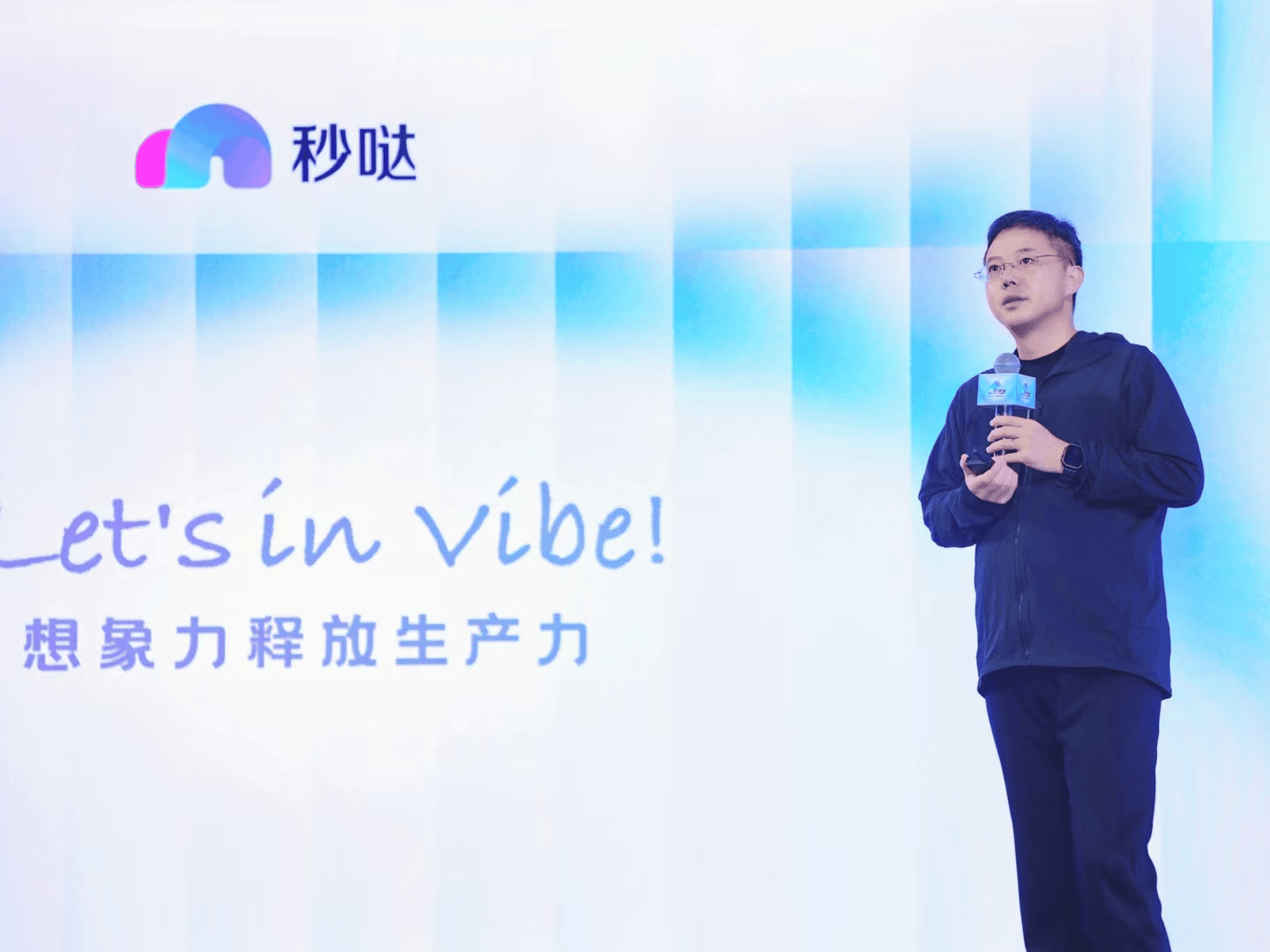
百度沈抖:AI开发从搓玩具进入能赚钱阶段,人人都是创造者
IPO早知道· 2025-12-16 05:18
Group 1 - The core idea of the article is that in the AI era, creation is shifting from being a privilege of a few to a right accessible to many, enabling widespread participation in production and decision-making processes [2][3]. - AI has integrated into core production and decision-making roles, allowing tasks such as coding, design, analysis, operations, and product development to be performed more efficiently [2][3]. - The source of creation is moving from technical departments to frontline employees and entrepreneurs, empowering anyone with ideas and a desire to create value to become a creator [3]. Group 2 - The development of AI has introduced new entrepreneurial models, where the sequence of turning an idea into a business has reversed; now, the focus is on creating and using products before formalizing a business plan [3]. - The concept of no-code creation is emphasized, where the goal is to build tools that generate real value and sustainable income from day one, rather than just simple prototypes [3]. - Baidu's no-code application platform, Miaoda, has generated over 500,000 commercial applications in various sectors within eight months, creating economic and efficiency value exceeding 5 billion yuan [3]. - Baidu announced the "Creator Dream Plan," aiming to support 1 million creators in generating income through traffic support, revenue sharing, and technical assistance over the next three years [3]. - It is projected that Miaoda will create at least 10 billion yuan in value in the coming year [4].
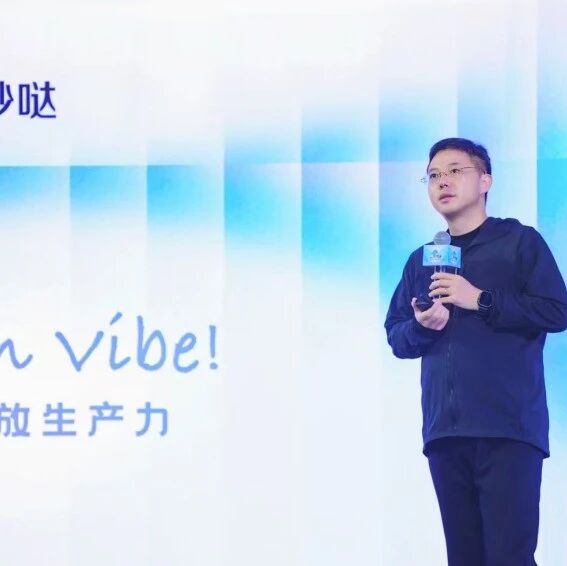
原创科普展品亮相奥园
Bei Jing Ri Bao Ke Hu Duan· 2025-09-19 22:50
Group 1 - The event at Olympic Park in Chaoyang District transformed into a science popularization exhibition featuring various national science museums and enterprises, providing innovative technology experiences to the audience [2][3] - The China Science and Technology Museum established three major exhibition areas focusing on cutting-edge fields such as life sciences, space exploration, AI creation, and advanced manufacturing, showcasing significant scientific issues and breakthrough technological achievements [2] - A total of 15 interactive science popularization exhibits were presented, including the "Zuchongzhi No. 3" superconducting quantum computer and immersive VR experiences related to aircraft carrier operations [2] Group 2 - The Chaoyang District Science and Technology Culture Carnival was launched alongside the exhibition, covering topics like metaverse virtual interaction, AIGC creativity, astronomy, space science, and digital healthcare, with 19 themed exhibitions set up [3] - The event featured 30 technology experiences at the Aoyuan Technology Show, allowing attendees to engage in human-machine chess matches and immersive flight simulations using VR headsets [3] - The exhibition also included unmanned retail vehicles and coffee robots providing food services, along with a consumer street featuring various tech brands and cultural creative studios showcasing trendy tech and cultural innovations [3]
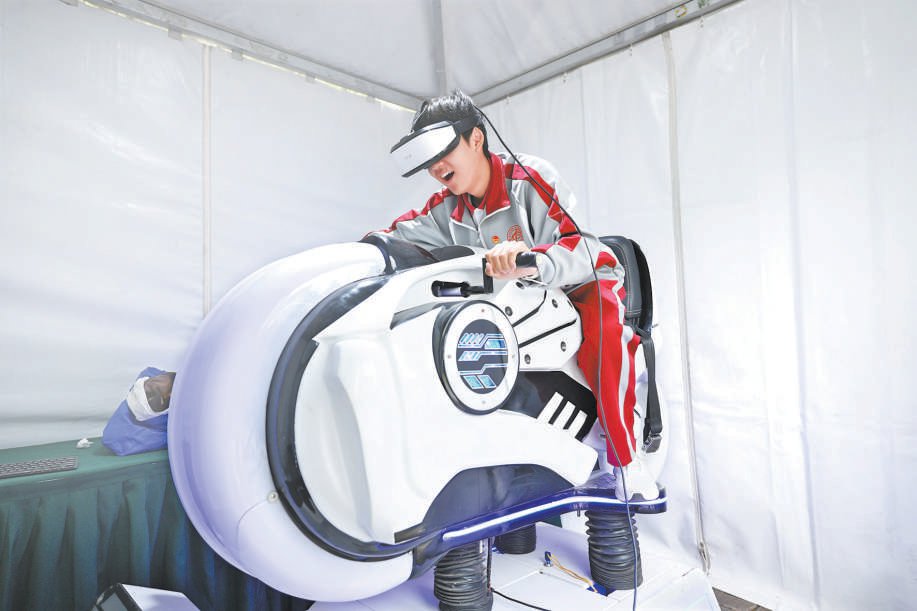
奥园景观大道变身科普展区
Bei Jing Wan Bao· 2025-09-19 06:51
Core Insights - The event held at the Olympic Park featured a variety of exhibits from national science museums and enterprises, providing innovative technology experiences to the audience [1] - The event included four main sections: the China Science and Technology Museum themed exhibition, Chaoyang District Science and Culture Carnival, Olympic Park Technology Showcase, and Cultural and Creative Leisure Area [1] Section Summaries - The China Science and Technology Museum set up three major exhibition areas focusing on cutting-edge fields such as life sciences, space exploration, AI creation, and advanced manufacturing, showcasing significant scientific issues and breakthrough technologies [1] - A total of 15 interactive science exhibits were presented, including the "Zuchongzhi No. 3" superconducting quantum computer and an interactive expression mirror, along with displays of smart highways and bionic soft robotic fish [1] - The Chaoyang District Science and Culture Carnival featured 19 themed exhibitions covering topics like the metaverse, astronomy, space science, and digital healthcare [1] - The Olympic Park Technology Showcase offered 30 technology experiences, allowing visitors to engage in human-machine chess games and immersive flight simulations using VR headsets [1]