科技服务

Search documents
找钢网集团2025年营收增超36%,升级为AI驱动的全链路科技服务平台
IPO早知道· 2026-03-30 02:00
Core Viewpoint - The company is leveraging AI and international expansion as dual engines for growth, with significant revenue increases in both areas, indicating a robust growth trajectory for the future [2][4][9]. AI Business Growth - AI revenue reached 335 million yuan, a year-on-year increase of 217.5%, contributing 15.8% to total revenue [4][6]. - The AI business generated a GMV of 1.7 billion yuan, a staggering increase of 464.1% [4]. - The company has developed 12 AI digital employees that enhance transaction efficiency, processing over 16 million messages daily with a 95% accuracy rate [6][7]. International Business Expansion - International business revenue reached 1.017 billion yuan, a year-on-year increase of 71.5%, with a transaction volume exceeding 220,000 tons, up 98.8% [9][12]. - Southeast Asia and the Middle East are key strategic regions, with Southeast Asia showing explosive growth, particularly in Thailand and Indonesia, with revenue increases of 15,932.1% and 9,654.8% respectively [12]. - The business model has evolved into a multi-faceted light-asset platform, integrating trade, processing, MRO, and AI infrastructure [13]. Stabilization of Core Business - The core business showed signs of stabilization, with total transaction volume reaching 45.59 million tons and a significant increase in registered enterprise users [14][15]. - The industrial terminal business, covering 80 industries, has a high profit margin, indicating a restructuring of the profit model [16]. Efficiency and Financial Performance - The company has seen a significant reduction in management, sales, and R&D expense ratios, leading to improved operational efficiency [17]. - Operating cash flow reached 680 million yuan, a year-on-year increase of over 60%, reflecting strong recovery and cash-generating capabilities [17][18].

美团去年净亏234亿元
Shang Hai Zheng Quan Bao· 2026-03-26 11:00
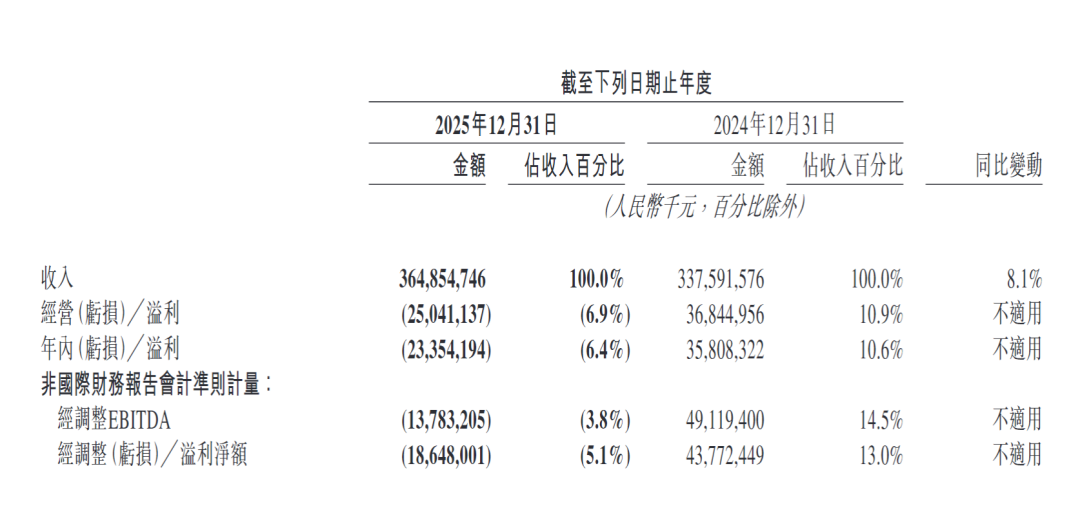
Core Insights - In 2025, Meituan reported a total revenue of 364.9 billion RMB, representing an 8% year-on-year growth. However, the company faced a net loss of 23.4 billion RMB due to intense competition in the instant retail sector, marking a shift from profit to loss [1][9]. Financial Performance - For the full year 2025, Meituan's operating loss was 17 billion RMB, with the core local business segment contributing an operating loss of 6.9 billion RMB [2][10]. - In Q4 2025, Meituan achieved revenue of 92.1 billion RMB, a 4.1% increase year-on-year, but reported an adjusted net loss of 15.1 billion RMB [2][10]. Business Strategy and Market Position - Meituan's CEO emphasized a clear strategic direction focused on combating "involution" and enhancing service through technological innovation and ecosystem development [3][11]. - The core local business segment generated 260.8 billion RMB in revenue, maintaining over 60% market share in Gross Transaction Value (GTV) despite fierce competition in the food delivery sector [3][11]. User Engagement and Ecosystem Development - Meituan's upgraded membership system integrates various consumer scenarios, leading to record highs in annual transaction users and user consumption frequency [3][11]. - The company reported strong growth in its grocery retail and overseas businesses, with new business revenue reaching 104 billion RMB, a 19% increase [5][13]. Technological Investment - Meituan increased its R&D investment to 26 billion RMB, a 23% rise, focusing on AI and logistics technologies, including drones and autonomous vehicles [6][14]. - The company launched AI assistants "Xiao Mei" and "Xiao Tuan" to enhance user experience, with over 340,000 merchants utilizing AI business management tools [6][15]. Social Responsibility and Safety Initiatives - Meituan implemented a comprehensive welfare system for delivery riders, including nationwide pension insurance coverage and expanded occupational injury protection [8][16]. - The company is advancing food safety measures through the "Bright Kitchen" initiative and AI-driven safety management systems [8][16]. Long-term Outlook - Meituan's CFO expressed confidence in the company's resilience and commitment to sustainable growth, focusing on operational efficiency and value creation for ecosystem participants [8][17].

宇树科技科创板IPO申请获受理
第一财经· 2026-03-20 09:48
Group 1 - The core viewpoint of the article is that Yushu Technology Co., Ltd. has submitted its IPO application to the Shanghai Stock Exchange, aiming to raise 4.202 billion yuan [1] Group 2 - The IPO application has been accepted by the Shanghai Stock Exchange as of March 20, 2026 [1] - The lead underwriter for the IPO is CITIC Securities Co., Ltd. [3] - The accounting firm involved is Rongcheng Accounting Firm (Special General Partnership), with signed accountants including Wan Yunlong, Xu Yuan, and Lu Jinhai [3] - The legal advisory is provided by Beijing Deheng Law Firm, with signed lawyers including Shen Hongshan, Su Zhongzheng, Ma Haoran, and Yan Mingkang [3] - The evaluation agency is Zhongshui Zhiyuan Asset Appraisal Co., Ltd., with signed appraisers Xu Xiangyang and Zheng Jingjing [3]
中国平安2026春招启动 面向全球招聘超4500岗位
Zheng Quan Ri Bao Wang· 2026-03-20 05:54
Core Insights - China Ping An officially launched its 2026 Spring Campus Global Recruitment, offering over 3,000 job positions and 1,500 internship positions across various sectors including finance, technology, healthcare, and elderly care [1] Group 1: Recruitment Details - The recruitment will utilize both online live streaming and offline campus activities, incorporating AI technology throughout the application process to enhance the experience and efficiency for students [1] - The recruitment campaign covers eight categories of positions, including business, investment, technology, product, operations, and functional roles, across more than 300 cities nationwide [1] Group 2: Engagement and Outreach - The launch event featured company executives and previous campus recruits sharing insights on business strategy, talent needs, corporate culture, and career growth stories, attracting over 2.77 million views [1] - The company is increasing its talent acquisition efforts in technology, healthcare, and elderly care sectors, with nearly 30% of the positions focused on roles in artificial intelligence, big data, algorithm engineering, basic medicine, clinical medicine, and health management [1]

中东的钱都躲到香港了?
投资界· 2026-03-19 08:09
Core Viewpoint - The article discusses the influx of Middle Eastern capital into Hong Kong as a safe haven amid geopolitical tensions, highlighting Hong Kong's unique position as a global financial hub and its appeal to wealthy investors seeking stability and growth opportunities [4][6][20]. Group 1: Market Performance - Since October last year, the Hang Seng Tech Index has experienced a significant decline, but recent weeks have shown a rebound, with the Hang Seng Index rising by 1.45% and the Hang Seng Tech Index increasing by 2.69% on March 16 [5]. - On March 17, the Hang Seng Tech Index reached a high of 5232 points, outperforming A-shares [5]. - The surge in Hong Kong's stock market is attributed to two main sources of capital: Wall Street's recognition of the undervaluation of the Hang Seng Tech Index and the flight of capital from the Middle East due to regional instability [5][7]. Group 2: Capital Inflow from the Middle East - The proportion of Middle Eastern sovereign funds participating in Hong Kong IPO cornerstone subscriptions has increased from 18% in 2024 to 39.2% by early 2026 [7]. - Following the outbreak of conflict in the Middle East, the average daily trading volume on the Hong Kong Stock Exchange rose to 3415.85 billion HKD, marking a significant increase of 997.49 billion HKD compared to the previous week [7]. - There has been a notable increase in inquiries from Middle Eastern clients regarding investments in Hong Kong, with family offices seeing a 50% rise in queries [9][10]. Group 3: Valuation and Investment Opportunities - The Hang Seng Index's PE and PB ratios are at 12.33 times and 1.27 times, respectively, placing them in the 80th and 64th percentiles since 2010, indicating a valuation low compared to global standards [12][17]. - The Hang Seng Tech Index's PE and PB ratios are 21.21 times and 2.75 times, respectively, significantly lower than the NASDAQ 100's 33 times and the A-share Growth Enterprise Market's 41 times [17]. - The expected EPS growth for the Hang Seng Tech Index in 2026 is between 34% and 40%, contrasting sharply with the current low stock prices, which has drawn attention from investors like Michael Burry [17][18]. Group 4: Hong Kong's Competitive Advantages - Hong Kong is viewed as a safe and stable environment for investment, especially in light of the recent volatility in the Middle East, making it an attractive option for wealthy investors seeking to diversify their assets [20][21]. - The region's legal and institutional framework, characterized by "One Country, Two Systems," provides a transparent and stable environment for investment [21][22]. - Hong Kong's status as a free trade port with no foreign exchange controls and a robust financial infrastructure enhances its appeal to global investors, particularly those from the Middle East [22]. Group 5: Future Market Outlook - Analysts suggest that the downward pressure on the market has diminished, indicating a potential for upward movement in Hong Kong stocks, although sustained recovery will depend on trading volume and corporate earnings [23]. - The influx of Middle Eastern capital and the valuation advantages of Hong Kong stocks create a positive feedback loop, but the sustainability of this independent market rally remains uncertain [23].
现代起亚将在部分车型中采用英伟达自动驾驶技术
Xin Lang Cai Jing· 2026-03-17 04:32
Core Viewpoint - Hyundai Motor and its subsidiary Kia Motors announced a partnership with Nvidia to integrate advanced autonomous driving technology into select vehicle models, enhancing their collaboration in future mobility solutions [1][2]. Group 1: Partnership Details - The partnership will involve the integration of Hyundai and Kia's software-defined vehicle (SDV) technology with Nvidia's L2+ level autonomous driving capabilities to jointly develop next-generation autonomous driving systems [1][2]. - The collaboration will leverage Nvidia's data platform and artificial intelligence (AI) technology, systematically integrating accumulated data into a unified learning process [1][2]. Group 2: Autonomous Driving Levels - L2 level autonomous driving systems require drivers to remain fully attentive, continuously monitoring the environment and ready to take control of the vehicle [2][4]. - L3 level vehicles can perform certain driving tasks, such as lane changes, without driver intervention under specific conditions [2][4]. - L4 vehicles can operate autonomously in limited environments but cannot function if necessary conditions are not met [2][4]. - L5 vehicles are capable of fully autonomous driving in all conditions without human intervention [2][4]. Group 3: Future Mobility Vision - The expansion of collaboration with Nvidia marks a significant step for Hyundai Motor Group in achieving a vision of safe and reliable autonomous driving technology [3]. - The company aims to enhance its technological competitiveness through a unified group collaboration framework, progressing from L2 and above autonomous driving systems to L4 level driverless taxi services [3]. - The integrated autonomous driving architecture will be built on Nvidia's Drive Hyperion platform, scalable from L2 to L4 levels [3].

暴力裁员1.6万!
商业洞察· 2026-03-16 09:24
Core Viewpoint - The article discusses Meta's significant layoffs, which may reach 20% of its workforce, driven by high spending on AI development and the need to optimize costs while transitioning to a capital-intensive AI model [5][20][39]. Group 1: Financial Performance and Layoffs - Meta is reportedly planning to lay off approximately 16,000 employees, which is about 20% of its workforce, based on an estimated total of 79,000 employees by the end of 2025 [6][25]. - Despite strong financial performance, with revenues of $141.073 billion and net profits of $37.690 billion in the first three quarters of 2025, the company is facing pressure to cut costs due to excessive spending on AI [7][8][20]. - The layoffs are expected to save Meta around $8 to $10 billion annually in labor costs, including salaries and stock options [25]. Group 2: AI Development Challenges - Meta has encountered significant setbacks in its AI projects, leading to substantial financial losses. The planned launch of the Llama 4 model was shelved due to misleading benchmark results, and new models "Avocado" and "Mango" have also faced delays [11][12][13]. - The company has committed to investing $600 billion in building 30 large data centers by 2028, indicating a long-term strategy focused on AI despite current challenges [20][39]. Group 3: Organizational Changes and Future Strategy - Meta is restructuring its workforce, particularly in departments like Reality Labs, which focuses on the metaverse, and is increasing the use of AI in operations, leading to a reduction in middle management roles [29][31][35]. - The new AI engineering organization has a significantly higher manager-to-employee ratio, allowing for more efficient management and potentially reducing the need for a large workforce [35][39]. - The shift towards a capital-intensive AI model signifies a fundamental change in Meta's business strategy, moving away from labor-intensive operations [39][44]. Group 4: Industry Implications - The trend of layoffs for AI development is not unique to Meta; other tech companies like Amazon and Google have also announced significant job cuts to streamline operations and focus on AI [44][45]. - The article suggests that the tech industry is undergoing a strategic transformation, where companies are betting on using fewer employees to achieve faster and cheaper development through AI [43][48]. - The new metrics for evaluating companies may shift towards revenue per GPU and AI-to-human ratios, reflecting the growing importance of AI in business operations [52][54].


英国金融时报:伊朗的大战略----持久战
美股IPO· 2026-03-14 05:01
Core Viewpoint - The article discusses the impact of an asymmetric war initiated by Iran on the global economy, suggesting that this conflict could exhaust U.S. resources and potentially force a ceasefire [1]. Group 1: Iran's Strategic Objectives - Iran's initial strategy involves enduring U.S. and Israeli airstrikes while retaliating with drones and missiles against Israeli cities and U.S. military bases, aiming to deplete Israel's missile interception capabilities [3]. - A parallel strategy targets the global economy, with Iranian attacks on oil and gas facilities in Qatar, Saudi Arabia, and the UAE, as well as disruptions in the Strait of Hormuz, leading to soaring oil prices [4]. Group 2: Economic Impact of the Conflict - The conflict has resulted in rising energy prices and market instability, with significant effects on various industries, including technology and aviation, due to Iranian drone and missile strikes [4]. - Disruptions in the Strait of Hormuz have affected the transportation of petrochemicals and agricultural fertilizers, further straining global supply chains [5]. Group 3: Geopolitical Dynamics - Iran's geographical control over the northern shore of the Persian Gulf gives it significant influence over energy zones and shipping routes, allowing it to exert pressure on the global economy [5]. - The leadership in Iran, experienced from previous asymmetric wars, is applying similar strategies to challenge the U.S. on the global economic battlefield [5]. Group 4: Prospects for Ceasefire - The U.S. faces increasing pressure to seek a ceasefire, as not only Gulf nations but also countries across Asia, Africa, and Europe are concerned about the potential for a severe economic crisis if the conflict continues [6]. - Iran's leadership is determined to ensure that this conflict leads to a significant change in its status, betting on the ability to inflict enough economic damage to compel a political resolution from Washington [6].

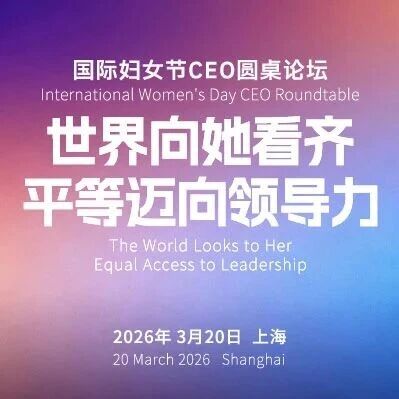
世界向她看齐:平等迈向领导力|国际妇女节CEO圆桌论坛即将开启
第一财经· 2026-03-13 10:20
Group 1 - The forum titled "The World Looks to Her: Equal Access to Leadership" will focus on the themes of "Digital Innovation and Women's Empowerment" and "Women's Influence in a Just Economy" [3][4] - The event is organized by First Financial, UN Women, and Fudan University School of Management, aiming to discuss inclusive growth paths in the digital age [3] - The forum will take place on March 20, 2026, at Fudan University, marking a significant moment as it coincides with the 30th anniversary of the Fourth World Conference on Women held in Beijing [3][6] Group 2 - The agenda includes discussions on AI governance and inclusive leadership, as well as two CEO roundtables focusing on how technology can reshape women's development pathways and enhance their influence in a prosperous economy [4][10] - The event aims to translate the commitment to gender equality into actionable steps that can be initiated immediately [4][10] - Key figures from various sectors, including business and academia, will participate, highlighting the collaborative effort to address gender equality in leadership [3][8][19]
人工智能时代的教育迷思,一位19岁休学少年给出了答案
36氪· 2026-03-13 09:55
Core Viewpoint - The article highlights the transformative journey of Tang Yingxi, a 19-year-old from China, who transitioned from a struggling student to a recognized figure in sustainable development, showcasing a new educational paradigm that emphasizes flexibility, creativity, and real-world problem-solving in the age of artificial intelligence [4][9][29]. Group 1: Tang Yingxi's Journey - Tang Yingxi, at 19, is the only Chinese youth nominated for the Rising Sustainability Star award at a prestigious event [4][5]. - He faced significant challenges in his early education, including being labeled a "bad student" and experiencing depression [6][10]. - His turning point came at 16 when he won the Tencent Science Seed Project award and was accepted into Minerva University, which has a lower acceptance rate than Harvard [7][9]. Group 2: Educational Philosophy - Tang emphasizes that true luck lies in developing a unique life perspective and educational approach, which fostered his sense of purpose and empathy [11][13]. - He believes traditional education fails to recognize talents like insight, creativity, and empathy, focusing instead on standardized testing [13][14]. - His father supported him in exploring project-based learning, which he views as essential for adapting to a rapidly changing world [14][19]. Group 3: Mercury Academy - After a year at Minerva, Tang decided to take a break to establish Mercury Academy, aiming to provide alternative education for peers struggling in traditional systems [9][25]. - The academy focuses on real-world problem-solving, allowing students to engage in projects that address community issues, such as sustainable architecture [36][40]. - Students undergo extensive personality and talent assessments to tailor their learning experiences, emphasizing the importance of individual strengths [38][41]. Group 4: Educational Innovation in the AI Era - The learning model at Mercury Academy is designed to cultivate skills necessary for the AI era, such as curiosity, creativity, and critical thinking [49][53]. - The academy's approach contrasts with traditional education by prioritizing real-world applications over rote memorization [40][55]. - The environment fosters a sense of autonomy and respect, allowing students to explore their interests without the pressure of conventional grading systems [44][54]. Group 5: Future of Education - The article suggests that as AI continues to reshape industries, the demand for individuals who can empathize and solve complex problems will grow [57]. - It argues that education should evolve to nurture these qualities, moving away from standardized assessments towards a more holistic understanding of student potential [50][56]. - The narrative concludes that the future of education lies in recognizing and developing unique talents, rather than conforming to traditional metrics of success [58].