AI反诈

Search documents
“一”字涨停,什么原因?
Zhong Guo Zheng Quan Bao· 2026-02-13 08:55
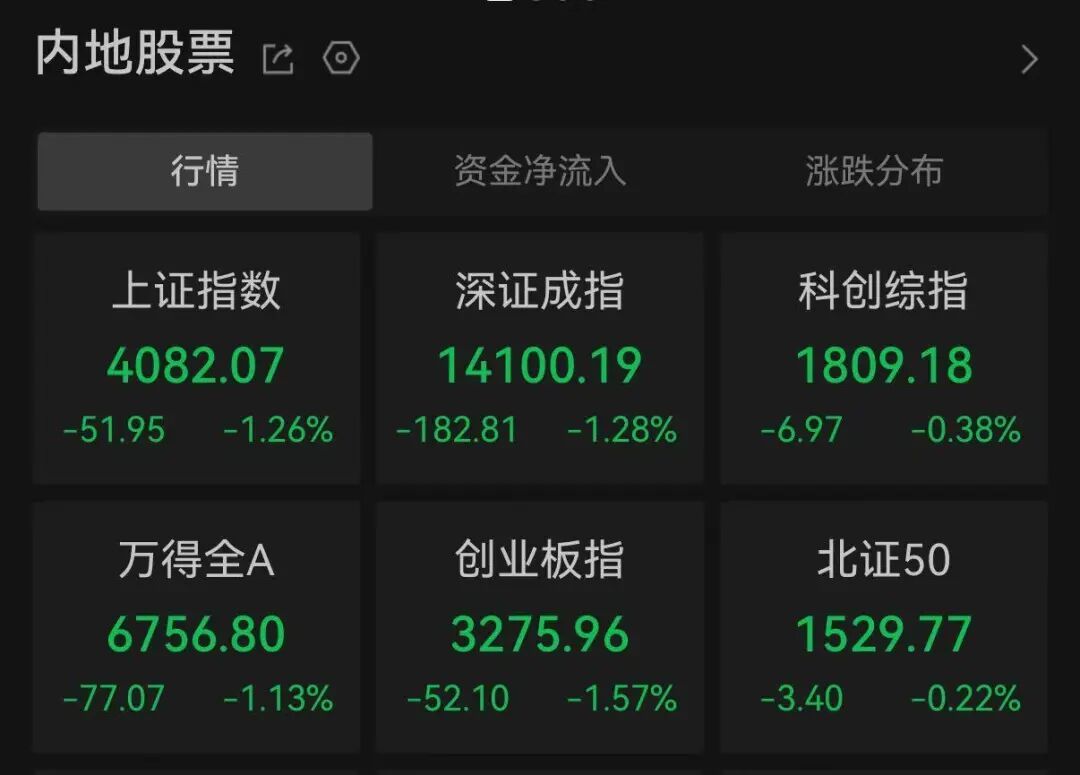
Market Overview - On February 13, the A-share market experienced fluctuations, with the Shanghai Composite Index falling by 1.26%, the Shenzhen Component Index by 1.28%, the ChiNext Index by 1.57%, and the Sci-Tech Innovation Index by 0.38%. The total market turnover was approximately 2 trillion yuan. For the week, the Shanghai Composite Index rose by 0.41%, the Shenzhen Component Index by 1.39%, the ChiNext Index by 1.22%, and the Sci-Tech Innovation Index by 3.17% [1]. Sector Performance - The military equipment, digital watermarking, and paper-making sectors saw significant gains, while previous hot sectors such as photovoltaics, small metals, and steel underwent adjustments. The digital watermarking sector surged, with related concepts like AI content review and AI fraud prevention also performing well. Notable stocks included Guoan Co., which hit the daily limit, and Hanbang High-Tech, which also reached the limit [3]. AI and Content Regulation - Recent reports indicated that some online accounts were publishing AI-generated synthetic information without proper AI identification, misleading the public and harming the online ecosystem. The internet regulatory authority has urged platforms to conduct thorough inspections, resulting in the disposal of 13,421 accounts and the removal of over 543,000 pieces of illegal information. The authority plans to maintain a strict stance against unmarked AI-generated misinformation [5]. AI Model Developments - On February 13, Huoshan Engine announced the launch of the Doubao image creation model 5.0 Lite, with API services expected to be available in late February. Additionally, Zhipu AI released its flagship model GLM-5, designed for complex system engineering and long-term tasks. ByteDance introduced the Seedance 2.0 AI video generation model, which quickly gained attention online. The rapid adoption of AI applications has raised concerns about compliance, authenticity, and safety, leading to a consensus that AI security has become essential [6]. Film Industry Insights - The film industry saw a notable increase in stock prices, particularly for film companies like Light Media, which rose over 15%. The pre-sale for the 2026 Spring Festival film season began on February 9, with Light Media's stock increasing by over 33% during the pre-sale period. As of February 13, the pre-sale box office reached 196 million yuan [10].


度小满“防深伪”技术揭秘:我们是如何从一段视频里揪出AI造假蛛丝马迹的?
Yang Guang Wang· 2026-02-12 10:00
Core Viewpoint - The rise of AI-driven deepfake technology has made it increasingly easy for criminals to create high-quality counterfeit content, posing significant challenges for security in the digital world. Financial technology is leveraging advanced methods to combat these threats and protect users' safety. Group 1: Deepfake Technology and Its Implications - Deepfake technology has become readily accessible, enabling criminals to produce convincing fake content, with instances of scams resulting in significant financial losses, such as a case where 4.3 million yuan was stolen in just 10 minutes using AI face-swapping technology [1]. - The key to identifying AI-generated fakes often lies in subtle flaws that are overlooked by the naked eye, such as abnormal blinking rates, irregular pupil shapes, and defects in teeth rendering [1]. Group 2: Anti-Fraud Initiatives - Chongqing's anti-fraud center and Du Xiaoman have launched a series of AI anti-fraud promotional activities for 2026, including short dramas, a digital anti-fraud song, and an H5 mini-game designed to educate users on recognizing scams through engaging scenarios [1]. - The "Jian Zhen" mini-game simulates real scam scenarios, helping users learn identification techniques in a fun way [1]. Group 3: Advanced Detection Technologies - Du Xiaoman's deep detection technology can uncover hidden "digital fingerprints" in images, allowing for the identification of high-risk behaviors such as impersonation or unauthorized actions [2]. - The technology analyzes unique noise patterns from cameras and AI generators, enabling precise detection of fraudulent activities [2]. Group 4: Micro-Expression Monitoring - The latest advancements in Du Xiaoman's technology include dynamic capture of micro-expressions, which last only about 0.1 seconds and are difficult for the human eye to detect [3]. - The micro-expression risk control model can quantify subtle facial movements, providing insights into the risk level during critical interactions, achieving over 90% recall rate and more than 99% accuracy with a false positive rate of one in a thousand [3]. Group 5: Impact and Future Directions - Du Xiaoman has successfully issued precise fraud warnings to over 450,000 customers, intercepting fraudulent amounts totaling 217 million yuan by leveraging its continuously upgraded anti-deepfake models [3]. - The evolution of technology has not only introduced new scam methods but has also led to the development of robust digital defenses, emphasizing the importance of technology-based identification in fraud prevention [3].

浩瀚深度:未来将持续通过“技术研发+场景落地”双轮驱动业务增长
Zheng Quan Ri Bao· 2026-02-11 11:11
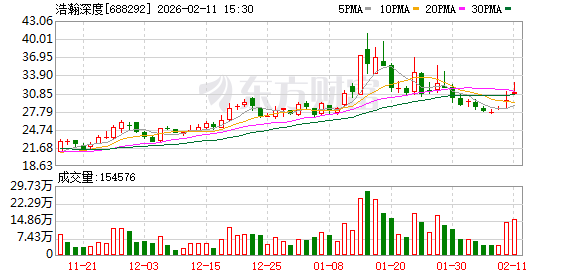
Core Insights - The company has made comprehensive technological layouts and product implementations in AI cybersecurity, deep synthesis content authentication, and AI fraud prevention [2] Group 1: Deep Synthesis Authentication System - The company will officially launch the digital content forgery detection system version 1.0 in June 2024, integrating DPI, multi-modal analysis, and large model training technologies [2] - The system has passed authoritative certification from the China Academy of Information and Communications Technology for 22 types of generative models, receiving national-level recognition [2] - It has already been commercialized in scenarios such as real-name authentication and audio-video communication, effectively preventing risks like false registrations and scam calls [2] - In Q1 2025, the subsidiary Guorui Zhizhi successfully won a bid for an AI authentication platform project from a provincial telecom company, with plans to expand into high-frequency business scenarios like live streaming platform reviews and social media content governance [2] Group 2: Intelligent Fraud Prevention System - The company has constructed a three-in-one intelligent fraud prevention system that integrates "voiceprint-semantics-deep forgery" to address fraud threats posed by AI voice simulation and deep forgery technologies [2] - This system relies on large model technology to accurately analyze dialogue contexts and fraudulent intentions, effectively identifying scams using voice-changing or voice synthesis software [2] Group 3: Multi-Modal Forgery Detection Engine - The company has developed a self-researched multi-modal domain-specific base model that combines image visual feature analysis, voice biometric recognition, and text semantic consistency verification [2] - This technology framework covers audio, video, images, and text for forgery content detection, analyzing the logic and risk assessment methods for deep forgery content from a technical principle perspective [2] Group 4: AI Security Verification and Compliance Supervision - The company is actively laying out in the AI security field, having independently developed a large model security inspection system to support the Ministry of Industry and Information Technology in AI compliance supervision [2] - The company is also deeply involved in the construction of the deep synthesis detection and disposal platform by the Ministry of Industry and Information Technology, enhancing its comprehensive capabilities in data privacy protection and AI risk governance [2] - The related technologies have formed a product matrix, with plans to continue driving business growth through a dual approach of "technology research and development + scenario implementation" [2]

一年呼出190万通电话!记者体验AI机器人如何“守”住群众钱袋子
Yang Zi Wan Bao Wang· 2026-02-11 10:08
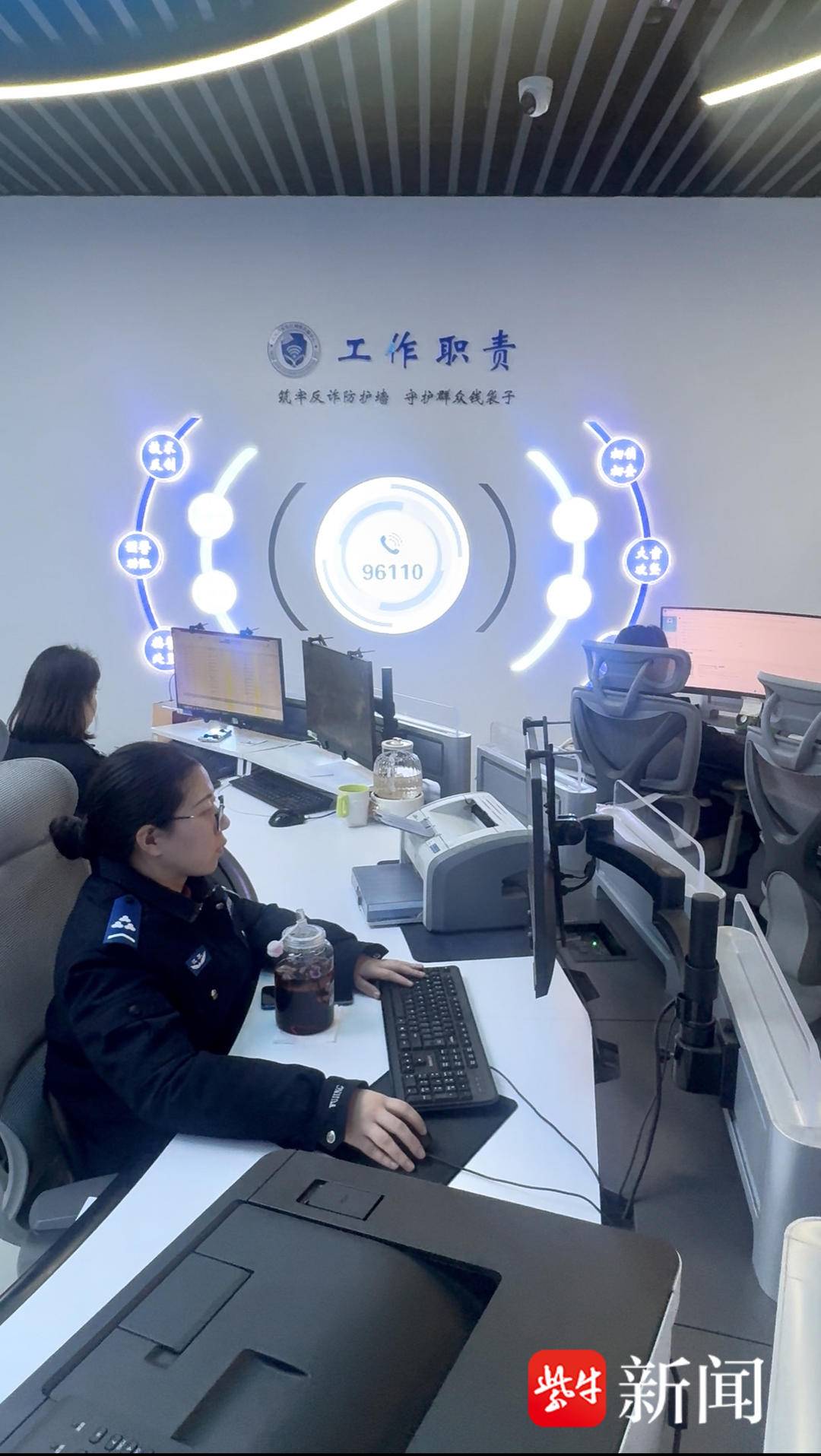
Core Viewpoint - The article highlights the increasing prevalence of telecom fraud as the year-end approaches and showcases how technology, particularly AI, is transforming anti-fraud measures in Yancheng City, enhancing efficiency and effectiveness in fraud prevention efforts [1][4]. Group 1: AI Implementation in Fraud Prevention - The Yancheng Anti-Telecom Fraud Center has implemented an AI-driven system that automates the identification and categorization of calls to the 96110 hotline, significantly improving response times and resource allocation [4][7]. - The AI system can monitor suspicious calls and transactions in real-time, issuing immediate warnings to citizens about potential scams, thereby preventing financial losses [7][11]. Group 2: Impact and Results - By 2025, the 96110 hotline is projected to have made 1.9 million outbound calls and sent over 2.8 million warning messages, successfully preventing over 7,100 cases of telecom fraud and avoiding substantial financial losses for the public [7][12]. - The system's integration of online warnings and offline interventions has created a closed-loop management approach, significantly enhancing the speed of fraud prevention responses [11][12]. Group 3: Future Developments - The Yancheng police plan to continuously update and expand the AI platform's capabilities, aiming to further enhance public safety and satisfaction regarding fraud prevention measures [13].

Soul IPO进程持续,生态安全报告凸显平台治理成果
Sou Hu Wang· 2026-01-27 04:41
Core Viewpoint - Soul's recent ecological safety report for 2025 highlights its advancements in fraud prevention and content safety, aiming to assure investors and users of its systematic capability to maintain a healthy ecosystem during its IPO process [1][9] Group 1: AI Integration in Governance - In 2025, Soul plans to deeply integrate AI into its governance cycle, deploying seven self-developed AI models to create a comprehensive safety shield [3] - The "Image/Text Anti-Fraud Model" can understand deep semantics and potential intentions, identifying not only surface-level violations but also the underlying logic of fraudulent activities [3][6] - Soul has developed a unique "Pig Butchering Posting Recognition Model" to target emotional manipulation and persona deception, allowing for early interception of fraud attempts [3][5] Group 2: Combatting False Traffic - Soul upgraded its governance matrix to address issues of "fake personas" and "image theft," achieving an average daily interception of 50,000 false content pieces through AI image path analysis and device anomaly detection [3][7] - This "circuit breaker" mechanism effectively disrupts the breeding ground for fraudulent activities, ensuring that users encounter content that reflects real life [3][7] Group 3: Collaborative Efforts with Law Enforcement - In 2025, Soul deepened its collaboration with law enforcement agencies, including the Pudong Anti-Fraud Center, by submitting over 100 illegal activity leads and assisting in investigations more than 30 times [4][8] - The company is building a closed-loop system of "in-platform interception + external crackdown" to create a safety network that leaves no room for wrongdoers [4] Group 4: Impact on User Ecosystem - The introduction of the "AI Anti-Fraud Plan" includes six recognition models and an AI reminder system to enhance user awareness and create a dual defense against fraud [5] - The number of individuals involved in fraudulent activities has decreased by approximately 20% compared to 2024, showcasing the effectiveness of the AI models in combating various forms of fraud [6]

帆立科技谢立:AI赋能反电诈,识别融资诈骗正确率大幅提升43%
Xin Lang Cai Jing· 2025-12-20 07:01
Core Viewpoint - The 22nd China International Financial Forum highlighted the evolving challenges of telecom network fraud in the financial sector and the advancements in AI technology for fraud detection, particularly through the development of the fourth-generation fraud detection model by Shanghai Fanli Information Technology Co., Ltd. [1][6] Group 1: Current Challenges in Fraud Detection - Telecom network fraud is becoming increasingly complex, with traditional anti-fraud methods showing significant limitations, including slow response times, data silos hindering risk identification, and the evolving nature of fraud becoming more concealed [3][8] - The similarity between fraudulent and legitimate users is alarmingly high, with traditional models identifying only 41.8% similarity, while real production data shows a similarity of 83.2%, indicating that fraud signals are extremely weak [4][9] Group 2: Technological Advancements - The fourth-generation fraud detection model has transitioned from passive response to proactive resolution, focusing on penetrating disguises and accurately identifying fraud [3][9] - The Grad model developed by Fanli Technology has demonstrated over a 10% efficiency improvement and a 43% increase in identification accuracy, successfully addressing complex fraud recognition challenges [4][9] Group 3: Industry Challenges and Recommendations - The industry faces three key challenges: restricted data circulation among banks, insufficient sharing of fraud black samples among financial institutions, and poor collaboration between government and enterprises [5][10] - There is a call for regulatory bodies and industry associations to establish a fraud result-sharing mechanism and for financial institutions to share key information while ensuring compliance with privacy regulations [10]

AI对决AI!金融科技打响AI欺诈攻防战
经济观察报· 2025-11-07 09:08
Core Viewpoint - The article discusses the ongoing battle between financial institutions and criminals using advanced AI techniques for fraud, highlighting the need for financial institutions to enhance their defenses in response to evolving threats [1][3]. Group 1: Fraud Techniques - A case study illustrates how criminals exploited AI to bypass security measures, using a technique called "injection attack" to manipulate a victim's phone camera and create a realistic video for identity verification [2][3]. - The evolution of fraud methods has shifted from simple presentation attacks to more sophisticated AI-generated images and videos, making detection increasingly challenging [5][6]. Group 2: AI Countermeasures - Financial institutions are developing AI algorithms to detect signs of AI-generated content, focusing on identifying algorithmic traces left by AI tools [5][6]. - Multi-dimensional defense strategies are necessary, combining image analysis with system-level checks to prevent injection attacks [5][6]. Group 3: Application of AI in Fraud Prevention - AI anti-fraud technologies are being integrated into various sectors requiring electronic identity verification, including banking, insurance, and e-commerce [9]. - The Hong Kong Monetary Authority is facilitating a sandbox program for banks to test AI fraud prevention technologies, promoting the use of AI to combat AI-generated fraud [10][11]. Group 4: Training and Data Utilization - Continuous training of AI models using historical transaction data is essential for improving fraud detection accuracy and minimizing false positives [14][15]. - Financial institutions are focusing on targeted training and knowledge acquisition to enhance their AI systems' responsiveness to new fraud scenarios [14][15].

守住钱袋子,护好幸福家”——兴业基金防非宣传“进园区
Zhong Guo Zheng Quan Bao· 2025-09-15 04:29
Group 1 - The core theme of the recent event organized by the Shanghai Financial Stability Development Research Center and others is "Protecting the Wallet and Safeguarding Happiness," focusing on educating the public about financial fraud prevention [1] - The event featured interactive games, educational materials, and on-site explanations to enhance the public's ability to recognize and prevent financial scams, thereby increasing self-protection awareness [1] - Industrial Fund emphasized "AI anti-fraud" and the dissemination of Chinese financial culture, attracting many participants with an interactive device that provided knowledge about AI fraud prevention through engaging activities [1] Group 2 - In June, Industrial Fund's original educational short video titled "Protect Biological Information, Beware of AI Face Swapping" won the "Second Prize in the Video Group" at a competition aimed at promoting the prevention of illegal financial activities [2] - The video uses a dramatized approach to illustrate a story about AI face-swapping scams, aiming to raise public awareness about AI fraud risks [2] - Industrial Fund has actively engaged in various educational initiatives, creating diverse promotional materials and participating in activities to educate investors on basic investment knowledge and self-protection techniques, thereby promoting rational and long-term investment practices [2]
当AI诈骗,正在与AI反诈“魔法对轰”?
Hu Xiu· 2025-09-03 02:49
Core Insights - The article discusses the escalating battle between AI scams and AI anti-fraud measures, highlighting the sophistication of AI-generated deception and the response from technology in combating these threats [1] Group 1: AI Scams - Merchants on platforms like Taobao are using AI-generated images to deceive consumers, showcasing the increasing complexity of AI fraud techniques [1] - Recent statistics indicate that Taobao has intercepted 100,000 fake AI images, reflecting the scale of the issue [1] Group 2: AI Anti-Fraud Measures - In response to traditional anti-fraud methods being ineffective, AI anti-fraud agents have emerged as a new technological countermeasure [1] - The article emphasizes that AI can now perform tasks such as face-swapping, simulating friends and family, and employing persuasive AI-generated language to manipulate consumers [1]
“守住钱袋子,护好幸福家” 兴业基金防非宣传“进园区”
Sou Hu Cai Jing· 2025-09-02 09:35
Core Insights - The event titled "Protecting the Wallet and Safeguarding Happiness" aims to educate the public on preventing financial fraud and enhancing awareness of self-protection against scams [1] Group 1: Event Overview - The event was organized by the Shanghai Financial Stability Development Research Center, Changning District Investment Promotion Office, and Donghongqiao Group [1] - Activities included setting up consultation booths, interactive games, distributing educational souvenirs, and on-site explanations to raise awareness about financial fraud [1] Group 2: Company Initiatives - Industrial Fund focused on "AI Fraud Prevention" and promoting Chinese financial culture during the event [1] - The "Fraud Prevention Spin" interactive device attracted many participants, using fun quizzes and educational souvenirs to convey AI fraud prevention knowledge [1] Group 3: Recognition and Contributions - In June, Industrial Fund's educational short video "Protecting Biological Information, Beware of AI Face Swapping" won the second prize in the video category at a financial risk prevention event [6] - The video uses dramatization to illustrate an AI fraud scenario, aiming to raise public awareness about AI-related scams [6] - The company actively engages in various educational initiatives, including campus and park activities, to promote investment knowledge and self-protection techniques [6]