AI时代红利

Search documents
中产家庭真正的消费陷阱
虎嗅APP· 2026-01-12 13:34
Core Viewpoint - The article discusses the phenomenon of "anxiety of falling behind" among the middle class in East Asia, highlighting how this anxiety drives irrational consumption and investment behaviors, often under the guise of self-improvement and future investment [4][5][6]. Group 1: High-Risk Future Investments - The line between consumption and investment is becoming increasingly blurred, with people paying for "potentially better futures" rather than tangible experiences or products [8]. - Real estate is a prime example, where high leverage home purchases are seen as a secure path to social mobility, with urban households' housing assets constituting 59.1% of total assets, significantly higher than the international average of 30%-40% [8]. - The premium for school district housing can reach 30%-50% in major cities, and families spend 15%-20% of their total expenditures on K12 education, indicating a strong commitment to educational investments [8][9]. - The shadow education market is projected to exceed 800 billion RMB in 2024, despite regulatory changes, reflecting ongoing parental investment in extracurricular education [8]. Group 2: The Paradox of Educational Investment - The inflation of education's signaling function leads to a zero-sum game in social status, where families invest heavily in education not for absolute improvement but to maintain relative standing [9][10]. - Families face increasing costs to maintain their relative positions, with those who invested heavily before policy changes experiencing asset depreciation [11]. - The opportunity costs of excessive investment in education can detract from family quality of life and children's holistic development [11]. Group 3: The Self-Improvement Economy - The rise of the "self-improvement economy" capitalizes on the middle class's fear of losing control, offering products that promise personal and professional advancement [13][14]. - Despite a decline in MBA enrollment, tuition fees continue to rise, with top programs costing between 360,000 to 450,000 RMB, leading many to overlook the inherent risks of such investments [14]. - The narrative around "light asset entrepreneurship" promotes the idea that anyone can succeed in the AI era, yet data shows that only 1.17% of content creators earn over 5,000 RMB monthly, with many abandoning their efforts [15][16]. Group 4: Complexity of Life Choices - Middle-class investment behaviors often exhibit characteristics such as long return cycles, high uncertainty, and the need for continuous investment [19]. - The commodification of solutions to complex life challenges leads to oversimplified decision-making, where families invest in real estate and education to mitigate fears of social decline [19][20]. - There is no "optimal solution" to life's complexities; instead, choices are often constrained by specific circumstances, as highlighted by the recent Nobel Prize in Economic Sciences awarded to Claudia Goldin for her work on labor market gender differences [20]. Group 5: The True Dilemma of the Middle Class - The middle class's real challenge lies not in excessive consumption but in misallocating resources that could enhance self-awareness and family relationships towards uncontrollable external investments [22]. - The most valuable investment for the middle class may be acknowledging the world's uncertainties and preparing accordingly, which requires discipline and courage [24][25].


猎奇智能IPO净利狂飙,罗超不惧专利官司
Xin Lang Cai Jing· 2026-01-06 08:53
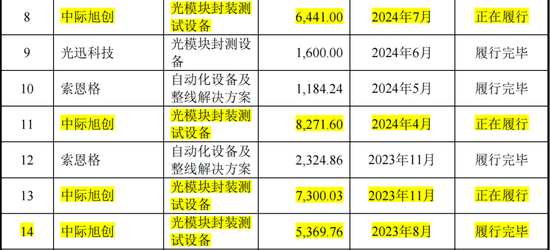
Core Viewpoint - The company Suzhou Lieqi Intelligent Equipment Co., Ltd. (Lieqi Intelligent) is accelerating its IPO process, benefiting from its partnership with Zhongji Xuchuang, a leading global supplier of optical modules, particularly in the AI era. The collaboration has significantly driven Lieqi Intelligent's revenue growth, with a substantial portion of its income derived from Zhongji Xuchuang's orders. Group 1 - Lieqi Intelligent's revenue from Zhongji Xuchuang accounted for 57.12%, 62.19%, 58.85%, and 65.55% during the reporting period from 2022 to the first half of 2025 [1][6][33] - The company has seen a revenue increase of 274% and a fivefold increase in net profit from 2022 to 2024, driven by its stable partnership with Zhongji Xuchuang [6][33][34] - The company plans to raise 913 million yuan through its IPO, with 582 million yuan allocated for intelligent production line construction and 251 million yuan for R&D center development [2][30][31] Group 2 - Lieqi Intelligent's R&D investment has a compound annual growth rate of 90.71% from 2022 to 2024, supporting the technological upgrades required by Zhongji Xuchuang [1][28][37] - The company has achieved a global market share ranking of first in optical module placement equipment and second in optical module coupling equipment [2][29][37] - The company has signed significant contracts with Zhongji Xuchuang, totaling 334 million yuan for optical module packaging testing equipment from April 2022 to May 2025 [4][31][32] Group 3 - The company has a high dependency on its top five customers, which contribute approximately 80% of its revenue, with Zhongji Xuchuang being the largest [11][14][37] - Lieqi Intelligent's main products include placement equipment, coupling equipment, aging testing equipment, and automation solutions, which are essential for the optical module packaging process [11][38] - The company has faced challenges with accounts receivable, which accounted for 40% of its revenue, primarily from Zhongji Xuchuang, and has reported negative cash flow from operating activities in the first half of 2025 [18][20][30]

你赚了钱,是因为市场不成熟
混沌学园· 2025-09-24 11:57
Core Insights - The article emphasizes that success in business often stems from operating in an immature market rather than solely from exceptional strategies or execution [2][3] - Recognizing the transient nature of market opportunities can help businesses navigate through cycles and avoid being eliminated when markets mature [2][3] Group 1: Three Types of "Immaturity Dividends" - **Information Asymmetry Dividend**: In immature markets, buyers and sellers lack efficient access to information, creating profit opportunities. Examples include early foreign trade and the initial internet phase [5] - **Rule Absence Dividend**: Markets with undeveloped regulations allow for greater freedom in business practices, enabling rapid expansion through methods that may be considered gray or illegal in mature markets. Early internet platforms often exploited this [6] - **Demand Overflow Dividend**: When supply cannot meet sudden or long-suppressed demand, businesses can succeed simply by being present in the market. Early real estate and smartphone markets exemplify this, where basic functionality sufficed for success [7] Group 2: Disappearance of Dividends as Markets Mature - As markets mature, the following changes occur: - **Information Equality**: Transparency in pricing and channels reduces profit margins from information asymmetry [9] - **Regulatory Framework**: Established laws and standards limit previously available freedoms, constraining growth opportunities [9] - **Supply Surplus**: Increased competition transforms markets from "blue oceans" to "red oceans," leading to a shift in consumer behavior towards quality and brand loyalty [9] - **Value Return**: Consumers begin to prioritize genuine value, such as better experiences and innovation, over mere availability [9] Group 3: Transitioning from "Arbitrageurs" to "Value Creators" - Businesses must adapt to the loss of immaturity dividends by focusing on creating unique value rather than relying on market conditions. Key strategies include: - **Self-Awareness**: Companies should assess how much of their profit is derived from market conditions versus their own value creation [11] - **Strategic Investment**: The best time to invest in technology, branding, and user experience is during profitable periods, as exemplified by Huawei's consistent R&D investment [11] - **Building Moats**: Establishing brand loyalty, proprietary technology, and efficient supply chains are essential for sustaining profits in mature markets [11] - **Embracing Regulations**: Viewing compliance as a competitive advantage can foster trust and credibility in mature markets [11] Conclusion - The article serves as a reminder that while market immaturity can lead to success, true business wisdom lies in distinguishing between temporary opportunities and sustainable practices. The greatest challenge is not seizing opportunities in immature markets but adapting core capabilities as markets mature [14]