AI机器人+商业

Search documents
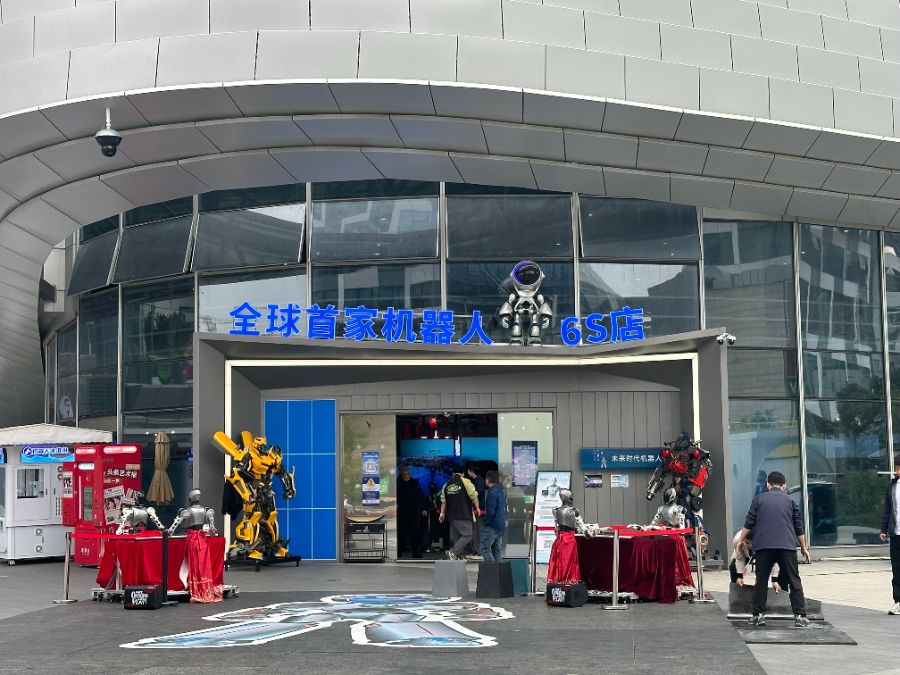
全国首家机器人6S店营业额已达2000万元
21世纪经济报道· 2026-01-15 12:10
Core Viewpoint - The article highlights the rapid growth of Shenzhen's "first store economy," particularly focusing on the emergence of technology-driven retail spaces, such as the world's first robot 6S store, which has generated significant consumer interest and revenue [1][3]. Group 1: Robot 6S Store Performance - The world's first robot 6S store has achieved a total revenue of 20 million yuan within six months of opening and has signed contracts for six franchise stores, attracting approximately 300,000 customers, with over 30% being international visitors [1][3]. - The store operates under a unique 6S model, which includes leasing and customization services, providing a comprehensive lifecycle service system for robots [3][6]. Group 2: Technology First Stores - Shenzhen has seen a surge in technology first stores, with an average of one new store opening daily from 2022 to 2024, showcasing the city's commercial vitality and innovation capabilities [1][3]. - The article mentions various technology first stores, including a humanoid robot-themed store that integrates AI robots into the retail experience, enhancing customer interaction and service [3][6]. Group 3: Impact on Consumer Behavior - Technology first stores are becoming key drivers of foot traffic and consumer spending, with the humanoid robot-themed store attracting over 2,000 visitors daily, doubling on weekends [8][10]. - These stores are effective in targeting high-net-worth individuals and young families, significantly increasing customer dwell time by 1-2 hours [10][11]. Group 4: Industry and Market Dynamics - The introduction of technology first stores is facilitating the connection between technology, industry, and consumer markets, accelerating the adoption of innovative products like 3D printers and robots [11][12]. - The article emphasizes the need for continuous innovation and adaptation in the retail landscape, as many technology first stores face challenges in sustaining operations due to high costs and market readiness [15][16]. Group 5: Government and Market Support - The Shenzhen government is actively promoting the first store economy, aiming to add over 1,000 new stores within the year and providing financial incentives for brands to establish a presence in the city [16][18]. - Market players are also collaborating to enhance the consumer experience, integrating technology stores with other retail formats to create a more engaging shopping environment [16][18].

机器人6S和3D打印店 正在催生新零售场景
2 1 Shi Ji Jing Ji Bao Dao· 2026-01-15 11:17
Core Insights - The first robot 6S store in the world has gained significant attention, achieving a total revenue of 20 million yuan within six months and attracting approximately 300,000 customers, with over 30% being international visitors [5][9]. Group 1: Business Model and Operations - The robot 6S store operates under a unique model that includes leasing and customization, creating a comprehensive service system that differs from traditional retail [11]. - The store has attracted nearly 70 robot brands, showcasing products across various sectors such as home service, medical assistance, and education [10]. Group 2: Economic Impact - The emergence of technology flagship stores in Shenzhen is seen as a vital driver for consumer traffic and economic growth, with the first human-shaped robot theme store attracting over 2,000 visitors daily [17]. - These stores enhance the shopping experience and draw high-value customers, significantly increasing the average time spent in stores by 1-2 hours [20]. Group 3: Industry Trends - The technology retail sector is becoming a key contributor to shopping mall performance, with tech brands achieving 2-3 times the sales per square meter compared to traditional retail [21]. - The introduction of technology flagship stores is expected to bridge the gap between technology and consumer markets, accelerating the adoption of innovative products [22][25]. Group 4: Challenges and Solutions - Despite the initial success, maintaining operations for technology flagship stores is challenging, with a closure rate of over 26% for newly opened stores nationwide [28]. - Shenzhen's government is actively promoting the development of flagship stores, aiming to introduce over 1,000 new stores within the year and providing financial incentives for attracting well-known brands [29][30].