
AI模型泛化能力

Search documents
王兴兴点评Seedance 2.0:全球遥遥领先
经济观察报· 2026-03-18 06:55
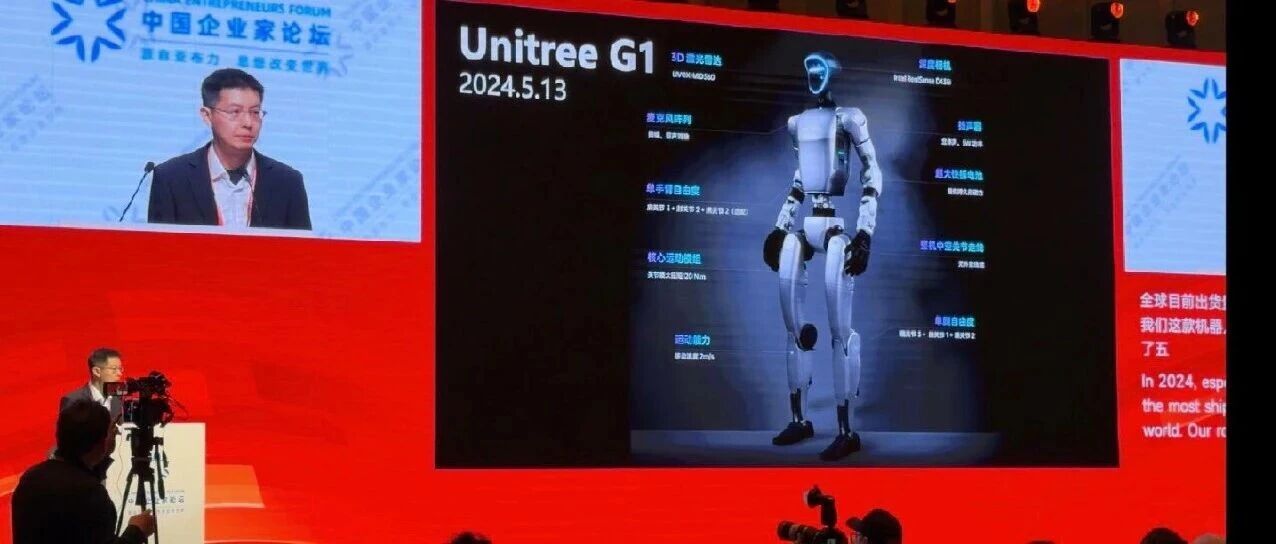
Core Viewpoint - The article discusses the advancements in robotics and AI, particularly focusing on the potential of achieving "embodied intelligence" akin to a "ChatGPT moment" in the near future, driven by technologies like Seedance 2.0 [2][3][4]. Group 1: Technological Advancements - Wang Xingxing emphasizes the importance of Seedance 2.0, a video generation model that could allow robots to perform tasks by aligning generated videos with robotic actions, addressing a significant global challenge [4]. - The development of a full-body remote operation system by Yushu Technology aims to synchronize human and robot actions, facilitating large-scale data collection and remote control capabilities [2][3]. - The prediction of a "ChatGPT moment" in embodied intelligence suggests that AI models could perform 80% of tasks in unfamiliar scenarios using language and text instructions without prior mapping [2][3]. Group 2: Challenges in the Industry - The industry faces challenges in achieving embodied intelligence, primarily due to the insufficient generalization ability of AI models [3]. - Improving the generalization capability of robots requires enhancing the expression of robotic movements and increasing data utilization, as the current data in the robotics field is still scarce compared to other domains [3]. - The two main model approaches in embodied intelligence are VLA models, which integrate language and robotic models, and world models, which allow robots to imagine actions before executing them [3]. Group 3: Product Developments and Market Potential - Yushu Technology plans to release a new generation of industrial-grade robots by 2025, featuring enhanced capabilities such as dust and water resistance and a range of over 20 kilometers on a single charge [4]. - The company anticipates a significant increase in robot shipments, potentially reaching one million units annually if AGI reaches a critical point, with current global shipments of the G1 model expected to be around 5,000 units by the end of 2025 [5]. - Recent performances by Yushu robots on national television demonstrate their advanced capabilities in AI reinforcement learning, showcasing high-level movements and flexibility [5].

医疗影像大模型,还需“闯三关”
3 6 Ke· 2025-05-18 23:14
Core Viewpoint - The integration of AI in medical imaging is advancing rapidly, with large models evolving from mere tools to core drivers of diagnostic ecosystems, enhancing the workflow of radiologists and addressing challenges in pathology diagnostics [1][2]. Group 1: Development of AI in Medical Imaging - Medical imaging AI models have achieved widespread application in the workflow of radiologists, transitioning from auxiliary diagnostic tools to essential components of the diagnostic ecosystem [1]. - The "Shukun Kun Multi-modal Medical Health Large Model" released by Shukun Technology in April signifies this evolution, enhancing the role of AI in diagnostics [1]. Group 2: Challenges and Solutions in Pathology - Pathology models are considered the "crown jewel" of medical models due to their complexity and diversity, with the first clinical-grade pathology model, "Insight," developed by Tuo Che Future, addressing accuracy and efficiency challenges [2]. - The pathology model addresses long-standing challenges in generalization across hospitals, cancer types, and pathology tasks, simplifying processes and improving diagnostic efficiency [3]. Group 3: Enhancing AI Generalization Performance - AI model generalization is crucial for reliability and stability, with key challenges including insufficient data diversity, model limitations, and the long-tail nature of medical data [4][6]. - Strategies to enhance generalization include expanding data sample diversity, optimizing model training, and iterating models in real clinical environments [6][7]. Group 4: Addressing the Hallucination Problem - The hallucination issue in large models is a significant barrier, with RAG (Retrieval-Augmented Generation) technology proposed as a solution to enhance accuracy by integrating external knowledge [8][9]. - A hybrid approach combining generative and discriminative AI is suggested to mitigate risks in critical decision-making scenarios, ensuring reliable outputs [9]. Group 5: Deployment Trends in Healthcare - Local deployment of AI models is becoming the preferred choice for hospitals due to data privacy and compliance advantages, with integrated solutions like one-box systems gaining traction [10][11]. - One-box systems combine the strengths of general and specialized models, addressing diverse medical needs while ensuring data control [10]. Group 6: Future Trends in Medical AI - The performance of medical large models is surpassing traditional small models, with applications expanding from thousands to over ten thousand hospitals [12]. - The future of medical AI is moving towards multi-modal integration and comprehensive diagnostics, akin to a digital "general practitioner" that synthesizes various patient data for holistic treatment recommendations [12][13].