工业级机器狗

Search documents
王兴兴点评Seedance 2.0:全球遥遥领先
经济观察报· 2026-03-18 06:55
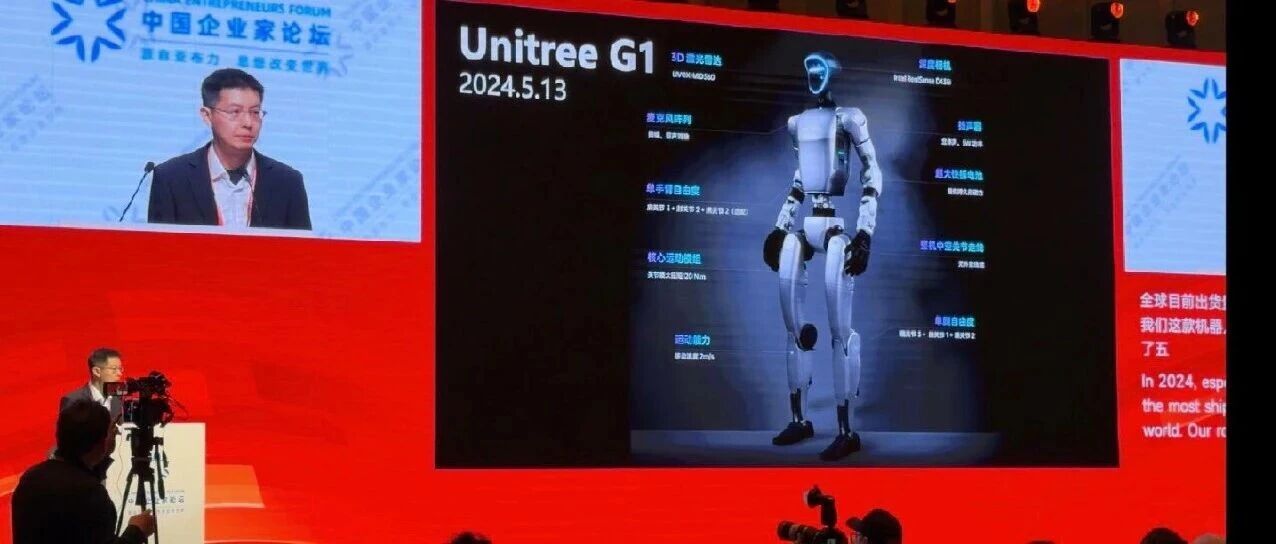
Core Viewpoint - The article discusses the advancements in robotics and AI, particularly focusing on the potential of achieving "embodied intelligence" akin to a "ChatGPT moment" in the near future, driven by technologies like Seedance 2.0 [2][3][4]. Group 1: Technological Advancements - Wang Xingxing emphasizes the importance of Seedance 2.0, a video generation model that could allow robots to perform tasks by aligning generated videos with robotic actions, addressing a significant global challenge [4]. - The development of a full-body remote operation system by Yushu Technology aims to synchronize human and robot actions, facilitating large-scale data collection and remote control capabilities [2][3]. - The prediction of a "ChatGPT moment" in embodied intelligence suggests that AI models could perform 80% of tasks in unfamiliar scenarios using language and text instructions without prior mapping [2][3]. Group 2: Challenges in the Industry - The industry faces challenges in achieving embodied intelligence, primarily due to the insufficient generalization ability of AI models [3]. - Improving the generalization capability of robots requires enhancing the expression of robotic movements and increasing data utilization, as the current data in the robotics field is still scarce compared to other domains [3]. - The two main model approaches in embodied intelligence are VLA models, which integrate language and robotic models, and world models, which allow robots to imagine actions before executing them [3]. Group 3: Product Developments and Market Potential - Yushu Technology plans to release a new generation of industrial-grade robots by 2025, featuring enhanced capabilities such as dust and water resistance and a range of over 20 kilometers on a single charge [4]. - The company anticipates a significant increase in robot shipments, potentially reaching one million units annually if AGI reaches a critical point, with current global shipments of the G1 model expected to be around 5,000 units by the end of 2025 [5]. - Recent performances by Yushu robots on national television demonstrate their advanced capabilities in AI reinforcement learning, showcasing high-level movements and flexibility [5].

机器人成广交会出海新顶流
2 1 Shi Ji Jing Ji Bao Dao· 2025-10-16 13:11
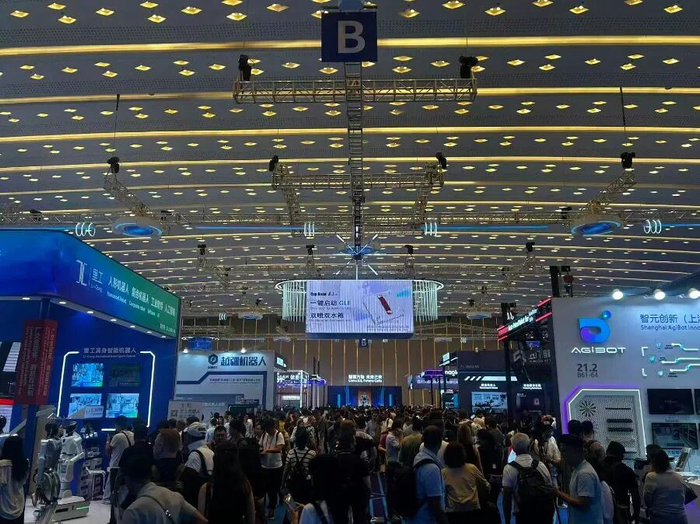
Core Insights - The article highlights the significant growth and international expansion of AI and robotics companies, particularly in the context of the recent Canton Fair, where many companies reported substantial orders and increased overseas interest [1][6][11]. Industry Trends - The AI and robotics sector is transitioning from simple product exports to providing "smart solutions," with companies like Shenzhen Zhihui Technology reporting a 300% year-on-year increase in robot business revenue due to rising orders from European and American clients [1][6]. - The overall export of China's equipment manufacturing industry reached 6.22 trillion yuan in the first five months of this year, with industrial robot exports increasing by 55.4% [8]. Company Developments - Companies such as Magic Atom Robotics and Shanghai Heitun Robotics are experiencing rapid growth in overseas sales, with Magic Atom reporting that its export business has risen from less than 15% to 30% of total revenue [6][8]. - Yujiang Technology has seen a 165.5% year-on-year increase in revenue from its commercial services sector, indicating a strong demand for diverse robotic solutions [7]. Financing and Market Expansion - By the third quarter of 2025, the total financing for China's robotics industry is expected to exceed 800 billion yuan, with nearly 30% allocated for overseas market expansion [1][11]. - Financial institutions are increasingly supporting AI and robotics companies in their global expansion efforts, with examples like the Bank of Communications providing services for companies seeking to list in Hong Kong [11][14]. IPO Activity - A notable trend is the surge in IPOs among AI and robotics companies, with 12 firms already having announced plans to list on the Hong Kong Stock Exchange as of August this year [14][15]. - Companies like Yujian Technology have successfully listed in Hong Kong and are focusing on expanding their overseas business [14]. Strategic Partnerships - Companies are exploring various strategies for international expansion, including acquisitions and forming partnerships to enhance their technological capabilities and market presence [8][16]. - The integration of financial services with industry needs is becoming crucial, as firms like GF Securities are tailoring their offerings to support tech companies in navigating both domestic and international markets [16].

机器人成广交会出海新顶流
21世纪经济报道· 2025-10-16 12:54
Core Viewpoint - The article highlights the significant growth and international expansion of AI and robotics companies, particularly in the context of the recent Canton Fair, where these companies are transitioning from simple product exports to providing comprehensive "smart solutions" for overseas markets [1][4]. Group 1: Industry Growth and Trends - The robot business of Shenzhen Zhihui Technology experienced a 300% year-on-year revenue increase in the first half of the year, driven by increased orders from European and American clients [1]. - The Chinese robotics industry is projected to exceed 800 billion yuan in total financing by the third quarter of 2025, with nearly 30% allocated for overseas market expansion [1][12]. - The export of industrial robots from China has seen a remarkable growth rate, with a 55.4% year-on-year increase in the first five months of this year [7]. Group 2: Company Innovations and Market Strategies - Companies like Magic Atom Robotics have increased their export business from less than 15% to 30% of total revenue, indicating a rapid growth trajectory [4]. - Shanghai Heitun Robotics secured over 300 million USD in orders before the Canton Fair, showcasing the demand for their products [4]. - The coffee robot from Shanghai Heitun offers highly personalized customization, catering to various market needs [5]. Group 3: Financial Institutions and Support - Financial institutions are accelerating their support for AI and robotics companies looking to expand internationally, with services like overseas listing and financing being highlighted at the Canton Fair [9][11]. - The integration of investment banking and commercial banking services is becoming crucial for supporting companies like Dipu Technology in their overseas expansion efforts [11][14]. - The trend of companies seeking to list on the Hong Kong stock exchange is increasing, with 12 companies already announcing IPOs as of August this year [12].

机器人成广交会出海新“顶流”,资本加速赋能全球化布局
2 1 Shi Ji Jing Ji Bao Dao· 2025-10-16 10:11
Core Insights - The article highlights the significant growth and international expansion of China's AI and robotics industry, particularly at the recent Canton Fair, where companies reported substantial order increases and a shift from simple product exports to comprehensive "smart solutions" [1][2][3]. Industry Growth - The robotics business of Shenzhen Zhihui Technology experienced a 300% year-on-year revenue increase in the first half of the year, driven by increased orders from European and American clients [1]. - The overall export of China's equipment manufacturing products reached 6.22 trillion yuan in the first five months of this year, with industrial robot exports growing by 55.4% [3]. - The compound annual growth rate of China's industrial robot exports is projected to be 22.2% from 2017 to 2024, increasing from 1.98 billion yuan to 8.06 billion yuan [3]. Market Trends - Companies are increasingly focusing on overseas markets, with the proportion of export business in some firms rising from less than 15% to 30% within a year [2]. - The demand for commercial robots in overseas markets is still low, indicating significant potential for growth and the need for tailored solutions [2][3]. Capital Market Activity - By the third quarter of 2025, the total financing in China's robotics industry is expected to exceed 80 billion yuan, with nearly 30% allocated for international market expansion [1][8]. - Twelve AI and robotics companies are currently awaiting IPOs in Hong Kong, indicating a trend towards leveraging international capital markets for growth [1][8]. Financial Institutions' Role - Financial institutions are accelerating their support for AI and robotics companies looking to expand internationally, with services including overseas listing and financing [5][8]. - The integration of investment banking and commercial banking services is becoming crucial for supporting these companies in their global expansion efforts [8][10]. Strategic Moves - Companies like Midea Group are acquiring foreign firms to enhance their technological capabilities and market access [4]. - The trend of forming partnerships and bundled solutions for "smart factories" is gaining traction among Chinese firms aiming to reduce costs and enhance brand recognition abroad [4].
这届东博会“不基础”!记者体验坐机器狗“巡馆”:稳稳的很安心
2 1 Shi Ji Jing Ji Bao Dao· 2025-09-17 14:47
Core Insights - The article highlights the growing trend of Chinese robots entering the ASEAN market, showcasing their capabilities in various fields such as security, entertainment, and industrial applications [1][2] - The 22nd China-ASEAN Expo introduced an AI pavilion, emphasizing the significance of AI-driven robots as a leading product for international buyers [1] Industry Developments - The AI pavilion at the expo featured cutting-edge technologies and products, indicating a shift towards purchasing entire ecosystems rather than individual products [1] - Nearly 200 leading AI companies and startups, including major players like Huawei and Alibaba Cloud, showcased their AI models, reflecting the competitive landscape in the AI sector [1] Product Innovations - Various AI and robotics companies demonstrated their unique capabilities, including the world's first explosion-proof humanoid robot and advanced collaborative welding systems [2] - A notable highlight was the industrial-grade robot dog, capable of carrying up to 120 kilograms, which attracted significant attention from attendees [2] Market Potential - The participation of these robots in the expo marks a crucial step towards their integration into production and daily life in ASEAN countries, suggesting a promising market opportunity for Chinese robotics [2]

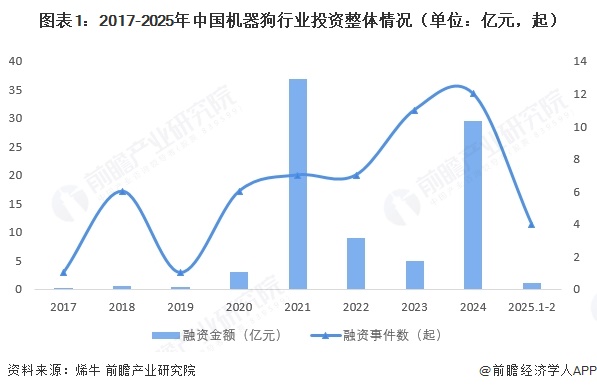
【投资视角】启示2025:中国机器狗行业投融资及兼并重组分析(附投融资事件、产业基金和兼并重组等)
Qian Zhan Wang· 2025-05-02 03:09
Group 1 - The core viewpoint of the article highlights the increasing investment activity in the machine dog industry in China, with significant financing events and amounts recorded since 2021 [1][2][19] - The machine dog industry is currently in a growth phase, with most financing rounds concentrated in B rounds and earlier, indicating a developing market [2][19] - Investment activity is concentrated in regions such as Zhejiang, Guangdong, Chongqing, and Jiangsu, with Zhejiang leading in the number of financing events [5][19] Group 2 - The primary focus of investment in the machine dog industry is on industrial-grade and consumer-grade machine dogs, with a shift in investment trends observed from industrial to consumer-grade products and back to industrial-grade [6][11][19] - Major investors in the machine dog industry are primarily investment firms, with notable names including Sequoia Capital and Shunwei Capital, alongside some industrial investors like Meituan and Alibaba [12][19] - The number of industry investment funds in the machine dog sector is limited, with only three identified, the largest being managed by Ma'anshan Zhefeng Intelligent Robot Investment Management Co., with a scale of 2-5 billion RMB [15][19] Group 3 - The machine dog industry has seen few mergers and acquisitions, primarily consisting of horizontal acquisitions among midstream companies to expand scale [16][19] - Specific examples of recent acquisitions include Joyoung's acquisition of Shenzhen Jiahechong Intelligent Co., and Jingye Intelligent's acquisition of Jiazhi Robot, both aimed at enhancing product offerings and competitive advantages [17][19]