AI焦虑

Search documents
壹快评|火出圈的“雪山救狐”,是一剂治疗Al焦虑的良药
第一财经· 2026-03-26 13:34
Core Viewpoint - The viral AI short drama "Snow Mountain Rescue Fox" highlights the irreplaceable value of human creativity amidst concerns about AI surpassing human capabilities, serving as a reassurance against "AI anxiety" [3][4]. Group 1: AI and Human Creativity - The rapid development of AI has led to widespread discussions about job displacement and creative erosion, but the success of "Snow Mountain Rescue Fox" demonstrates that human creativity remains essential [4][5]. - AI can generate content but lacks the ability to create emotional resonance, which is a unique human trait [5][7]. - The original creator of "Snow Mountain Rescue Fox" aimed to promote a product, showcasing that only humans can conceive such creative ideas influenced by cultural contexts [4][5]. Group 2: AI as a Tool - AI serves as a powerful tool that enhances human capabilities, allowing individuals to focus on tasks that require human qualities such as empathy and creativity [7][8]. - Historical technological advancements have always sparked fears of job loss, yet they have also created new opportunities, emphasizing the need for humans to adapt and leverage technology [7][8]. - The effectiveness of AI in creative fields will depend on human ingenuity and the ability to utilize AI's strengths while recognizing its limitations [8].


中国进入长假,错过一次“虚假上涨”
Xin Lang Cai Jing· 2026-02-13 23:03
Group 1 - The U.S. stock market showed mixed results, with the Dow Jones up 0.1%, S&P 500 up 0.05%, and Nasdaq down 0.22%, indicating a lack of strong upward momentum despite some positive economic signals [2] - Gold and U.S. Treasury bonds both rose, with gold reclaiming the $5000 mark and the 10-year Treasury yield falling to 4.04%, reflecting ongoing market uncertainty [2] - The Nasdaq index is approaching critical support levels, with significant resistance at 25200, 25600, and 26000, while the key support level is at 24400 [2] Group 2 - Recent non-farm payroll and CPI data were positive, but concerns about AI risks have emerged, suggesting that market volatility may be driven by factors beyond macroeconomic indicators [3] - The report titled "Global Market Notes: A Major Change is Coming" suggests that the current calm in the market is deceptive, with significant shifts expected in the near future [4] - Predictions regarding commodities such as gold, silver, and copper indicate the potential for a multi-year bull market, with specific forecasts for A-shares, Hong Kong stocks, and currency movements included [4][5] Group 3 - Wall Street has identified 13 Chinese stocks as favorable, with 5 receiving overweight ratings, indicating a positive outlook for certain sectors within the Chinese market [6]
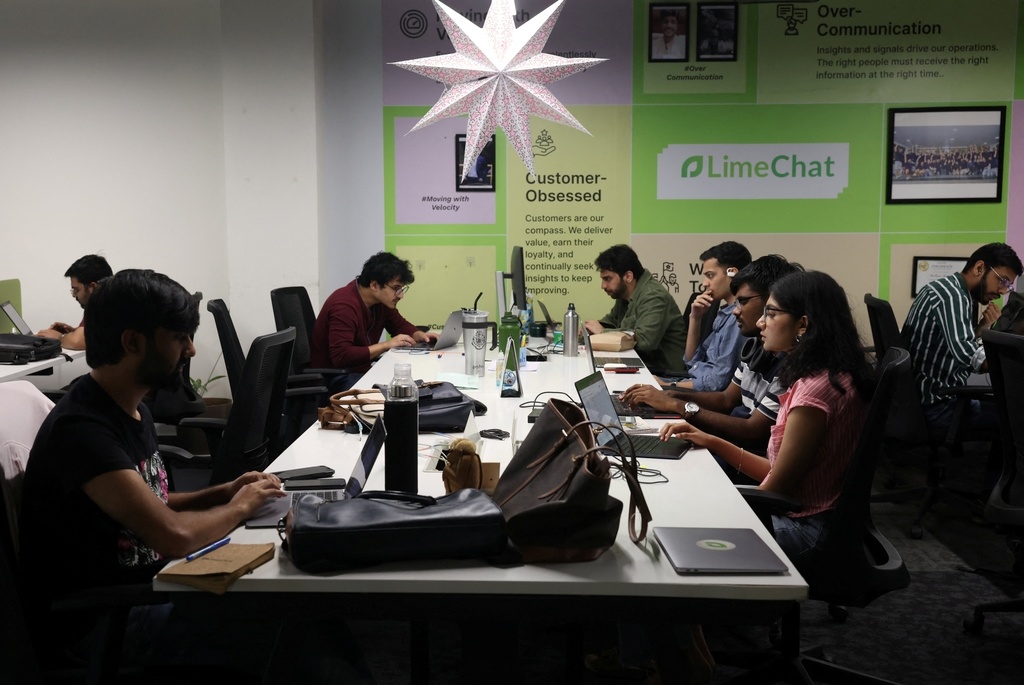
财经观察:印度“AI蓝领”抢走美国白领饭碗?
Huan Qiu Shi Bao· 2025-12-11 22:41
Core Insights - The rapid development of artificial intelligence (AI) is reshaping employment landscapes in both the West and East, replacing some low-skill jobs while creating new opportunities, particularly in India [1] - In the U.S., anxiety among younger generations is prompting a shift towards blue-collar jobs to avoid being replaced by AI, contrasting with the rise of white-collar jobs in India's smaller cities [1] Group 1: AI Impact on Employment - AI data annotation roles are emerging as significant employment opportunities in India, with companies like Objectways adapting to new demands for personalized data [3][4] - The average salary for AI data annotators in India is significantly higher than local averages, with entry-level positions earning around $200 per month, and managerial roles reaching up to $1,000 [3] - The Indian AI data annotation industry is projected to grow substantially, potentially employing 1 million workers by 2030, with a market size expected to reach $7 billion [8] Group 2: U.S. Employment Challenges - In November, U.S. companies announced 71,000 layoffs, a 24% increase year-over-year, with AI contributing to 6,280 job losses [5] - A survey indicated that 59% of U.S. youth view AI as a significant threat to their employment prospects, with 23% considering it a major threat [6] - Many young Americans are opting for blue-collar jobs, such as plumbing and electrical work, which are perceived as less susceptible to automation compared to traditional white-collar roles [7] Group 3: Outsourcing Trends - The trend of outsourcing AI-related jobs to countries like India is expected to continue, driven by cost advantages and the need for skilled labor [8][10] - U.S. companies are increasingly expanding their teams in Asia, with a 32% growth in offshore employees from 2019 to 2024 [8] - The disparity in employment impacts between the U.S. and India is attributed to differences in labor costs, economic structures, and the nature of job roles being replaced by AI [10][12]
如何缓解越来越严重的AI焦虑?
Hu Xiu· 2025-05-30 05:41
Core Insights - The article discusses the growing anxiety related to AI advancements and the pressure to keep up with rapid technological changes [5][50]. - It highlights the difference in perspectives between content creators and general users, where creators feel overwhelmed by the need to stay relevant [29][30]. Group 1: Personal Experience with AI Anxiety - The author expresses a deep sense of fatigue and anxiety over the past months, feeling increasingly disconnected from the excitement surrounding new AI tools [6][11]. - There is a notable shift in enthusiasm for new AI models, with the author feeling a lack of desire to engage with them as before [13][15]. - The author experiences self-doubt and compares their abilities unfavorably to peers, leading to heightened anxiety [16][18]. Group 2: Understanding the Source of Anxiety - The anxiety stems from a fear of being left behind in a rapidly evolving field and a struggle with self-acceptance regarding one's capabilities [38][39]. - The article emphasizes that the core of this anxiety is the fear of obsolescence and the pressure to outperform others [37][40]. - It suggests that many individuals, not just content creators, are experiencing similar feelings of anxiety due to societal pressures and media narratives about AI [50][54]. Group 3: Recommendations for Managing AI Anxiety - The author proposes that individuals should focus on their unique strengths and avoid blindly following trends, which can lead to unnecessary anxiety [58][61]. - It is recommended to shift the mindset from anxiety to curiosity regarding AI, allowing for a more balanced approach to learning and engagement with technology [62][63]. - The article concludes with a call for maintaining curiosity and collaboration rather than competition, suggesting that finding a supportive community can alleviate feelings of isolation and anxiety [49][64].
聊聊如何缓解越来越严重的AI焦虑。
数字生命卡兹克· 2025-05-29 23:17
Core Viewpoint - The article discusses the pervasive anxiety surrounding AI advancements, highlighting the emotional toll it takes on individuals in the industry and the need for a shift in mindset towards curiosity rather than competition [4][32]. Group 1: Personal Experience with AI Anxiety - The author expresses a deepening sense of anxiety over the past couple of months, feeling overwhelmed despite maintaining a facade of normalcy [6][8]. - There is a growing fear of falling behind in the rapidly evolving AI landscape, leading to feelings of inadequacy compared to peers [10][11]. - The author reflects on the contrast between the excitement of general users and the anxiety felt by content creators, stemming from a fear of not being able to keep up with advancements [20][21]. Group 2: Understanding the Source of Anxiety - The core of the anxiety is identified as a fear of obsolescence and a struggle with accepting one's own limitations in a competitive environment [27][28]. - The author acknowledges that much of the anxiety comes from a refusal to accept mediocrity and the pressure to constantly outperform others [23][24]. - The societal pressure and media narratives around AI contribute to a heightened sense of urgency and fear of being left behind [34][36]. Group 3: Recommendations for Managing AI Anxiety - It is suggested that individuals should focus on finding their unique strengths and not blindly follow trends, which can lead to a clearer sense of direction [37][39]. - Emphasizing the importance of curiosity over anxiety, the article encourages a more measured approach to learning about AI, advocating for selective engagement rather than frantic pursuit [40][41]. - The author concludes with a call for collaboration and community support, suggesting that individuals should seek out partnerships to navigate the complexities of the AI landscape together [30][32].