AI监测

Search documents
AI监测 精准识别违规直播带货
Xin Lang Cai Jing· 2026-02-05 20:15
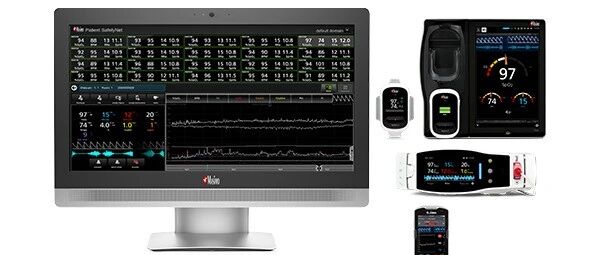
Core Viewpoint - The Chengdu Market Supervision Administration is launching an AI monitoring system for live e-commerce to enhance consumer protection and address regulatory challenges in the industry [1][3]. Group 1: AI Monitoring System - The upcoming "Live E-commerce AI Monitoring System" will effectively address regulatory challenges by providing all-day coverage of various live streaming scenarios through dual deployment on PC and mobile terminals [2]. - The system utilizes a self-built AI recognition model and a dynamically updated compliance knowledge base to form an intelligent judgment mechanism that triggers alerts upon detecting prohibited terms [2]. - It enables real-time monitoring of live streams, associated short videos, and text content, creating an intelligent regulatory loop of "monitoring—recognition—warning—disposal" [2]. Group 2: Implementation and Impact - The system has already included over 70,000 live streaming rooms registered in Chengdu across major platforms like Douyin, Kuaishou, Taobao, Xiaohongshu, and Pinduoduo [2]. - During a one-week trial run, the system identified over 30 illegal clues, primarily related to false advertising, which will be forwarded for verification and legal action [2]. - This initiative is a key measure for the Chengdu Market Supervision Administration to implement the "Live E-commerce Supervision Management Measures," supporting market order and consumer rights [3].
卫星追踪、AI监测,我国护鸟手段持续升级,记者探访→
Sou Hu Cai Jing· 2025-11-27 11:10
Core Viewpoint - During the "14th Five-Year Plan" period, China's bird protection efforts have significantly upgraded their technological methods, transitioning from extensive management to precise strategies, which has notably improved population analysis and migratory bird tracking accuracy [1]. Group 1: Technological Advancements - The introduction of satellite trackers powered by solar energy allows for real-time recording of bird location, body temperature, flight altitude, and speed, with data retrieval as fast as once per second under good lighting conditions [5]. - Over 40 bird monitoring stations in Beijing have adopted voiceprint and image recognition technology, utilizing artificial intelligence and big data analysis to monitor bird species and populations based on their appearance and sounds [7]. - Drones have emerged as a powerful auxiliary monitoring tool in complex terrains and wetlands that are difficult for humans to access [9]. Group 2: Rehabilitation and Release Efforts - A specific case involved a rescued buzzard that was rehabilitated and prepared for release during the migratory season, equipped with a satellite tracker that adheres to a global standard of not exceeding 5% of the bird's body weight [3]. - The tracking data from released birds aids in evaluating the effectiveness of rehabilitation and release efforts, providing insights into their activity patterns and habitat preferences [5].


2025股市观察|“股票实盘十倍融资”的市场逻辑与风险启示
Sou Hu Cai Jing· 2025-10-19 14:05
Core Viewpoint - The A-share market continues to experience volatility in 2025, with active alternation among technology, energy, and cyclical sectors, leading to renewed discussions on "tenfold financing" as a means to enhance return efficiency [1][3]. Group 1: Basics of Stock Trading and Financing Leverage - "Real stock trading" refers to actual securities account transactions, contrasting with virtual or simulated operations, where all financial flows, positions, and profits/losses reflect real market conditions [3]. - "Tenfold financing" allows investors to amplify their operational scale by using external funds based on their own capital, theoretically increasing returns in a bull market but also magnifying losses in unstable conditions [3][4]. Group 2: Market Position of Financing Behavior - Financing represents an efficiency in capital allocation, meeting short-term funding needs and enhancing market liquidity and trading activity [4][6]. - High leverage reduces risk tolerance; if the market fluctuates negatively, investors may face forced liquidation risks, necessitating controlled leverage use by both institutional and individual investors [6]. Group 3: Risk Identification and Control Points for Tenfold Financing - Investors view financing as a means to "amplify returns," but it is more suitable as a strategic allocation tool rather than a short-term speculative instrument [8]. - Market volatility risk: A tenfold leverage means price fluctuations are amplified tenfold, making high-leverage operations more appropriate for investors with mature trading systems and risk management capabilities [8]. - Safety of funds: "Real stock financing" must ensure account transparency, fund segregation, and traceable transactions to avoid non-compliant fund operations [8]. - Psychological and discipline risks: High leverage tests both technical skills and mindset, with a tendency for investors to develop a "gambling mentality," making it crucial to maintain discipline and rational operations [8]. Group 4: Combining Stock Investment and Financing Strategies - Starting with low leverage (1:2 or 1:3) allows investors to gradually understand market rhythms [9]. - Controlling position ratios: Individual sector or stock positions should not exceed 30% of total funds to mitigate financing risks and align with sound fund management logic [9]. Group 5: Future of the Financing Market from Regulatory and Industry Trends - The financing market is evolving towards transparency and compliance due to ongoing regulatory improvements [9]. - The application of technologies like intelligent risk control and AI monitoring will enhance the market's ability to identify high-leverage funds and provide risk warnings [9]. - Investors should focus on selecting legitimate channels and robust strategies rather than pursuing extreme leverage multiples [11]. Group 6: Conclusion - Leverage is a neutral tool in capital markets, capable of amplifying both profits and losses [11]. - "Real stock trading with tenfold financing" is not off-limits for ordinary investors, but it requires rational thinking, risk awareness, and execution discipline as prerequisites [11].

最新!两家巨头扩大合作,对国内厂商有何影响?
思宇MedTech· 2025-09-15 04:09
Core Viewpoint - The strategic collaboration between Philips and Masimo in patient monitoring signifies a shift towards integrated solutions in the medical device industry, highlighting the importance of partnerships to meet clinical demands for comprehensive healthcare solutions [1][6]. Collaboration Content and Focus - Philips and Masimo will deepen their collaboration through technology integration, focusing on enhancing patient monitoring capabilities [2]. - The partnership aims to develop next-generation patient monitoring solutions that address the clinical needs for mobility, wearability, and intelligence, incorporating AI algorithms for improved patient outcomes [5]. Product Features and Collaborative Foundations - Philips has a strong presence in multi-parameter patient monitoring devices, particularly in high-acuity settings, while Masimo specializes in non-invasive sensors and innovative monitoring parameters [4]. - Key technologies include Masimo's SET pulse oximetry technology and Radius PPG wearable sensors, which will be integrated into Philips' monitoring systems [4][5]. Insights for Domestic Manufacturers - Domestic companies often excel in specific innovations but may struggle to scale without partnerships with larger firms. Finding complementary partners to embed innovations into comprehensive solutions is crucial for growth [9]. - Mindray serves as a representative example of a domestic firm that integrates sensors, algorithms, and monitoring platforms internally, adopting a "full-stack self-research" model [9]. Areas Suitable for Collaboration - The medical device industry is moving towards systematic strategies for collaboration, emphasizing the need for integrated solutions rather than isolated innovations [6][10]. - Collaborations can enhance market efficiency, shorten the path from R&D to market, and facilitate access to reimbursement and regulatory approvals [10]. Areas Unsuitable for Collaboration - Direct competition in core devices, such as ventilators and surgical robots, may hinder collaboration due to potential dilution of competitive advantages [11]. - Areas with severe product homogeneity or conflicting business models may also present challenges for effective partnerships [11]. Future Observations - The trend of collaboration among multinational companies to quickly address market gaps may influence domestic firms to consider open partnerships in emerging fields like AI and wearable sensors [12].