AI算力自主

Search documents
壁仞科技上市首日市值破千亿,专家:市场看好中国AI算力自主长期形势
Sou Hu Cai Jing· 2026-01-02 13:17
Core Viewpoint - Wallen Technology (06082.HK) debuted on the Hong Kong Stock Exchange on January 2, 2023, with a significant opening price of HKD 35.7, reflecting an 82.14% increase, marking it as the first domestic GPU company listed in Hong Kong and the third overall in China [1][2]. Company Overview - Founded in 2019, Wallen Technology focuses on GPGPU (General-Purpose Graphics Processing Unit) chips and intelligent computing solutions, primarily generating revenue from product sales, support services, and rental income from intelligent computing clusters [2][4]. - The company has consistently recorded net losses since its inception, indicating challenges in commercializing its products and solutions [2][4]. Financial Performance - Wallen Technology's revenue for the years ending December 31 and June 30 is projected as follows: - 2022: RMB 499,000 - 2023: RMB 62.03 million - 2024: RMB 337.9 million - 2025 (first half): RMB 58.9 million - The gross profit margins are expected to decline from 100% in 2022 to 31.9% by mid-2025, with cumulative losses exceeding RMB 6.3 billion [4][5]. - The company heavily relies on a few major clients, with revenue from the top five clients accounting for 98.1% in 2023, which poses risks of revenue volatility [5]. Market Position and Competition - Wallen Technology holds a market share of 0.16% in the Chinese intelligent computing chip market and 0.2% in the general GPU market as of 2024, with expectations to reach 0.19% by 2025 [1]. - The Chinese smart computing chip market is highly concentrated, with Nvidia and Huawei's HiSilicon accounting for 94.4% of the market share, leaving Wallen Technology and over 15 other players to compete for the remaining share [1][2]. Research and Development - The company has incurred substantial R&D expenses, totaling RMB 10.18 billion in 2022, RMB 8.86 billion in 2023, and projected RMB 8.27 billion in 2024, which constitutes a significant portion of its total operating expenses [5][6]. - As of mid-2025, Wallen Technology employs 657 R&D personnel, representing 83% of its workforce, with a majority holding advanced degrees and significant industry experience [5][6]. IPO and Future Plans - The IPO proceeds are primarily intended for R&D of intelligent computing solutions, commercialization efforts, and general corporate purposes, with the company aiming to leverage its technological advantages in the AI model computing power sector [6][7].


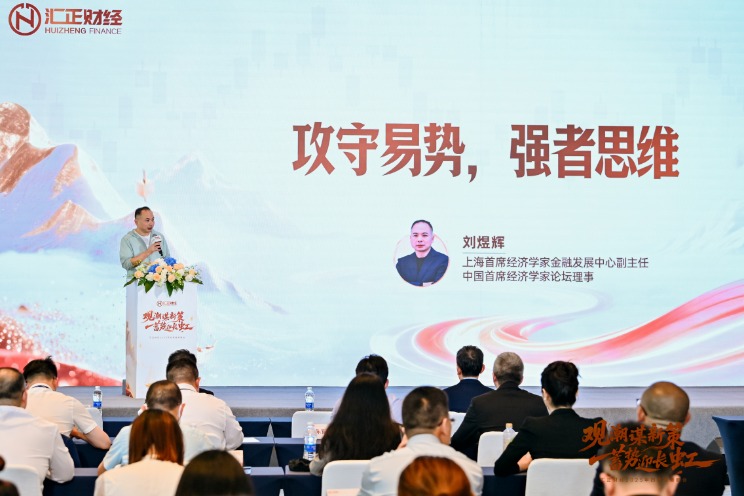
将“战略优势”转化为“战略胜势” 专家解析四季度宏观经济形势
Xin Hua Cai Jing· 2025-10-13 07:31
Core Viewpoint - The conference highlighted the current market's core contradictions and long-term opportunities, focusing on the recovery logic of the domestic economy, trends in the A-share market, and the direction of the 14th Five-Year Plan [1] Economic Indicators - Key indicators PPI and M2-M1 were emphasized, with PPI indicating a potential improvement in income and profits for component stocks, supporting the possibility of index growth [3] - The narrowing gap between M2 and M1 over the past year reflects a shift in market liquidity from stagnation to activity, providing solid support for equity assets [3] A-share Market Outlook - An optimistic outlook for the A-share market was presented, with expectations that China could transform its "strategic advantages" into "strategic victories" within three years, focusing on sectors linked to strategic advantages such as circular economy, AI computing power autonomy, and control of key materials [3][4] Financial and Monetary Reform - The importance of leveraging China's trade scale and supply chain advantages to promote the "tokenization" of core assets in the Hong Kong market was discussed, predicting that the RMB could capture 20% of global financial transactions in the next five years, reshaping the global monetary landscape and bringing incremental funds to the A-share market [3] Data as a Core Element - The next credit cycle's core element is identified as "data," with a focus on transforming data income into "credit consensus" to reconstruct balance sheets for governments, enterprises, and households, which is seen as the only solution to current fiscal and credit issues [4] Long-term Investment Strategy - The current market's short-term fluctuations are viewed as "interludes in a long-term trend," urging investors to focus on "strategic advantage sectors" rather than short-term speculation [4] - The future performance of the A-share market is expected to depend on the speed of industrial realization in these strategic sectors, emphasizing the importance of aligning with national strategies [4]
百亿元级私募机构二季度重仓五大行业个股
Zheng Quan Ri Bao· 2025-08-26 16:41
Core Insights - The latest data reveals that 27 private equity firms with over 10 billion yuan in assets have appeared in the top ten shareholders of 94 A-share listed companies, with a total holding value of 34.731 billion yuan [1] Group 1: Private Equity Holdings - In Q2, 18 companies saw increased holdings from these private equity firms, while 47 companies maintained their positions, and 10 companies experienced reduced holdings [2] - Notably, Gao Yi Asset Management reduced its stake in Hikvision (002415) by 12 million shares but still holds a significant value of 9.373 billion yuan [2] - Gao Yi Asset also increased its positions in Longbai Group (002601), Angel Yeast (600298), and Yun Aluminum (000807) by 8 million, 3.5 million, and 8.4 million shares respectively [2] Group 2: Industry Focus - The concentrated holdings of private equity firms are primarily in five sectors: electronics, pharmaceuticals, computers, machinery, and basic chemicals, with the number of heavy stocks being 15, 13, 10, 8, and 7 respectively [3] - The electronics sector is particularly favored, with firms like Dazhongquan Investment and Shanghai Ruijun Asset Management making significant investments in companies like Shengyi Technology (600183) and Yangjie Technology (300373) [3] - The pharmaceutical sector also attracted attention, with new investments in companies like Taiji Group (600129) and increased holdings in companies like Fuyuan Pharmaceutical (601089) [3] Group 3: Market Trends and Insights - The movements of these private equity firms serve as a market barometer, reflecting their insights into global macro changes and China's economic transition [4] - The focus on sectors such as electronics and pharmaceuticals aligns with government support for new productivity and technological innovation [4] - The overall market sentiment is positive, with a mild improvement in the macroeconomic environment and increased investor risk appetite, supported by liquidity in the market [5]