
AI虚假广告

Search documents
以假乱真?国家终于出手了,不仅是李梓萌被牵连,全红婵也没逃过
Xin Lang Cai Jing· 2025-11-22 09:24
Core Points - The rise of AI technology has led to its misuse in creating fake endorsements using the faces of well-known public figures, resulting in fraudulent product promotions [1][15][18] - The case of Li Zimeng, a popular CCTV host, highlights how her likeness was used to promote products falsely, leading to public confusion and financial loss [3][20][28] - The government has responded to these fraudulent activities by implementing stricter regulations and requiring real-name verification for online sellers to prevent future scams [40][42] Group 1 - AI technology is being exploited to create realistic fake endorsements, causing significant public trust issues [1][15] - Li Zimeng's image was used in deceptive marketing, leading many to believe in the legitimacy of the products being sold [3][18] - The fraudulent products, which were essentially candy, misled consumers into thinking they were legitimate health supplements [20][22] Group 2 - The incident has raised awareness about the potential dangers of AI-generated content and its implications for consumer trust [10][42] - Other public figures, such as athlete Quan Hongchan, have also been victims of similar scams, indicating a broader trend of AI misuse in marketing [30][34] - The government is taking action against these fraudulent practices, marking the Li Zimeng case as a significant example of AI-related advertising fraud [38][40]


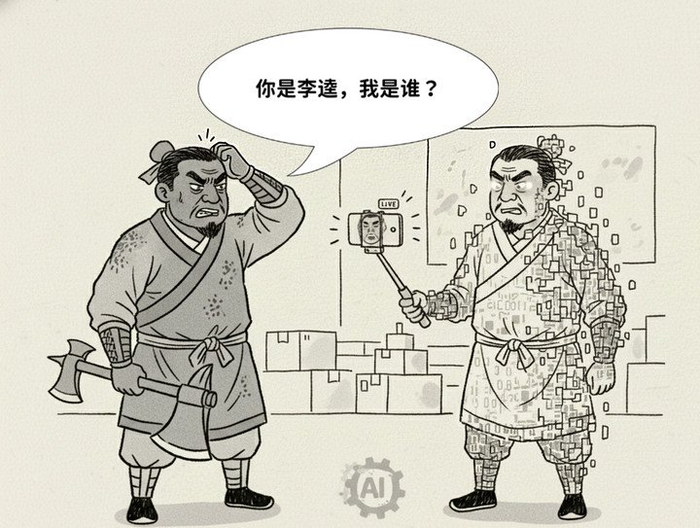
当“李逵”遇上“AI李鬼”——如何在创新与规制之间寻找平衡
Xin Lang Cai Jing· 2025-11-18 00:25
Core Viewpoint - The article discusses the challenges posed by AI-generated content, particularly in the context of advertising and the potential for misuse, highlighting the need for a balance between innovation and regulation [1]. Group 1: AI Misuse and Regulation - The case of actor Wen Zhengrong being impersonated by AI in a live broadcast raises public awareness about AI as a tool for deception [1]. - The first national fine for "AI false advertising" in Beijing signifies the urgent need to redefine the boundaries between innovation and abuse [1]. - The article emphasizes that as AI blurs the lines of authenticity, legal and regulatory frameworks must address how to ensure accountability for real content [1]. Group 2: Challenges in Implementation - The mandatory identification system for AI-generated content, effective from September 1, is not a comprehensive solution, as many non-compliant entities exploit loopholes [4][5]. - The rapid evolution of AI impersonation techniques outpaces current platform regulations, which often rely on reactive measures rather than proactive identification [5]. - High costs and lengthy processes for legal recourse deter victims from pursuing justice against AI impersonation, while offenders face minimal consequences [6]. Group 3: Platform Responsibilities - The debate on whether platforms should act as "safe harbors" or "proactive guardians" of content reflects differing views on their responsibilities in managing AI-generated content [7]. - Legal standards require platforms to move beyond passive responses to actively prevent the spread of misleading AI content [7][8]. - The distinction between "look-alikes" and actual individuals complicates the determination of liability for AI-generated content [8]. Group 4: Governance and Collaboration - The fragmented regulatory landscape complicates the enforcement of laws related to AI misuse, necessitating improved inter-departmental coordination [12]. - Local legislation can serve as a testing ground for national AI governance, allowing for practical responses to emerging risks [12][13]. - Public education on AI literacy is essential to empower individuals to discern between legitimate and deceptive AI-generated content [13][14]. Group 5: Future Directions - The article advocates for a balanced approach to AI governance that accommodates innovation while ensuring accountability [11]. - The integration of technology and legal frameworks is crucial for establishing a reliable system for managing AI-generated content [11][16]. - The future of AI governance should involve collaboration among regulators, platforms, and the public to create a trustworthy digital environment [15][16].
李梓萌遭AI仿冒带货!北京查处首例AI虚假广告案
Yang Shi Xin Wen· 2025-10-15 23:17
Core Insights - The first case of using AI technology for false advertising was investigated by Beijing's market regulatory authorities [1] - A company was reported for promoting "deep-sea polyunsaturated fish oil" as a treatment for various diseases, which was found to be misleading [1] Summary by Sections Case Details - The case originated from a consumer complaint received in February, highlighting the company's misleading claims about its product [1] - The company's live streaming account had 880,000 followers and prominently displayed medical terms suggesting the product was suitable for various health issues [1] Investigation Findings - The investigation revealed that the product in question was classified as candy and did not possess any disease treatment capabilities [1] - The image of a well-known host used in the promotional video was entirely fabricated using AI technology [1]