AI赋能材料研发

Search documents
大国博弈・新材料之战:2025三大战线突围收官,2026体系化决战蓝图
材料汇· 2026-01-17 16:02
Introduction - The article discusses the strategic importance of materials science in the context of global competition, highlighting China's transition from a passive to an active role in the new materials industry by 2025 [1][5]. Fortress Materials - The focus is on ensuring national security through the development of reliable materials for extreme environments, with key breakthroughs including the mass production of fourth-generation single crystal superalloys and the engineering application of full-depth titanium alloys for deep-sea manned submersibles [2][10]. - The fourth-generation single crystal superalloy has improved temperature resistance to over 1200°C and increased lifespan by nearly 50% compared to previous generations [10]. - Continuous silicon carbide fibers have transitioned from laboratory production to stable engineering mass production, marking a significant advancement in high-performance fiber supply chains [15][16]. Sovereign Materials - This dimension emphasizes the importance of self-sufficiency and competitiveness in critical industries such as semiconductors and high-end manufacturing [41]. - The production of 12-inch silicon wafers has seen a significant increase, with domestic supply rates expected to rise from 15% to 40% by the end of 2025, alleviating reliance on imports [46]. - Breakthroughs in photolithography materials have been achieved, with domestic companies successfully producing ArF dry photoresists and other critical materials, indicating progress in overcoming technological barriers [47][48]. Fusion Materials - This dimension focuses on interdisciplinary innovation, where materials science intersects with AI, synthetic biology, and neuroscience to create new products and industries [74]. - AI-driven platforms have been developed to enhance materials research efficiency, significantly reducing development cycles for new materials [76]. Conclusion - The article outlines a strategic roadmap for China's materials industry, emphasizing the need for integrated systems and collaborative efforts across various sectors to achieve breakthroughs in material science by 2026 [5][39].


大国基座2025:新材料三重战线的突破与2026年体系化决战
材料汇· 2025-12-31 11:27
Core Viewpoint - The article discusses the strategic transformation of China's new materials industry by 2025, emphasizing a "three-dimensional war" approach that includes "fortress materials" for national security, "sovereign materials" for technological independence, and "fusion materials" for future industry definition [3]. Group 1: Fortress Materials - The development of safety dimension materials is closely tied to national core interests, focusing on absolute reliability and performance under extreme conditions rather than cost-effectiveness [5]. - A significant breakthrough in 2025 is the mass production of the fourth-generation single crystal high-temperature alloy turbine blades, which can withstand temperatures above 1200°C and have a lifespan increased by nearly 50% compared to previous generations [8][10]. - Continuous silicon carbide fibers have transitioned from laboratory preparation to stable engineering mass production, with a production capacity of hundreds of tons, marking a strategic leap in the aerospace sector [14][15]. Group 2: Sovereign Materials - Sovereign materials focus on achieving "self-control" and enhancing industrial competitiveness, particularly in strategic sectors like semiconductors and high-end manufacturing [40]. - In the semiconductor sector, the production of 12-inch silicon wafers has reached a milestone with over 500,000 monthly shipments, and significant advancements in low-oxygen high-resistivity silicon wafer technology have been made [44]. - The domestic supply ratio of 300mm semiconductor silicon wafers is expected to increase from 15% to 40% by the end of 2025, significantly reducing reliance on imports [45]. Group 3: Fusion Materials - The fusion materials dimension represents a shift towards creating new demands and defining new products, characterized by the integration of materials science with cutting-edge fields like artificial intelligence and synthetic biology [72]. - AI-driven platforms for materials research have emerged, enabling rapid property prediction and screening, significantly reducing development cycles for critical materials [74]. - The integration of intelligent materials in robotics is evolving, allowing materials to interact with their environment and make autonomous decisions, marking a shift from passive components to intelligent structures [77].






香蜜湖金融+系列活动之“星耀鹏城”20+8产业沙龙--新材料投融资并购对接活动成功举办
Quan Jing Wang· 2025-08-13 05:51
Core Viewpoint - The event held on June 20 focused on the integration of AI in material research, lightweight materials for low-altitude economy, and solid-state batteries, highlighting the importance of these sectors in driving innovation and investment [1] Group 1: Event Overview - The event was attended by nearly 120 participants, including representatives from listed companies in the new materials industry, research institutions, venture capital firms, and specialized enterprises [1] - Experts from the Shenzhen Stock Exchange provided insights into the latest policies, while industry trends in investment and financing were discussed [1] - The event featured deep dialogues between leading companies and investment institutions, along with on-site project matching for financing and mergers [1] Group 2: Future Initiatives - The Shenzhen Listed Companies Association's Xiangmi Lake CVC Innovation Service Center has successfully hosted six sessions of the "20+8 Industry Salon," promoting collaboration among industry, technology, capital, and new production forces [1] - There are plans to continue integrating more professional resources to enhance the multi-level capital market's role in supporting the fusion of technological and industrial innovation [1]
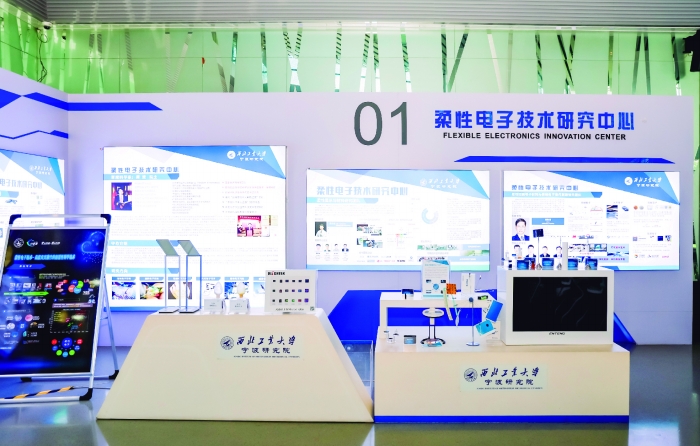
洪波“甬”起——宁波新材料从“看不见的突破”迈向“看得见的跃升”
Shang Hai Zheng Quan Bao· 2025-07-28 18:58
Core Insights - Ningbo is actively building a new ecosystem in the new materials sector by integrating capital, technology, and industry, aiming for rapid growth and innovation [8][11][14] - The city has established a robust framework for the new materials industry, with significant government support and a focus on high-tech manufacturing [9][21][25] Industry Development - Ningbo's new materials industry is recognized as one of the three major industrial clusters in the "361" modern industrial system, with a focus on chemical new materials, high-end metal alloys, and graphene [9][25] - The city has attracted 25 national-level champion enterprises and 69 specialized "little giant" companies, positioning itself as a leader in the new materials sector [9][25] - In the first half of 2025, the added value of high-tech manufacturing and equipment manufacturing in Ningbo grew by 13.1% and 6.5%, respectively, indicating strong industrial performance [21] Investment and Collaboration - Approximately 30 investors and entrepreneurs participated in a recent event to explore investment opportunities in Ningbo's new materials sector, highlighting the collaboration between government, academia, and industry [8][11] - Investment firms are increasingly interested in Ningbo due to its strong resource integration and project incubation capabilities, which are essential for attracting capital [13][14] - Several investment agreements were signed during the event, indicating a commitment to support local companies in their growth and development [12][14] Innovation and Technology - The Yongjiang Laboratory is a key player in transforming scientific research into commercial applications, focusing on overcoming the "valleys of death" in technology and industry [15][16][17] - The laboratory has introduced 23 research teams from top global institutions, achieving breakthroughs in various fields, including nanomaterials and semiconductor technologies [17][18] - Companies like Tianxuan New Materials have made significant advancements in optical interface materials, breaking foreign monopolies and achieving high production standards [22][23] Future Outlook - The new materials industry in Ningbo is expected to continue its rapid growth, driven by a combination of strong manufacturing capabilities, active investment, and supportive government policies [21][25] - There is a call for further collaboration across the supply chain to enhance the resilience and competitiveness of the industry, particularly in upstream raw materials [26]