AI Car

Search documents
雷军官宣!第50万辆正式下线
Shang Hai Zheng Quan Bao· 2025-11-20 07:00
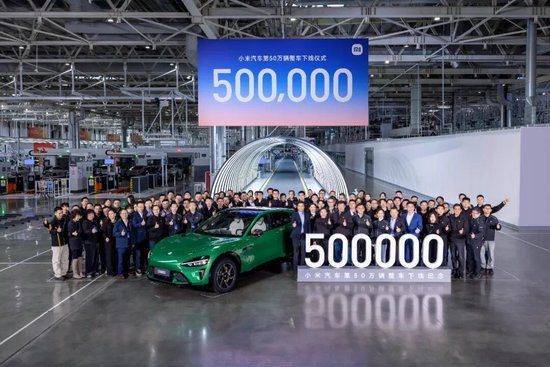
Core Insights - Xiaomi has achieved a significant milestone with the production of its 500,000th vehicle, marking a rapid growth in its automotive business within just 1 year and 7 months since the first vehicle was produced [2][4]. Group 1: Production and Delivery Milestones - The 500,000th vehicle signifies the validation of Xiaomi's complete system capabilities in research, manufacturing, sales, delivery, and service, indicating a new phase of scalability [4]. - Xiaomi aims to deliver over 400,000 vehicles in 2025, with the SU7 and YU7 models leading in sales within their respective categories in China [4]. - In Q3, Xiaomi delivered over 100,000 vehicles, achieving a record high and a year-on-year increase of 173.4%, with total deliveries exceeding 260,000 vehicles in the first three quarters of the year [4]. Group 2: Technological Advancements and Innovations - The factory employs over 1,100 production robots and has undergone 35 technical upgrades, significantly enhancing production efficiency and reducing delivery times [5]. - Xiaomi is committed to advancing safety and quality while accelerating production, with a focus on integrating AI and smart manufacturing to improve efficiency and product quality [5]. - The company plans to release a new version of its HAD (Highway Assisted Driving) system, incorporating reinforcement learning algorithms to enhance driving experience and road condition understanding [5].



小米宣布第50万辆整车下产线,雷军:今年交付超40万辆,AI Car是发展趋势
Sou Hu Cai Jing· 2025-11-20 05:18
Group 1 - The 500,000th Xiaomi car rolled off the production line at the Xiaomi Super Factory in Beijing, marking the fastest record in the electric vehicle industry for reaching this milestone in just over one year and seven months [2] - Xiaomi's founder and CEO Lei Jun stated that the achievement signifies the validation of Xiaomi's complete system capabilities in research and development, manufacturing, sales, delivery, and service, as well as consumer recognition [2] - The company initially set a delivery target of 300,000 vehicles for the year, which was later raised to 350,000, and it is expected to exceed 400,000 deliveries by the end of the year [2] Group 2 - In the third quarter, Xiaomi reported revenue of 29 billion yuan from its smart electric vehicle and AI innovation business segment, representing a year-on-year growth of over 199% [3] - The smart electric vehicle segment generated 28.3 billion yuan in revenue, with the company achieving a quarterly profit of 700 million yuan for the first time in this segment [3] - Xiaomi delivered a record 108,796 new cars in the third quarter, setting a new historical high for the company [3]
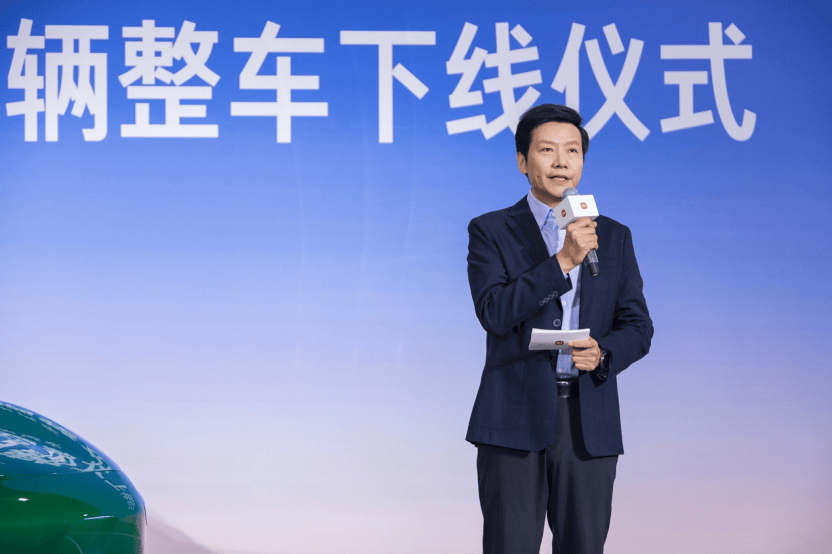
小米第50万辆汽车下线,雷军:下一步推进安全、科技创新
Sou Hu Cai Jing· 2025-11-20 04:48
Core Insights - Xiaomi Group's founder and CEO Lei Jun announced the production of the 500,000th Xiaomi car, achieved in just 1 year and 7 months, setting a record for the fastest 500,000 units produced by a global new energy vehicle company [1][3] - The company expects to deliver over 400,000 cars in 2025, having already met its initial target of 350,000 cars for the year ahead of schedule [1][3] Production and Delivery Achievements - Xiaomi delivered over 100,000 cars in Q3, marking a historical quarterly high with a year-on-year growth of 173.4% [3] - Cumulative deliveries for the first three quarters exceeded 260,000 units, with September and October seeing over 40,000 units delivered each month [3] - The automotive business achieved its first quarterly profit in Q3, generating revenue of 28.3 billion yuan [3] Market Position and Recognition - As of October, the Xiaomi SU7 ranked first in sales among domestic mid-to-large sedans for 2025, while the Xiaomi YU7 led the sales of mid-to-large SUVs for three consecutive months, topping the overall SUV sales in October [3] Manufacturing and Quality Assurance - The Xiaomi automotive factory features 98 quality inspection stations and 143 high-precision testing devices, ensuring stringent quality standards [4] - The factory employs over 1,100 production robots and has undergone 35 technical upgrades to enhance production efficiency [4] - Xiaomi's automotive production has positively impacted over 300 component suppliers in the Beijing-Tianjin-Hebei region, contributing an estimated 14 billion yuan in value [4] Future Directions - The company plans to focus on safety, technological innovation, and the integration of AI and smart manufacturing [5] - Xiaomi has committed to investing 32 to 33 billion yuan in R&D for the year, with a projected 200 billion yuan over the next five years [5] - Upcoming advancements include the release of a new version of the HAD (Highway Autonomous Driving) system, incorporating reinforcement learning algorithms to enhance driving experience and road condition understanding [5]
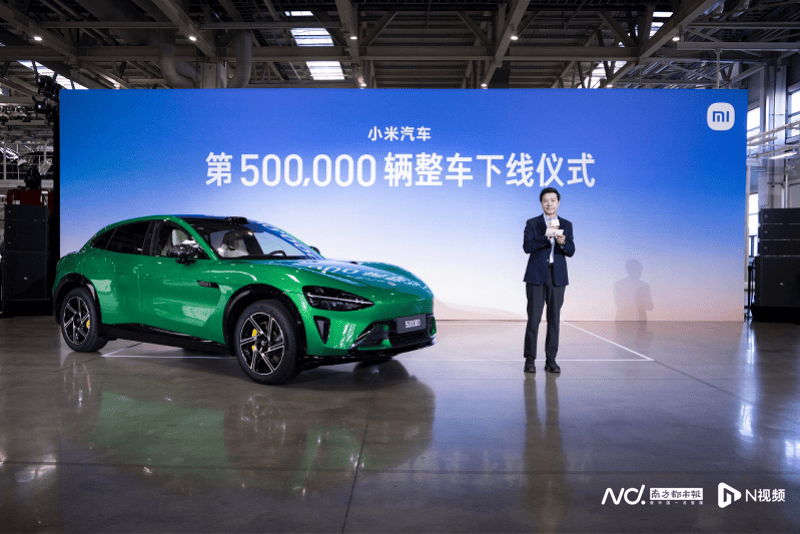
小米汽车第50万辆汽车下线,创全球最快纪录!小米集团CEO雷军最新发声:我们始终认为,安全是基础,是前提
Sou Hu Cai Jing· 2025-11-20 04:20
Core Insights - Xiaomi has achieved a significant milestone with the production of its 500,000th vehicle, marking the fastest record in the domestic new energy vehicle industry [1][3] - This achievement validates Xiaomi's capabilities across the entire automotive ecosystem, including R&D, manufacturing, sales, delivery, and service [3] - The company has seen strong consumer recognition, with its SU7 model becoming the best-selling sedan and the YU7 SUV surpassing the Model Y in sales [3] Production and Sales Performance - The production of 500,000 vehicles was accomplished in just over 1 year and 7 months, showcasing rapid growth [1][3] - Xiaomi initially set a delivery target of 300,000 vehicles for the year, which was later raised to 350,000, and the company is on track to exceed this target [3] - The latest forecast predicts that annual deliveries will exceed 400,000 vehicles by 2025 [3] Support and Collaboration - The success of Xiaomi's automotive division is attributed to the trust and support from users, partners, and suppliers [4] - The company acknowledges the critical role of its supply chain and the supportive business environment in Beijing, which fosters innovation and talent [4] Future Strategies - Xiaomi plans to focus on safety and delivery efficiency, emphasizing that safety is a foundational priority [5] - The company aims to increase its investment in technology and innovation, with R&D expenditures projected at 32 to 33 billion for the year and 200 billion over the next five years [5] - There is a commitment to integrating AI with smart manufacturing to enhance product efficiency and performance [5]
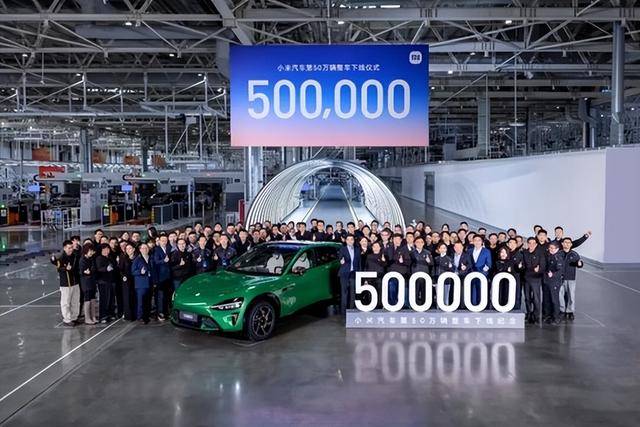
小米汽车第50万辆汽车下线,创全球最快纪录!小米集团CEO雷军最新发声:我们始终认为,安全是基础,安全是前提
Sou Hu Cai Jing· 2025-11-20 04:14
Core Insights - Xiaomi has achieved a significant milestone by rolling out its 500,000th vehicle, marking the fastest record in the domestic automotive industry, taking just over 1 year and 7 months to reach this figure [1][3] Group 1: Production and Sales Achievements - The achievement of 500,000 vehicles signifies the validation of Xiaomi's capabilities across the entire automotive ecosystem, including R&D, manufacturing, sales, delivery, and service [4] - The Xiaomi SU7 has become the best-selling sedan in the past year with over 200,000 units sold, while the Xiaomi YU7, which began deliveries in July, has become the best-selling SUV, surpassing the Model Y in the Chinese market [4] - The company initially set a delivery target of 300,000 vehicles for the year, which was later raised to 350,000, and it is expected to meet this target ahead of schedule [4] Group 2: Acknowledgments and Support - Xiaomi expresses gratitude to its users, partners, and the supportive environment in Beijing, which has contributed to its rapid growth in the automotive sector [5] - The company acknowledges the crucial role of suppliers in achieving production capacity and the importance of collaboration within the supply chain [5] Group 3: Future Plans and Innovations - Xiaomi plans to focus on safety and delivery, emphasizing that safety is the foundation for all operations [6] - The company aims to increase its investment in technology and innovation, with a projected R&D expenditure of 32 to 33 billion for the year and an anticipated 200 billion over the next five years [6] - There is a commitment to integrating AI with smart manufacturing, with upcoming advancements in assisted driving technology expected to enhance user experience [6]