AI4S概念

Search documents
刚刚,A股突变!三大原因!
天天基金网· 2026-01-20 05:21
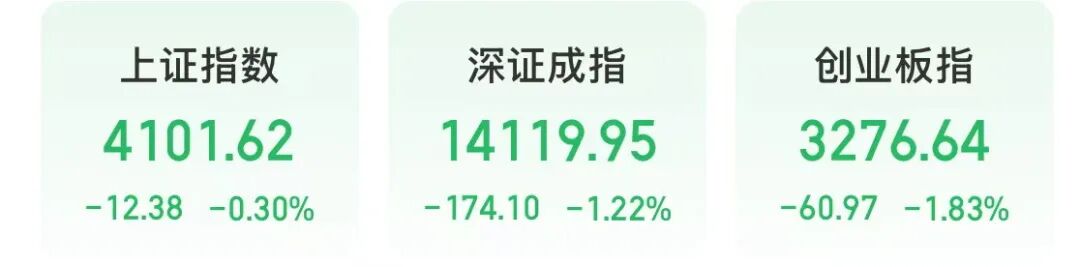
Market Overview - The Shanghai Composite Index experienced significant fluctuations, dropping below 4100 points and later recovering slightly, with a maximum decline of over 0.8% [2] - The Shenzhen Component Index fell by 1.22%, and the ChiNext Index decreased by 1.83% by the close of the morning session [4] Market Influences - Concerns over the performance of US markets following the Martin Luther King Jr. Day holiday contributed to negative sentiment in the Asia-Pacific markets [2] - A report indicated that the US will impose a 10% tariff on goods from several European countries starting February 1, which added to market anxiety [2] - A notable decline in market liquidity was observed, with the A-share market's financing balance decreasing by 8.5 billion yuan to 27,059 billion yuan as of January 19 [2] Consumer Sector Performance - The consumer sector showed strong performance, with significant gains in beauty care, food processing, and liquor sectors [6] - The stock of Pop Mart surged after announcing a share buyback of approximately 251 million HKD, positively impacting market sentiment towards new consumption [8] - Recent government policies aimed at boosting domestic consumption were highlighted, including plans to enhance service consumption and address supply-demand imbalances [8][9] AI Sector Activity - The AI for Science (AI4S) concept saw active trading, with leading stocks like Zhizhi New Materials rising over 17% [11] - Analysts noted that advancements in AI model capabilities are accelerating the commercialization of AI applications, particularly in scientific research [11] - The competition among major AI model providers for market share is expected to intensify, creating growth opportunities across various sectors [11]


A股调整 三大原因
Zhong Guo Zheng Quan Bao· 2026-01-20 05:03
Market Overview - The Shanghai Composite Index experienced significant volatility, dropping below 4100 points with a maximum decline of over 0.8%, before narrowing its losses [1] - The technology sector faced a pullback, particularly in the computing industry chain, while sectors such as consumer goods, high-dividend assets, and chemicals saw gains [1] Market Fluctuation Reasons - The U.S. stock market was closed on Martin Luther King Jr. Day, leading to concerns about its performance upon reopening, which negatively impacted the Asia-Pacific markets [2] - A notable decrease in market liquidity was observed, with the A-share market's financing balance reported at 27,059 billion yuan, down 8.5 billion yuan from the previous day, ending a 10-day increase [2] - The commercial aerospace concept has cooled down, contributing to the overall market decline, with the Shanghai Composite Index down 0.3%, Shenzhen Component Index down 1.22%, and ChiNext Index down 1.83% [3] Consumer Sector Activity - The consumer sector showed strong performance, with significant gains in beauty care, food processing, and liquor manufacturing [6] - The stock of Pop Mart surged, positively influencing the new consumption sector. On January 19, Pop Mart announced a repurchase of 1.4 million shares for approximately 251 million HKD, with prices ranging from 177.7 HKD to 181.2 HKD per share [7] - Recent favorable policies have been released, including a meeting on January 16 focused on boosting consumption and a commitment to expand domestic demand [8] - Analysts suggest that the consumer sector is in a phase of "policy catalysis + peak season drive," with opportunities in essential and discretionary consumption expected to continue improving [9] AI for Science Sector - The AI for Science (AI4S) concept saw active performance, with leading stocks like Zhizhi New Materials rising over 17%, alongside significant gains in other related stocks [11] - Analysts from CITIC Securities noted that advancements in model capabilities and cost reductions are accelerating the commercialization of AI applications [11] - Open Source Securities highlighted the competitive landscape among major AI model companies, suggesting that the commercialization of AI applications could open up growth opportunities across various sectors [11]
ETF盘中资讯|AI应用,为何大爆发?重仓软件开发行业的——信创ETF基金(562030)飙涨7%,三六零等8股涨停!
Jin Rong Jie· 2026-01-12 06:56
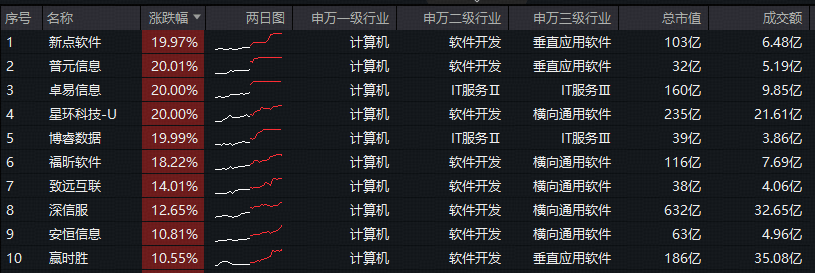
Group 1 - The core viewpoint of the news is the significant surge in AI application stocks, with multiple companies experiencing substantial price increases, indicating a strong market interest in AI technologies [1][3]. - The recent strong performance of domestic large model companies MiniMax and Zhipu after their listings in Hong Kong signals the successful "capital closure" of domestic large models, marking the beginning of the "commercial value realization" in AI applications [3]. - Three new hotspots in the AI application field have emerged: AI for Science (AI4S), Generative Engine Optimization (GEO), and AI in healthcare, with notable developments such as OpenAI's launch of "ChatGPT Health" and the rapid user growth of "Ant Financial's" health feature [3]. Group 2 - Guojin Securities recommends four key directions in AI applications: super entry points, AI infrastructure, high growth sectors, and high barrier industries, emphasizing the commercial potential of AI technologies in various fields [4]. - The current geopolitical climate and the trend towards self-sufficiency in technology have increased the urgency for domestic innovation, supported by government initiatives and the need for national security [7]. - The 信创 ETF fund, which tracks the 中证信创 index, has seen significant price increases, reflecting strong market interest in the domestic innovation sector, particularly in software development [5][7].


三大利好突袭!狂掀涨停潮!
天天基金网· 2026-01-12 05:18
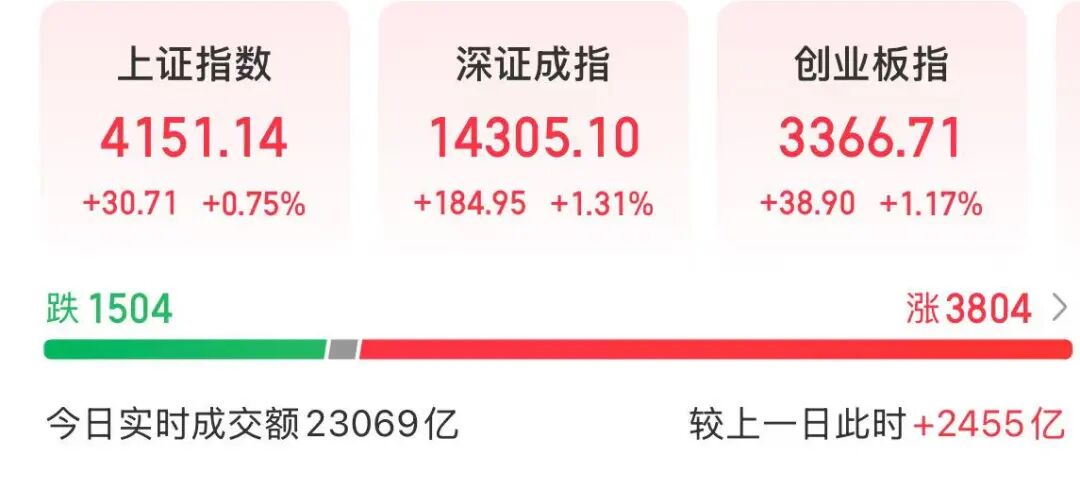
Core Viewpoint - The article highlights a significant shift in market dynamics, with AI application stocks experiencing a major surge while AI hardware stocks decline, indicating a potential turning point in investment focus towards AI applications [2][5][12]. AI Application Surge - AI application sectors, including Sora concept, AI+ marketing, and AI intelligent agents, saw substantial gains, with leading stocks like BlueFocus and Kunlun Wanwei hitting "20CM" limit up, and BlueFocus achieving a transaction volume of 193.2 billion yuan, the highest in A-shares [5][6]. - The market is establishing a dual mainline structure of "AI applications and commercial aerospace," with the Shanghai Composite Index rising by 0.75% and the Shenzhen Component Index by 1.31% [2][5]. Reasons for AI Application Growth - The recent strong performance of major model companies MiniMax and Zhipu, which have listed on the Hong Kong Stock Exchange, is seen as a key factor for the surge, providing a critical anchor for industry valuation and financing [7]. - Three new hotspots in the AI application field have emerged: 1. AI4S (AI for Science) with stocks like Zhizhi New Materials hitting "20CM" limit up and a year-to-date increase of over 198% [8]. 2. GEO (Generative Engine Optimization) focusing on optimizing content for AI search, marking a shift in user behavior towards direct answers from AI rather than traditional search engine results [8]. 3. AI+ healthcare, with OpenAI launching "ChatGPT Health" and significant user engagement reported by Ant Group's "Antifufu" [9]. Future Outlook for AI Applications - 2026 is anticipated to be a pivotal year for AI applications, with expectations of a "golden year" driven by technological maturity, supportive policies, and market demand [12]. - Key investment directions include: 1. Super entry points where large models become dominant traffic sources. 2. AI infrastructure focusing on software-defined computing. 3. High-growth areas in marketing and media leveraging AI capabilities. 4. High barriers in sectors like healthcare and manufacturing due to data and workflow integration [12].





今天,AI应用爆发
Zhong Guo Zheng Quan Bao· 2026-01-12 04:47
Core Viewpoint - The AI application sector has experienced a significant surge, marking a shift in market dynamics, while AI hardware stocks have seen a decline, indicating a potential reallocation of investor interest towards AI applications [1][4][7]. Group 1: AI Application Performance - The AI application sector saw a major breakout, with key stocks like BlueFocus and Kunlun Wanwei hitting the "20CM" limit up, and BlueFocus achieving a transaction volume of 19.32 billion yuan, the highest in A-shares [1][4]. - New stocks in the AI application space, such as Yidian Tianxia, Vision China, and Tianlong Group, also reached their daily limit up, indicating strong market interest [1]. - The overall market established a dual focus on "AI applications and commercial aerospace," with the Shanghai Composite Index rising by 0.75% and the Shenzhen Component Index by 1.31% [1]. Group 2: Reasons for AI Application Surge - The recent strong performance of major model companies MiniMax and Zhipu, which have listed on the Hong Kong Stock Exchange, has provided a critical anchor for industry valuation and financing, signaling the start of "commercial value realization" in AI applications [7]. - Three new hotspots in the AI application field have emerged: AI for Science (AI4S), Generative Engine Optimization (GEO), and AI in healthcare, with significant stock performances in these areas [8][9]. - The AI application sector is expected to enter a "golden year" in 2026, driven by technological maturity, supportive policies, and increasing market demand [10][11]. Group 3: Future Outlook - Analysts predict that 2026 will be a pivotal year for AI applications, transitioning from "technical validation" to "commercial promotion," with a focus on four key areas: super entry points, AI infrastructure, high growth sectors, and high barriers in data and workflow [11].