Ghost GDP

Search documents
The week the AI scare turned real and America realized maybe it isn’t ready for what’s coming
Yahoo Finance· 2026-02-28 10:05
Core Viewpoint - The narrative surrounding AI's impact on employment is shifting from speculation to reality, with significant layoffs occurring in the tech sector, indicating that the AI transition may be more immediate and disruptive than previously thought [1][5]. Group 1: AI and Employment Impact - Block CEO Jack Dorsey announced a 40% workforce reduction, attributing the change to advancements in intelligence tools, which led to a nearly 14% rise in Block's stock the following day [2]. - The Citrini Research report warned of a "global intelligence crisis," predicting a "human intelligence displacement spiral" where AI could replace numerous jobs, leading to high unemployment and a potential economic collapse [3]. - Matt Shumer's essay on X.com compared the current situation to the pre-pandemic environment, urging white-collar workers to reconsider their job security in light of AI advancements [4]. Group 2: Economic Analysis and Predictions - Veteran macroeconomic analyst Albert Edwards highlighted that the AI crisis is not a future concern but is already affecting the economy, with consumer incomes stagnating during a period of "greedflation" [6][7]. - Laks Ganapathi's research suggested a "vibecession," forecasting high unemployment and persistent inflation, indicating a disconnect between economic data and reality, exacerbated by AI [9][10]. - Citadel Securities and Morgan Stanley provided counterarguments to the doomsday narrative, suggesting that AI will create new roles rather than eliminate jobs, with demand for software engineers increasing by 11% year-over-year [11][12]. Group 3: Future Job Landscape - The emergence of new roles such as "Chief AI Officer" and specialized positions like "computational geneticists" is anticipated as companies adapt to AI technologies [12]. - David Stout, CEO of webAI, argued that AI will lead to more optimized work environments rather than mass job losses, emphasizing the need for companies to reassess employee contributions [16]. - The transition to a "new-collar" economy is expected, with high-paying blue-collar jobs emerging in fields related to AI infrastructure, necessitating a shift in educational focus towards vocational training [19][20].
CitriniResearch:全球智能危机的发展进程及其后果-20260226
CitriniResearch· 2026-02-26 01:45
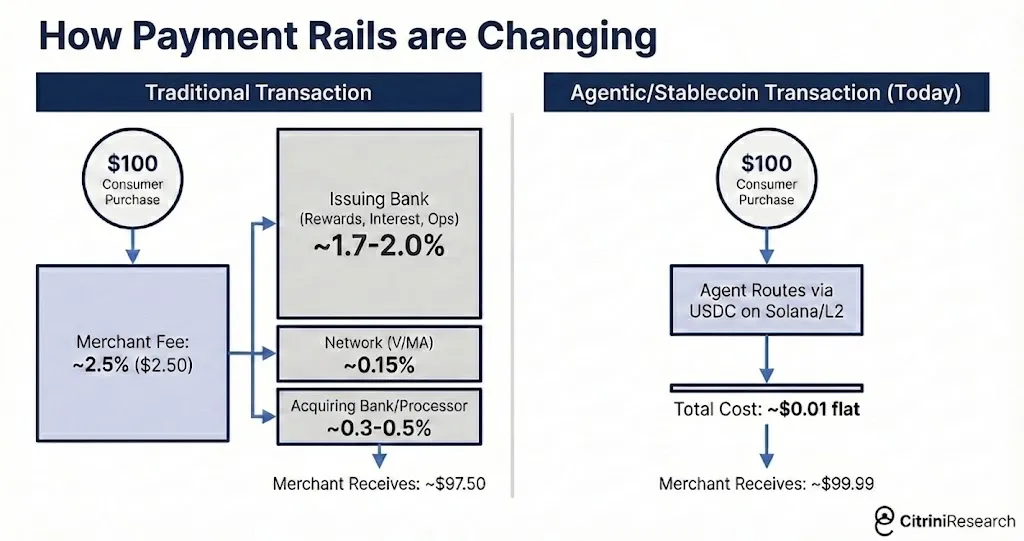
Summary of Key Points from the Conference Call Industry Overview - The macro memo discusses the implications of AI advancements on the economy, particularly focusing on the "Global Intelligence Crisis" and its effects on various sectors, especially white-collar jobs and the service economy [2][6][64]. Core Insights and Arguments - **Unemployment Rate and Market Reaction**: The unemployment rate reached 10.2%, surprising analysts by 0.3%. This led to a 2% market sell-off, with the S&P 500 experiencing a cumulative drawdown of 38% since October 2026 [6][8]. - **AI Impact on Employment**: The rapid advancement of AI led to significant layoffs in white-collar sectors, with companies reallocating profits into AI capabilities, resulting in a negative feedback loop where job losses fueled further AI investment [8][12][30]. - **Consumer Economy Decline**: The consumer economy, which constituted 70% of GDP, began to wither as AI displaced human workers, leading to a phenomenon termed "Ghost GDP," where output did not translate into real economic circulation [11][66]. - **Disruption of Business Models**: By late 2027, AI disruption threatened all business models reliant on human intermediation, leading to widespread failures among companies that profited from human friction [15][16]. - **Reflexivity in Economic Models**: The interconnected nature of businesses meant that layoffs in one sector (e.g., Fortune 500 companies) led to revenue losses in others (e.g., ServiceNow), creating a cycle of economic decline [26][27]. Additional Important Content - **Historical Context**: The memo contrasts the current AI-driven disruption with past technological innovations, arguing that unlike previous cycles, AI does not create new jobs at the same rate it displaces them [67][69]. - **Consumer Behavior Changes**: AI agents began to handle consumer decisions, optimizing transactions continuously, which fundamentally altered how consumers interacted with services and products [35][41]. - **Financial Sector Vulnerability**: The financial sector, particularly credit card companies like American Express, faced significant risks as AI-driven commerce bypassed traditional fee structures, leading to revenue declines [61][62]. - **Market Misinterpretation**: Initially, the market viewed the negative impacts of AI as sector-specific issues, failing to recognize the systemic risks posed to the broader economy [64][66]. Conclusion - The memo highlights a critical transition in the economy driven by AI, emphasizing the need for a reevaluation of economic models and the potential for systemic risks as traditional job structures and consumer behaviors are fundamentally altered by technology [64][82].
2028 年全球情报危机 --- THE 2028 GLOBAL INTELLIGENCE CRISIS
2026-02-24 14:17
Summary of Key Points from the Conference Call Industry Overview - The macro memo from CitriniResearch discusses the **Global Intelligence Crisis** and its implications on the economy, particularly focusing on the impact of AI on various sectors, especially white-collar jobs and the financial services industry [5][8]. Core Insights and Arguments - **Unemployment Rate**: The unemployment rate reached **10.2%**, a **0.3%** surprise increase, leading to a **2%** market sell-off and a cumulative **38%** drawdown in the S&P 500 since October 2026 [8]. - **Economic Transformation**: The economy has shifted dramatically in two years from a "contained" state to one that no longer resembles the familiar economic landscape, with significant layoffs and a focus on AI-driven productivity [9][10]. - **Corporate Profits and AI Investment**: Record corporate profits were reinvested into AI compute, leading to expanded margins and earnings, despite a collapse in real wage growth for white-collar workers [10][12]. - **Ghost GDP**: The term "Ghost GDP" was introduced to describe output that appears in national accounts but does not circulate in the real economy, highlighting a disconnect between AI-driven productivity and actual economic growth [13]. - **Displacement of White-Collar Workers**: The rise of AI capabilities has led to increased layoffs among white-collar workers, who are now forced into lower-paying jobs, impacting consumer spending and the mortgage market [15][61]. - **Systemic Risk**: The memo argues that the negative impacts of AI are not just sector-specific but pose systemic risks to the entire economy, as white-collar workers constitute a significant portion of employment and discretionary spending [60][61]. Important but Overlooked Content - **Agentic AI Development**: The emergence of agentic coding tools in late 2025 allowed developers to replicate SaaS products quickly, leading to significant changes in procurement and pricing negotiations [19][22]. - **Impact on SaaS Companies**: Companies like ServiceNow experienced a deceleration in new annual contract value growth from **23%** to **14%**, alongside workforce reductions, indicating a shift in the SaaS landscape due to AI [25]. - **Consumer Behavior Changes**: AI agents began to optimize consumer transactions continuously, leading to a decline in customer lifetime value and disrupting traditional business models reliant on consumer inertia [37][38]. - **Financial Services Disruption**: The financial services sector, particularly companies like American Express, faced significant challenges as AI agents bypassed traditional fee structures, leading to revenue declines [59][58]. - **Job Market Dynamics**: The JOLTS report indicated a **15%** year-over-year decline in job openings, with white-collar job postings collapsing while blue-collar openings remained stable, reflecting a significant shift in the labor market [69]. This summary encapsulates the critical insights and arguments presented in the conference call, highlighting the transformative impact of AI on the economy and the associated risks and opportunities.
The viral ‘Ghost GDP’ essay predicting a devastating AI doom loop is a warning to CEOs as they decide how much work to automate
Yahoo Finance· 2026-02-24 10:50
Group 1 - The essay "The 2028 Global Intelligence Crisis" explores a future where AI boosts profits but leads to job losses and stagnant wages, creating a "Ghost GDP" phenomenon [1] - There is a significant gap between corporate profits and worker pay, with predictions of job losses across various sectors, including tech and office work [1] - CEOs are increasingly focused on using AI to redesign work processes rather than merely reducing headcount, with companies like Cognizant and IBM planning to hire more junior workers [2] Group 2 - The economy is undergoing shifts that necessitate changes in business models, with AI optimizing costs and eliminating inefficiencies [3] - The concept of "Agentic commerce" suggests that traditional business models relying on human friction will be undermined by AI's capabilities [3] - Current market reactions include a drop in European markets due to the implementation of tariffs, indicating broader economic concerns [4]

The great AI scare sell-off is still permeating Wall Street; a speculative blog from the not-so-distant future stands as the latest culprit
The Market Online· 2026-02-24 00:56
Core Viewpoint - The ongoing tech sell-off in the U.S. is significantly influenced by developments in AI, with IBM experiencing its steepest drop in history, reflecting broader market concerns about the tech sector's sustainability amidst AI advancements [1][5]. Group 1: Market Dynamics - The tech sector is under pressure, with a notable sell-off driven by fears that AI advancements are cannibalizing traditional tech stocks [2][3]. - FAANG ETFs and software stocks like Salesforce and Adobe are among the first to feel the impact, indicating a broader trend of U.S. investors divesting from tech [3][9]. - The consumer discretionary, tech, and financial sub-indices of the S&P 500 remain negative year-to-date, highlighting the rapid growth of investor fears [9]. Group 2: AI Developments - IBM's recent price action is linked to the emergence of AI programs like Anthropic's 'Claude,' which are seen as potential competitors to existing software solutions [5][9]. - Agentic AI, which can autonomously create code and fulfill roles traditionally held by humans, poses a significant threat to companies like Adobe and Salesforce, potentially reducing their revenue from SaaS contracts [6][9]. - The speculative nature of AI's impact on the economy is underscored by a report suggesting that AI could lead to a 'Ghost GDP,' where economic activity does not translate into consumer spending [14][15]. Group 3: Speculative Insights - A speculative blog post titled "The 2028 Global Intelligence Crisis" has contributed to market panic, suggesting that AI disruption could lead to a collapse in labor GDP and the mortgage market [11][12]. - The report's narrative resonates with existing market fears, indicating a consensus view among investors regarding the potential negative implications of AI on the economy [12][15]. - The concept of a 'Ghost GDP' suggests that while investments in AI may increase, they do not benefit the workforce, leading to decreased consumer spending and economic downturn [14][15].


‘Ghost GDP,’ a white-collar recession, and the death of friction: Substack’s top finance writer warns of the 2028 AI crisis nobody sees coming
Yahoo Finance· 2026-02-23 16:30
Core Argument - The memo outlines a dystopian economic scenario driven by aggressive AI adoption, leading to record corporate profits but ultimately resulting in mass layoffs and a hollowed-out consumer base, termed "ghost GDP" [1] Group 1: Economic Impact of AI - AI adoption is expected to create "ghost GDP," inflating national accounts without benefiting the real economy, as machines do not spend money on discretionary goods [1] - The displacement of human intelligence, which has historically been a scarce input in the economy, is anticipated to lead to a contraction in consumer spending and a negative feedback loop of further AI cost-cutting measures [2][3] - The rapid unwinding of the "intelligence premium" could lead to a systemic financial crisis, with significant impacts on the $13 trillion residential mortgage market and the private credit market [4][5] Group 2: Labor Market Disruption - The fallout from AI adoption is expected to disproportionately affect white-collar workers, who constitute 50% of U.S. employment and drive approximately 75% of discretionary spending, potentially leading to a national unemployment rate of 10.2% and a 38% crash in the S&P 500 [3] - High-earning professionals may be forced into gig economy roles, flooding the labor supply and driving down wages across the economy [3] Group 3: Human Adaptability and Economic Reallocation - While the scenario presents significant challenges, it may overlook human adaptability and institutional responses that could mitigate the impacts of AI-induced displacement [6] - Historical trends suggest that productivity gains from technology often lead to the reallocation of value rather than its destruction, potentially creating new industries and consumer behaviors [7] - The notion that AI will eliminate entire categories of work may overstate the value humans place on complexity and the need for trust and human connection in various services [8] Group 4: Future Job Market Predictions - Predictions indicate that while AI may eliminate 92 million jobs by 2030, it could also create 170 million new roles in a more frictionless economy, emphasizing the importance of human adaptability in navigating this transition [10]
来自“2028年6月的研究报告”:当AI超越预期,经济却崩了
Hua Er Jie Jian Wen· 2026-02-23 03:53
Core Insights - The macro memo from CitriniResearch and Alap Shah presents a hypothetical scenario where AI surpasses optimistic expectations but does not necessarily benefit assets and the economy. Instead, it may lead to a contraction in demand and financial repricing due to the displacement of labor income and consumption cycles [1][2] Economic Impact - The memo outlines a scenario where the U.S. unemployment rate rises to 10.2%, 0.3 percentage points higher than expected, leading to a 2% market drop and a 38% cumulative decline in the S&P 500 from its peak in October 2026 [1] - The report describes a "Ghost GDP" phenomenon, where output is recorded in national accounts but fails to circulate in the real economy due to the displacement of white-collar jobs by AI [1][2] Labor Market Dynamics - The initial wave of layoffs in early 2026, driven by AI advancements, results in cost reductions and increased profit margins, leading to a temporary stock market surge. However, this is followed by a decline in real wage growth and a shrinking consumer base, which constitutes about 70% of GDP [2][3] - The memo emphasizes that the wealth generated from AI primarily benefits the owners of computational power, while labor income declines, leading to a negative feedback loop in the economy [2] Software Industry Disruption - The software sector is identified as the first domino to fall, with the emergence of programming tools that allow companies to replicate mid-tier SaaS products, prompting procurement managers to reconsider vendor contracts [3] - The competitive landscape shifts as companies increasingly opt for self-built solutions, leading to price wars and eroding traditional competitive advantages [3] Corporate Responses - Companies facing AI disruption are noted to adopt aggressive self-rescue strategies rather than resisting change, leading to a cycle of layoffs and reinvestment in AI tools [4] - The memo highlights a case where ServiceNow experiences a significant drop in annual contract value growth and announces layoffs, reflecting the direct impact of AI on employment and revenue [4] Financial Sector Vulnerabilities - The memo discusses the rapid growth of private credit, which has increased from under $1 trillion in 2015 to over $2.5 trillion by 2026, with a significant portion directed towards software and tech LBOs [13] - The potential for defaults in software-backed loans is highlighted, with specific examples of companies like Zendesk facing severe financial distress [13] Housing Market Risks - The U.S. residential mortgage market, valued at approximately $13 trillion, faces risks as AI-driven changes lead to structural shifts in income expectations, undermining the reliability of borrower cash flows [15] - Early signs of mortgage stress are observed, with increasing defaults in high-tech job markets, indicating a potential crisis brewing in the housing sector [15][16] Policy Challenges - The memo critiques traditional policy tools, suggesting that while they may address financial issues, they fail to remedy the underlying economic problems caused by the devaluation of human labor [17] - The report anticipates a significant decline in federal revenue due to the structural changes in labor income, leading to discussions around new economic policies to address these challenges [18] Societal Implications - The memo notes rising social tensions, exemplified by protests against tech companies, indicating that the pace of institutional change is lagging behind technological advancements [19] - The report concludes with a warning about the need for a new economic framework to adapt to the changing landscape driven by AI, emphasizing the importance of reassessing traditional cash flow assumptions [20]