Workflow
Global Growth
icon
Search documents
全球基金经理调查-现金持有激增,股票资产未现恐慌抛售-Global Fund Manager Survey-Cash surge but no equity capitulation
2026-03-18 02:27
Summary of BofA Global Fund Manager Survey - March 2026 Industry Overview - The survey reflects the sentiment of global fund managers regarding macroeconomic conditions, asset allocation, and investment strategies in March 2026. Key Points Macro Economic Sentiment - Global growth optimism has significantly decreased, with only 7% of investors expecting a stronger economy, down from 39% in February 2026 [doc id='2'][doc id='13'] - Inflation expectations have surged, with 45% of investors anticipating higher global CPI in the next 12 months, up from 9% last month [doc id='23'][doc id='104'] - The probability of a hard landing for the economy is perceived to be low at 5%, while 46% expect "no landing" and 44% anticipate a "soft landing" [doc id='20'][doc id='18'] Risk Factors - Geopolitical tensions and inflation have replaced the AI bubble as the primary tail risks, with 63% of investors identifying private equity/credit as the most likely source of a systemic credit event [doc id='3'][doc id='38'] - Concerns over credit default risk have risen sharply, with 46% of investors indicating above-normal risk, the highest since April 2025 [doc id='49'] Asset Allocation Trends - Cash levels among fund managers have increased to 4.3%, marking the largest monthly increase since March 2020 [doc id='16'][doc id='14] - There has been a rotation in asset allocation from "boom" sectors like banks to "stagflation" sectors such as staples [doc id='4'] - Fund managers are currently net 34% overweight in commodities, the highest since April 2022, and net 53% overweight in emerging market equities, the highest since February 2021 [doc id='68'][doc id='160] Investment Strategies - The most crowded trades identified are "long gold" and "long global semiconductors," each at 35% [doc id='61'] - Contrarian trades suggested include long bonds and short commodities, as well as long UK and short emerging markets [doc id='5'] - Fund managers are underweight in consumer discretionary stocks, with a net 27% underweight, the lowest since December 2022 [doc id='72] Political Outlook - Investors expect the outcome of the 2026 US midterm elections to result in a Democratic House and Republican Senate, with 54% supporting this view [doc id='58] Sector Sentiment - Fund managers are most overweight in pharmaceuticals, banks, and industrials, while being underweight in consumer discretionary and insurance sectors [doc id='169'] - The sentiment towards technology remains positive, with a net 7% overweight [doc id='175] Currency Valuation - 46% of fund managers believe the US dollar is overvalued, down from 52% last month [doc id='145] Additional Insights - The survey indicates a shift in investor sentiment towards a more cautious approach, with increased cash holdings and a focus on commodities and emerging markets as potential areas for growth [doc id='4'][doc id='68] - The overall sentiment index has dropped to a six-month low, reflecting growing concerns about economic stability and inflation [doc id='9']
X @Bloomberg
Bloomberg· 2026-03-16 16:18
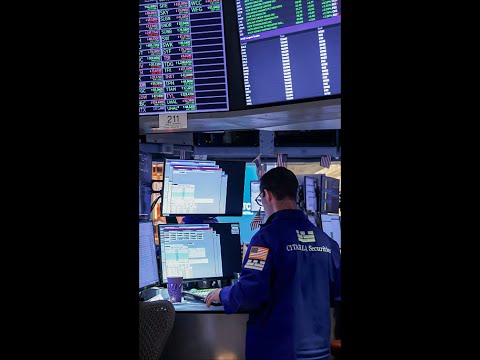
Citadel Securities dropped its bearish stance toward US Treasuries, saying markets have largely priced in the inflation risks from the surge in oil prices and are underestimating the potential damage to global growth. https://t.co/hYnU1Vt46y ...
YETI(YETI) - 2025 Q4 - Earnings Call Transcript
2026-02-19 14:02
Financial Performance - In Q4 2025, YETI delivered adjusted net sales of $583.7 million, representing a 5% year-over-year growth, marking the strongest quarterly performance of the year [30] - Adjusted net income decreased 15% to $71.8 million, with adjusted EPS declining to $0.92 from $1, impacted by higher tariff costs [35][39] - Full-year free cash flow reached $212 million, exceeding adjusted net income, highlighting the cash-generating strength of the operating model [6] Business Line Performance - Drinkware sales grew 6% to $380 million in Q4, driven by innovation and strong international demand, despite flat sales in the U.S. [30][31] - Coolers and Equipment sales increased 2% to $192 million, with strong performance in soft coolers and bags, despite supply constraints [31] - Direct-to-consumer sales grew 5% to $394 million, while wholesale sales increased 6% to $189 million, led by international performance [32] Market Performance - International sales grew 25% to $136 million, representing 23% of Q4 sales, with exceptional growth in Europe and Australia [32][38] - The international addressable market has expanded significantly, growing from 2% of sales at IPO to 21% today, with further growth expected [18][19] Company Strategy and Industry Competition - YETI's strategy focuses on product innovation, brand expansion, and global growth, with expectations of 6%-8% net sales growth in 2026 [7][37] - The company is investing in foundational technology and AI to enhance consumer engagement and operational efficiency [23] - The brand's presence is being strengthened through high-impact marketing campaigns and partnerships, particularly in international markets [14][15] Management Commentary on Operating Environment and Future Outlook - Management expressed confidence in the long-term growth trajectory, despite a cautious consumer environment, emphasizing the strength of the brand and innovation pipeline [4][7] - The company anticipates continued growth in international markets and a gradual recovery in the U.S. market, particularly in the drinkware category [37][66] Other Important Information - A leadership transition was announced, with Mike McMullen stepping down as CFO and Scott Bomar appointed as the new CFO [24][25] - The company executed $125 million in share repurchases during Q4, bringing the total for the year to approximately $300 million [6][36] Q&A Session Summary Question: Pricing and Tariffs - Inquiry about pricing increases and potential tariff relief from recent policy changes [48] - Management indicated that pricing impacts would be similar to the previous year, with no current expectations for tariff relief [49][50] Question: International Business and Brand Awareness - Request for details on foundational work for international expansion and brand awareness in various markets [53] - Management highlighted the growth from 2% to 21% in international sales and the establishment of teams in key markets [54][56] Question: Revenue Guidance - Question regarding the conservatism in international revenue guidance and drinkware expectations [58] - Management confirmed that guidance reflects cautious optimism, with inventory levels down significantly year-over-year [61] Question: U.S. Market Improvement - Inquiry about the expected improvement in the U.S. market and contributions from drinkware and international sales [65] - Management noted stabilization in the drinkware category and opportunities for growth across all categories [66][67] Question: Operating Expense Leverage - Request for context on expected operating expense leverage in the back half of the year [68] - Management explained that investments made in 2025 would start to yield leverage, with specific timing dynamics affecting the first half of 2026 [70]
YETI(YETI) - 2025 Q4 - Earnings Call Transcript
2026-02-19 14:00
Financial Data and Key Metrics Changes - In Q4 2025, the company reported adjusted net sales of $583.7 million, representing a 5% year-over-year growth, marking the strongest quarterly performance of the year [28] - Adjusted gross profit was $341 million, or 58.4% of sales, down 180 basis points year-over-year, impacted by higher tariff costs [31] - Adjusted net income decreased 15% to $71.8 million, or 12.3% of sales, with adjusted EPS declining to $0.92 from $1 [32] Business Line Data and Key Metrics Changes - Drinkware sales grew 6% to $380 million, while U.S. Drinkware sales were flat year-over-year [28][29] - Coolers and Equipment sales grew 2% to $192 million, despite supply constraints [29] - Direct-to-consumer sales grew 5% to $394 million, with growth across all D2C channels [30] Market Data and Key Metrics Changes - International sales grew 25% to $136 million, representing 23% of Q4 sales, up from 20% in the prior year [30] - Europe showed exceptional growth, particularly in the U.K. and Germany, while Australia delivered its strongest performance of the year [30][17] - The international market has grown from 2% of sales at IPO to 21% today, indicating significant expansion potential [16] Company Strategy and Development Direction - The company aims for 6%-8% net sales growth in 2026, driven by innovation and expanding global reach [6][34] - Strategic priorities include driving product innovation, broadening brand reach, and expanding globally [7][16] - The company is investing in foundational technology platforms and AI to enhance consumer engagement and operational efficiency [21] Management's Comments on Operating Environment and Future Outlook - Management expressed confidence in the long-term growth trajectory, despite a challenging consumer environment [6][7] - The company anticipates healthy growth in 2026 as new production capacity comes online [10] - Management highlighted the importance of maintaining premium positioning and protecting channel integrity [16] Other Important Information - The company executed $125 million in share repurchases during Q4, totaling approximately $300 million for the year [5][33] - A leadership transition was announced, with Scott Bomar appointed as the new CFO [22][23] Q&A Session Summary Question: Pricing and Tariffs - Inquiry about pricing increases and potential tariff relief - Management indicated pricing impacts would be similar to the previous year, with no current expectations for tariff relief [45][46] Question: International Business Foundations - Request for details on foundational work for international expansion - Management highlighted established teams in key markets and the focus on building wholesale and e-commerce capabilities [50][52] Question: Revenue Guidance Context - Inquiry about the conservatism in international revenue guidance and drinkware expectations - Management confirmed a cautious but optimistic outlook, with inventory levels down year-over-year [56][57] Question: U.S. Market Improvement - Request for context on expected sequential improvement in the U.S. market - Management noted stabilization in the drinkware category and opportunities for growth across all categories [62][63] Question: Operating Expense Leverage - Inquiry about expected inflection in operating expense leverage - Management discussed investments made in 2025 that are expected to yield leverage in 2026 [65][66]
X @Bloomberg
Bloomberg· 2026-02-13 13:26
RT QatarEconForum (@QatarEconForum)From sovereign investment to cutting-edge technology, the Middle East is reshaping the dynamics of global growth and risk.Join us in Doha May 12-14th as we as we bring together world leaders and global CEOs to examine the new balance of global power.https://t.co/lozypYA81z https://t.co/lBQyqRvsOJ ...
X @MEXC
MEXC· 2026-02-05 07:00
From global growth to zero-downtime resilience, MEXC didn’t slow down.2026 will have us MEXCmizing your infinite opportunities beyond expectations.What do you want to see us build next? https://t.co/FmacnyaVaM ...
GOAL 启动:重回看涨区间-风险偏好指标创 2021 年以来新高-GOAL Kickstart_ Back to Bullish – Risk Appetite Indicator at highest levels since 2021
2026-01-27 03:13
Summary of Key Points from the Conference Call Industry Overview - The discussion centers around the **Risk Appetite Indicator (RAI)**, which has reached its highest levels since 2021, indicating a strong risk-on sentiment in the market [1][7]. Core Insights and Arguments - The RAI reached **1.09**, marking the highest level since 2021 and the **98th percentile since 1991**. This indicates a broad risk-on repricing, with **17 out of 27 inputs** of the RAI above **0.8** in z-score terms [1][12]. - Key bullish components contributing to the elevated RAI include: - Small vs. Large cap equities - Emerging Markets (EM) vs. Developed Markets (DM) equities - Bonos spreads - AUD/JPY currency pair [1][12]. - The gold rally suggests a more cautious sentiment; excluding gold, the RAI would be nearly **1.2** [1]. - The **Global growth factor (PC1)** was identified as the main driver behind the increase in the RAI [1][42]. - Historically, elevated RAI levels have been associated with positive equity returns, particularly in the subsequent **12 months**, although returns tend to slow after about **6 months** [2][4]. - The most negative episode occurred in **May 2007**, while the most positive was in **2021**, which coincided with a prolonged period of RAI above **1** [2]. Additional Important Insights - Elevated RAI levels alone do not signal a bearish turn; a supportive macro backdrop is necessary for sustaining positive equity returns [3][4]. - The distribution of S&P 500 returns is influenced by the starting RAI level, with a higher likelihood of small corrections when starting from an RAI above **0.9** [3]. - The company maintains a **modestly pro-risk** asset allocation for **2026**, favoring equities while being underweight in credit [5][21]. - Selective options hedges are being considered for both downside and upside growth risks, with attractive spreads identified on Nasdaq/S&P 500 and call spreads on various indices [6]. Conclusion - The current market sentiment is characterized by a high risk appetite, supported by macroeconomic factors, which could lead to sustained positive equity returns. The company is strategically positioned to capitalize on this environment while managing risks through selective hedging strategies.
Investors' Picture of Global Growth Needs an Update
Barrons· 2025-12-22 16:50
Calm headline growth figures mask a realignment among emerging and developed economies, Marcello Estevão and Jonathan Fortun writes in a guest commentary. ...
RH Investors Look Beyond Q3 Miss Toward Antiques Push And Global Growth
Benzinga· 2025-12-12 18:24
Core Viewpoint - RH shares increased despite missing Q3 earnings estimates and lowering full-year guidance, indicating investor focus on long-term expansion plans rather than short-term challenges [1] Q3 Miss & Guidance Cuts - RH reported Q3 earnings of $1.71 per share, missing the analyst estimate of $2.16 by 20.87% [2] - The company narrowed its 2025 sales growth guidance to 9.0%–9.2% from a previous range of 9%–11% and cut its operating margin outlook to 11.6%–11.9% from 13%–14% [3] Revised Analyst Outlook - Analyst Cristina Fernández lowered her 2025 EPS estimate to $7.20 from $9.10, based on projected revenue of $3.47 billion [4] - For 2026, the EPS forecast was cut to $10.15 from $12.35, citing tariff headwinds and upcoming gallery openings in London and Milan [4] Strategic Pivot: RH Antiques - Despite the cuts, the company plans to launch RH Antiques in spring 2026, shifting focus to classic styles after years of modern emphasis [5] - This initiative follows the acquisition of the Michael Taylor brand and will coincide with the RH Milan opening in April, with new antique galleries planned for San Francisco, West Hollywood, and Greenwich, Connecticut [5] Strong Unit Economics - The company expects to generate $250 million to $300 million in free cash flow for 2025, with capital spending anticipated to decrease as international investments wind down [6] - RH shares were up 8.77% at $166.76 at the time of publication [6]
Bitcoin Signals “COVID-Era” Risk-Reward Setup Again: Bitwise Analyst
Yahoo Finance· 2025-11-29 10:26
Core Insights - Bitcoin's current price action is reminiscent of the extreme risk-reward environment seen during the early COVID-19 pandemic, indicating a potential asymmetric risk-reward scenario [3][4] - The cryptocurrency is perceived to be pricing in a recessionary growth environment, reflecting the most bearish global growth outlook since 2022 [4][5] - Recent price movements show Bitcoin has declined over 17% in the past 30 days, with significant sell-offs and liquidations impacting market sentiment [5][6] Market Dynamics - Bitcoin reached an all-time high of $125,100 on October 5, followed by a significant pullback after a $19 billion liquidation wave on October 10 [6] - The price dipped below $100,000, a key psychological support level, and briefly fell under $90,000 on November 20, but buyers quickly entered the market [6] - The current market setup suggests that Bitcoin is trading as if a deep economic downturn is already underway, influenced by aggressive rate tightening from the US Federal Reserve and the fallout from the FTX failure [4][5] Future Outlook - There is a belief that the current pessimism surrounding Bitcoin may be misplaced, with expectations of a rebound in global growth as previous monetary stimulus takes effect [7][9] - ARK Invest's CEO, Cathie Wood, anticipates a liquidity rebound in crypto markets driven by expected Federal Reserve policy shifts before year-end [8]