
H+A模式

Search documents
人形机器人第一股优必选16.65亿收购锋龙股份,创新“H+A”模式背后的产业链整合与两地资本市场联动
Ge Long Hui· 2025-12-31 00:56
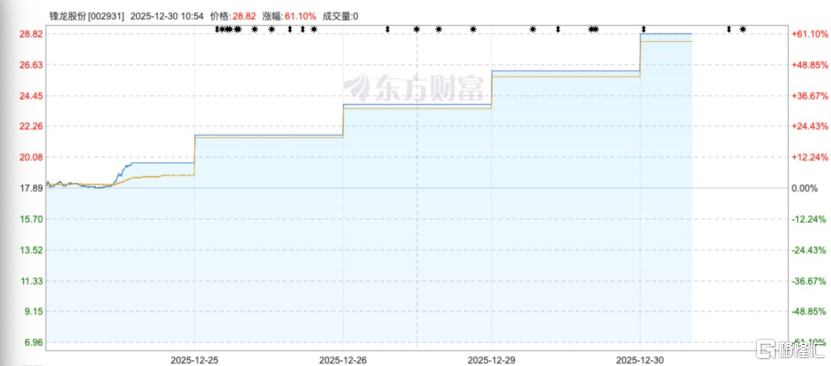
Core Viewpoint - The acquisition of approximately 43% of Fenglong Co., Ltd. by UBTECH Robotics through a combination of "agreement transfer + tender offer" is a strategic move aimed at vertical integration and capital governance optimization, aligning with regulatory policies for high-quality mergers and acquisitions [3][4][8]. Group 1: Acquisition Details - UBTECH plans to acquire about 93.96 million shares of Fenglong at a price of 17.72 CNY per share, representing a 10% discount from the last trading price of 19.68 CNY before suspension [1]. - The total consideration for the acquisition is approximately 1.665 billion CNY [1]. - Following the announcement, Fenglong's stock hit the daily limit up and achieved four consecutive trading days of limit-up, closing at 28.82 CNY per share by December 30 [1]. Group 2: Strategic Rationale - The acquisition is not merely a control transfer but a dual strategic layout that facilitates vertical integration and capital governance optimization, effectively avoiding issues like competition and interest conflicts [3][4]. - UBTECH's focus on humanoid robot development and market promotion is complemented by Fenglong's precision manufacturing capabilities, allowing for a closed-loop collaboration in production and supply [5][7]. Group 3: Governance and Compliance - The acquisition structure ensures that UBTECH's other holdings will not engage in similar business activities as Fenglong, eliminating potential competition and protecting shareholder interests [7][12]. - The funding for the acquisition is sourced entirely from UBTECH's own funds and special placements in the Hong Kong market, with no leverage financing involved, ensuring transparency and compliance with regulatory standards [10][12]. Group 4: Market and Policy Context - The acquisition aligns with the macro policy environment that supports strategic emerging industries, particularly in the context of the Guangdong-Hong Kong-Macao Greater Bay Area [14][15]. - The favorable policies for the humanoid robotics industry, including the inclusion of "embodied intelligence" in national strategic priorities, provide a strong impetus for UBTECH's growth and integration strategy [14][15]. Group 5: Future Outlook - The humanoid robotics industry is expected to transition from demonstration applications to large-scale production by 2026, with global shipments projected to exceed 50,000 units, marking a significant growth opportunity [20]. - UBTECH's acquisition is positioned to enhance its competitive edge and operational efficiency, paving the way for sustained growth and value realization in the long term [20].


★深圳有望试点红筹股二次上市 市场静待细则出台
Zheng Quan Shi Bao· 2025-07-03 01:56
Core Viewpoint - The recent issuance of the "Opinions on Deepening Reform and Innovation in the Shenzhen Comprehensive Reform Pilot" by the Central Committee and the State Council has sparked market interest, particularly regarding the policy allowing Guangdong-Hong Kong-Macao Greater Bay Area enterprises listed on the Hong Kong Stock Exchange to also list on the Shenzhen Stock Exchange [1] Group 1: Policy Implications - The "H+A" policy is seen as a key measure for financial collaboration in the Greater Bay Area, enhancing investor confidence in China's capital markets and technology assets [1][2] - The policy is expected to facilitate the return of high-quality technology companies from Hong Kong to A-shares, promoting high-quality development in China's capital markets [1][2] - The Shenzhen Stock Exchange is anticipated to become a more efficient listing channel for innovative enterprises through the potential trial of secondary listings for red-chip stocks [1][3] Group 2: Market Activity - The Hong Kong IPO market has seen significant activity in 2023, with an estimated 40 companies expected to go public, raising approximately HKD 1,087 billion [2] - Hong Kong's IPO fundraising accounted for 24% of the global total, while the combined share of Hong Kong and A-shares reached 33% [2] - The policy allowing Greater Bay Area enterprises to list on Shenzhen is expected to provide more diverse financing options and break existing market restrictions [2][3] Group 3: Listing Structures - The common structures for Hong Kong-listed companies include red-chip and H-share architectures, with red-chip companies being controlled by offshore registered holding companies [3] - The Shenzhen Stock Exchange has established clear standards for red-chip companies seeking secondary listings, requiring a market capitalization of at least RMB 200 billion [3][4] Group 4: Recommendations for Implementation - Experts suggest that detailed guidelines are needed for the return of red-chip stocks to A-shares, covering aspects such as market capitalization, profitability, corporate governance, and information disclosure [4] - Recommendations include refining standards for eligibility, promoting cross-border cooperation, and developing supporting financial instruments [4][5] Group 5: Attracting High-Tech Companies - As of June 15, 2023, there are 224 Hong Kong-listed companies based in the Greater Bay Area, with 328 companies having a market capitalization exceeding RMB 200 billion [5] - There is a call for the Shenzhen Stock Exchange to simplify the review process for high-tech companies returning from Hong Kong, potentially creating a green channel for eligible firms [5][6] - Suggestions include using non-financial metrics for listing standards for unprofitable high-tech companies and introducing a "hard technology index" to attract long-term investment [5][6]




深圳有望试点红筹股二次上市 市场静待细则出台
Zheng Quan Shi Bao· 2025-06-15 17:47
Core Viewpoint - The recent policy allowing companies from the Guangdong-Hong Kong-Macao Greater Bay Area that are listed on the Hong Kong Stock Exchange to also list on the Shenzhen Stock Exchange is seen as a significant step towards financial collaboration and enhancing investor confidence in China's capital markets [1][2]. Group 1: Policy Implications - The "H+A" model aims to enhance the integration of the Shenzhen Stock Exchange with the Hong Kong Stock Exchange, improving internationalization and resource allocation [2]. - The policy is expected to facilitate the return of high-quality technology companies from Hong Kong to the A-share market, thereby boosting investor confidence and supporting high-quality development of the capital market [1][2]. - The policy may provide a more efficient listing channel for innovative enterprises, particularly those with red-chip structures [1][4]. Group 2: Market Activity and Trends - The Hong Kong IPO market has seen significant activity, with an estimated 40 companies expected to go public in the first half of 2025, raising approximately 1,087 million HKD [2]. - Hong Kong's IPO fundraising accounted for 24% of the global total, while combined with A-shares, they represented 33% [2]. - The number of Hong Kong-listed companies based in the Greater Bay Area is 224, with 328 companies having a market capitalization exceeding 20 billion RMB [7]. Group 3: Listing Standards and Requirements - The Shenzhen Stock Exchange has set specific standards for red-chip companies seeking secondary listings, including a minimum market capitalization of 200 billion RMB and strong technological capabilities [5]. - The Growth Enterprise Market (GEM) has different criteria for red-chip companies, focusing on rapid revenue growth and a minimum market capitalization of 10 billion RMB or 5 billion RMB with certain revenue conditions [6]. - There is a need for detailed regulations regarding market capitalization, profitability, corporate governance, and investor protection for red-chip companies returning to A-shares [6]. Group 4: Recommendations for Implementation - Experts suggest refining standards for eligibility, enhancing cross-border cooperation, and developing supportive financial instruments to facilitate the return of Hong Kong-listed companies [6]. - Recommendations include establishing a "Hong Kong Return Service Center" in specific regions to support the return of companies and promote data sharing [6]. - Simplifying the review process for high-tech companies and considering non-financial metrics for listing standards are also proposed to attract more innovative firms [7].