
IP食玩

Search documents
数读「糖果、巧克力」:低糖健康、功能功效、IP食玩,是出路吗?
东京烘焙职业人· 2026-03-06 08:33
Core Insights - The article discusses the challenges faced by the candy and chocolate categories in the retail market, highlighting the impact of health trends and rising raw material costs on consumer preferences and pricing strategies [2][4]. Group 1: Market Overview - The candy and chocolate categories account for approximately 9% and 4% of the overall snack market, respectively, with chocolate experiencing a slight decline in market share from 2024 to 2025 [7]. - Both categories have seen negative year-on-year sales growth, with chocolate sales declining by about 7% and candy experiencing a more significant drop of over 10% [7][11]. - The overall market for snacks in traditional retail channels is shrinking, affecting all subcategories, with candy facing more severe pressure than chocolate [7][11]. Group 2: Seasonal Trends - Chocolate sales peak in the autumn and winter months due to higher caloric needs and seasonal holidays like Christmas and Valentine's Day [9]. - Candy maintains a higher quarterly market share than chocolate but has shown a noticeable decline in 2025, reflecting changing consumer preferences and a shift away from traditional candy [9][11]. Group 3: Pricing Trends - The average price per 100 grams for chocolate has been rising, influenced by increased raw material costs, while candy prices have generally declined [13][15]. - The price index for both categories has shown a trend of initial decline followed by recovery, with chocolate performing better than the overall snack category in certain periods [15][17]. Group 4: Regional Insights - In 2025, the Southwest region had the highest market share for candy, exceeding 10%, while the Northeast had the lowest at around 5.5% [17]. - Chocolate market share is higher in East China, North China, and Southwest regions, with some areas showing growth in market share from 2024 to 2025 [19]. Group 5: Market Concentration - The chocolate category has a high market concentration, with the top three brands holding over 70% of the market share, while the candy category remains fragmented with only about 20% held by the top three brands [21]. - The market share of the top ten brands in chocolate remains stable at around 80%, indicating a trend towards increased concentration in this category [21]. Group 6: Brand Dynamics - In the chocolate category, Meiji Group has shown significant sales growth of over 15%, while other brands like Mars and Ferrero have also seen positive market share growth [25][29]. - The candy category's top ten brands have all reported negative year-on-year sales growth, with Mars being the only brand exceeding 8% market share [41][45]. Group 7: Product Innovations - The article highlights the emergence of new product types such as probiotic and sugar-free candies, which are gaining traction among health-conscious consumers [46][57]. - The trend towards IP-themed products in both candy and chocolate categories is noted, with brands leveraging popular culture to enhance product appeal and pricing power [43][45].


数读「糖果、巧克力」:低糖健康、功能功效、IP食玩,是出路吗?
3 6 Ke· 2026-02-10 03:41
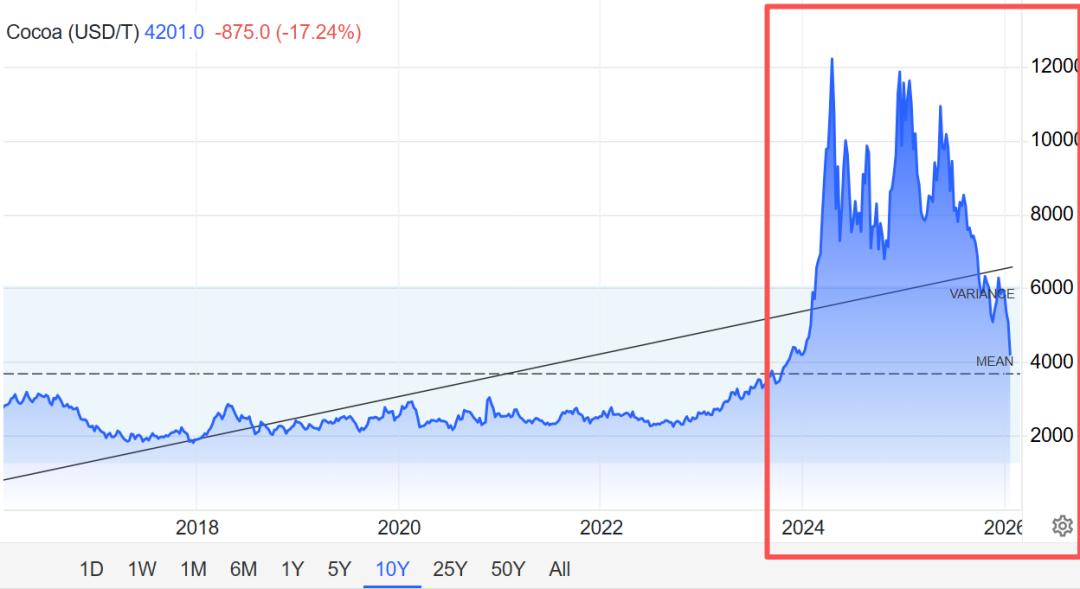
Overview - The leisure snack category, particularly candy and chocolate, has faced significant challenges in recent years due to health trends and rising raw material costs, with cocoa prices expected to remain high in 2024 and 2025, having increased several times compared to a decade ago [1][3]. Market Dynamics - In 2024 and 2025, chocolate accounts for approximately 9% of the leisure snack category, while candy holds about 4%, indicating a significant disparity [5]. - Both categories are experiencing negative sales growth, with chocolate sales declining by about 7% year-on-year, while candy's decline is more pronounced, exceeding 10% [5][9]. - The overall market for leisure snacks in traditional retail channels is shrinking, affecting all subcategories, with candy facing more severe pressure than chocolate [5][14]. Seasonal Trends - Chocolate sees higher sales in the autumn and winter months due to increased caloric needs and holiday celebrations, while candy's market share has shown a noticeable decline in 2025 [7][9]. Pricing Trends - The average price per 100 grams for chocolate has been rising, influenced by increased raw material costs, while candy prices have generally decreased [11][14]. - The price index for both chocolate and candy has shown a similar trend, with fluctuations indicating a general decline in prices for leisure snacks overall [13][14]. Regional Insights - In 2025, the market share of candy has declined across seven regions, with the Southwest region having the highest share, while the Northeast has the lowest [16]. - Chocolate's market share is higher in East China, North China, and Southwest regions, with some regions showing growth in 2025 compared to 2024 [17]. Market Concentration - The chocolate category has a high market concentration, with the top three companies holding over 70% of the market share, which is expected to increase further [19]. - In contrast, the candy category has a much lower concentration, with the top three companies holding only about 20% of the market share, indicating a fragmented market [19]. Brand Performance - Among chocolate brands, Meiji has shown significant sales growth, while Mars maintains the largest market share [22][27]. - In the candy sector, all top ten companies reported negative sales growth, with Mars being the only one exceeding 8% market share [36][42]. Product Trends - The chocolate category is seeing a rise in the number of SKUs, particularly in milk chocolate, while the market share of nostalgic products like M&Ms is declining [30][33]. - In the candy category, products like pressed candy and sugar-free options are gaining traction, but traditional candy faces challenges in maintaining market share [43][50]. Future Outlook - The candy and chocolate sectors are expected to evolve with a focus on health-oriented products and innovative marketing strategies, such as IP branding, to enhance consumer appeal and pricing power [53].

金添动漫IPO:零食+玩具+IP能否促成好生意?
Hua Er Jie Jian Wen· 2025-12-01 15:13
Core Insights - The "food-toy" segment, which combines snacks with toys, is gaining traction in the competitive IP consumer goods market, driven by the increasing attention on IP industries in China [1][2]. Market Overview - The Chinese IP food-toy market is projected to grow from 5.9 billion yuan in 2020 to 11.5 billion yuan by 2024, with a compound annual growth rate (CAGR) of 19.6% [3]. - Guangdong Jintian Animation Co., Ltd. (Jintian Animation) is a leading player in this sector, holding a 7.6% market share and achieving revenues of 877 million yuan in 2024, with a CAGR exceeding 20% over the past three years [3]. Business Model - The integration of IP, snacks, and toys leverages emotional value through low-cost, high-frequency consumption, enhancing product playability and collectability [3]. - Jintian Animation's reliance on IP licensing presents both opportunities for premium pricing and risks of homogenization and weak control [4]. Company Dynamics - Jintian Animation has a significant relationship with Shanghai Xinchanghua Cultural Development Co., Ltd. (Xinchanghua), a key player in domestic IP licensing, which has supported Jintian's growth through its association with popular IPs like Ultraman and Detective Conan [6][9]. - The company's revenue structure is evolving, with a notable increase in revenue from the My Little Pony IP, which surged nearly fourfold in 2024, becoming the second-largest contributor to the company's income [12][13]. Financial Performance - Despite the growth in IP revenue, Jintian Animation faces challenges, including a 17% decline in revenue from its largest IP, Ultraman, in the first half of 2025, and a slowdown in overall revenue growth to below 10% [14]. - The company's gross margin of 33.7% is lower compared to competitors in the snack industry, indicating limited pricing power [17]. Strategic Initiatives - Jintian Animation aims to diversify its IP portfolio to enhance operational stability, as consumer preferences for IPs can shift rapidly [15]. - The company has expanded its IP portfolio to 26 licensed IPs, significantly above the industry average of 4-6 [16]. Channel Strategy - The importance of distribution channels is shifting, with direct sales channels gaining prominence as traditional distribution channels decline in significance [22]. - Jintian Animation is focusing on expanding its direct sales and e-commerce channels, including collaborations with popular snack brands for promotional activities [25][29]. Future Outlook - The company plans to develop proprietary IP and explore new channels, including international markets, to support its growth strategy [29]. - The success of these initiatives remains uncertain, as they are still in the early stages of implementation [29].