休闲零食

Search documents
食品饮料行业研究:春糖平稳收官,持续关注业绩窗口期稳健型配置
SINOLINK SECURITIES· 2026-03-29 08:24
Investment Rating - The report maintains a positive outlook on the liquor sector, particularly for high-end brands and companies with strong market positions, suggesting a favorable investment environment in the current market conditions [1][2][10]. Core Insights - The liquor industry is transitioning from a peak to a quieter sales period, with expectations for overall sales in 2026 to remain flat or slightly decline year-on-year. However, the price levels are expected to stabilize despite potential risks of price drops during the off-season [1][10]. - Companies are focusing on inventory reduction and maintaining price stability while adapting to new trends such as lower alcohol content products. The industry is anticipated to stabilize in the second half of 2026 due to a low base effect [1][11]. - The report highlights the potential for recovery in the liquor sector, driven by improving consumer sentiment and economic conditions, particularly as policies aimed at reducing competition and improving return on equity (ROE) are implemented [1][11]. Summary by Sections Liquor Sector - The report indicates that the liquor industry is currently in a "downward trend slowing" phase, with expectations for gradual stabilization as the market adjusts to previous consumption restrictions [11]. - Recommendations include focusing on high-end brands with strong market positions, such as Guizhou Moutai and Wuliangye, as well as companies benefiting from robust consumer demand and regional consumption upgrades [2][11]. - The report also suggests monitoring the performance of beer and yellow wine sectors, which are expected to show resilience and potential growth due to evolving consumer preferences and market dynamics [12][11]. Snack Foods - The snack food sector is experiencing accelerated new product launches and expansion, with strong growth anticipated in March due to favorable seasonal factors and increased store openings [3][13]. - Companies like Wancheng Group and Yanjinpuzi are recommended for their strong fundamentals and potential for valuation recovery as market sentiment improves [3][13]. Soft Drinks - The soft drink sector is entering a peak season with slight improvements in demand, although it faces pressure from rising packaging costs. The report emphasizes the importance of supply chain management and product innovation for leading companies [14][15]. Condiments - Despite a slowdown in demand, the condiment sector is expected to see price increases, with leading companies like Haitian and Angel Yeast showing strong performance and resilience against cost pressures [16][17].





春糖平稳收官,持续关注业绩窗口期稳健型配置
SINOLINK SECURITIES· 2026-03-29 06:03
Investment Rating - The report maintains a positive outlook on the liquor sector, particularly recommending high-end brands with strong market positions such as Guizhou Moutai and Wuliangye, as well as regional leaders benefiting from robust consumer demand [1][2][11] Core Insights - The liquor industry is transitioning from a peak to a quieter sales period in March, with expectations for overall sales in 2026 to remain flat or slightly decline year-on-year. The pricing environment may face downward pressure during the off-season, but inventory reduction efforts are expected to limit the extent of any price drops [1][10] - The report highlights the importance of inventory management and price stability as key strategies for liquor companies in the short term. It anticipates that the performance of listed liquor companies in Q4 2025 and Q1 2026 will mirror the inventory clearance rates seen in Q3 2025, with a potential stabilization phase in the second half of 2026 [1][10][11] - The report suggests that the current market conditions present a favorable investment opportunity in the liquor sector, especially as external risk factors create volatility. Indicators such as PPI and M1 are seen as leading signals for liquor demand [1][11] Summary by Sections Liquor Sector - The report discusses the liquor sector's performance, noting a shift from peak sales to a quieter period in March, with expectations for 2026 sales to be flat or slightly down. The pricing environment may face risks of decline during the off-season, but inventory reduction efforts are expected to mitigate significant price drops [1][10] - It emphasizes the strategies of inventory management and price stability as crucial for liquor companies, predicting that Q4 2025 and Q1 2026 performance will reflect similar inventory clearance rates as Q3 2025, with a stabilization phase anticipated in H2 2026 [1][10][11] - The report identifies high-end brands with strong market positions and regional leaders as key investment opportunities, alongside companies with potential for cyclical recovery and innovative product offerings [2][11] Beer Sector - The beer sector is expected to maintain a stable outlook, with demand recovering in dining and on-premise consumption. Companies are diversifying into non-drink channels and soft drinks, which may enhance their performance [2][12] - The report suggests that the beer industry's competitive landscape remains robust, with good earnings visibility and dividend levels, making it a sector to watch [2][12] Snack Foods - The snack food sector is experiencing accelerated new product launches and expansion, with strong growth expected in March. The report recommends companies with solid fundamentals, such as Wancheng Group and Yanjinpuzi, as potential growth stocks [3][13] - The report notes that the Spring Festival has set a solid foundation for Q1, with significant revenue growth observed in snack retail channels [3][13] Condiments - The condiment sector is showing signs of stabilization despite a dip in demand, with expectations for price increases. The report highlights leading companies like Haitian and Angel Yeast as having the ability to pass on costs effectively [4][16] - The report indicates that the condiment sector is well-positioned to benefit from the recovery in the restaurant chain, with a focus on companies that can maintain pricing power [4][16]

食品饮料-筑底接近尾声-聚焦高质量增长
2026-03-22 14:35
Summary of Key Points from Conference Call Records Industry Overview: Food and Beverage Sector - The food and beverage sector is nearing a bottoming phase, focusing on high-quality growth as of 2026 [1] - The sector's valuation and institutional holdings are at historical lows, with a notable improvement in consumption during the 2026 Spring Festival [1][2] - The beverage and liquor sales are showing signs of recovery, driven by an 8% increase in cross-regional personnel movement [1][3] Key Insights on Specific Segments Liquor Sector - The liquor sector is expected to see a report clearing phase in April 2026, with a gradual recovery anticipated from May onwards due to low base effects from 2025 [1][4] - High-end liquor brands like Moutai and Wuliangye are experiencing double-digit growth during the Spring Festival, with Moutai's price rising from 1,500 to 1,700 RMB [1][6] - The competitive landscape is shifting, with high-end brands expanding their consumer base while putting pressure on mid-range competitors [6] Soft Drinks - The soft drink industry is witnessing structural changes, with a decline in sugary drinks and growth in healthier options like sugar-free tea and functional beverages [10] - The market share of Nongfu Spring's sugar-free tea has reached 79.8%, indicating a strong trend towards health-oriented products [10][11] Snack Foods - The snack food sector is transitioning to a dual oligopoly, with significant growth in discount snack channels [1][8] - The focus for 2026 will shift from rapid store expansion to improving profitability as the market matures [8] Dairy Products - The raw milk cycle is expected to stabilize in the second half of 2026, improving profitability for downstream dairy companies [1][13] - Long-term growth potential exists in fresh milk and cheese segments, with current penetration rates in China being significantly lower than in mature markets [14][15] Frozen Foods - The frozen food sector is recovering from previous price wars, with a focus on new product launches and channel expansion [16] - The introduction of national standards for prepared dishes is expected to further standardize the industry [16] Beer Industry - The beer sector is experiencing a slowdown in high-end product growth, with the 6-10 RMB price range becoming the main focus for upgrades [18][19] - The overall beer market is expected to remain flat, with a slight increase in profits due to improved cost efficiency [19] Health Supplements - The health supplement market is seeing a decline in concentration due to the rise of content e-commerce, with the CR5 dropping from 32% in 2015 to 26% in 2024 [20] - Major companies are adapting by increasing their presence in emerging online channels, potentially reversing the trend of declining concentration [20] Additional Observations - The overall consumer sentiment remains cautious, with a preference for high-value products in various categories [1][8] - The shift towards healthier options across multiple segments indicates a long-term trend that companies need to adapt to in their product offerings and marketing strategies [10][11][20]
食品饮料行业研究:步入业绩窗口期,关注稳健型a标的配置价值
SINOLINK SECURITIES· 2026-03-22 12:12
Investment Rating - The report suggests a positive outlook for the liquor sector, particularly for high-end brands like Guizhou Moutai and Wuliangye, indicating a favorable investment environment in the current market conditions [1][10][11]. Core Insights - The liquor industry is entering a clear "de-stocking" phase, with performance improvements expected in Q4 2025 and Q1 2026, particularly for second-tier brands and those with strong alpha attributes [1][10]. - The report highlights the potential for a stabilization phase in H2 2026 due to low base effects, with a focus on brands that have strong market positioning and robust demand resilience [1][11]. - The beer sector is experiencing steady recovery in on-premise consumption, with companies diversifying into non-drink channels and soft drinks, suggesting a stable outlook for the industry [2][11]. - The yellow wine industry is witnessing a trend towards premiumization and market promotion, with leading brands enhancing their marketing capabilities [2][12]. - The snack food sector is expanding rapidly, with significant growth in store openings and new product launches, indicating a strong market performance [2][12]. Summary by Sections Liquor Sector - The report indicates that liquor companies have begun to clear inventory since Q3 2025, with expectations for continued performance improvement into early 2026 [1][10]. - Specific recommendations include focusing on high-end brands with strong market positions and those benefiting from consumer demand trends [1][11]. Beer Sector - The beer industry is expected to maintain a stable outlook, with recovery in restaurant consumption and a focus on diversified product offerings [2][11]. Yellow Wine Sector - The yellow wine industry is moving towards a big product strategy and premiumization, with leading brands enhancing their marketing efforts [2][12]. Snack Food Sector - The snack food industry is experiencing rapid growth, with a solid foundation established in early 2026 and significant expansion in store openings [2][12]. Soft Drinks - The soft drink sector is seeing slight improvements in demand, although facing pressure from rising packaging costs [3][15]. Condiments - The condiment industry is stabilizing, with improvements in consumer demand and the ability to pass on cost increases to consumers [4][15].
鸣鸣很忙20260316
2026-03-18 02:31
Company and Industry Summary Company Overview - The company is the largest snack wholesale retailer in China, with approximately 19,000 stores as of Q3 2025, expected to exceed 20,000 by November 2025. [5] - The company has experienced significant growth, with GMV reaching 661 billion yuan in the first three quarters of 2025, a year-on-year increase of over 70%. [5] - The company has undergone three development phases: initial store model refinement and regional exploration (2017-2019), rapid expansion (2021-2023), and industry consolidation starting in 2023. [5] - The company is controlled by founders Yan Zhou and Zhao Jing, holding about 45% of the shares, with a young management team averaging 35-40 years old. [5] Financial Performance - Revenue is projected to grow from 43 billion yuan in 2022 to approximately 400 billion yuan in 2024, with Q3 2025 revenue reaching 460 billion yuan. [6] - Net profit is expected to rise from 0.72 billion yuan in 2022 to 8.34 billion yuan in 2024, with a CAGR of 241%. [6] - In Q3 2025, net profit reached 15.6 billion yuan, a year-on-year increase of 216%, indicating that profit growth outpaces revenue growth due to scale effects. [6] Industry Dynamics - The snack food retail market is projected to grow from 29 trillion yuan in 2019 to 37 trillion yuan in 2024, with an annual growth rate of 5-6%. [8] - The market is seeing a shift towards snack wholesale stores, particularly in lower-tier cities, which are viewed as a consumption upgrade. [8] - The competitive landscape is characterized by a high concentration of major players, with the company holding a 1.5% market share in the snack food sector, ranking first in GMV at 555 billion yuan. [8] Competitive Positioning - The company has a slight edge over its competitor Wanchen, with a 4% decline in single-store revenue compared to Wanchen's 10% decline in 2025. [14] - The company's store closure rate improved to 1.1% in 2025, compared to Wanchen's 1.9%, indicating stronger operational stability. [14] - The company is expanding into new store formats and product categories, including "discount supermarkets" and IP co-branded products, to meet diverse consumer needs. [16] Self-Brand Development - The company has a significant opportunity to develop its private label brands, currently at about 5% market share, compared to 20-40% in the US and Europe. [10][11] - The company has begun launching private label products, including milk and frozen goods, with plans to increase the share of private labels in its offerings. [17] - The company aims to enhance consumer trust through strict production standards and transparency in the manufacturing process. [17] Future Projections - The company is expected to add approximately 3,000 new stores annually, with revenue projected to reach 855 billion yuan in 2026, a year-on-year increase of over 30%. [18] - Net profit for 2026 is forecasted at 31 billion yuan, reflecting a 40% increase, indicating substantial growth potential in both revenue and profit. [18]
企业扎堆卖凤爪背后,毛利率可超过60%?
36氪· 2026-03-17 13:35
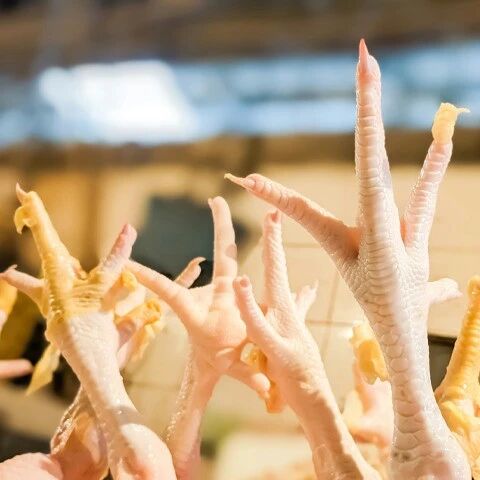
Core Viewpoint - The article highlights the recent scandal involving chicken feet products from Sichuan Shufu Xiang Food Co., Ltd. and Chongqing Zengqiao Food Co., Ltd., which were found to use hydrogen peroxide for bleaching, posing health risks to consumers [4][5]. Group 1: Company Background - Sichuan Shufu Xiang was established in 1997 and has a registered capital of 23.8 million RMB, involved in food production and sales [11]. - Chongqing Zengqiao Food, founded in April 2003, is a well-known agricultural product processing enterprise in Chongqing, recognized as a key national leading enterprise in agricultural industrialization [8]. - The brand "Guai Xifu" under Chongqing Zengqiao Food achieved annual sales of 400 million RMB in 2021 [9]. Group 2: Market Dynamics - The Chinese chicken feet snack market is projected to grow, with a forecasted market size of 34.96 billion RMB by 2025 [5][13]. - The competition in the chicken feet market is intense, leading some companies to take risks, such as using harmful substances to reduce costs [17]. - The profitability of chicken feet products is high, with gross margins exceeding 60% for some brands [15]. Group 3: Consumer Impact - Following the exposure of the bleaching scandal, consumers have shown increased concern, particularly regarding the "Guai Xifu" brand, leading to inquiries about product safety [5]. - The scandal has resulted in the removal of the implicated brands from major e-commerce platforms [4].


食品饮料行业研究持续关注顺周期及餐饮链配置契机
SINOLINK SECURITIES· 2026-03-09 00:40
Investment Rating - The report maintains a positive outlook on the white liquor sector, indicating a potential for recovery and growth in the coming months, particularly for high-end brands like Guizhou Moutai and Wuliangye [2][12]. Core Insights - The report highlights that the recent fluctuations in the price of Feitian Moutai are primarily due to seasonal demand changes and market sentiment rather than significant supply-demand shifts. It suggests that the industry is in a phase of price stabilization and is expected to gradually transition to a bottoming phase [2][11]. - The white liquor sector is viewed as having considerable investment value, especially during periods of market volatility influenced by external risks. The report anticipates that demand indicators such as PPI and M1 will provide forward-looking signals for the sector [12]. - The report emphasizes the importance of brand strength and market positioning, recommending investments in high-end liquor brands and companies with strong distribution channels and innovative product offerings [3][12]. Summary by Sections White Liquor - The report notes that the price of Feitian Moutai has recently fluctuated, with a current price around 1600 yuan, reflecting typical seasonal patterns. The overall sentiment in the market is expected to stabilize as the industry approaches a low base period [2][11]. - It suggests that the white liquor industry is transitioning to a "bottoming out" phase, with potential improvements in consumer spending and corporate profitability expected to support this trend [12]. Beer - The beer sector is experiencing a gradual recovery in on-premise consumption, with companies diversifying into non-drink channels and soft drinks. The report recommends continued attention to beer companies due to their solid performance and dividend levels [3][12]. Snack Foods - The snack food sector is expanding with new channels and product innovations, maintaining high growth potential. The report recommends companies like Wancheng Group and Weilong for their strong market positions and product offerings [4][13]. Soft Drinks - The soft drink sector is facing challenges due to seasonal sales declines and competition from ready-to-drink tea. However, companies like Dongpeng Beverage are highlighted for their potential in national expansion and brand development [4][13]. Seasoning Products - The seasoning industry is stabilizing after a period of intense competition, with recommendations for companies like Angel Yeast and Qianhe Flavor Industry, which are expected to benefit from cost reductions and market expansion [5][14].
数读「糖果、巧克力」:低糖健康、功能功效、IP食玩,是出路吗?
东京烘焙职业人· 2026-03-06 08:33
Core Insights - The article discusses the challenges faced by the candy and chocolate categories in the retail market, highlighting the impact of health trends and rising raw material costs on consumer preferences and pricing strategies [2][4]. Group 1: Market Overview - The candy and chocolate categories account for approximately 9% and 4% of the overall snack market, respectively, with chocolate experiencing a slight decline in market share from 2024 to 2025 [7]. - Both categories have seen negative year-on-year sales growth, with chocolate sales declining by about 7% and candy experiencing a more significant drop of over 10% [7][11]. - The overall market for snacks in traditional retail channels is shrinking, affecting all subcategories, with candy facing more severe pressure than chocolate [7][11]. Group 2: Seasonal Trends - Chocolate sales peak in the autumn and winter months due to higher caloric needs and seasonal holidays like Christmas and Valentine's Day [9]. - Candy maintains a higher quarterly market share than chocolate but has shown a noticeable decline in 2025, reflecting changing consumer preferences and a shift away from traditional candy [9][11]. Group 3: Pricing Trends - The average price per 100 grams for chocolate has been rising, influenced by increased raw material costs, while candy prices have generally declined [13][15]. - The price index for both categories has shown a trend of initial decline followed by recovery, with chocolate performing better than the overall snack category in certain periods [15][17]. Group 4: Regional Insights - In 2025, the Southwest region had the highest market share for candy, exceeding 10%, while the Northeast had the lowest at around 5.5% [17]. - Chocolate market share is higher in East China, North China, and Southwest regions, with some areas showing growth in market share from 2024 to 2025 [19]. Group 5: Market Concentration - The chocolate category has a high market concentration, with the top three brands holding over 70% of the market share, while the candy category remains fragmented with only about 20% held by the top three brands [21]. - The market share of the top ten brands in chocolate remains stable at around 80%, indicating a trend towards increased concentration in this category [21]. Group 6: Brand Dynamics - In the chocolate category, Meiji Group has shown significant sales growth of over 15%, while other brands like Mars and Ferrero have also seen positive market share growth [25][29]. - The candy category's top ten brands have all reported negative year-on-year sales growth, with Mars being the only brand exceeding 8% market share [41][45]. Group 7: Product Innovations - The article highlights the emergence of new product types such as probiotic and sugar-free candies, which are gaining traction among health-conscious consumers [46][57]. - The trend towards IP-themed products in both candy and chocolate categories is noted, with brands leveraging popular culture to enhance product appeal and pricing power [43][45].

卫龙美味20260303
2026-03-04 14:17
Summary of the Conference Call for Weilong Delicious Company Overview - **Company Name**: Weilong Delicious - **Industry**: Snack Food, specifically spicy snacks and konjac products - **Headquarters**: Luohe, Henan Province, China - **Management**: Family-led with a stable team and diverse professional managers Key Points 2026 Performance Expectations - **Revenue Growth**: Expected to increase by 15%-20% in 2026, with the spicy snack business turning profitable and konjac business experiencing high growth [2] - **Profit Growth**: Anticipated to outpace revenue growth due to scale effects and cost benefits [2] Profitability Recovery Variables - **Cost Reduction**: Significant decrease in konjac raw material costs expected in 2026, alongside an increase in high-margin vegetable products and efficiency gains from new factories [2][3] - **Gross Margin Improvement**: Potential for gross margin recovery due to the above factors [2] Product Matrix and Competitive Landscape - **Vegetable Products**: Now the largest business segment with a gross margin of 46.6% in H1 2025 [2] - **Market Share**: Konjac snacks have a CR3 of 75%, with Weilong holding over 50% market share, but facing competition from brands like Salted Fish [2] Channel Strategy and Market Penetration - **Distribution Network**: Over 580,000 offline coverage points, with SKU per point increasing from 9.6-12.5 to 16-22.8 [2][14] - **Focus on Emerging Markets**: Targeting faster-growing lower-tier markets and specialty snack stores [2] Product Innovation Trends - **Flavor Preferences**: Spicy flavor remains dominant (>35%), with sesame flavor rapidly rising (>25%) [2][11] - **New Product Launches**: Plans to introduce new flavors like sesame and porcini in 2026 [2][5] Shareholder Returns and Valuation Support - **Free Cash Flow Improvement**: Significant improvement expected as capital expenditure peaks, with a high dividend payout ratio likely to continue [2][4] - **Valuation Potential**: Projected PE ratio below 15 times for 2026, indicating room for valuation recovery [2][19] Cost Structure and Gross Margin Levels - **Cost Composition**: Raw materials account for approximately 28.2% of costs, with a downward trend in packaging and employee benefits [6] - **Gross Margin Levels**: Vegetable products have the highest gross margin, with improvements expected in 2026 due to lower konjac costs [6] Capacity and Utilization Trends - **Production Capacity**: Annualized capacity close to 190,000 tons, with room for further utilization improvement [7] Competitive Landscape in Spicy Snacks and Konjac - **Market Dynamics**: Weilong leads in most provinces for spicy snacks, while konjac products maintain a strong competitive position [8][9][10] Industry Trends and Market Size - **Market Size**: The spicy snack market in China is expected to exceed 270 billion by 2026, with a projected industry size of 63.4 billion by 2025 [10] - **Price Trends**: The industry is experiencing pressure with "volume and price declines" [10] Overseas Market Potential - **International Growth**: Overseas revenue around 50 million, with significant growth potential in Southeast Asia [18] Investment Outlook - **Revenue and Profit Growth**: Anticipated growth of 15%-20% in revenue for 2026, with profit growth expected to exceed revenue growth due to scale effects [19] This summary encapsulates the key insights from the conference call, highlighting the company's strategic direction, market positioning, and financial outlook.
食品饮料行业周报:节后需求稳健格局优化,健康功能饮品长期向好
KAIYUAN SECURITIES· 2026-03-01 08:24
Investment Rating - The industry investment rating is "Positive" (maintained) [1] Core Viewpoints - The food and beverage industry is experiencing a recovery in sales during the Spring Festival, with structural differentiation observed. The demand for high-end liquor remains strong, particularly for brands like Moutai and Wuliangye, which have shown year-on-year sales growth. The market's resilience and channel confidence are being restored, with the price bottoming out due to continuous supply-side contraction. The current valuation of the food and beverage sector is low, with institutional holdings being relatively low, indicating high allocation value. Investment strategies suggest focusing on leading companies with strong brands and channel barriers in the liquor sector, while in the mass market, three core lines are recommended: the snack sector benefiting from channel changes, dairy and ranch sectors with potential profit elasticity, and the frozen and compound seasoning sectors linked to the recovery of the catering chain [4][11][12]. Summary by Sections Weekly Insights - The food and beverage index declined by 1.5% from February 23 to February 27, ranking 26th among 28 sectors, underperforming the CSI 300 by approximately 2.6 percentage points. The sub-sectors of prepared foods (+6.7%), beer (+2.6%), and health products (+1.2%) performed relatively well [11][13]. Market Performance - The food and beverage sector underperformed the broader market, with a 1.5% decline in the index. Notable individual stock performances included Sanquan Foods, Anjuke Foods, and Jinhwa Industrial showing significant gains, while Gujing Gong B, Dongpeng Beverage, and Gujing Gongjiu faced declines [11][13][17]. Upstream Data - Some upstream raw material prices have decreased. For instance, the price of whole milk powder in GDT auctions was $3,706 per ton, down 10.8% year-on-year. The price of fresh milk was 3.04 yuan per kilogram, down 2.3% year-on-year [15][18]. Liquor Industry Data - In mid-February, the national liquor price index fell by 0.07%. The wholesale price index for famous liquors increased by 7.26% year-on-year, indicating a stable demand for premium products [37]. Recommendations - Recommended stocks include Moutai, Shanxi Fenjiu, Ximai Foods, Weilong Delicious, and Ganyuan Foods. Moutai is focusing on sustainable development amidst shifting demand, while Shanxi Fenjiu is expected to see medium-term growth despite short-term pressures. Ximai Foods is expanding its channels, and Ganyuan Foods is anticipated to rebound after adjustments [6][40].