IPO政策调整

Search documents
“去产能”进行时 投行保代队伍缩水
Zheng Quan Shi Bao· 2025-06-30 18:14
Core Insights - The number of securities industry sponsors has decreased for the first time since the implementation of the revised "Securities Issuance and Listing Sponsorship Business Management Measures" in 2020, with a reduction of over 300 individuals in the first half of 2025 [1][2][3] Industry Trends - As of June 30, 2025, the total number of securities sponsors has dropped to 8,470, down from 8,812 at the end of 2024, marking a significant shift in the industry after five years of growth [2][3] - The decline in sponsor numbers is attributed to a tightening of IPO policies, leading to a significant reduction in the number of companies going public, with only 100 listings expected in 2024, the lowest since 2014 [3][4] Impact on Major Firms - Large securities firms have seen the most significant reductions in sponsor numbers, with firms like CITIC Securities and Guotai Junan experiencing notable decreases in their sponsor teams [4][5] - CITIC Securities reported a reduction of 53 sponsors, while Guotai Junan's team decreased by 41, reflecting the broader trend of downsizing in response to the challenging market environment [4][5] Small and Medium Firms - Smaller firms are experiencing more pronounced fluctuations in sponsor numbers due to their smaller base, with six firms reporting reductions exceeding 20% in the first half of 2025 [5] - The industry is facing a "capacity reduction" trend, with many firms restructuring and optimizing their teams in light of the current market conditions [6][7] Future Outlook - Despite the current challenges, there are indications of potential recovery in the IPO market, with regulatory bodies releasing favorable policies to support technology innovation companies [6][7] - However, firms are still cautious, with some sponsors transitioning to roles in the real economy or seeking public sector positions as they navigate the changing landscape [7]







IPO放闸吓退散户!机构却在暗中扫货
Sou Hu Cai Jing· 2025-06-18 16:32
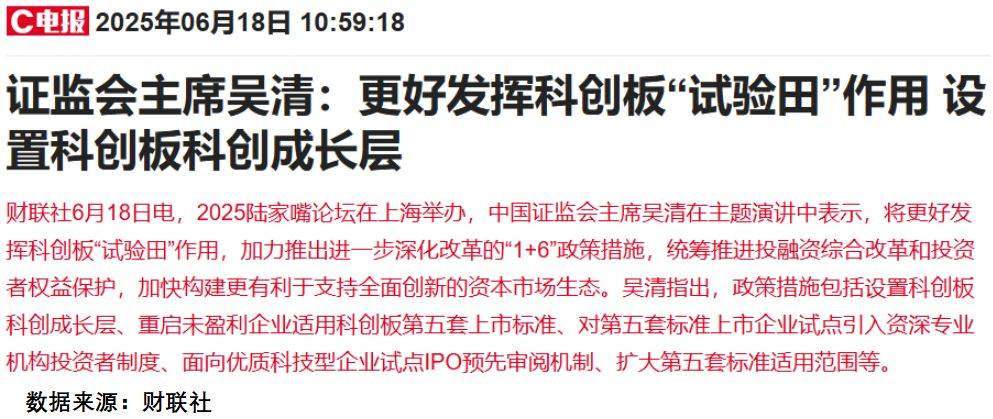
Group 1 - The core viewpoint of the article highlights the volatility of the A-share market, where stock prices fluctuate based on news and trends, leading to a perception of an "external leverage market" [1] - The recent IPO policy adjustments, specifically the introduction of a third listing standard for the ChiNext board and the establishment of a growth tier for the Sci-Tech Innovation Board, did not lead to a market decline but rather a positive closing, indicating a complex market reaction [1][2] - The selective nature of the IPO policy changes allows more technology companies in the R&D phase to access the capital market, which may lead to a reassessment of the long-term impacts of these policies by investors [2] Group 2 - The distinction between low-quality IPOs and high-potential loss-making companies is crucial, particularly in sectors like semiconductors and biomedicine, where initial losses are common due to long R&D cycles and high capital requirements [2] - Observations of trading behavior indicate significant disparities in stock performance, suggesting that relying solely on news can lead to misjudgments [4] - Stocks with sustained institutional interest tend to recover after short-term adjustments, while those experiencing outflows from institutional investors struggle to maintain upward momentum, emphasizing the importance of understanding market dynamics beyond emotional trading [8][10]