外部杠杆行情

Search documents
7月降息预期暴增,机构却用这招收割
Sou Hu Cai Jing· 2025-06-25 11:07
Group 1 - The core viewpoint of the articles is that the A-share market is heavily influenced by external news and events, leading to a situation where stock prices fluctuate based on manipulated information, creating a typical "external leverage market" [1][5] - There is a growing expectation for the Federal Reserve to cut interest rates in July, with comments from Fed officials indicating support for such a move if inflation remains moderate [4][5] - The upcoming interest rate cut window is on July 30, and if significant agreements are reached in trade negotiations, the likelihood of a rate cut could increase substantially [4] Group 2 - Despite the anticipation of a rate cut, the A-share market has shown signs of growth recently, indicating that the market can rise even without immediate Fed action [5][7] - The article emphasizes the importance of understanding institutional trading behaviors to avoid being misled by market movements, suggesting that data analysis is crucial for identifying genuine investment opportunities [7][10] - The concept of "institutional inventory" is highlighted as a key indicator of whether institutions are actively trading, which can help distinguish between real market strength and mere speculative movements [12][14]


IPO放闸吓退散户!机构却在暗中扫货
Sou Hu Cai Jing· 2025-06-18 16:32
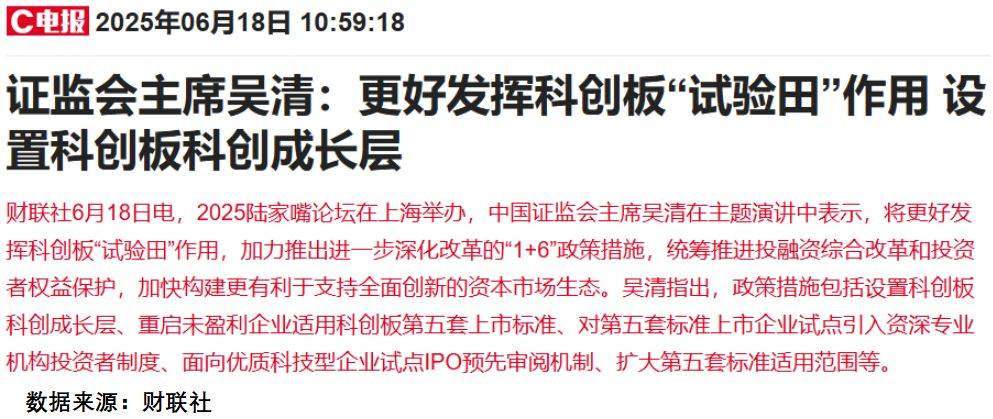
Group 1 - The core viewpoint of the article highlights the volatility of the A-share market, where stock prices fluctuate based on news and trends, leading to a perception of an "external leverage market" [1] - The recent IPO policy adjustments, specifically the introduction of a third listing standard for the ChiNext board and the establishment of a growth tier for the Sci-Tech Innovation Board, did not lead to a market decline but rather a positive closing, indicating a complex market reaction [1][2] - The selective nature of the IPO policy changes allows more technology companies in the R&D phase to access the capital market, which may lead to a reassessment of the long-term impacts of these policies by investors [2] Group 2 - The distinction between low-quality IPOs and high-potential loss-making companies is crucial, particularly in sectors like semiconductors and biomedicine, where initial losses are common due to long R&D cycles and high capital requirements [2] - Observations of trading behavior indicate significant disparities in stock performance, suggesting that relying solely on news can lead to misjudgments [4] - Stocks with sustained institutional interest tend to recover after short-term adjustments, while those experiencing outflows from institutional investors struggle to maintain upward momentum, emphasizing the importance of understanding market dynamics beyond emotional trading [8][10]