KTV转型

Search documents
KTV被年轻人盘成健身房
Jing Ji Guan Cha Bao· 2025-11-22 05:15
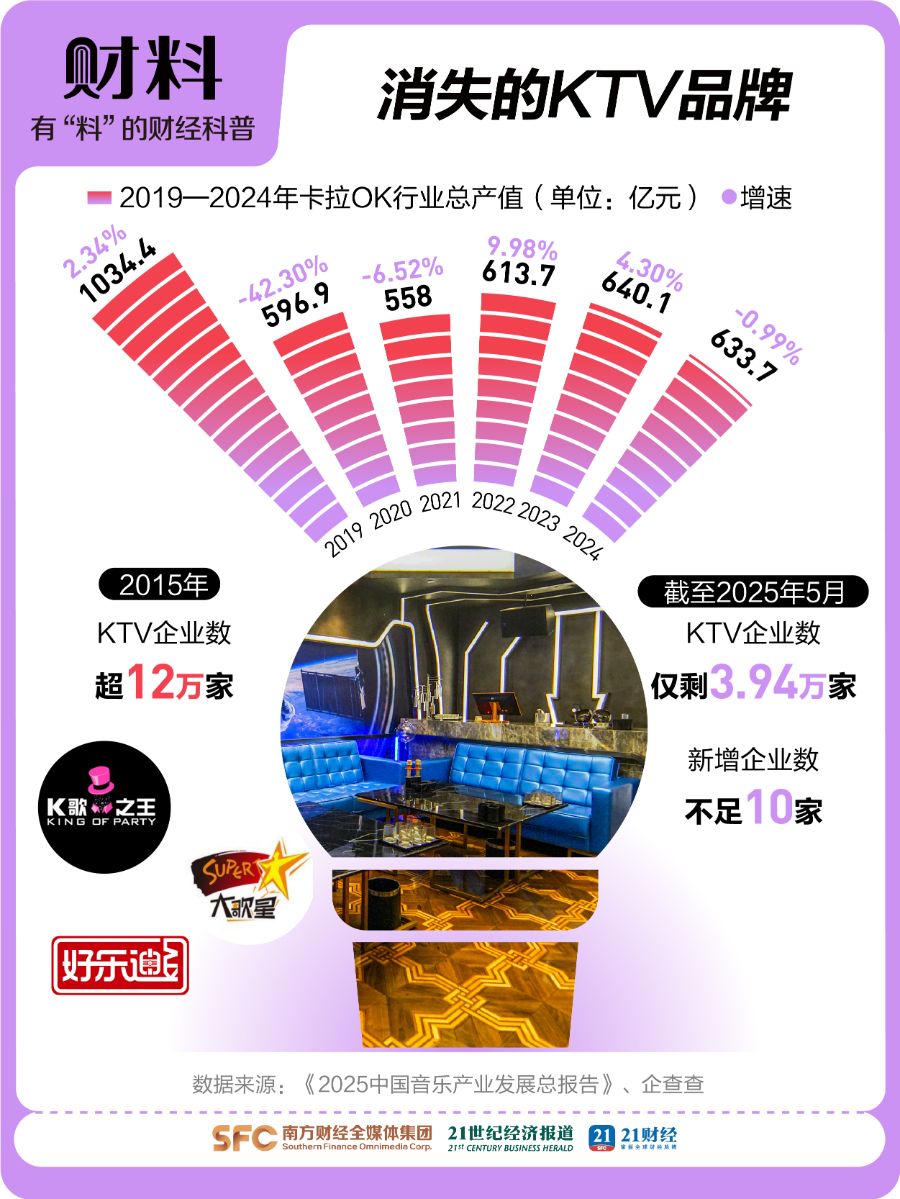
Core Insights - KTV is increasingly being viewed as a fitness venue by young people, combining enjoyment with physical activity [1][2][6] - The trend is driven by social media engagement, where users share their experiences of singing as a form of exercise [2][3] - KTV brands are adapting to this trend by incorporating fitness elements into their offerings, such as dance routines and workout videos [6][12] Group 1: User Experiences - Users like Cheng Jie and Wan Ning have found that singing in KTV can burn significant calories, with Cheng burning over 700 calories in three hours [1][3] - Wan Ning reported improvements in his physical fitness, including increased lung capacity and faster running times, attributed to his KTV singing sessions [3] - The social aspect of KTV, where friends gather to sing and dance, enhances the overall experience, making it a fun and engaging way to stay active [5][8] Group 2: Industry Adaptation - KTV brands are responding to the decline in traditional KTV popularity by diversifying their offerings to include fitness-related activities [11][12] - Innovations include integrating dance routines and fitness videos into the KTV experience, as seen in partnerships with popular platforms like Bilibili [6][12] - The shift towards a multi-functional space aims to attract a younger audience seeking a blend of entertainment, social interaction, and fitness [11][12] Group 3: Market Trends - The KTV industry is facing challenges, with a significant decline in the number of KTV establishments and market size, projected to be around 633.73 billion yuan in 2024 [11] - New entertainment options such as escape rooms and live music venues are drawing audiences away from traditional KTV [11] - KTV brands are exploring new business models, including smaller venues and enhanced user experiences, to remain competitive in the evolving entertainment landscape [12][13]
KTV破局寻路
Jing Ji Guan Cha Wang· 2025-11-21 14:29
Core Insights - KTV is emerging as a popular alternative for fitness among young people, combining enjoyment with physical activity [1][2][6] - The trend is driven by social media engagement, where users share their experiences of singing as a form of exercise [2][3] - KTV brands are adapting to this trend by incorporating fitness elements into their offerings, such as dance routines and workout videos [6][9] Group 1: User Experiences - Users like Cheng Jie and Wan Ning have found that singing in KTV can burn significant calories, with Cheng burning over 700 calories in three hours [1][3] - Wan Ning reported improvements in his physical fitness, including increased lung capacity and faster running times, attributed to his KTV singing sessions [3][4] - The social aspect of KTV, where friends gather to sing and dance, enhances the overall experience, making it feel less like a workout and more like a fun activity [5][6] Group 2: Industry Adaptation - KTV brands are innovating by offering new features such as dance routines and fitness-related content, responding to the demand for more engaging experiences [6][9] - The introduction of "KTV fitness" concepts, such as dance-along videos and interactive singing sessions, aims to attract a younger audience seeking multifaceted entertainment [6][11] - Companies are shifting from traditional business models to more dynamic ones, integrating various entertainment forms like dance, social gaming, and live performances [12][14] Group 3: Market Trends - The KTV industry is facing challenges, with a decline in the number of establishments and market size, prompting a need for transformation [11][12] - The market size for the karaoke industry is projected to be approximately 63.37 billion yuan in 2024, showing a slight decline from previous years [12] - The rise of alternative entertainment options, such as escape rooms and live music venues, has contributed to the shifting preferences of younger consumers [12][14]
10年消失超8万家,KTV真的被抛弃了吗?
2 1 Shi Ji Jing Ji Bao Dao· 2025-09-13 02:13
Core Insights - The KTV industry has seen a significant decline, with over 80,000 establishments disappearing in the past decade, dropping from over 120,000 in 2015 to approximately 39,400 by May 2025 [1][2] - Interestingly, the elderly population (60 years and above) now constitutes 35% of KTV consumers, with their average consumption frequency being 1.8 times that of younger individuals [2] - KTV establishments are undergoing transformation to adapt to changing consumer preferences, introducing various promotional offers and diversifying their services to include dining, gaming, and even AI self-service KTV options [3] Group 1 - The KTV industry peaked in 2015 with over 120,000 establishments, but has since faced a drastic decline, with only 39,400 remaining by May 2025 [1] - The elderly demographic is emerging as a primary consumer group, accounting for 35% of KTV patrons [2] - KTV venues are innovating by offering discounts and integrating new entertainment formats, such as dining and gaming, to attract customers [3] Group 2 - The shift in consumer behavior has led to the rise of "KTV+" concepts, where traditional KTV spaces are repurposed for activities like studying and fitness [3] - The KTV industry is not disappearing but is instead seeking new positioning through strategic transformations [3]
10年消失超8万家 KTV真的被抛弃了吗?
2 1 Shi Ji Jing Ji Bao Dao· 2025-09-13 02:09
Group 1 - The KTV industry has seen a significant decline, with over 80,000 KTV establishments disappearing in the past decade, dropping from over 120,000 in 2015 to approximately 39,400 by May 2025 [1] - The elderly population is emerging as a new consumer group, with individuals aged 60 and above accounting for 35% of KTV consumers, and their average consumption frequency is 1.8 times that of younger consumers [3] - KTV establishments are undergoing transformation to adapt to changing consumer preferences, introducing promotional offers and diversifying services by incorporating dining, billiards, gaming, home theaters, bars, and even AI self-service KTV at prices nearly 1/3 lower than traditional KTV [6] Group 2 - Young consumers are changing their engagement with KTV, with trends like "KTV+" gaining popularity, where KTV venues are used for activities such as study sessions or group fitness classes [7] - The decline in KTV popularity among younger generations raises questions about their engagement with the traditional KTV experience [10]