Multi - Asset Portfolio

Search documents
AMD Stock's Real Rank Among Semi Giants
Forbes· 2026-01-30 15:30
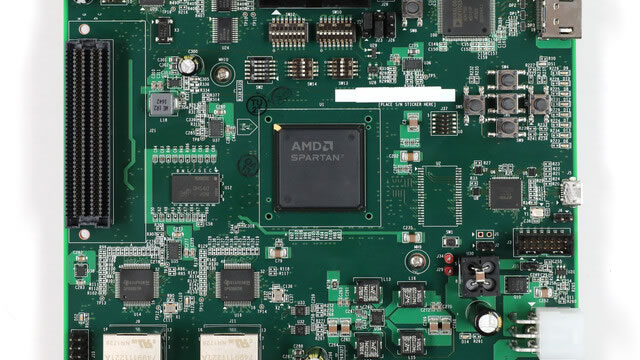
Core Insights - Advanced Micro Devices (AMD) stock has outperformed most peers over the last year, but faces competition in the rapidly growing AI and data-center market [1] - AMD's revenue growth is solid at 31.8%, driven by Ryzen/Radeon and AI accelerators, but still lags behind competitors like NVIDIA and Marvell [8] - AMD's operating margin stands at 9.4%, significantly lower than NVIDIA's 58.8%, indicating a gap in profitability [3] Revenue Growth Comparison - AMD's revenue growth of 31.8% is notable, but it is behind NVIDIA and Marvell's increased exposure to AI data center demand [8] - The stock price of AMD has increased by 114.9%, reflecting market expectations for AI growth [8] Profitability and Valuation - AMD's operating margin of 9.4% is modest compared to industry leaders, highlighting the need for improvement in profitability [3] - The elevated P/E ratio of 124.0 indicates a substantial premium over competitors, suggesting limited upside potential if market momentum favors better-valued rivals [3]


Can OPEN Stock Reclaim The $4 Level?
Forbes· 2026-01-29 16:25
Group 1 - Opendoor Technologies (OPEN) stock has experienced a significant decline of 21.0%, dropping from $7.29 to $5.76 within a month, with further downside potential suggested [2] - The stock has historically shown a median return of -34% in the 12 months following sharp declines of 30% or more within 30 days, despite a median peak return of 36% [3][8] - Since January 1, 2010, OPEN has had 13 occurrences of sharp dips reaching the -30% threshold within 30 days [5] Group 2 - To assess the implications of a dip, it is crucial to evaluate revenue growth, profitability, cash flow, and balance sheet strength [5] - A multi-asset portfolio approach is recommended to stabilize returns and minimize risks associated with single market investments [6] - The Trefis High Quality Portfolio has a history of outperforming benchmarks, including the S&P 500, S&P mid-cap, and Russell 2000 [7]


Can Intel Stock Fall To $30?
Forbes· 2026-01-27 15:35
Group 1 - Intel's stock has declined by 21.8% in less than a month, from $54.32 on January 22, 2026, to $42.49, due to a weaker than expected outlook for Q1 FY'26 and concerns about its foundry operations [1] - The ongoing correction suggests potential for further downside, with a price target of $30 being plausible, as the stock has reached this level in the past five years [3] - Historical data indicates that the median return for the 12-month period following sharp dips (defined as a decline of 30% or more within 30 days) is -0.2%, despite a median peak return of 37% [4][10] Group 2 - Intel has experienced three instances since January 1, 2010, where the dip threshold of -30% within 30 days was activated [6] - To assess the risk of a dip indicating a worsening business situation, metrics such as revenue growth, profitability, cash flow, and balance sheet strength must be evaluated [7] - A multi-asset portfolio approach is suggested to mitigate risks and take advantage of potential upside, as individual selections can be volatile [8]

What's The Downside Risk For Intel Stock?
Forbes· 2026-01-26 16:50
Core Viewpoint - Intel's stock has experienced a significant drop of 17.0% in a single day, raising concerns about its weak Q1 forecast, ongoing supply shortages, and intense competition in the AI sector [1] Company Position - Intel is valued at $203 billion with annual revenue of $53 billion, currently trading at $45.07 [3] - The company has seen a revenue decrease of 1.5% over the past 12 months and has an operating margin of -0.2% [3] Operational Performance - Current indicators suggest weak operational performance and a moderate valuation, making the stock unattractive [4] - The stock has underperformed the S&P 500 during various economic downturns, indicating potential vulnerability [5] Historical Stock Performance - Intel's stock has seen a decline of 63.3% from a peak of $68.26 on April 9, 2021, to $25.04 on October 11, 2022, compared to a 25.4% decline for the S&P 500 [9] - The stock has not yet regained its pre-crisis high, with a maximum price of $54.32 reached on January 22, 2026, and currently trading at $45.07 [9] - A previous decline of 34.8% occurred from a high of $68.47 on January 24, 2020, to $44.61 on March 16, 2020, against a 33.9% decline for the S&P 500 [10] - Another decline of 26.1% was noted from a peak of $58.82 on April 22, 2019, to $43.46 on June 3, 2019, although it fully recovered by November 26, 2019 [11] - The stock plummeted 56.8% from a peak of $27.98 on December 6, 2007, to $12.08 on February 23, 2009, matching the S&P 500's decline, but it fully rebounded by March 26, 2012 [11] Financial Ratios - Intel has a Debt to Equity ratio of 0.23 and a Cash to Assets ratio of 0.15 [8] - The stock is currently trading at a P/E multiple of 1027.5 and a P/EBIT multiple of 71.1 [8]
How AMD Stock Can Surge In 2026
Forbes· 2026-01-20 17:11
Core Viewpoint - AMD has a history of rapid stock rallies, with increases over 50% in short periods, suggesting potential for future growth driven by upcoming catalysts [1] Group 1: Catalysts for Growth - Catalyst 1: AI Accelerator Market Share Shift, with potential acquisition of up to 20% market share by 2027 [4][11] - Catalyst 2: Activating OpenAI Strategic Revenue, with a definitive agreement to utilize AMD GPUs for OpenAI infrastructure [5][11] - Catalyst 3: Broadening Enterprise and Edge AI Presence, including new revenue pathways in AI PCs and Automotive through strategic partnerships [6][11] Group 2: Financial Performance - Revenue Growth: 31.8% for the last twelve months (LTM) and a three-year average of 12.9% [12] - Cash Generation: Nearly 17.0% free cash flow margin and 9.4% operating margin LTM [12] - Valuation: AMD stock trades at a P/E multiple of 114.0 [12]

Buy PG Stock Over Colgate-Palmolive?
Forbes· 2025-12-17 19:45
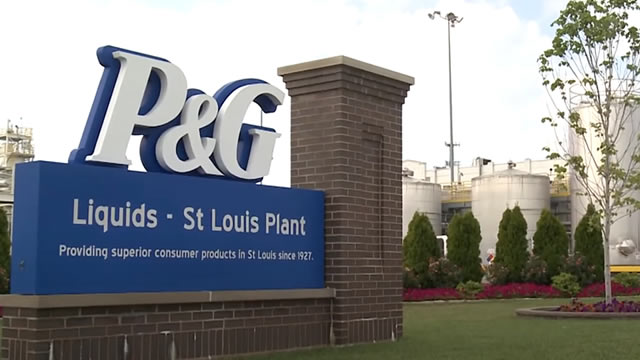
Core Viewpoint - Procter & Gamble (P&G) stock is currently viewed favorably, especially in comparison to its competitor Colgate-Palmolive (CL), despite both companies experiencing a decline of approximately 12% year-to-date, while the S&P 500 has increased by 16% [2][3]. Financial Performance Comparison - P&G's recent quarterly revenue growth was 3.0%, significantly higher than CL's 1.0% [4]. - On a trailing twelve-month basis, P&G's revenue growth stands at 1.2%, compared to CL's 0.1% [4]. - P&G demonstrates superior profitability with a last twelve-month operating margin of 24.1% and a three-year average margin of 23.6%, both of which exceed CL's corresponding figures [4]. Investment Strategy Insights - For investors seeking potential gains with reduced volatility, a High Quality Portfolio is recommended, which has consistently outperformed its benchmark, yielding returns exceeding 105% since its launch [5]. - The performance metrics of the High Quality Portfolio illustrate that it has generated better returns with less risk compared to the benchmark index [5].


Get Paid 8.5% To Buy Starbucks Stock At A 30% Discount
Forbes· 2025-12-15 17:45
Core Viewpoint - Starbucks (SBUX) is currently trading at approximately $85.35 per share, which is about 25% below its 52-week high, as investors are concerned about slower traffic trends, near-term margin pressures, and a prolonged turnaround process [2] Company Analysis - Starbucks has a strong brand loyalty and pricing power, which contributes to its wide economic moat, making it a compelling long-term investment [8] - The company has approximately 34.3 million active members in its rewards program as of 2024, indicating a highly engaged customer base despite price increases [10] - Starbucks has maintained a positive free cash flow, although it has a significant net debt position of approximately $23.162 billion as of September 2025 [11] Industry Insights - The specialty coffee market is projected to grow at a compound annual growth rate (CAGR) of 10.4%, indicating strong industry tailwinds [9] - There is a secular trend towards premium and specialty coffee, providing a long runway for growth for companies like Starbucks [8] Pricing Strategy - Starbucks has implemented a new pricing structure in 2025, including flat fees for customizations, which has been positively received by customers [10] - Despite some customers planning to visit less due to high prices, the CEO has indicated that further price hikes may be considered in 2026, reflecting confidence in the brand's ability to retain customers [10]

OPEN Stock: Why Opendoor Could Slide Toward $5
Forbes· 2025-12-09 18:50
Core Viewpoint - Opendoor Technologies (OPEN) stock has experienced a significant decline of 24.8% in less than a month, dropping from $9.37 to $7.05, with potential further downside towards $5, a level it has reached in the past five years [2] Group 1: Stock Performance and Historical Context - The stock has seen a sharp decline, categorized as a dip when it decreases by 30% or more within 30 days, with historical data indicating a median return of -37% in the year following such declines [3][7] - There have been 12 instances since January 1, 2010, where the stock reached the dip threshold of -30% within 30 days [7] Group 2: Business Model and Market Risks - Opendoor is heavily reliant on the cyclical housing market, making it vulnerable to rising mortgage rates and downturns in home demand, which can lead to reduced sales and unsold inventory at depressed values [4] - The company has struggled with consistent profitability due to high carrying costs and financing expenses associated with holding large inventories of homes [5] - A shift from the original "iBuying → flip" model to a lighter, agent-driven platform introduces execution risks, as success depends on scaling this new model in a fragmented real estate market [5] Group 3: Financial Quality and Risk Mitigation - Assessing revenue growth, profitability, cash flow, and balance sheet resilience is crucial to mitigate risks associated with dips indicating a declining business situation [8]

Can Opendoor Stock Drop To $5?
Forbes· 2025-12-09 17:20
Company Overview - Opendoor Technologies (OPEN) stock has experienced a significant decline of 24.8% in less than a month, dropping from $9.37 on November 12, 2025, to $7.05 currently, with a potential further decline to $5 being plausible based on historical performance [2]. Market Risks - The company is heavily reliant on a cyclical housing market, making it vulnerable to rising mortgage rates and downturns in home demand, which can sharply reduce sales and lead to unsold inventory at depressed values [4]. - Opendoor has historically struggled to achieve consistent profitability, facing high carrying costs and financing expenses due to large inventories of homes [4]. - The shift from the original "iBuying → flip" model to a lighter, agent-driven platform introduces execution risk, as success depends on scaling this new model in a fragmented real estate market [4]. - Regulatory changes, interest-rate volatility, and algorithmic valuation errors could negatively impact margins or force write-downs on owned homes, severely affecting shareholder value [4]. Historical Performance - Historically, the median return for the year following sharp declines (defined as a drop of 30% or more within 30 days) has been -37%, while the median peak return was 37% [3][10]. - Opendoor has had 12 incidents since January 1, 2010, where the dip threshold of -30% within 30 days was reached [6].

Meta Stock Vs. Pinterest: Which Internet Giant Offers The Better Bet?
Forbes· 2025-12-05 17:31
Core Insights - Meta Platforms (META) stock shows strong revenue growth and profitability compared to Pinterest (PINS), making it a more attractive investment option [3][4]. Financial Performance Comparison - META's quarterly revenue growth was 26.2%, while PINS reported 16.8% [4]. - Over the last 12 months, META's revenue growth stood at 21.3%, surpassing PINS's 16.8% [4]. - META's last twelve months (LTM) margin was 43.2%, with a three-year average margin of 37.4%, indicating superior profitability compared to PINS [4]. Valuation Insights - META stock is characterized by improved profitability and a comparatively lower valuation than PINS, suggesting a more favorable investment opportunity [3][4].