
Neutral Rate

Search documents
Federal Reserve Governors Warns AI Could Bring 'Job Displacement' Before 'Job Creation,' Saying 'This Outcome Could Cause Hardship'
Yahoo Finance· 2026-03-17 13:16
Core Insights - Artificial intelligence is beginning to reshape parts of the labor market, potentially displacing workers before creating new jobs [1] - Early evidence of the transition in labor data indicates that the effects of AI on employment are starting to emerge [2] - The transition may lead to job displacement in certain occupations, particularly in coding, where AI systems are taking over tasks previously performed by entry-level programmers [3] Labor Market Impact - There is a declining demand for labor in some occupations, with rising unemployment among recent college graduates despite a broader unemployment rate of 4.3% [3] - Startups like Rad AI are leveraging data-driven intelligence to help businesses optimize content creation, reflecting a broader transformation in the workplace [4] Business Investment Trends - Companies are heavily investing in AI infrastructure, such as data centers and advanced chips, even amid elevated interest rates [5] - This surge in AI investment is contributing to strong aggregate demand, which may influence long-term interest rate estimates [6] - The current wave of AI investment suggests that the neutral interest rate may be higher than pre-pandemic levels [7] Economic Theory - The concept of "creative destruction," as popularized by economist Joseph Schumpeter, links innovation to economic growth and job disruption, which is relevant in the context of AI's impact on the labor market [7]
Fed’s Hammack Expects Rates to Be On Hold for Some Time
Bloomberg Television· 2026-03-06 21:05
You just finished a panel. You made an address basically suggesting that risks are two sided. Now, you've been on the side of inflation being the biggest concern.But then we got this jobs report today that sort of makes the case for some of the doves on the committee. What did you make of it. Well, I try not to make too much of any one individual number.And certainly this number was a disappointment, mostly because it means that there are more Americans who aren't working. That's what disappointed me in thi ...

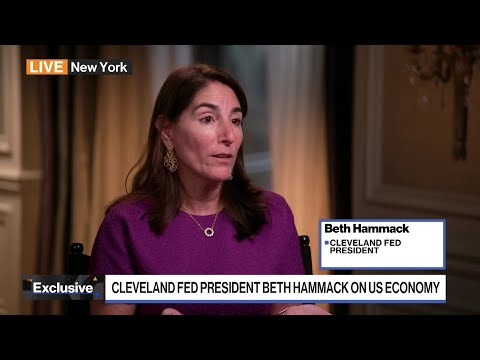
Fed's Hammack Expects Rates to Be On Hold for Some Time
Youtube· 2026-03-06 21:05
Economic Outlook - The overall economy has been described as healthy and brightening, with a positive outlook for growth and business investments [2][5] - Businesses express optimism about demand and are looking to increase investments, indicating a stabilizing labor market with an unemployment rate around 4.3% to 4.4% [3][4] Labor Market - The recent jobs report was disappointing as it indicated more Americans are not working, which is a concern despite the overall economic health [2][4] - The labor market has shown signs of stabilization, although the headline jobs number has been weaker recently [4] Inflation Concerns - Inflation has remained above target for five years, with little progress made in reducing it over the past two years, currently around 3% [5][6] - There is a need to balance monetary policy to bring inflation down while still supporting the labor market [6] Monetary Policy - The current monetary policy is viewed as being around neutral, with businesses still willing to invest and banks reporting improving loan growth [8][9] - The next meeting of the Open Market Committee may not lead to significant changes in policy, as the situation is considered stable for now [9][10]

War Creates Uncertainty for Rate Path Says Fed's Kashkari (Full Panel)
Youtube· 2026-03-05 15:39
Group 1 - The recent geopolitical events, particularly the conflict involving Hamas and Israel, have raised concerns about potential commodity shockwaves and their impact on inflation, similar to the effects seen after Russia's invasion of Ukraine [1][3][4] - The Federal Reserve's approach to inflation is being scrutinized, especially in light of new shocks to the economy, with uncertainty surrounding how long elevated inflation will persist [4][9][42] - There is a focus on core inflation as a better indicator of future inflation trends, with energy prices influencing core goods and services over time [5][7][39] Group 2 - The labor market is showing signs of softness, with businesses indicating they can manage with current staffing levels, which may affect hiring decisions [26][28][67] - Companies are experiencing pressure to adjust pricing due to previous cost increases, but there is no immediate indication of major inflation waves, suggesting a gradual adjustment process [35][37] - The uncertainty surrounding tariffs and their potential impact on inflation is a significant concern, with expectations that inflation may follow a lower trajectory if tariffs are not fully replicated [12][13][14] Group 3 - The introduction of AI in businesses is influencing hiring practices and productivity, with companies finding efficiencies that may affect their labor needs [29][30] - The Federal Reserve's communication strategy and its implications for monetary policy are under discussion, with calls for a more coordinated approach to messaging [54][56] - The resilience of the U.S. economy in the face of previous shocks suggests that the neutral interest rate may be higher than previously estimated, impacting future monetary policy decisions [21][22][32]

War Creates Uncertainty for Rate Path Says Fed's Kashkari (Full Panel)
Bloomberg Television· 2026-03-05 15:39
The president's war has obviously disrupted oil prices in their way up over the last couple of days. That means gasoline prices go up. So that means inflation goes up.But the Fed has some experience dealing with this. Right. So I think the question is, obviously, when Russia invaded Ukraine, it sent a commodity shockwave all around the world.And I was on that go back a few years. I was on Team Transitory, which said, hey, I think that this inflation that's coming out of the pandemic won't be that bad and wi ...
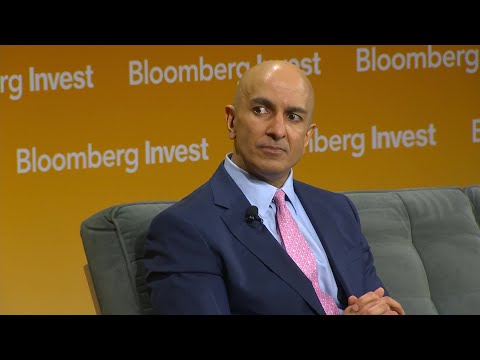
Minneapolis Fed's Kashkari: 'We're pretty close to neutral' on rates
Yahoo Finance· 2026-02-19 16:39
Minneapolis Fed president Neel Kashkari said Thursday he thinks the central bank is “pretty close” to neutral on the level of its benchmark policy rate, implying there may be little room left to cut rates. “We've cut interest rates a bunch in the last couple of years,” Kashkari said during a fireside chat at the Fargo Moorhead West Fargo Chamber of Commerce. “My guess is we're pretty close to neutral on where our monetary policy is, but ultimately, we need to see, where does inflation go? Does it come all ...
Fed Expected to End Rate-Cutting Cycle This Week
Youtube· 2026-01-26 19:14
POTENTIALLY HAVE AND I FROM THIS ADMINISTRATION. JONATHAN: THEY MADE THEMSELVES EASY TO FIND. LET'S TURN TO THE FEDERAL RESERVE, TRADERS TURNED TO THE FIRST CENTRAL-BANK DECISION OF THE YEAR.JOINING US NOW IS ENDA CURRAN. SOME POTENTIAL SPIES IN THIS NEWS CONFERENCE GIVEN CHAIRMAN POWELL'S ASSERTIVE POSTURE TOWARD THE WHITE HOUSE. ENDA: A LOT OF POLICY AND POLITICS. A LOT OF INTEREST AROUND ANY FRESH COMMENTARY AROUND THE NEUTRAL RATE.WHERE ARE THEY IN THE LABOR MARKET. DO THEY THINK THE LABOR MARKET WILL S ...

Fed Expected to End Rate-Cutting Cycle This Week
Bloomberg Television· 2026-01-26 19:14
POTENTIALLY HAVE AND I FROM THIS ADMINISTRATION. JONATHAN: THEY MADE THEMSELVES EASY TO FIND. LET'S TURN TO THE FEDERAL RESERVE, TRADERS TURNED TO THE FIRST CENTRAL-BANK DECISION OF THE YEAR.JOINING US NOW IS ENDA CURRAN. SOME POTENTIAL SPIES IN THIS NEWS CONFERENCE GIVEN CHAIRMAN POWELL'S ASSERTIVE POSTURE TOWARD THE WHITE HOUSE. ENDA: A LOT OF POLICY AND POLITICS. A LOT OF INTEREST AROUND ANY FRESH COMMENTARY AROUND THE NEUTRAL RATE.WHERE ARE THEY IN THE LABOR MARKET. DO THEY THINK THE LABOR MARKET WILL S ...
全球 360°_我们的全球观点-The Global 360_ Our views around the world.
2026-01-20 01:50
Summary of Key Points from the Conference Call Industry Overview - The conference call primarily discusses the global economic outlook for 2026, focusing on various regions including the US, Euro area, Japan, and China, as well as implications for monetary policy and inflation trends. Core Insights and Arguments United States - Economic growth is expected to be influenced by central bank discussions on the "neutral" rate, with the Fed likely to cut rates in June and September 2026 due to inflation pressures from a lower unemployment rate [11][12][17] - Consumer spending remains strong, with a 3.5% quarter-over-quarter growth in Q3 2025, but job growth has slowed significantly, indicating a mixed labor market [36] - Inflation is projected to soften mid-year, with core inflation expected to decline as tariff impacts are fully realized [12][36] Euro Area - Growth in the Euro area is steady but below potential, with a forecast of 1.0% growth for 2025 and 2026 [38] - Core inflation has decreased to 2.3%, and further disinflation is anticipated, leading to expectations of ECB rate cuts in June and September 2026 [13][38] - The Euro area composite PMI fell, indicating a slowdown in both manufacturing and services, which aligns with the forecast of modest growth [38][24] Japan - The Bank of Japan (BoJ) raised rates to 0.75% in December 2025, but further increases are not expected in 2026 due to anticipated declines in core CPI [14][36] - Political uncertainty is rising with potential snap elections, which could impact economic stability [14] China - China's growth in Q4 2025 was below expectations, but manufacturing PMI showed improvement, suggesting modest fiscal support in 2026 [15][19] - The global export market share for China is projected to increase to 16.5% by 2030, driven by advancements in manufacturing and sectors like EVs and robotics [19] - Fiscal policy is expected to remain flat compared to 2025, with a focus on front-loaded investments [15] Other Important Insights - The global economic outlook for 2026 presents a wide range of potential outcomes, with scenarios for both stronger spending and rising productivity, as well as mild downturns [16] - The impact of tariffs is becoming more pronounced, with firms beginning to pass costs onto consumers, which may lead to inflation but also reduce recession risks [64][65] - The overall sentiment indicates a cautious approach to monetary policy across various regions, with central banks remaining data-dependent and responsive to economic indicators [18][36][72] This summary encapsulates the key points discussed in the conference call, highlighting the economic outlook and monetary policy expectations across major global economies.
Fed split deepens as Miran calls for 1.5-point rate cut
Yahoo Finance· 2026-01-09 02:03
Core Viewpoint - Federal Reserve officials are divided on the extent of interest rate cuts for 2026, with some advocating for steady rates until more data is available on inflation and employment [1] Group 1: Interest Rate Cuts - Fed Governor Stephen Miran is advocating for aggressive interest rate cuts, suggesting a reduction of at least 150 basis points this year to support the labor market [2][3] - Miran describes current monetary policy as restrictive, indicating that underlying inflation is around 2.3%, which allows for further cuts [2] - The Federal Funds Rate currently stands at 3.50% to 3.75%, with a total of 75 basis points cut in 2025 [8] Group 2: Economic Context - There are approximately one million Americans unemployed who could potentially find jobs without triggering unwanted inflation, according to Miran [5] - Fed officials estimate that the long-run neutral rate is between 2.5% and 3%, but can rise to approximately 4.5% to 5% when factoring in inflation [9] - The neutral rate is defined as the interest rate that maintains full employment while keeping inflation stable around the Fed's 2% target [10]