Real Estate Market Differentiation

Search documents
2026年楼市预期大反转,房价已经明牌了,买房卖房都注意
Sou Hu Cai Jing· 2026-02-23 02:15
2026楼市"明牌"时刻:分化时代的购房逻辑重构 2026年,中国楼市彻底告别了"普涨普跌"的混沌期,进入了"趋势明牌、分化加剧"的新阶段。国家统计局数据显示,2025年全国房地产开发投资同比下降 17.2%,商品房销售额下滑12.6%,住宅销售额降幅更是达到13.0%。这场持续数年的调整,既非V型反弹,也非U型复苏,而是呈现出长长的L型走势。 从"房价永远涨"的集体信仰崩塌,到"住好房"的理性回归;从增量扩张的野蛮生长,到存量优化的精耕细作,2026年的楼市,正以清晰的分化格局,重构着 每个人的购房逻辑。 底层逻辑切换:从"投资品"到"消费品"的本质回归 2026年楼市最核心的变化,并非政策的松紧调整,而是购房底层逻辑的根本性切换——房子从"闭眼赚钱的投资品",彻底回归为"满足居住需求的消费品", 这一转变让房价走势彻底失去了"普涨"的基础。 过去二十年,楼市的定价逻辑是"故事导向":城市规划、板块概念、人口红利,都能成为房价上涨的催化剂,人们买房的核心诉求是"增值套利",甚至不惜 加杠杆"以房养房"。但如今,这一逻辑已完全失效。随着"房价永远涨"的信仰崩塌,普通人不再盲目加杠杆入市,反而在悄悄"去杠杆", ...

杭州2868套豪宅逆市吸金442亿
3 6 Ke· 2025-12-19 02:57
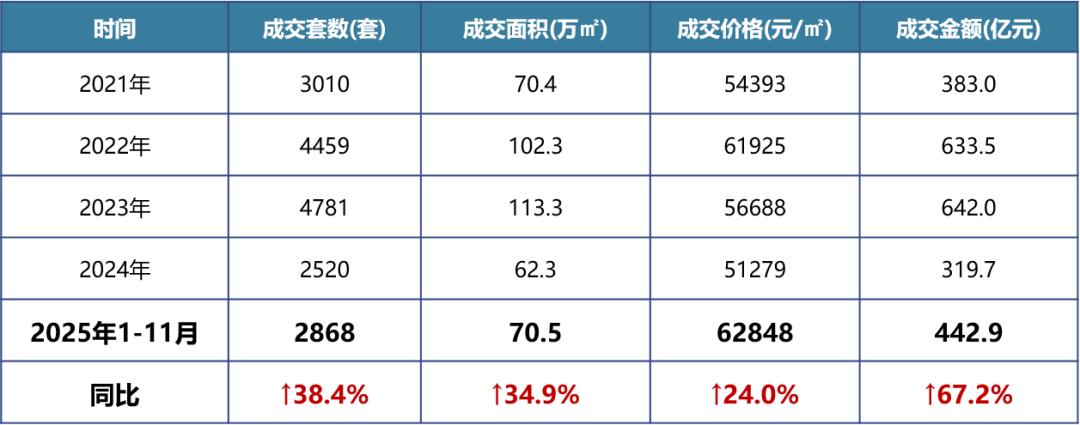
2025年的杭州楼市,上演着极致的"冰火两重天" :前 11 个月杭州住宅成交同比缩量近两成,但却有 442.9 亿资金涌入千万级豪宅市场,同比激增 67.2%,以2868套的成交量,撬动了市区超四分之一的购买力 。与此同时,高端市场内部则经历深刻的结构性分化: 低密别墅成交"现象级"增长:2025 年1-11月成交套数从 2024 年同期的不足 500 套增长至 1174 套,同比激增 157.5% ,占据高端市场总量的四成; 购买力跃升,向顶端冲刺:在1000-1500万 " 基础盘 " 稳固的同时, 1500 万以上市场份额提升近 25 个百分点,其中总价超 2500 万元的顶级豪宅提升 6.3 个百分点,显示出强烈的资产升级趋向; 需求向"核心"与"稀缺"高度聚集: 购买力强势汇聚于奥体、江湾新城、城东新城等新兴核心及拥有稀缺资源的板块,地段价值梯度拉大。 伴随供应放量,部分高端住宅项目去化压力显现,市场进入买方主导、基于稀缺性进行价值重估的新阶段。 量价逆势齐涨,创市场份额新高 2025年,杭州总价千万以上的高端住宅市场在整体楼市调整的背景下(2025年1-11月杭州市区商品住宅共计成交497.3万 ...
上海25套亿元大平层1天秒光,胡歌夫妇曾到现场看房
2 1 Shi Ji Jing Ji Bao Dao· 2025-10-20 05:59
Core Insights - The Chinese real estate market is stabilizing, with luxury properties in Shanghai showing resilience and achieving record sales despite a broader market slowdown [1][2] - High-end projects "Jinling Huating" and "Gaofuyun Jing" have emerged as new benchmarks in the luxury market, attracting significant interest from high-net-worth individuals, particularly from the Yangtze River Delta region [1][6] Group 1: Market Performance - "Jinling Huating" sold 120 units at an average price of 82 million yuan, with the most expensive unit priced at 283 million yuan, setting a new record for Shanghai [2][3] - "Gaofuyun Jing" launched 125 units with an average price of 21 million yuan per square meter, achieving total sales exceeding the entire annual sales of similar luxury properties in Shanghai [3][5] - The sales performance of both projects indicates a strong demand for high-end properties, with "Jinling Huating" generating nearly 20 billion yuan in total sales [2][3] Group 2: Buyer Demographics - The primary buyers for these luxury properties are high-net-worth individuals from Shanghai, with significant participation from clients in Jiangsu and Zhejiang provinces [6][8] - "Gaofuyun Jing" attracted 184 effective applicants, with 34.78% being local Shanghai clients, while "Jinling Huating" had 43.97% of its first phase buyers from Shanghai [8][9] - The overall buyer composition for both projects shows that over 60% of clients are from the Yangtze River Delta region, highlighting the area's economic integration and wealth concentration [8][9] Group 3: Market Trends - The luxury market is experiencing a bifurcation, with a clear preference for properties priced over 100 million yuan, while the demand for properties in the 10 million yuan range is declining [5][6] - The emergence of "Gaofuyun Jing" and "Jinling Huating" reflects a shift in buyer focus towards quality and location, with both projects benefiting from their prestigious locations in Shanghai [2][5] - The competitive landscape in the luxury segment is intensifying, with both projects showcasing unique attributes that appeal to affluent buyers, such as privacy and scenic views [3][5]
专家再次预测中国房价走势,或大概率是正确的,提前做好2个准备
Sou Hu Cai Jing· 2025-09-05 16:16
Core Insights - The real estate market is showing signs of stabilization, particularly in first-tier cities, with a notable decrease in price decline rates and increased transaction volumes [5][9] - There is a clear divergence in the real estate market, with first-tier cities recovering while second and third-tier cities continue to struggle [10][9] Group 1: Market Trends - Recent data indicates that new home prices in first-tier cities have only decreased by 0.2% month-on-month, a significant improvement compared to previous months [5] - The transaction volume in areas outside the fifth ring road in Beijing has surged by 35% in viewings and doubled in sales within 20 days of policy relaxation [5][4] - Predictions suggest that transaction volumes in areas outside the fifth ring road may increase by 25%-40% from August to September, contributing to a "small spring" in the real estate market [4] Group 2: Market Divergence - There is a stark contrast between the performance of first-tier cities and that of second and third-tier cities, with first-tier cities showing signs of recovery while the latter remain under pressure [10][9] - Inventory pressure is significantly different, with 70% of the national housing inventory concentrated in second and third-tier cities, leading to longer absorption periods compared to first-tier core areas [9] Group 3: Consumer Sentiment - Buyers are increasingly making decisions based on personal circumstances rather than market speculation, with some opting to purchase homes for stability rather than investment [11][16] - The sentiment among buyers reflects a shift in perspective, viewing homes more as consumer goods rather than investment assets, emphasizing the importance of location and livability [18]