SaaS危机

Search documents
跌崩!黑天鹅重演?
格隆汇APP· 2026-02-06 10:08
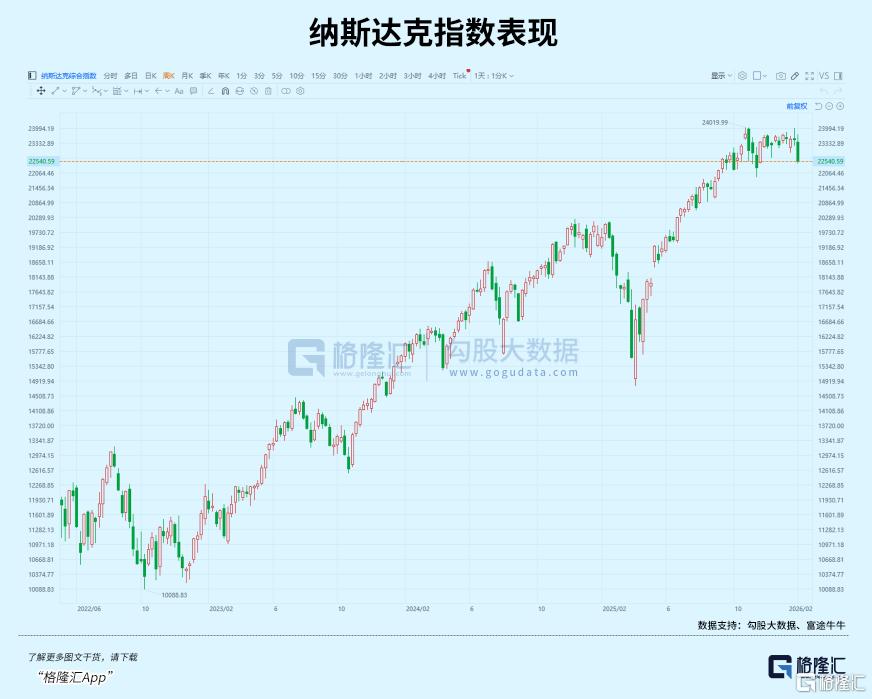
Core Viewpoint - The article discusses a significant downturn in the U.S. stock market, precious metals, and cryptocurrencies, indicating a potential major adjustment in the market dynamics, particularly in the tech sector driven by AI investments [3][4][5][8]. Group 1: Market Performance - U.S. stock indices fell over 1%, with the Nasdaq experiencing its worst three-day sell-off since April of the previous year [5]. - Precious metals like silver and gold saw drastic declines, with silver dropping over 20% and gold over 4% [4]. - The recent earnings reports from major tech companies like Google and Amazon, despite showing strong growth, did not excite the market and instead led to significant stock price drops [5][10][13]. Group 2: Capital Expenditure Concerns - Google reported a remarkable 48% growth in cloud business but indicated a capital expenditure guidance for 2026 of $175-185 billion, nearly double its 2025 spending [10]. - Amazon's capital expenditure plan for 2026 is projected at $200 billion, yet its stock also faced a 10% drop post-earnings [13]. - The combined planned investment of $660 billion by major tech firms for AI infrastructure by 2026 raises concerns about the efficiency of such massive capital expenditures, especially if they yield only marginal growth in cloud services [18]. Group 3: AI Investment Dynamics - The article highlights a shift from a "honeymoon phase" of AI investment to a more critical phase where the market questions the return on investment for high capital expenditures in AI infrastructure [17]. - The physical limitations of infrastructure, such as the U.S. power grid's inability to support explosive growth in data center capabilities, further complicate the situation [18][19]. - The emergence of autonomous AI applications threatens traditional software business models, as companies may reduce their reliance on SaaS products due to AI's ability to perform tasks previously done by human employees [22][23]. Group 4: Macroeconomic Factors - The nomination of Kevin Warsh as the Federal Reserve Chair has created uncertainty in the market, with fears of tighter monetary policy leading to higher long-term interest rates, which could negatively impact tech stock valuations [24][30]. - Warsh's hawkish stance on monetary policy contrasts with market expectations for continued liquidity support, raising concerns about the future of tech stock valuations [26][32]. - The potential for a liquidity crunch, combined with the current market dynamics, suggests an increased likelihood of a significant market correction [38][41].




跌崩!黑天鹅重演?
Ge Long Hui· 2026-02-06 09:22
Market Overview - The U.S. stock market, precious metals, and cryptocurrency markets experienced significant declines [1] - Spot silver fell over 20%, while spot gold dropped more than 4%, and international oil prices also saw substantial decreases [2] - All three major U.S. stock indices closed down over 1%, with the Nasdaq facing its worst three-day sell-off since April of the previous year [3] Company Performance - Major tech stocks like Google and Amazon reported "better-than-expected" earnings but still saw declines, which is considered unusual [4] - Google reported a remarkable 48% growth in its cloud business for Q4, yet its pre-market drop reached 6% [8] - Amazon's Q4 revenue and net profit were solid, with AWS cloud business growth at 24%, but it also faced a 10% drop in after-hours trading [11] Capital Expenditure Trends - Over the next few years, major tech companies including Amazon, Google, Microsoft, and Meta plan to invest a total of $660 billion in AI infrastructure, a 60% increase year-on-year [16] - The shift in market sentiment reflects a growing skepticism about the efficiency of massive capital expenditures, as investors question whether the returns justify the costs [15] AI and Software Industry Challenges - The AI investment landscape is transitioning from a "honeymoon phase" to a more challenging environment, with concerns about the effectiveness of capital spending [15] - The rise of autonomous AI applications is disrupting traditional SaaS business models, leading to a potential decline in demand for entry-level positions and related software subscriptions [18] - The software sector has seen significant stock price adjustments, with the iShares Software ETF (IGV) down 25% year-to-date, underperforming the broader market [18] Macroeconomic Factors - The market is reacting to potential changes in monetary policy under Kevin Warsh, who is perceived as hawkish, raising concerns about liquidity and future interest rates [25][26] - The anticipated tightening of liquidity could lead to higher long-term interest rates, negatively impacting tech stock valuations that rely on future cash flow [28] - The current macroeconomic environment, combined with the challenges faced by AI companies, suggests a potential for significant market corrections in the near future [34][35]