Stock sell - off

Search documents
Ulta Beauty: Strong Holiday Sales, And A Chance To Buy The Dip (NASDAQ:ULTA)
Seeking Alpha· 2026-03-13 20:03
Core Insights - Investors are increasingly looking for reasons to sell off stocks as the Q4 earnings season concludes, influenced by the ongoing war in the Middle East and significant disruptions to oil prices [1] Group 1: Market Sentiment - The current market sentiment is bearish, with a focus on potential sell-offs in response to geopolitical events and economic indicators [1] Group 2: Industry Analysis - The technology sector is highlighted, with insights from experienced analysts who have a background in both Wall Street and Silicon Valley, indicating a blend of traditional finance and innovative tech perspectives [1]


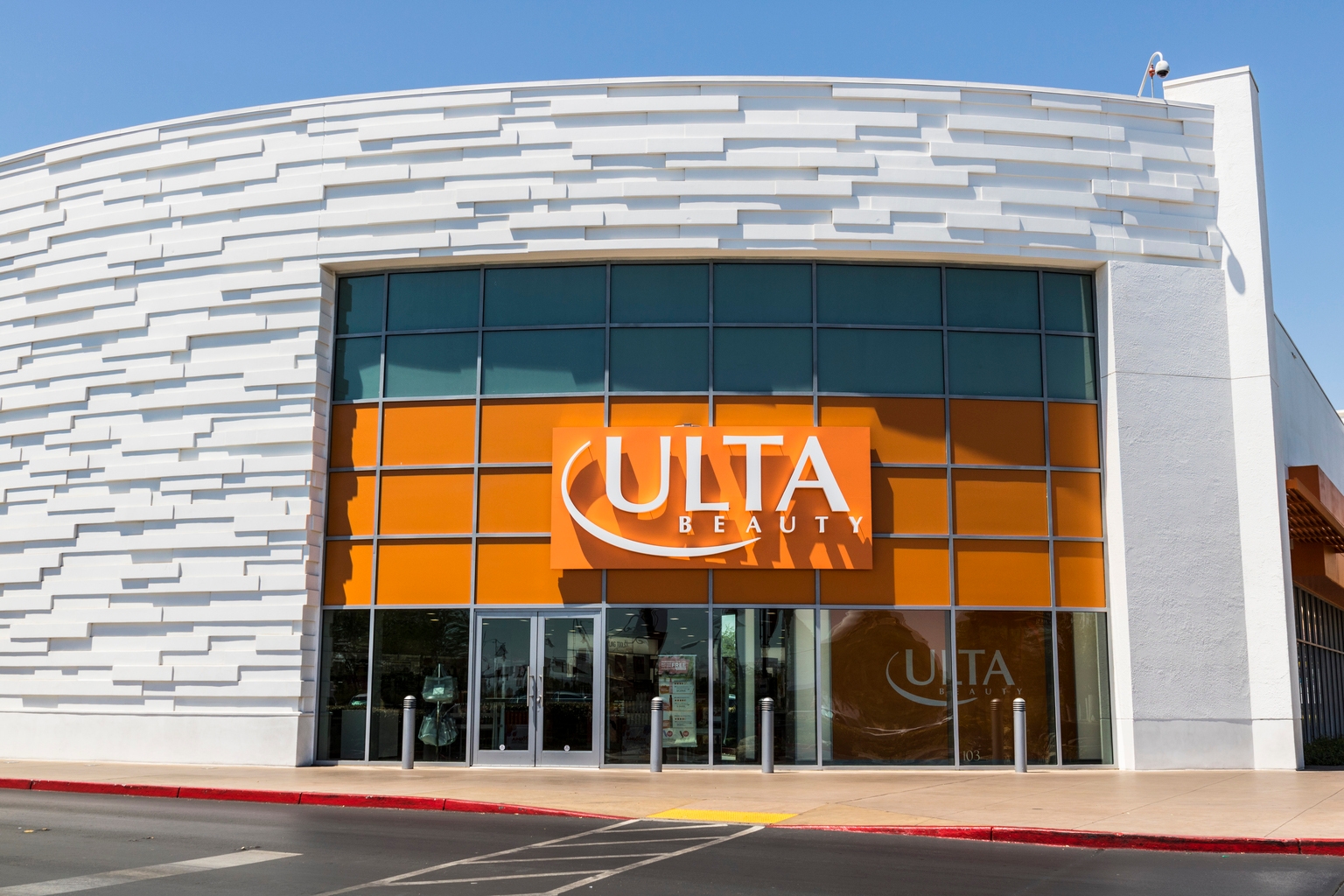
Profit Miss, Dismal Forecast Trigger Ulta Beauty Stock Selloff
Schaeffers Investment Research· 2026-03-13 14:34
Core Viewpoint - Ulta Beauty Inc reported worse-than-expected earnings for the first quarter, leading to a 9.4% drop in stock price, despite revenue exceeding estimates. The company also provided a disappointing annual profit forecast due to increased marketing expenses and noted that global conflicts may pressure consumers to focus on value [1]. Group 1: Earnings and Revenue - The first quarter earnings were below expectations, while revenue was above estimates [1]. - The company issued a disappointing annual profit forecast, attributing it to higher marketing expenses [1]. Group 2: Analyst Reactions - Eight analysts have cut their price targets, with Wells Fargo reducing its target from $400 to $475 [2]. - Despite the recent downturn, 16 out of 26 analysts maintain a "buy" or better rating, with a 12-month consensus target price of $674.11, indicating an 18.4% premium to current levels [2]. Group 3: Stock Performance - Shares fell below a significant support level of $620, which had previously contained pullbacks from a record high of $714.97 on February 18 [3]. - The stock is experiencing its worst day since April 2024 and is trading at its lowest level since December, despite an 81.9% year-over-year gain [3]. Group 4: Options Activity - Options volume is significantly high, running at 10 times the intraday average, with 5,273 calls and 4,915 puts traded [4]. - The most active contract is the weekly 3/13 545-strike put, indicating that investors are anticipating further downside for Ulta by the close of trading [4].

UAE stocks sell off as markets reopen from two-day closure after Iranian strikes
CNBC· 2026-03-04 08:57
Core Viewpoint - The UAE stock markets experienced significant declines following Iranian missile and drone strikes, marking a notable downturn for both Dubai and Abu Dhabi indexes. Group 1: Market Performance - Dubai's benchmark index fell by 4.9%, indicating its worst performance since May 2022 [2] - Abu Dhabi's main index decreased by over 3%, on track for its sharpest intraday decline since August [2] - The Nasdaq UAE 20 index dropped by 4.3% [2] Group 2: Key Contributors to Losses - Emirates NBD, a state-owned bank, led the losses in Dubai with a decline of 5.2% [2] - In Abu Dhabi, Al Buhaira National Insurance Company and Umm Al Qaiwain General Investments saw declines of 9.6% and 8.7% respectively, contributing significantly to the market downturn [2] Group 3: Context of Market Movements - The stock exchanges announced a temporary adjustment to lower price limit thresholds for securities to -5% in response to the market conditions [3] - The Iranian attacks were a retaliation for U.S.-Israeli strikes that resulted in the death of Supreme Leader Ayatollah Ali Khamenei, impacting civilian and commercial areas in the UAE [3] - Notable damages from the strikes included Dubai's international airport, hotels, and Amazon data centers [3]

Why Trilogy Metals Stock Is Crashing This Week
Yahoo Finance· 2026-02-19 18:30
Core Viewpoint - Trilogy Metals has experienced a significant decline in stock price, attributed to disappointing Q4 2025 financial results and the exit of a major investor, John Paulson's hedge fund [1][5][6]. Financial Performance - For Q4 2025, Trilogy Metals reported a net loss of $34.7 million, contributing to an annual net loss of $42.2 million, equating to a diluted loss per share of $0.26, which is a steeper loss compared to the $0.05 diluted loss per share reported in 2024 [5]. Investor Sentiment - The exit of Paulson & Co. from its position in Trilogy Metals, where it previously held 14,326,996 shares, has further fueled the sell-off, as the hedge fund reported no longer holding any shares in its latest filing [6]. Future Outlook - Despite the current decline, the company continues its exploration and development activities in the Upper Kobuk Mineral Projects in Alaska, indicating that investors may need to exercise patience as additional net losses are expected in the near future [7].

Why Astera Labs Stock Is Plummeting Today
Yahoo Finance· 2026-02-11 19:01
Core Viewpoint - Astera Labs' stock is experiencing a significant sell-off despite reporting strong Q4 results, primarily due to management changes and concerns over future margins [1][4]. Financial Performance - Astera Labs reported non-GAAP earnings per share of $0.58 on revenue of $270.6 million, surpassing Wall Street estimates of $0.51 per share and $249.55 million in sales [3]. - Revenue increased nearly 92% year over year, while adjusted earnings per share rose approximately 57% compared to the previous year [4]. Guidance and Outlook - For the current quarter, Astera Labs is guiding for sales between $286 million and $297 million, with a projected gross margin of around 74% [5]. - Adjusted earnings per share are expected to be between $0.53 and $0.54, which is ahead of expectations on most key fronts [5]. Management Changes - The resignation of CFO Mike Tate, who will transition to a strategic advisor role, has contributed to the stock's decline. Desmond Lynch will take over as CFO on March 2 [6]. - Management changes often lead to stock volatility, and the current bearish reaction may be an overreaction [6].

SHAREHOLDER INVESTIGATION: Faruqi & Faruqi, LLP Investigates Claims on Behalf of Investors of Wealthfront
TMX Newsfile· 2026-02-10 15:22
Company Overview - Wealthfront Corporation, listed on NASDAQ as WLTH, is currently under investigation by Faruqi & Faruqi, LLP for potential claims related to significant losses suffered by investors [2][4]. Stock Performance - Following its IPO on December 12, 2025, at a price of $14.00 per share, Wealthfront's stock has experienced a decline of $3.74, representing a decrease of 26.71%, closing at $10.26 on January 14, 2026 [5]. Financial Concerns - The company's first post-IPO earnings release revealed disappointing asset flow figures, leading to a sharp decline in stock prices. This was attributed to softer net inflows and a slowdown in client acquisitions and cash management balances compared to previous periods [4]. Strategic Issues - Investor concerns have emerged regarding the CEO's ownership stake in a banking partner that is crucial to Wealthfront's mortgage business. This has raised questions about potential conflicts of interest and long-term integration risks, contributing to the overall uncertainty among investors [4].

Why Kyndryl Stock Was More Than Halved On Monday
Yahoo Finance· 2026-02-09 19:23
Core Insights - Kyndryl's shares have dropped 54.5% following disappointing fiscal Q3 results, with revenue of $3.9 billion translating to a net income of $57 million, or an adjusted profit of $0.52 per share, which fell short of expectations despite a slight year-over-year increase [1][2] - The company has lowered its revenue guidance for the current fiscal year, now expecting free cash flow between $325 million and $375 million, with revenue projected to be 2% to 3% lower than the previous year, down from an earlier expectation of around $550 million in free cash flow [2] - A significant factor in the stock's decline is the unexpected departure of CFO David Wyshner and the delay in the quarterly 10-Q filing due to a review of cash management practices and internal controls, with the company anticipating reporting material weaknesses in financial reporting for the current and upcoming fiscal periods [3] Financial Performance - Kyndryl reported revenue of $3.9 billion for the three months ending in December, with a net income of $57 million, resulting in an adjusted profit of $0.52 per share [2] - The company has adjusted its free cash flow expectations significantly downward, now forecasting between $325 million and $375 million, compared to previous expectations of around $550 million [2] Management and Governance - The unexpected exit of CFO David Wyshner has raised concerns among investors, particularly in light of the delayed 10-Q filing and the review of cash management practices [3] - The company is expected to report material weaknesses in internal controls over financial reporting, which could impact investor confidence [3] Market Position - Despite the steep sell-off, there is a potential value argument for investors, as the stock is currently priced at around three times the anticipated per-share profit of $3.38 for the upcoming year [4]

AppLovin Stock Regains Ground After Sell-Off That Analyst Calls 'Overblown'
Investors· 2026-02-09 18:38
Core Insights - AppLovin stock is recovering as an analyst has deemed recent concerns regarding competition to be exaggerated [1] Company Summary - The recent analyst commentary suggests that fears about competition affecting AppLovin's performance are not as significant as previously thought [1]


Goldman Sachs Issues $80B Stock Selloff Warning — Will Crypto Industry Be Dragged Further Down?
Yahoo Finance· 2026-02-09 13:32
Core Insights - U.S. stocks may experience renewed selling pressure as trend-following funds reduce exposure, which could also impact Bitcoin and other cryptocurrencies if risk appetite declines [1][6] Group 1: Market Conditions - Goldman Sachs indicates that market stress remains high and liquidity is thin, increasing the risk of volatility despite a recent rebound in equities [2] - The S&P 500 has breached a short-term level prompting Commodity Trading Advisers (CTAs) to sell, with an estimated $33 billion in U.S. equities expected to be sold this week [3] - If the selloff continues, Goldman models suggest an additional $80 billion in selling could occur over the next month [3] Group 2: Selling Pressure and Strategies - Even if markets stabilize, CTAs are expected to remain net sellers, potentially reducing equity exposure in both flat and rising market scenarios [4] - Stress indicators have sharply increased, with Goldman's internal Panic Index nearing levels associated with extreme fear [4] - A shift in options dealer positioning towards "short gamma" could exacerbate market movements, forcing dealers to buy into rallies and sell into declines [5] Group 3: Implications for Bitcoin and Crypto - Sustained volatility in U.S. stocks may spill over into crypto markets, which are viewed as high-risk assets during macroeconomic stress [6] - Thin liquidity and rising volatility could amplify price swings in digital assets, where leverage plays a significant role in short-term price movements [7] - The ongoing market turbulence has reignited discussions about Bitcoin's role as a store of value, with some investors favoring it over gold in the current environment [8]

Why Tesla stock is slipping around 3% today
Invezz· 2026-02-05 16:38
Core Viewpoint - Tesla stock has experienced a decline of over 3% as investors react to signs of weakening demand and strategic uncertainty [1] Group 1: Stock Performance - Tesla's stock has continued to fall, extending a recent sell-off trend [1] - The decline in stock price reflects investor concerns regarding the company's future performance [1] Group 2: Demand and Strategy - There is mounting evidence indicating a weakening demand for Tesla's products [1] - Strategic uncertainty surrounding the company's future direction is contributing to investor apprehension [1]