Supply chain issues

Search documents
Sypris Reports Fourth Quarter Results
Businesswire· 2026-03-26 11:45
Core Insights - Sypris Solutions, Inc. reported a 27.6% increase in revenue for Sypris Electronics in Q4 2025, but overall consolidated revenue decreased due to challenges in the transportation sector [4][7][10] - Year-to-date orders for Sypris Electronics rose by 58%, driven by missile programs and U.S. Navy electronic warfare upgrades [4][3] - The company anticipates improved market conditions in 2026, supported by a strong backlog and new program wins [11] Financial Performance - Q4 2025 revenue was $30.3 million, down from $33.4 million in Q4 2024, with a net loss of $3.9 million compared to a net income of $0.1 million in the prior year [7][8] - For the full year 2025, revenue totaled $119.9 million, a decline from $140.2 million in 2024, with a net loss of $6.3 million compared to a net loss of $1.7 million in 2024 [8][14] - Sypris Technologies experienced a revenue drop to $12.5 million in Q4 2025 from $19.5 million in Q4 2024, attributed to reduced demand in the commercial vehicle market [9] Operational Highlights - Sypris Electronics secured a follow-on contract for circuit card assemblies for NASA's Artemis program, with production expected to continue through 2027 [4] - A long-term sole-source agreement was established with a global truck OEM for critical components, with production set to begin in 2027 [4] - Orders for energy products increased by 18% year-over-year, indicating potential growth opportunities in LNG and CO2 capture markets [6] Market Outlook - The company expects demand in electronic warfare, missile avionics, and secure communications to grow, particularly due to geopolitical tensions in the Middle East [3] - Sypris Technologies anticipates a replenishment cycle in the transportation sector to accelerate as inventory drawdowns near completion [5]

Campbell's Q2 Earnings & Revenues Miss Estimates, Sales Down 5% Y/Y
ZACKS· 2026-03-12 15:10
Core Insights - The Campbell's Company (CPB) reported second-quarter fiscal 2026 results, with both net sales and earnings missing the Zacks Consensus Estimate, reflecting year-over-year declines in performance [1][10]. Financial Performance - Adjusted earnings per share (EPS) were 51 cents, down 31% year over year, missing the Zacks Consensus Estimate of 57 cents [2][10]. - Net sales totaled $2,564 million, a decrease of 5% year over year, and also fell short of the Zacks Consensus Estimate of $2,606 million [3][10]. - Organic net sales decreased 3% to $2.6 billion, attributed to lower volume and an unfavorable product mix, while net price realization remained neutral [3]. Profitability Metrics - Adjusted gross profit fell to $710 million from $815 million, missing the estimate of $753.6 million, with the adjusted gross profit margin declining 270 basis points to 27.7% [4]. - The decline in margin was primarily due to cost inflation, supply-chain expenses, tariff impacts, and unfavorable volume/mix, partially offset by cost-saving measures and modest price realization [4]. Expense Management - Adjusted marketing and selling expenses decreased 3% to $248 million, driven by reduced selling expenses and ongoing cost-reduction initiatives [5]. - Adjusted administrative expenses dipped 3% to $152 million, reflecting cost-saving efforts, though partially offset by higher benefit-related costs and inflationary pressures [5]. Segment Performance - Meals & Beverages segment net sales decreased 4% to $1,650 million, with organic net sales declining 2% due to lower sales in U.S. soup and other products [7]. - Snacks segment net sales decreased 6% to $914 million, primarily due to weaker demand for chips and pretzels, as well as supply constraints [8]. Financial Position - As of the end of the reported quarter, Campbell's had cash and cash equivalents of $561 million and total debt of $7,075 million [9]. - Cash flow from operations for the six months ended February 1, 2026, was $740 million, with capital expenditures of $227 million [9]. Guidance and Outlook - The company has lowered its full-year fiscal 2026 guidance, now expecting organic net sales to decline by 1% to 2%, and adjusted EPS to fall to approximately $2.15 to $2.25 [12]. - Adjusted EBIT is projected to decrease by 17% to 20%, compared to the previous expectation of a 9% to 13% decline [12]. Stock Performance - Shares of Campbell's have lost 18.9% in the past three months, compared to the industry’s decline of 4.5% [13].



Agilent Technologies Stock: Analyst Estimates & Ratings
Yahoo Finance· 2026-02-20 07:06
Core Viewpoint - Agilent Technologies, Inc. is a prominent player in the laboratory instruments and services market, with a market capitalization of $35.8 billion, but its stock has underperformed compared to broader market indices over the past year [1][2]. Financial Performance - Agilent's stock has declined by 7.9% over the past 52 weeks and 7.2% year-to-date, while the S&P 500 Index has gained 11.7% during the same period [2]. - The stock has also lagged behind the State Street Health Care Select Sector SPDR ETF, which has seen a 7.4% increase over the past year [3]. Market Sentiment - The stock has faced downward pressure in 2026 due to weak sentiment and profit-taking, despite stable fundamentals and a positive long-term outlook [5]. - Concerns in the market are attributed to ongoing global tariffs and supply chain issues [5]. Earnings Outlook - For the full fiscal year 2026, analysts project an EPS of $5.93, reflecting a 6.1% year-over-year increase [6]. - Agilent has a history of meeting or surpassing earnings expectations, having done so in each of the past four quarters [6]. Analyst Ratings - Among 18 analysts covering Agilent, the consensus rating is a "Moderate Buy," with 12 "Strong Buy" ratings, one "Moderate Buy," and five "Holds" [6]. - The current analyst configuration is more bullish than three months ago, when there were only nine "Strong Buy" ratings [7]. Price Targets - HSBC recently initiated coverage on Agilent with a "Buy" rating and a price target of $180 [7]. - The mean price target for Agilent is $171.25, indicating a 35.5% premium to current price levels, while the highest target of $185 suggests a potential upside of 46.4% [7].

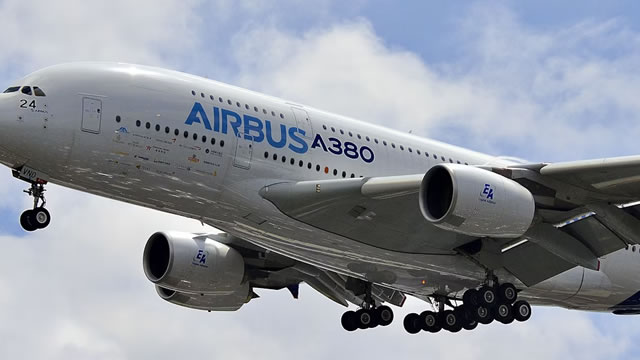
Airbus Hits Out at Pratt & Whitney Over Engine Shortages
Yahoo Finance· 2026-02-19 13:03
Core Viewpoint - Airbus is reducing its aircraft delivery expectations due to significant shortages of Pratt & Whitney engines, leading to a public rebuke of the supplier [1][4]. Group 1: Production and Delivery Impact - Airbus shares fell by as much as 8% following the announcement of engine issues that forced a slowdown in A320 production, impacting the company's ability to capitalize on post-pandemic demand for new aircraft [2]. - The company now forecasts approximately 870 commercial aircraft deliveries for the year, an increase from 793 in 2025 but below the 907 deliveries analysts had anticipated for 2026 [5]. - Airbus expects to produce between 70 and 75 A320 aircraft monthly by the end of next year, down from the previous target of 75 [6]. Group 2: Supplier Issues - Airbus has faced challenges sourcing various components, including engines, seats, and toilets, complicating the assembly and delivery of aircraft [3]. - The company has accused Pratt & Whitney of failing to meet contractual commitments, attributing the engine shortages to the supplier's decision to prioritize existing aircraft over new deliveries [4][7]. - The engine issues stem from persistent durability problems and quality issues with some components, leading Airbus to activate a dispute clause in its contract with Pratt [7].

Airbus CEO: Engine shortages are 'unsatisfactory'
Youtube· 2026-02-19 13:01
Core Viewpoint - The company is facing challenges with engine supply from Pratt & Whitney, which is impacting its production targets for 2026 and beyond. The company is pursuing contractual rights to address these issues. Engine Supply Issues - The company has an order in place with CFM, which is confirming its commitment, but Pratt & Whitney is scaling down its delivery, resulting in fewer engines than needed for 2026 [1][2] - CFM has increased its engine supply incrementally, but cannot guarantee additional deliveries beyond current commitments for 2026 [3] - The company is exploring options with Pratt & Whitney to increase engine supply, but the shortfall from Pratt is significant and difficult to offset [4] Legal and Contractual Actions - The company is considering legal action against Pratt & Whitney to enforce its contractual rights if an amicable resolution cannot be reached [5] Supply Chain Performance - The overall supply chain has improved significantly since the COVID-19 pandemic, although there are still some issues, such as a panel issue on the A320 that will take time to resolve [6][7] - The company enters 2026 in a better position than in previous years, despite ongoing challenges [7] Production Targets - The company aims to deliver around 870 aircraft in 2026, which is considered achievable despite the engine supply challenges [8][10] - The ramp-up of production is supported by increased final assembly lines, including new facilities in Mobile, Alabama, and Tulu [9][10]

Hormel Foods Stock: Analyst Estimates & Ratings
Yahoo Finance· 2026-02-12 13:38
Core Insights - Hormel Foods Corporation, based in Austin, Minnesota, is valued at $13.2 billion and distributes various food products globally under multiple brands [1] Performance Overview - Hormel Foods' shares have underperformed the broader market, declining 17.4% over the past year, while the S&P 500 Index has increased by nearly 14.4% [2] - Compared to the First Trust Nasdaq Food & Beverage ETF, which gained about 6% over the past year, Hormel's stock performance has been significantly lower [3] Challenges and Outlook - The company's underperformance is attributed to input cost inflation, supply chain issues, and discrete events such as a product recall and a facility fire, which have pressured margins and sales volumes [6] - Hormel expects continued volatility in input costs but is focusing on cost savings, marketing support for core brands, and portfolio reshaping to drive future growth [6] Financial Results - On December 4, 2025, Hormel reported Q4 results with an adjusted EPS of $0.32, exceeding Wall Street expectations of $0.30, while revenue of $3.19 billion fell short of forecasts of $3.20 billion [7] - For the full fiscal year, Hormel anticipates adjusted EPS in the range of $1.43 to $1.51 and revenue between $12.2 billion and $12.5 billion [7] Future Projections - Analysts project Hormel's EPS to grow by 6.6% to $1.46 on a diluted basis for fiscal 2026, ending in October [8] - The company's earnings surprise history is mixed, having beaten or matched consensus estimates in two of the last four quarters while missing forecasts in the other two [8]

Francesca’s files for bankruptcy, again
Yahoo Finance· 2026-02-09 12:23
Core Insights - Francesca's has filed for Chapter 11 bankruptcy protection for the second time in about six years, with consolidated assets between $10 million and $50 million and approximately 1,000 to 5,000 creditors [7] - The company's financial struggles are attributed to various factors, including supply chain issues, a shift towards e-commerce, and underperforming investments in non-core brands [7] Financial Performance - Francesca's income is primarily derived from its brick-and-mortar business, with only about 13% of 2025 sales coming from e-commerce [3] - The company peaked between 2016 and 2017, operating around 700 stores and generating over $500 million in sales [4] Recent Developments - MAS Acquisition acquired Francesca's in September 2024, following its previous acquisition out of bankruptcy by TerraMar Capital and Tiger Capital [5] - Despite being on a "positive trajectory" post-acquisition, the company continued to face supply chain challenges that limited merchandise access [5] Bankruptcy Details - The bankruptcy filing indicates that Francesca's has about $30.1 million in secured debt, with debt holders supporting the bankruptcy case [7] - The filing also mentions a phased liquidation process for store closures, driven by constrained liquidity from prior restructuring and a disruptive data breach in 2023 [7] Creditors - Among the top 30 unsecured creditors are Francesca's former CEO Andrew Clarke and several inventory suppliers, as well as landlords Simon Property Group and Tanger Properties [6]
Auto executives are hoping for the best and planning for the worst in 2026
CNBC· 2026-01-25 13:00
Core Insights - The U.S. automotive industry is facing ongoing challenges, with a trend of inconsistency expected to continue into 2026 [1][3] - The sector, contributing approximately 4.8% to the U.S. GDP, has been impacted by multiple crises since the onset of the Covid-19 pandemic [2] Industry Challenges - Automakers are experiencing a combination of supply chain issues, affordability concerns, and declining consumer demand, leading to a more difficult environment in 2026 [3][4] - Sales forecasts for 2026 suggest steady to lower sales, with 2025 sales recorded at 16.3 million units, down from over 17 million units for five consecutive years prior to the pandemic [4] Vehicle Pricing Dynamics - The average transaction price for new vehicles reached around $50,000 by the end of 2025, marking a 30% increase from less than $38,747 at the beginning of 2020 [5] - Historically, average transaction prices increased by 3.2% year-over-year, but this rate nearly tripled to 9% from 2020 to 2022 [5][6] Ownership Costs - Total vehicle ownership costs have escalated, with median household income required to purchase an average new vehicle increasing from 33.7 weeks in November 2019 to 36.3 weeks currently [8] - The cumulative impact of rising vehicle prices, inflation, and increased maintenance and insurance costs has exacerbated the affordability crisis for many households [7][8] Strategic Shifts - In response to affordability challenges, automakers like Toyota and Honda are shifting focus towards lower-priced vehicle models and certified pre-owned vehicles [10][11] - Ford is considering re-entering the sedan market, which it exited in 2020, indicating a potential shift in strategy to adapt to changing market conditions [12][13] Regulatory Environment - Automakers are preparing for potential volatility in U.S. regulations and trade negotiations, particularly regarding the United States-Mexico-Canada Agreement [15][16] - The outcome of these negotiations could significantly impact production costs and pricing strategies for automakers with substantial U.S. operations [16] Market Outlook - Analysts predict a challenging year ahead for the automotive sector, with mixed results expected as companies navigate ongoing disruptions [17][18] - GM's CEO has indicated a more optimistic outlook for 2026 compared to 2025, with adjusted earnings guidance suggesting potential growth [18]



Volkswagen warns workers of potential stoppages as chip crunch looms
Yahoo Finance· 2025-10-22 13:25
Core Points - Volkswagen has indicated that it cannot rule out production stoppages due to supply chain issues stemming from a dispute over Dutch chip maker Nexperia, which poses a threat to Europe's auto sector [1][2][3] - The Dutch government seized control of Nexperia last month, raising concerns about intellectual property, while China has restricted exports of essential products needed by European car manufacturers [2][7] - Volkswagen has communicated to its staff that, while production has not yet been affected by chip shortages, the situation is dynamic and could change in the short term [2][3] Production Impact - Reports suggest that Volkswagen may plan production stoppages starting next Wednesday, initially affecting the Golf series and subsequently other models [4] - The company is currently monitoring the situation closely and has not confirmed any specific plans regarding production halts [4][6] - Volkswagen will temporarily pause production of its Golf and Tiguan models at its Wolfsburg plant on Friday for an unrelated inventory issue, clarifying that this is not connected to chip supply problems [5] Industry Context - The ongoing dispute over Nexperia adds to existing global trade tensions impacting European carmakers, including increased U.S. import tariffs and Chinese export restrictions on rare earths [7] - Other automakers, such as BMW and Mercedes, are also taking steps to secure their production in light of the Nexperia situation [7] - Recent discussions between Dutch and Chinese economy ministers did not yield a resolution to the Nexperia impasse [8]
Embraer eyes 100 commercial jet deliveries per year in 2028, CEO says
Reuters· 2025-09-11 18:09
Core Viewpoint - Embraer aims to achieve 100 commercial aircraft deliveries annually by 2028, but supply chain challenges may hinder this goal [1] Company Summary - The CEO of Embraer communicated the target of reaching 100 commercial aircraft deliveries per year by 2028 [1] - Current supply chain issues are expected to delay the achievement of this delivery target [1]