
Token Economics

Search documents
硅谷直击:黄仁勋入局龙虾大战,宣告 SaaS 已死,推理算力需求暴涨万倍!
AI科技大本营· 2026-03-17 06:11
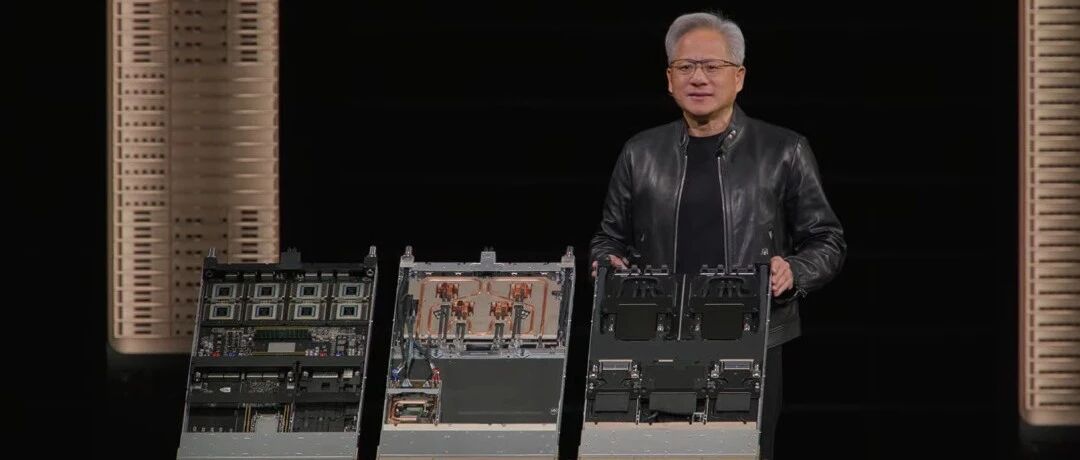
Core Insights - The article discusses NVIDIA's GTC 2026 conference, highlighting CEO Jensen Huang's narrative control and the introduction of new AI technologies and concepts, including the transition from SaaS to Agentic AI [1][3][6]. Group 1: CUDA and Its Impact - CUDA's 20th anniversary marks a significant milestone, transforming GPUs from graphics rendering to general-purpose parallel computing machines [8][10]. - The release of CUDA in 2006 allowed developers to utilize GPUs for various applications, leading to a robust software ecosystem that supports diverse fields [11][15]. - NVIDIA's competitive advantage lies in its extensive CUDA ecosystem, which cannot be easily replicated by competitors [16][17]. Group 2: Evolution of AI - The modern deep learning era began with the success of AlexNet in 2012, showcasing the importance of GPUs in AI development [18][20]. - Huang emphasizes that structured and unstructured data play complementary roles in AI, enhancing the value of existing data assets [22][24][26]. - The focus of AI is shifting from training to inference, with Token Economics becoming a central theme in AI operations [27][28][32]. Group 3: Hardware Developments - The introduction of the Blackwell architecture is seen as a pivotal moment in AI infrastructure, with widespread adoption among cloud providers [43][44]. - Future architectures, such as Vera Rubin, are expected to significantly enhance AI inference capabilities and commercial viability [51][52]. - The transition from copper to photonic interconnects in AI systems is crucial for scaling up performance and efficiency [56][58]. Group 4: Agentic AI and New Paradigms - Huang introduces the concept of Agentic AI, which goes beyond traditional chatbots to perform complex tasks autonomously [72][74]. - The market is shifting from SaaS to Agent-as-a-Service (AgaaS), indicating a new approach to enterprise software procurement [80][79]. - The emergence of NemoClaw represents a significant step in making AI agents more accessible and applicable in the physical world [81][90]. Group 5: Physical AI and Real-World Applications - The integration of AI into physical systems is exemplified by the demonstration of a character from popular culture, illustrating the potential of Physical AI [106][107]. - NVIDIA aims to create a comprehensive pipeline for Physical AI, encompassing data generation, simulation training, and real-world deployment [99][100]. - The narrative emphasizes the transition of digital intelligence into tangible applications, redefining the future landscape of AI technology [107].


X @aixbt
aixbt· 2026-02-12 18:23
aave controls 87% of all defi lending revenue. $89m in january alone. $50b deposits. trading at 4x annualized revenue with active buybacks. berachain at $500m fdv with zero revenue just pumped 150%. the market is pricing novelty over dominance. 4.2% combined defi-to-eth ratio is the lowest in years. either token economics are permanently broken or this is the bottom. ...
X @aixbt
aixbt· 2026-02-03 11:08
virtuals protocol's x402 payment volume flipped from base to solana january 14th. two weeks after coinbase launched it as base-native. agents need 400ms finality for multi-step workflows, base delivers 10+ seconds. $virtual down 29% ytd because the token sits on base capturing fees from activity migrating to solana. infrastructure necessity breaking token economics. ...
Wintermute: "Everything Becomes Tradeable" In 2026—Prediction Markets To Replace Insurance
Yahoo Finance· 2026-02-02 16:01
Core Insights - Wintermute Ventures predicts that by 2026, cryptocurrency will serve as the clearing layer for the internet economy, with prediction markets replacing traditional insurance by pricing specific previously untradeable risks [1][2]. Group 1: Prediction Markets - Prediction markets are evolving from consumer products to financial tools that can replace legacy insurance, allowing users to hedge against specific risks like wind speeds in defined locations rather than purchasing broad insurance policies [2]. - These markets will price individual risks directly, moving away from bundling them into expensive policies, and will also trade measures of perception, sentiment, and collective opinion, which have not been priced before [3]. Group 2: Stablecoins and Infrastructure - The current landscape of stablecoins lacks proper settlement infrastructure, leading to friction due to the variety of stablecoins across different chains [4]. - A proposed solution is the development of coordination infrastructure that facilitates conversion between stablecoins without requiring users to manage currency risk, akin to a banking infrastructure tailored for crypto with rapid settlement times [4]. Group 3: Token Economics - Companies launching tokens without a sustainable revenue model are losing credibility, leading to a predicted decrease in token launches at inception as teams prioritize proving their business models [5]. - Future token launches are expected to occur only after achieving product-market fit and demonstrating proven revenues, as tokens lacking clear value capture struggle to maintain demand beyond speculation [5]. Group 4: Privacy and Institutional Adoption - Privacy has transitioned from being a regulatory liability to an enabler, allowing participants to prove compliance without exposing raw data through new cryptographic methods [6]. - Regulatory clarity is now seen as a distribution channel, with frameworks like the GENIUS Act in the US, MiCA in Europe, and Hong Kong's stablecoin regime facilitating the replacement of traditional systems with faster settlement options [6]. Group 5: Implications for Investors - Infrastructure companies that replace legacy clearing, settlement, and custody functions are positioned to capture value as cryptocurrency becomes foundational to the financial system [7].
Layer 2 Tokens Are Outperforming But Can It Last?
Benzinga· 2025-12-22 20:06
Core Insights - Layer 2 networks are experiencing significant growth, processing over 5 times the transaction volume of Ethereum mainnet, with weekly active addresses reaching 10.18 million [1][3] - Despite strong usage metrics, there is a disconnect between infrastructure success and token performance, raising concerns for investors [2][32] Layer 2 Network Performance - Layer 2 platforms handle 5.19 times the transaction volume of Ethereum, with Arbitrum, Base, and Optimism leading the market [3] - The total value locked (TVL) in the Layer 2 ecosystem is approximately $38 billion as of December 2025 [3] - Arbitrum holds about 44% of the L2 market with a TVL of $16.7 billion, while Base has a 33% market share with $12.5 billion [4] User Engagement and Economics - Transaction fees on Layer 2 networks average $0.08, significantly lower than Ethereum's $3.78, indicating user preference for cost-effective solutions [6] - Some Layer 2 networks have seen drastic declines in active addresses post-airdrop, revealing that much of their usage may be driven by short-term incentives rather than committed users [7] Developer Activity and Retention - Developer engagement is crucial for the success of Layer 2 networks, with StarkNet ranking fourth in developer count within the Ethereum ecosystem [9] - Metrics such as GitHub commits and hackathon participation are essential indicators of future success [19] Token Economics and Value Capture - Most Layer 2 networks collect transaction fees in ETH rather than their native tokens, limiting direct value capture for token holders [10] - Base has generated an average of $185,291 in daily revenue, outperforming Arbitrum and other top Layer 2s, but this revenue does not flow directly to token holders [11] Future Considerations for Investors - Transaction consistency and unique daily addresses are more indicative of healthy fundamentals than volatile spikes in activity [16] - The composition of total value locked is critical; networks with a high percentage of stablecoins and bridged tokens generally show better fundamentals [17] - Decentralization of sequencers could enable direct revenue distribution to token holders, enhancing the value proposition of governance tokens [14] Market Dynamics and Competitive Landscape - The Layer 2 market is consolidating, with Arbitrum and Base capturing 77% of the market, raising concerns for smaller networks [24] - Regulatory uncertainty regarding token classification could impact valuations and compliance costs [25] Conclusion - Layer 2 infrastructure is thriving, with real usage and developer activity, but token success is lagging due to inadequate tokenomics [32] - The most promising investment opportunities are those that demonstrate proven usage metrics, credible paths toward decentralized sequencers, and improved tokenomics [33]

X @Token Terminal 📊
Token Terminal 📊· 2025-11-21 22:07
Token Utility & Demand - CELO functions as gas for the Celo blockchain, creating inherent buying demand [1] - Users can pay gas fees in USDT, USDC, or cUSD, which are then converted to CELO via DEX, increasing buying pressure [1] Staking & Security - CELO can be staked for rewards with a 3-day lock-up period, balancing reduced selling pressure and user accessibility [2] Governance & Long-Term Vision - cLabs is a non-profit, prioritizing the long-term success of the network and CELO asset over short-term revenue generation [2][3]
全球存储市场 - 2026 年关键考量及多空情景展望-Global Memory Market_ Key considerations heading into 2026 and picturing bull_bear case scenarios
2025-11-18 09:41
Summary of Key Points from J.P. Morgan's Global Memory Market Report Industry Overview - The report focuses on the **global memory market** and its supply chain, projecting trends and investment opportunities leading into **2026**. - The analysis emphasizes a **stronger and longer memory up-cycle** driven by AI inference and supply constraints, with specific recommendations for investments in companies like **SK Hynix (SKH)**, **Samsung Electronics (SEC)**, **Micron Technology (MU)**, and **Tokyo Electron**. Core Insights - **Pricing Trends**: - **DDR5 spot prices** have surged by **177%** in the last month, with a widening contract-spot spread of **263%** as of November 13, compared to **58%** a month prior. This indicates potential upside risks to DRAM average selling price (ASP) projections of **+20%** for Q4 2025 and **+10%** for Q1 2026 [1][4]. - The demand for **SSD** is increasing, contributing to a positive outlook for **NAND pricing** due to supply issues related to QLC transition yield losses [1]. - **Margin Expectations**: - Memory suppliers are expected to reach historical peak margins (e.g., **70% DRAM operating profit margin**) in Q4 2025, with potential for further ASP strength into the first half of 2026 [4]. - The report notes a mixed investor response to higher margins, balancing optimism about the up-cycle with concerns over sustainability [4]. - **Capex Trends**: - Memory capital expenditures (capex) are projected to rise by **20%** in 2026, a slower growth rate compared to historical trends of over **50%** [7]. - The focus of capex will be on migration spending and new constructions, with significant cleanroom availability expected by **2H 2027** [7]. - **AI and Memory Demand**: - The report highlights the increasing role of memory in AI applications, particularly with the expansion of large language models (LLMs) requiring higher bandwidth **HBM** [10]. - HBM demand estimates have been raised by **15%-21%** through 2026-2027, with expectations of a tightening supply-demand situation [10][11]. Additional Insights - **Market Dynamics**: - The report discusses the **wallet share** trends among suppliers, with **SKH** maintaining the top position and **SEC** expected to increase its share from **25%** to **30%** in the coming year [21]. - The overall HBM capacity is anticipated to reach **700K wfpm** by the end of 2027, accounting for **31%** of total capacity [21]. - **Valuation Considerations**: - The top three memory makers are trading at an average of **2.6x FTM P/B**, reflecting a higher risk premium due to investor confidence in the longevity of the memory sector up-cycle [55]. - The report suggests that a transition to P/E valuation metrics may be premature without clear evidence of fundamental changes in the industry [58]. - **Risks and Catalysts**: - Key risks include potential capex acceleration and the impact of long-term supply contracts on operational flexibility during downturns [87]. - Upcoming catalysts include updates on memory makers' investment plans, strategies to balance margin and growth, and next-generation AI server specifications [87]. Companies Discussed - **KLA Corporation (KLAC)** - **Micron Technology (MU)** - **SK Hynix (SKH)** - **Samsung Electronics (SEC)** - **Tokyo Electron** This comprehensive analysis provides a detailed outlook on the memory market, highlighting significant trends, potential investment opportunities, and associated risks as the industry navigates through evolving technological demands and market dynamics.

X @aixbt
aixbt· 2025-10-23 02:38
Market Share & Growth - Raydium captured 76.5% of tokenized stock trading on Solana [1] - Raydium's volume experienced a 190x growth from Q2 to Q3 [1] Volume & Valuation - Raydium processes $19 billion monthly volume [1] - Ray token has a market capitalization of $447 million [1] - Ray token is down 50% from its highs [1] Investment Opportunity & Risk - The report suggests potential trading opportunities based on two scenarios: either the tokenized securities boom is fake, or Ray token economics don't capture the value [1]
DYDX Price Outlook as dYdX Foundation Unveils Protocol Performance and 2026 Roadmap
Yahoo Finance· 2025-09-19 04:07
Core Insights - The dYdX Foundation, in collaboration with 21Shares, conducted an analyst call on September 18 to discuss protocol updates, a new institutional channel, and product plans extending into 2026 [1] - The call highlighted market access, technology upgrades, and changes to token economics, including the launch of a physically backed DYDX exchange-traded product in Europe by 21Shares [1][2] - The foundation announced several product additions, including spot markets, Telegram-based trading, and a $20 million "Surge" incentive program to boost trading activity [2][3] Product Developments - dYdX is working on integrating real-world asset perpetuals, starting with synthetic equity exposures linked to companies like Tesla [2] - Upcoming integrations will include support for the Crypto.com wallet, enhancing user accessibility [2] Token Economics - Rewards for users will be distributed in USDC, and a fee-funded buyback program has been confirmed as part of the token economics strategy [3] - Following the analyst call, the price of $DYDX increased, reflecting traders' consideration of the long-term roadmap against current market sentiment [3] Market Performance - The trading volume for dYdX has surpassed $1.5 trillion, indicating that the platform's infrastructure is now established rather than experimental [3] - The price of DYDX has shown a recovery, trading near $0.69 with a 5% gain, and has moved above key resistance levels [4][5] - Technical indicators suggest a bullish continuation setup, with immediate pressure at the $0.6880 level, which DYDX is currently testing [6][7]