生物基材料

Search documents
糖能科技,超2亿融资完成,全球首条万吨HMF产线加速
DT新材料· 2025-10-08 16:04
Core Insights - Zhejiang Sugar Energy Technology Co., Ltd. successfully completed equity and debt financing exceeding 200 million yuan on October 1 [2] - The financing strategy optimizes the company's capital structure and provides sufficient funding for its core project, which aims to produce 12,000 tons of 5-hydroxymethylfurfural (HMF) annually, facilitating the construction of the world's first 10,000-ton HMF production line [3] Company Overview - Founded in December 2017, Sugar Energy Technology is a leading enterprise in the research, production, and application of bio-based furan new materials, with core technology originating from the Ningbo Institute of Materials Technology and Engineering, Chinese Academy of Sciences [5] - The company has developed a bio-based material industry development system based on high-end raw material production capabilities and downstream innovation advantages, achieving breakthroughs in over 120 key technologies [5] - Sugar Energy Technology has successfully overcome technical barriers in HMF production, including low selectivity, product instability, and purification difficulties, and has pioneered continuous production processes internationally [5] Production Capacity and Projects - The company is currently constructing a 12,000-ton production capacity for 5-HMF, along with production lines for 2,5-furandicarboxylic acid (FDCA) and polyester (PEF), each with a capacity of 2,000 tons [6] - The company has achieved stable operation of a pilot production line for 1,000 tons of 5-HMF, utilizing its self-developed continuous production technology [5][6]


朱锦研究员:生物基高分子材料研究新进展(建议收藏)
DT新材料· 2025-09-30 16:10
Core Viewpoint - The article discusses the advancements and commercialization opportunities in the field of bio-based polymers, highlighting the potential of non-food biomass as a sustainable resource for producing high-performance materials [4][7][10]. Summary by Sections Economic Viability of Bio-based Polymers - The economic feasibility of bio-based polymers varies, with some materials being economically viable while others are not. The development of bio-based materials from biomass is a key focus area for research and development [7][10]. - The history of polylactic acid (PLA) pricing illustrates the significant potential for converting biomass into bio-based materials [7]. Research Directions and Achievements - The Zhejiang Provincial Key Laboratory for Bio-based Polymer Materials focuses on three main research areas: efficient conversion of non-food biomass, design and synthesis of high-quality bio-based polymers, and high-quality processing and application technologies [10]. - Key research topics include cellulose conversion to sugars, furan dicarboxylic acid (FDCA) and its polyesters, biodegradable polymers, and bio-based additives [10][11]. Cellulose Conversion - The conversion of cellulose to glucose is challenging but essential for utilizing non-food biomass. The research team has developed a catalyst that achieves over 85% glucose yield from cellulose, which is currently the highest reported [15][16]. - This process enables the further development of important products such as ethanol and lactic acid [16]. Furan Dicarboxylic Acid (FDCA) and Its Polyesters - FDCA is a promising bio-based platform compound with advantages over traditional petroleum-based counterparts, including sustainability and enhanced properties [17][19]. - The research team has pioneered a non-food biomass route for FDCA production, which is more sustainable and efficient than traditional methods. They have successfully scaled up production to a pilot level [21][25]. Biodegradable Polymers - Biodegradable polymers are seen as a solution to plastic pollution, but they often face challenges such as slow degradation rates. The research team is focusing on developing marine biodegradable materials [26][30]. - They have successfully created a low-cost oxalic acid-based polymer that demonstrates effective degradation in various environments [31]. Bio-based Additives - There is a significant lack of bio-based additives for polymer modification. The global compatibilizer market is growing rapidly, with a focus on developing high-grafting-rate reactive compatibilizers [32][34]. - The team has developed a bio-based compatibilizer with superior performance compared to traditional products, and a production line has been established [35]. Future Directions - The article concludes that the bio-based polymer sector has seen rapid development over the past two decades, with some materials already commercialized. The potential for bio-based polymers to replace fossil-based materials is significant [35].

凤阳县鑫云科技有限公司成立 注册资本20万人民币
Sou Hu Cai Jing· 2025-09-29 01:25
Core Viewpoint - Fengyang County Xinyun Technology Co., Ltd. has been established with a registered capital of 200,000 RMB, indicating a focus on various technology and manufacturing sectors [1] Company Summary - The legal representative of the company is Shen Xuequn [1] - The registered capital of the company is 200,000 RMB [1] - The company operates in multiple areas including technology intermediary services, bio-based materials manufacturing, and refractory materials production [1] Business Scope - The business scope includes general projects such as: - Technology intermediary services - Manufacturing of bio-based materials - Production of refractory materials - Information consulting services (excluding licensed information consulting services) - Processing and handling of non-metal waste and scraps - Sales of non-metal minerals and products - Manufacturing of non-metal mineral products - Processing of construction stones - Sales of construction materials - Manufacturing and sales of coatings (excluding hazardous chemicals) - Production of chemical products (excluding licensed chemical products) - Sales of new metal functional materials - Sales of metal ores - Processing of metal waste and scraps (excluding licensed businesses) [1]
公司问答丨凯赛生物:公司正在开发生物基复合材料在新能源电池上盖的应用
Ge Long Hui A P P· 2025-09-28 08:15
Group 1 - The company is developing bio-based composite materials for applications in new energy batteries [1] - The company is simultaneously constructing production lines for these materials [1] - Currently, the materials have not been used for packaging in solid-state batteries [1]

又一生物基材料企业,连续完成两轮融资
DT新材料· 2025-09-25 16:05
Core Insights - Xiangsheng Technology has recently completed two rounds of angel financing totaling several tens of millions, which will be used for the construction of an AI catalysis technology platform, product development, production line expansion, and smart factory construction [1] - The company aims to reduce production costs through its self-developed multiphase microflow matrix reaction platform, targeting high-barrier packaging scenarios [1] - Xiangsheng Technology has developed biocatalysts and nano-catalysts for the mass production of FDCA and PEF, providing microflow process development and mass production services to multiple industry clients [1] Financial Projections - By 2025, Xiangsheng Technology expects to have orders in hand and intentions reaching the million-level, with two strategic product lines contributing approximately 50% each to revenue [2] - The company anticipates a profit growth of 40%-50% over the next 3-4 years [2]

首个生物基复合材料冷藏集装箱交付
Zhong Guo Hua Gong Bao· 2025-09-22 03:05
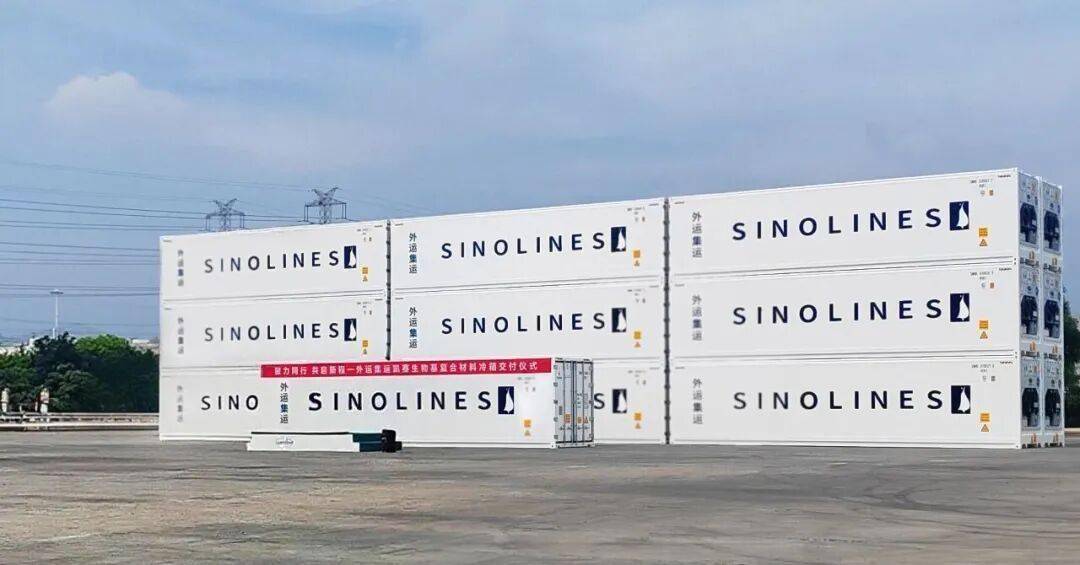
Group 1 - The world's first bio-based composite refrigerated container has been officially delivered, marking a breakthrough in the application of bio-based materials in the refrigerated container sector in China [1] - The bio-based composite material, developed by Shanghai Kasei Biotechnology Co., Ltd., has lower carbon emissions, lighter weight, and recyclable properties compared to traditional metal materials [1] - The material can reduce carbon emissions by 50% compared to traditional petroleum-based products, with a density of only 1/4 that of steel and 2/3 that of aluminum [1] Group 2 - The material exhibits excellent chemical stability and corrosion resistance, eliminating the need for additional rust-proof treatment, thus reducing production costs and environmental pollution [1] - The design flexibility of the material allows for precise engineering of mechanical properties by adjusting fiber layering, akin to "cutting fabric" [1] - As the application market expands and production scales increase, the manufacturing efficiency of key monomers will improve, leading to a continuous decrease in costs [2]
国内首个AI+MGI干湿法一体生物基新材料(合成生物)智能研发创新中心启动
Xin Hua Wang· 2025-09-05 06:59
Core Insights - The establishment of the first "AI + MGI (Material Genome Initiative)" driven "Dry-Wet Integrated Polysaccharide Biobased Material Innovation Laboratory" in Taizhou, Zhejiang marks a significant advancement in digital R&D for biobased materials in China, filling a gap in collaborative R&D for polysaccharide biobased materials [1] - The laboratory aims to create a replicable and sustainable innovation ecosystem through a model of "government guidance, platform operation, enterprise participation, and industry-university-research collaboration," referred to as the "Huangyan Sample" [1] - The laboratory focuses on the development of biodegradable and low-carbon polysaccharide materials, which is a key step in Taizhou Huangyan's transition towards high-end, intelligent, and green manufacturing [1] Summary by Sections Laboratory Functionality - The laboratory integrates "dry experiments" (computational simulations) and "wet experiments" (physical synthesis testing), significantly reducing the time and number of experiments needed for developing new materials [2] - Companies can now quickly receive optimal solutions for their needs, enhancing innovation capabilities and efficiency [2] Collaboration and Ecosystem - The laboratory brings together government, enterprises, universities, and research institutions, with the professional platform "Zhigeng" responsible for its operation, emphasizing a "demand-driven, complementary advantages" approach [1][2] - The collaboration fosters a more focused research direction, addressing practical challenges such as production stability and cost control, thus enhancing the practical value of academic research [2] Broader Implications - The Huangyan laboratory serves as an innovative hub connecting government, industry, academia, and research, facilitating faster market entry for technological achievements [2] - The model established by the laboratory is seen as a valuable "Chinese solution" for the large-scale implementation of cutting-edge technologies like AI + MGI, with potential applications in various fields such as new energy, biomedicine, and semiconductors [2]
凯赛生物,90万吨生物基聚酰胺项目公示
DT新材料· 2025-09-03 23:31
Core Viewpoint - The article highlights the advancements and projects of Kasei (Taiyuan) Biomaterials Co., Ltd., particularly in the production of bio-based materials, showcasing significant growth in revenue and profit, as well as innovative product applications in the industry [2][5]. Group 1: Project Developments - Kasei is constructing a project with an annual capacity of 500,000 tons of bio-based hexamethylenediamine and 900,000 tons of bio-based polyamide, located in the Shanxi Synthetic Biology Industrial Ecological Park [2]. - The company currently has a series of bio-based dicarboxylic acids (DC10-DC18) with an annual capacity of 115,000 tons, and a bio-based sebacic acid project with an annual capacity of 40,000 tons that commenced production in 2022 [4]. - The bio-based hexamethylenediamine has an annual capacity of 50,000 tons, primarily used as a raw material for bio-based polyamide production [4]. Group 2: Financial Performance - In the first half of 2025, Kasei achieved a revenue of 1.671 billion yuan, representing a year-on-year increase of 15.68% [5]. - The net profit attributable to shareholders reached 309 million yuan, up 24.74% year-on-year, while the net profit after deducting non-recurring items was 296 million yuan, reflecting a growth of 23.67% [5]. Group 3: Research and Development - The company invested 123.2 million yuan in R&D in the first half of 2025, a 23.13% increase year-on-year, accounting for 7.37% of its revenue [4]. - Significant progress has been made in R&D projects related to green dicarboxylic acids, bio-based piperidine, bio-based long-chain polyamides, and high-value utilization of agricultural waste [4].

全球首个!凯赛生物,绿色复合材料新突破
Sou Hu Cai Jing· 2025-09-03 01:20
Core Viewpoint - The delivery of the world's first bio-based composite refrigerated container marks a significant advancement in the application of bio-based materials in the cold chain logistics sector, providing a replicable "Chinese solution" for the global container industry’s low-carbon transition [1][3]. Group 1: Product Innovation - The newly delivered refrigerated container utilizes Kasei Biotech's self-developed bio-based polyamide continuous fiber composite materials in key components such as the inner ceiling and side panels [3]. - The bio-based material offers low carbon and high performance, featuring lightweight, high strength, wear resistance, and corrosion resistance, with a density only 1/4 that of steel and 2/3 that of aluminum, while achieving comparable or superior mechanical properties [3]. Group 2: Environmental Impact - The lightweight design significantly reduces the weight of the container, leading to decreased transportation energy consumption and improved logistics efficiency [3]. - The material requires no additional surface treatment to meet functional needs, thereby lowering production costs and environmental pollution [3]. - The lifecycle carbon emissions of the bio-based materials are substantially lower than those of traditional metal materials, aligning with global carbon neutrality trends [3]. Group 3: Future Developments - In addition to the container delivery, a bio-based battery shell manufacturing base project, with a total investment of 500 million yuan, has been established, aiming for an annual production capacity of 2.5 million bio-based battery shells [3]. - The bio-based materials exhibit strong corrosion resistance, maintaining stability in harsh environments such as high humidity and low temperatures, which extends the product's lifespan [3].
全球首个!凯赛生物,绿色复合材料新突破
DT新材料· 2025-09-02 16:05
Core Viewpoint - The delivery of the world's first bio-based composite refrigerated container marks a significant advancement in the application of bio-based materials in the logistics industry, providing a replicable "Chinese solution" for the global container industry’s low-carbon transition [2][4]. Group 1: Product Innovation - The refrigerated container utilizes Kasei Biotech's bio-based polyamide continuous fiber composite materials in critical components, showcasing low-carbon and high-performance advantages [4]. - The material has a density of only 1/4 that of steel and 2/3 that of aluminum, yet achieves mechanical performance comparable to or better than metal materials [4]. Group 2: Environmental Impact - The bio-based materials significantly reduce the carbon emissions throughout their lifecycle compared to traditional metal materials, aligning with global carbon neutrality trends [4]. - The lightweight design through "plastic replacing steel and aluminum" reduces transportation energy consumption, enhancing logistics efficiency [4]. Group 3: Additional Developments - A new manufacturing base for bio-based battery shells, with a total investment of 500 million yuan, is set to produce 2.5 million sets annually, further expanding the application of bio-based materials [4]. - The materials used in the container do not require additional surface treatment, which lowers production costs and environmental pollution [4]. Group 4: Collaborating Entities - The project involves collaboration with China Merchants Group's subsidiary, China Merchants Container Transportation Co., and COSCO Shipping Development Group's subsidiary, Shanghai Huanyu Qingdao Container Factory [2].