
生物法长链二元酸

Search documents
我国生物制造产业10大链主企业分析
DT新材料· 2026-03-04 16:05
Core Insights - The 11th Bio-based Conference and Exhibition will be held in Shanghai from May 20-22, focusing on bio-based chemicals and materials, featuring 11 thematic forums, 7 concurrent activities, and 1000 new product displays [2] Group 1: Company Overview - Kasei Biotech, established in 2000, focuses on synthetic biology and bio-manufacturing technology, becoming a global leader in producing new bio-based materials [3] - Kasei Biotech's revenue for 2025 is projected to reach 3.295 billion yuan, marking an 11.41% increase, with a net profit of 566 million yuan, up 15.7% [3] - Huaheng Biotech, founded in 2005, plans to list in Hong Kong and expects a revenue of 2.885 billion yuan in 2025, a 32.5% increase, but a net profit decrease of approximately 30% [9][10] - Huadong Medicine achieved a revenue of 41.906 billion yuan in 2024, a 3.16% increase, with a net profit of 3.512 billion yuan, up 23.72% [14] Group 2: Main Business Composition - Kasei Biotech's main revenue sources include long-chain dicarboxylic acids (2.67 billion yuan, 90.26% of revenue) and bio-based polyamides (144 million yuan, 4.88% of revenue) [6] - Huaheng Biotech's main products include amino acids (1.509 billion yuan, 69.29% of revenue) and vitamins (207 million yuan, 9.49% of revenue) [10] - Huadong Medicine's industrial microbiology segment saw revenue growth from 510 million yuan in 2022 to 711 million yuan in 2024, with a CAGR of 18.07% [14] Group 3: Research and Development Projects - Kasei Biotech is investing in projects like bio-manufacturing research with a total investment of 6.3 million yuan, focusing on fermentation and extraction technology [7] - Huaheng Biotech has multiple ongoing projects, including optimizing amino acid production strains and developing high-purity amino acid removal processes [11][12] - Huadong Medicine has initiated 393 research projects in industrial microbiology, focusing on xRNA raw materials and health-related products [18] Group 4: Development Strategies - Kasei Biotech aims to expand large-scale applications of bio-materials to replace petrochemical products and utilize agricultural waste for bio-manufacturing [8] - Huaheng Biotech focuses on becoming a leader in synthetic biology through innovation and collaboration, emphasizing the use of renewable resources [13] - Huadong Medicine is accelerating its business layout through cooperation and acquisitions, focusing on xRNA raw materials and health products [25] Group 5: Financial Performance - Kasei Biotech's revenue for 2025 is projected to be 3.295 billion yuan, with a net profit of 566 million yuan [3] - Huaheng Biotech expects a revenue of 2.885 billion yuan in 2025, with a significant decrease in net profit [9] - Huadong Medicine's revenue reached 41.906 billion yuan in 2024, with a notable increase in net profit [14] Group 6: Market Trends - The bio-based industry is witnessing a shift towards sustainable materials, with companies focusing on reducing reliance on fossil fuels and enhancing the use of agricultural by-products [8][13] - The demand for bio-based products is expected to grow, driven by environmental concerns and regulatory support for sustainable practices [2][8]






我国生物制造产业10大链主企业概况(含在研产品)
合成生物学与绿色生物制造· 2026-03-02 04:06
Core Insights - The 11th Bio-based Conference and Exhibition will be held in Shanghai from May 20-22, focusing on bio-based chemicals and materials, featuring 11 thematic forums, 7 concurrent activities, and 1000 new product displays [2] - The article outlines the basic information, main business composition, ongoing projects, and development strategies of ten leading companies in the bio-manufacturing industry, including Kasei Biotech, Huaheng Biotech, and others [2] Group 1: Kasei Biotech (688065) - Kasei Biotech achieved a revenue of 3.295 billion yuan in 2025, marking an 11.41% year-on-year increase, with a net profit of 566 million yuan, up 15.7% [3] - The main business composition includes synthetic bio-materials, with long-chain dicarboxylic acids generating 2.67 billion yuan in revenue, accounting for 90.26% of total income [6] - Ongoing projects focus on bio-manufacturing research, including the development of fermentation technology for bio-based materials and high-throughput microbial screening systems [7][8] Group 2: Huaheng Biotech (688639) - Huaheng Biotech plans to list in Hong Kong, with projected revenue of 2.885 billion yuan in 2025, a 32.5% increase, but a net profit decrease of approximately 30% [9][10] - The main business composition includes amino acids, contributing 1.509 billion yuan, and vitamins, contributing 207 million yuan, with a significant portion of revenue coming from overseas [11] - Ongoing projects include optimizing amino acid production strains and developing high-purity amino acid removal processes [12][13] Group 3: Huadong Medicine (000963) - Huadong Medicine expects a revenue of 41.906 billion yuan in 2024, a 3.16% increase, with a net profit of 3.512 billion yuan, up 23.72% [15] - The industrial microbiology segment saw revenue growth from 510 million yuan in 2022 to 711 million yuan in 2024, with a CAGR of 18.07% [15] - The company has initiated 393 research projects in the industrial microbiology field, focusing on xRNA materials and health-related products [19] Group 4: Meihua Biotech (600873) - Meihua Biotech reported a revenue of 25.069 billion yuan in 2024, a 9.69% decrease, with a net profit of 2.740 billion yuan, down 13.85% [28] - The company focuses on amino acid production and has developed a comprehensive ecosystem including animal nutrition and pharmaceutical-grade amino acids [27] - Research and development investments reached 733 million yuan in 2024, emphasizing the development of new technologies and strains [31] Group 5: Chuan Ning Biotech (301301) - Chuan Ning Biotech achieved a revenue of 5.758 billion yuan in 2024, a 19.38% increase, with a net profit of 1.400 billion yuan, up 48.88% [36] - The main business composition is primarily in pharmaceutical manufacturing, with a significant portion of revenue from pharmaceutical intermediates [38] - The company has established a commercial system integrating product selection, research, and large-scale production [37]

凯赛生物总裁杨晨:以生物智造筑牢双碳基石 打造产业协同生态
Zhong Guo Zheng Quan Bao· 2026-02-09 23:17
Core Viewpoint - Biomanufacturing is a crucial component of national strategic technological strength and a key engine for promoting green and low-carbon industrial transformation. The company, Kasei Biotech, has been deeply engaged in this field for over 20 years, leveraging core technologies and products to build competitive advantages [2] Group 1: Green Transformation in Downstream Industries - Kasei Biotech focuses on developing chemicals through biotechnological processes, aiming to create low-cost alternatives to traditional petrochemical products. The biomanufacturing process is characterized by mild reaction conditions and the use of renewable plant materials or biomass waste, significantly reducing reliance on non-renewable fossil resources [3] - The company has developed a series of biobased long-chain dicarboxylic acids and biobased hexamethylenediamine, which are typical products in the biomanufacturing industry. These products meet high-performance requirements while being cost-effective and environmentally friendly, thus supporting downstream industries in overcoming carbon barriers and enhancing market competitiveness [3] Group 2: Application and Production Capacity - Kasei Biotech's biobased composite materials have been successfully applied in various sectors, including new energy, transportation logistics, pipelines, and construction. For instance, biobased polyamide composite materials for battery shells reduce weight and costs while meeting fire resistance and protection needs [4] - The company has established a production capacity of 40,000 tons of biobased dodecanedioic acid and a 5,000-ton production line for biobased high-temperature polyamide. The company is also building a complete industrial chain in its Hefei biobased materials base [4] Group 3: Future Development and Innovation - Kasei Biotech plans to expand the application scenarios of biobased polyamides and composite materials, focusing on sectors such as automotive, energy storage, and robotics through joint ventures with industry leaders [5] - The company emphasizes the importance of technological innovation and supply chain security, continuously increasing R&D investment to support the development and commercialization of biobased products [6] - Future plans include enhancing the efficiency of core products, advancing research on new biobased materials, and developing high-value utilization technologies for biomass waste [7] Group 4: Collaborative Ecosystem - Kasei Biotech believes that the commercialization of new materials requires collaboration among various stakeholders, including capital, technology, industry, and government. The company has engaged in partnerships with state-owned enterprises and local governments to establish its first biomanufacturing materials industrial base [8] - The collaboration model of "central enterprises + local governments + industry leaders" is seen as an effective way to integrate resources and drive innovation in biobased materials [8] - The company aims to break the inertia of traditional petrochemical materials in downstream industries through application demonstration projects, thereby enhancing industry awareness and expanding commercialization pathways [9]
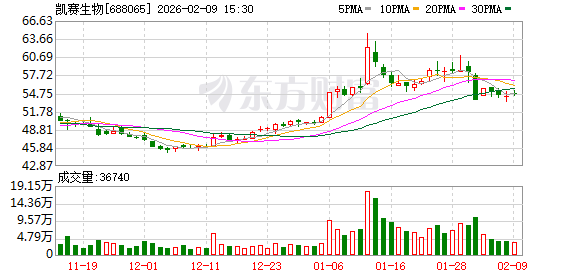
凯赛生物总裁杨晨: 以生物智造筑牢双碳基石 打造产业协同生态
Zhong Guo Zheng Quan Bao· 2026-02-09 22:04
Core Viewpoint - Biomanufacturing is a crucial component of national strategic technological strength and a key engine for promoting green and low-carbon industrial transformation. The company, Kasei Biotech, has been deeply engaged in this field for over 20 years, leveraging core technologies and products to build competitive advantages [1] Group 1: Green Transformation in Downstream Industries - Kasei Biotech focuses on developing chemicals through biomanufacturing processes, which create low-cost alternatives to traditional petrochemical products. This method utilizes biological conversion, operates under mild conditions, and avoids heavy metal catalysts, significantly reducing reliance on non-renewable fossil resources [2] - The company has developed a series of bio-based long-chain dicarboxylic acids and bio-based hexamethylenediamine, which are typical products in the biomanufacturing industry. These products meet high-performance requirements while being cost-effective and environmentally friendly, supporting downstream industries in reducing carbon footprints [2] Group 2: Application and Production Capacity - Kasei Biotech's bio-based composite materials have been applied in various sectors, including new energy, transportation logistics, and construction. For instance, bio-based polyamide composite materials for battery shells reduce weight and costs while meeting fire resistance and protection needs [3] - The company has established production lines for bio-based dodecanedioic acid and high-temperature polyamide, with a focus on creating a complete industrial chain in its Hefei base. The production layout is strategically organized across different locations to optimize capacity [3] Group 3: Future Development and Innovation - Kasei Biotech plans to expand the application scenarios of bio-based polyamides and composite materials, collaborating with partners like CATL to deepen application breadth and provide demonstration projects for low-carbon transformation in downstream industries [4] - The company emphasizes the importance of technological innovation and supply chain security, committing to continuous R&D investment to support the development of bio-based products [5] Group 4: Digitalization and AI Integration - Digitalization and smart technology are key development directions for Kasei Biotech, with a vision to reshape low-carbon living through biomanufacturing. The company has implemented AI tools in various research areas, enhancing operational efficiency across R&D, production, and management [6] Group 5: Collaborative Ecosystem in Synthetic Biology - Kasei Biotech recognizes the challenges in commercializing new materials and emphasizes the need for collaboration among capital, technology, industry, and government to drive the industry forward. The company has engaged in partnerships to enhance resource integration and support the commercialization of bio-based materials [7] - The collaboration model involving state-owned enterprises, local governments, and industry leaders aims to create a synergistic value network, facilitating the development of bio-based new materials across various sectors [7][8] Group 6: Strategic Goals for the Next 3-5 Years - The company aims to focus on three core areas in the next 3-5 years: advancing the high-value utilization of biomass waste, expanding the commercial application of bio-based polyamides and composites, and accelerating the construction of industrial demonstration projects and ecosystems [8]
以生物智造筑牢双碳基石 打造产业协同生态
Zhong Guo Zheng Quan Bao· 2026-02-09 20:25
Core Viewpoint - Biomanufacturing is a crucial component of national strategic technological strength and a key engine for promoting green and low-carbon industrial transformation. The company, Kasei Biotech, has been deeply engaged in this field for over 20 years, leveraging core technologies and products to build competitive advantages [1]. Group 1: Business Model and Product Development - Kasei Biotech focuses on developing chemicals through biotechnological processes, aiming to create low-cost, high-performance bio-based new materials that empower downstream industrial upgrades and promote the large-scale development of the biomanufacturing industry [1][2]. - The company has developed a series of bio-based long-chain dicarboxylic acids and bio-based hexamethylenediamine, which are typical products in the biomanufacturing industry. These products meet high-performance requirements while achieving low cost, lightweight, and recyclability, effectively reducing the carbon footprint of downstream products [2]. Group 2: Production Capacity and Industrial Layout - Kasei Biotech's Shanxi synthetic biological industrial park has launched a 40,000-ton biomanufacturing project for sebacic acid, which has quickly replaced chemical methods. A 5,000-ton bio-based high-temperature polyamide production line has also been established [3]. - The company is building a complete industrial chain in its Hefei bio-based materials industrial base, focusing on resin, composite materials, and application products. The production layout will be coordinated across different regions, with specific focuses for each base [3]. Group 3: Research and Development Strategy - Kasei Biotech emphasizes innovation-driven development, with a commitment to increasing R&D investment. Significant progress is expected in projects related to green dicarboxylic acids, bio-based piperidine, and bio-based long-chain polyamides by 2025 [4]. - The company is integrating AI technology into its R&D, production, and management processes, enhancing operational efficiency and supporting the development of bio-based new products [4][5]. Group 4: Collaborative Ecosystem and Market Penetration - Kasei Biotech is collaborating with various stakeholders, including state-owned enterprises and local governments, to create a synergistic ecosystem for biomanufacturing. This collaboration aims to leverage resources and expertise to overcome challenges in commercialization [6][7]. - The company is focusing on application scenario demonstration projects to break the inertia of traditional petrochemical materials in downstream industries, thereby enhancing industry recognition and expanding commercialization pathways for bio-based new materials [7]. Group 5: Future Development Directions - In the next 3-5 years, Kasei Biotech will focus on three core development areas: advancing the high-value utilization of biomass waste, expanding the application and commercialization of bio-based polyamides and their composites, and accelerating the construction of industrial demonstration projects and ecosystems [7].
华泰证券今日早参-20251111
HTSC· 2025-11-11 01:42
Group 1: Market Overview - Recent adjustments in technology stocks have led to a relatively volatile market, with trading activity cooling down and retail investors showing net outflows [2][4] - Private equity funds have shown a strong willingness to allocate capital, with the number of registered funds increasing to 286 last week, marking a rebound [2] - Public funds have also shown signs of a trend reversal in their positions since mid-October [2] Group 2: Fixed Income Insights - In the first week of November, both new and second-hand housing transactions have declined, with new home sales at seasonal lows, indicating a need for price improvement [4][5] - Industrial freight volumes have slightly decreased, but production rates remain strong, with most sectors showing year-on-year increases [4] - The real estate sector is advised to focus on high-grade state-owned enterprise bonds for investment, given the current market conditions [5] Group 3: Technology and AI Developments - The 2026 Investment Summit highlighted a new acceleration in global computing power construction, driven by expanding inference demand and innovative financing models [6][7] - The AI industry is entering a new paradigm, with synthetic data breaking training data ceilings and commercial applications scaling up [7] Group 4: Machinery and Equipment - In October 2025, excavator sales reached 18,100 units, a year-on-year increase of 7.8%, but growth has slowed compared to September [8] - Domestic demand is expected to recover, supported by rapid growth in second-hand excavator exports [8] Group 5: Renewable Energy and Storage - The State Council's white paper emphasizes the importance of new energy storage in achieving carbon neutrality goals, highlighting three key areas for investment: new energy + storage, grid upgrades, and traditional power sources [11] Group 6: Communication Sector - The communication sector showed steady growth in Q3 2025, with revenue and net profit increasing by 5.2% and 12.3% year-on-year, respectively [14] - Future growth is expected to be driven by increased investment in AI computing power and the expansion of telecommunications operators [14] Group 7: Environmental Testing Industry - The third-party testing and inspection industry is anticipated to see a performance growth inflection point in Q4 2025, driven by policy support and emerging demand [16] - Key companies to focus on include Su Shi Testing and Huace Testing, which are expected to show clear performance rebounds [16] Group 8: Company-Specific Insights - Kaisa Biotech has been initiated with a "Buy" rating, targeting a price of 64.90 yuan, benefiting from its leading position in the biomanufacturing sector [19][16] - Hualu Hengsheng is expected to see improved market conditions for oxalic acid and caprolactam, maintaining a "Buy" rating [18]



凯赛生物: 中信证券股份有限公司关于上海凯赛生物技术股份有限公司2025年半年度持续督导跟踪报告
Zheng Quan Zhi Xing· 2025-09-04 16:18
Overview of Continuous Supervision - The continuous supervision work includes reviewing company governance documents, financial management, internal controls, and fundraising management [1][2][3] Key Findings - No major issues were found during the continuous supervision period [2] Major Risk Factors - Core Competitiveness Risk: The company relies on advanced biomanufacturing techniques for producing new materials, and the retention of skilled personnel is crucial for maintaining competitive advantage [2][3] - Operational Risk: The company faces risks related to raw material and energy costs, which are influenced by market fluctuations [4][5] - Financial Risk: The company has a good credit status but may face challenges in accounts receivable management and potential foreign exchange losses [8][9] Financial Performance - Revenue for the first half of 2025 reached 167,076.79 million, a 15.68% increase from the previous year [15] - Net profit attributable to shareholders was 30,866.71 million, reflecting a 24.74% increase [15] - Total assets increased by 25.23% to 2,382,118.27 million [15] Core Competitiveness - The company has developed a comprehensive production chain for biobased polyamides and maintains a strong patent portfolio with 516 patents [16][17] - The company emphasizes technological innovation and has a stable management team with extensive experience in R&D [16][17] R&D Investment - R&D expenditure for the first half of 2025 was 12,319.85 million, a 23.13% increase compared to the previous year [22][23] - The proportion of R&D investment to revenue increased by 0.44 percentage points, indicating a commitment to maintaining competitive advantage [23] Business Development - The company is expanding its production capacity and has initiated several projects, including a 50,000-ton biobased hexamethylenediamine project [5][20] - The company has established partnerships with major firms and is recognized as a leading supplier in the biobased materials market [21] Environmental and Safety Considerations - The company’s biomanufacturing processes are designed to minimize waste and reduce carbon emissions, contributing to sustainability goals [18][19] - Safety management systems are in place to mitigate risks associated with production processes [21] Market Position - The company is a leading player in the biobased materials sector, with a strong brand and customer base, facilitating further market expansion [21]

凯赛生物,90万吨生物基聚酰胺项目公示
DT新材料· 2025-09-03 23:31
Core Viewpoint - The article highlights the advancements and projects of Kasei (Taiyuan) Biomaterials Co., Ltd., particularly in the production of bio-based materials, showcasing significant growth in revenue and profit, as well as innovative product applications in the industry [2][5]. Group 1: Project Developments - Kasei is constructing a project with an annual capacity of 500,000 tons of bio-based hexamethylenediamine and 900,000 tons of bio-based polyamide, located in the Shanxi Synthetic Biology Industrial Ecological Park [2]. - The company currently has a series of bio-based dicarboxylic acids (DC10-DC18) with an annual capacity of 115,000 tons, and a bio-based sebacic acid project with an annual capacity of 40,000 tons that commenced production in 2022 [4]. - The bio-based hexamethylenediamine has an annual capacity of 50,000 tons, primarily used as a raw material for bio-based polyamide production [4]. Group 2: Financial Performance - In the first half of 2025, Kasei achieved a revenue of 1.671 billion yuan, representing a year-on-year increase of 15.68% [5]. - The net profit attributable to shareholders reached 309 million yuan, up 24.74% year-on-year, while the net profit after deducting non-recurring items was 296 million yuan, reflecting a growth of 23.67% [5]. Group 3: Research and Development - The company invested 123.2 million yuan in R&D in the first half of 2025, a 23.13% increase year-on-year, accounting for 7.37% of its revenue [4]. - Significant progress has been made in R&D projects related to green dicarboxylic acids, bio-based piperidine, bio-based long-chain polyamides, and high-value utilization of agricultural waste [4].

凯赛生物,营收再创新高
DT新材料· 2025-08-17 16:03
Core Viewpoint - The article highlights the significant growth and innovation in the bio-based technology sector, particularly focusing on the achievements of Kasei Biotech in the production of bio-based materials and their applications in various industries [4][6]. Group 1: Financial Performance - Kasei Biotech reported a revenue of 1.671 billion yuan for the first half of 2025, marking a year-on-year increase of 15.68% [4]. - The net profit attributable to shareholders reached 309 million yuan, reflecting a year-on-year growth of 24.74% [4]. - The company's non-recurring net profit was 296 million yuan, up 23.67% year-on-year, achieving a historical high in revenue [4]. Group 2: Product Development and Market Position - Kasei Biotech maintains a leading global position in the production of long-chain dicarboxylic acids (DC10-DC18), with a production capacity of 115,000 tons and record sales [6]. - The bio-based dicarboxylic acid project, with an annual output of 40,000 tons, has steadily increased its market share since its launch in 2022, exemplifying the shift from chemical to bio-based production [6]. - The company's dodecanedioic acid was included in the first batch of the "Iconic Products of Bio-Manufacturing" list published by the Ministry of Industry and Information Technology [6]. Group 3: Innovation and R&D - Kasei Biotech has achieved breakthroughs in several innovative projects, including the production of bio-based piperidine and bio-based continuous fiber composite materials, which are being validated by major clients [6][7]. - The company has filed 39 new invention patents, bringing the total to 516, including 400 invention patents [7]. - The AI protein computing platform has accelerated the efficiency of strain modification, leading to improvements in key technologies such as short-chain dicarboxylic acid strain development [7]. Group 4: Industry Applications and Expansion - Kasei Biotech has established a complete industrial chain from monomers to resins and composite materials, with applications in batteries, photovoltaics, construction, hydrogen storage, wind turbine blades, and high-speed rail flame-retardant flooring [8]. - The company is advancing projects such as the bio-based battery shell manufacturing base in collaboration with CATL, with a planned annual output of 41,000 tons of bio-based composite materials [8]. Group 5: Upcoming Events - The fourth Synthetic Biology and Green Bio-Manufacturing Conference (SynBioCon 2025) will be held from August 20-22 in Ningbo, focusing on AI and bio-manufacturing, green chemicals, new materials, future food, and agriculture [14][15].

凯赛生物: 2025年半年度报告
Zheng Quan Zhi Xing· 2025-08-15 14:10
Core Viewpoint - The report highlights the financial performance and operational updates of Cathay Biotech for the first half of 2025, showcasing growth in revenue and net profit, alongside advancements in product development and market expansion in the biomanufacturing sector. Financial Performance - The company's operating revenue for the first half of 2025 reached approximately 1.67 billion RMB, representing a 15.68% increase compared to the same period last year [5] - The total profit amounted to approximately 342 million RMB, reflecting a 21.81% increase year-on-year [5] - The net profit attributable to shareholders was approximately 309 million RMB, marking a 24.74% increase compared to the previous year [5] - The company's total assets increased by 25.23% year-on-year, reaching approximately 23.82 billion RMB [5] Business Overview - Cathay Biotech specializes in the research, production, and sales of new bio-based materials, leveraging synthetic biology and biomanufacturing technologies [6] - The company has an annual production capacity of 115,000 tons for bio-based long-chain dicarboxylic acids, with ongoing projects to expand production capabilities [6] - The bio-based diamine production capacity is 50,000 tons annually, primarily used for producing bio-based polyamides [6] - The company is also developing bio-based nitrogen-containing heterocyclic compounds, which are expected to replace traditional petroleum-based products [6] Industry Context - The biomanufacturing industry is gaining traction due to increasing environmental concerns and the need for sustainable alternatives to fossil fuels [7] - The Chinese government has initiated several policies to promote the development of the bio-economy, including the integration of biotechnology and information technology [8] - The industry is positioned as a strategic emerging sector, with a focus on innovation and sustainability, aiming to achieve competitive parity with fossil-based products by 2025 [8]