
Banking

Search documents
美元最大的挑战者仍是黄金-USD‘s Biggest Challenger Remains Gold
2026-01-26 02:49
Summary of Key Points from the Conference Call Industry Overview - The focus is on the global currency landscape, particularly the role of the USD and gold as a reserve asset in the context of a multipolar world [2][12][59]. Core Insights 1. **Decline of USD's International Footprint**: - The USD's share in global central bank FX reserves has decreased to 56.9% in Q3 2025 from 57.1% in Q2 2025 and 57.9% in Q3 2024, marking a gradual decline [9][14]. - The USD's market share in FX corporate bond issuance fell from 60% to 58% in 2025, while the EUR increased its share by 2.5 percentage points to 34% [14][21]. - The average market share of the USD across six metrics has dropped below 50% for the first time since at least 2001 [21]. 2. **Gold's Rising Share in Reserves**: - Gold's share in central bank reserves has increased from approximately 14% to between 25% and 28% currently, indicating a significant shift towards gold as a reserve asset [9][39]. - Central banks now hold more in gold (around $4 trillion) than in US Treasuries ($3.9 trillion) for the first time since 1996 [38]. - The World Gold Council's survey indicates that 43% of central banks expect to increase their gold reserves over the next year, with no banks anticipating a decline [40]. 3. **Geopolitical and Economic Factors**: - Elevated US debt levels and fiscal sustainability concerns are influencing the USD's role as a reserve currency [59]. - Trade policy uncertainty and the use of tariffs may adversely affect the USD's demand, as they can reduce trading volumes [59]. - Geopolitical risks, including military alliances, can either bolster or diminish the USD's attractiveness as a reserve currency [61]. 4. **Market Dynamics and Future Outlook**: - The report maintains a bearish bias on the USD, with expectations of continued pressure due to risk premia and geopolitical tensions [33]. - Gold prices are projected to reach $4,800 per ounce by year-end, driven by strong demand from central banks and ETFs [54]. Additional Important Insights - The transition towards a multipolar world is expected to continue influencing the USD's dominance, with policy factors playing a critical role in this shift [59]. - The increasing share of gold in reserves is partly attributed to central banks' responses to geopolitical crises, such as the Russia-Ukraine conflict, which has led to a doubling of annual gold purchases [39]. - The report highlights the growing gap between reported and actual gold purchases, suggesting a significant amount of unreported buying, which could further elevate gold's share in reserves [41]. This summary encapsulates the key points discussed in the conference call, focusing on the dynamics of the USD and gold in the current economic landscape.

美联储监测:1 月议息会议前瞻-“按兵不动” 会有多鹰派?-Federal Reserve Monitor-January FOMC Preview How Hawkish a Hold
2026-01-26 02:49
Summary of the January FOMC Preview Conference Call Industry Overview - The conference call focuses on the Federal Reserve's monetary policy, specifically the expectations surrounding the January FOMC meeting and its implications for the U.S. economy and financial markets. Key Expectations - The Federal Reserve is expected to maintain the federal funds rate target range at **3.5-3.75%** during the January meeting, indicating a "dovish hold" [5][8][7] - The Fed has initiated bill purchases to keep reserve balances at "ample" levels, a policy expected to continue without additional changes in January [5][8] - The Committee is anticipated to upgrade its assessment of economic growth from "moderate" to "solid," reflecting improved consumer spending momentum [5][9] - The statement is likely to remove references to increased downside risks to employment, suggesting a more favorable outlook for the labor market [5][12] Communication Strategy - A key focus will be on how Chair Powell communicates the pause in rate cuts, with expectations leaning towards a "dovish hold" that emphasizes the potential for future rate reductions if inflation pressures ease [5][24][23] - There is a possibility of a "hawkish hold" if the committee signals a more durable pause, which would indicate the end of the rate-cutting cycle [5][24][25] Market Implications - Rates strategists recommend investors maintain a neutral position in U.S. Treasury duration and curve, while favoring long positions in 2-year UST SOFR swap spreads [5][5] - FX strategists note that the case for U.S. dollar (USD) weakness is less pronounced but remains, with a hawkish FOMC likely to weigh on the Australian dollar (AUD) more than other currencies [5][5] Economic Indicators - Recent stabilization in the labor market and solid economic activity data are seen as justifications for the Fed's decision to pause rate cuts [7][23] - The unemployment rate is projected to remain low, with a slight decline to **4.375%** noted, indicating limited slack in the labor market [23][23] - Inflation data has shown muted signals, with concerns shifting towards inflation persistence rather than further increases [11][11] Forward Guidance - The Fed is expected to maintain language regarding the "extent and timing of additional adjustments" to the target range, signaling an easing bias [5][13] - The anticipated changes in the FOMC statement reflect a shift towards a more optimistic economic outlook, while still acknowledging divisions within the committee regarding the appropriate policy path [5][27][29] Additional Considerations - The Fed's recent speeches indicate a narrowing of divisions among committee members, suggesting a more unified outlook on economic conditions [27][28] - Powell is likely to address various topics during the press conference, including productivity gains, AI's impact on the labor market, and risks to Fed independence [30][31] Conclusion - The upcoming FOMC meeting is poised to reflect a cautious yet optimistic stance on the U.S. economy, with the Fed maintaining a "dovish hold" while preparing for potential future rate cuts depending on inflation trends and labor market conditions [5][7][24]
加央行维稳利率美加政策分化
Jin Tou Wang· 2026-01-26 02:48
Group 1 - The Canadian dollar continues to experience a range-bound trading pattern, influenced by its commodity currency characteristics, the monetary policy dynamics between Canada and the U.S., and trade uncertainties, resulting in a slight strengthening against the U.S. dollar while remaining within a volatile range since the beginning of the year [1] - The Bank of Canada has maintained its benchmark interest rate at 2.25%, with a 75% market expectation that rates will remain stable throughout 2026, indicating a conclusion to the rate-cutting cycle, which provides a foundational support for the Canadian dollar [1] - The U.S. Federal Reserve exhibits a "hawkish but still accommodative" stance, with rate cut expectations pushed to June, but a projected reduction of 54 basis points within the year, leading to a narrowing interest rate differential that weakens the relative advantage of the U.S. dollar [1] Group 2 - The Canadian dollar, being an energy-export-oriented currency, is closely tied to international oil prices, with recent geopolitical risks supporting oil price stabilization, thus improving expectations for Canadian crude oil export revenues [2] - However, medium to long-term oil prices are pressured by expectations of global oversupply, leading to a decline in oil prices since the beginning of the year, which has previously caused significant depreciation of the Canadian dollar [2] - Domestic economic recovery in Canada is insufficient, with the unemployment rate projected to rise to 6.8% by December 2025, the highest level outside of the pandemic, and declining consumer confidence impacting corporate investment [2] Group 3 - The technical indicators show that the USD/CAD pair is in a bearish trend, with the price recently breaking below the key psychological level of 1.3700 and testing new lows [3] - The Relative Strength Index (RSI) is in a neutral to low range, indicating potential for further downward movement, while the MACD remains in a bearish state, suggesting a continuation of the downtrend [3] - Key pivot points for the USD/CAD pair are identified, with resistance levels between 1.3729-1.3762 and support levels at 1.3670-1.3650, indicating a need to monitor these critical levels for potential price movements [3]
2亿授信加持!新塍大米成嘉兴碳认证首个
Xin Lang Cai Jing· 2026-01-25 23:27
Core Viewpoint - The article highlights the achievement of "Xinchang Rice" in receiving the first carbon footprint certification for rice products in Jiaxing City, along with a significant financial support of 200 million yuan from Hecheng Rural Commercial Bank to promote green upgrades in the rice industry chain [1] Group 1: Certification and Financial Support - "Xinchang Rice" has been awarded the first carbon footprint certification for rice products in Jiaxing City, showcasing its commitment to sustainability [1] - Hecheng Rural Commercial Bank has provided a credit line of 200 million yuan to support the green transformation of the rice industry, focusing on ecological planting technology research and low-carbon processing equipment upgrades [1] Group 2: Green Finance and Ecological Value - The integration of green finance and carbon footprint certification is transforming intangible ecological value into tangible development capital, promoting a more sustainable agricultural model [1]
These Are The Stock Market's Newest Dividend Payers
Forbes· 2026-01-25 18:00
Core Insights - The article discusses seven new dividend payouts from various companies, highlighting their potential as investment opportunities due to initial high yields and growth prospects [2][3] Group 1: Tutor Perini (TPC) - Tutor Perini announced its first dividend of $0.06 per share with a yield of 0.3%, marking a significant turnaround after three years of net losses [4][5] - The company reported record operating cash flow of $574.4 million and a backlog of $21.6 billion by Q3 2025, leading to a tripling of its share price in 2025 [5] - For full-year 2025, Tutor Perini is expected to report a profit of $4.10 per share, with the dividend representing only 6% of earnings, indicating room for future increases [6] Group 2: Orla Mining (ORLA) - Orla Mining initiated a quarterly dividend of $0.015 with a yield of 0.4%, transitioning from a junior miner to a mid-tier producer [7][8] - The company experienced a 143% increase in share price in 2025 and is expected to report a smaller profit for 2025 after doubling its net income in 2024 [9] - Future dividend growth may be limited due to the cyclical nature of mining profits, but management is confident in the sustainability of profits [10] Group 3: ePlus (PLUS) - ePlus announced a quarterly dividend of $0.25 with a yield of 1.1%, providing IT and professional services [12] - The company has seen a 2,000% increase in share price over the past 15 years, but is currently navigating mixed financial results [13][14] - Revenue growth is expected to be high-single-digit, but earnings per share are projected to decline in the current fiscal year [14] Group 4: Visteon (VC) - Visteon initiated a quarterly dividend of $0.275 with a yield of 1.2%, focusing on automotive technology [15][16] - After a history of volatility and declining net income, the company has shown a stable rebound in profits during the 2020s [17] - Despite the dividend announcement, the stock experienced a selloff following the first payment [17] Group 5: G-III Apparel Group (GIII) - G-III announced a quarterly dividend of $0.10 with a yield of 1.3%, operating in the apparel sector [18][19] - The company has seen steady net income, despite a loss in fiscal 2023 due to brand writedowns and supply chain issues [19][20] - G-III's dividend announcement reflects a strategy to attract shareholders amid limited growth prospects [20] Group 6: California BanCorp (BCAL) - California BanCorp initiated a quarterly dividend of $0.10 with a yield of 2.2%, showing rapid revenue growth from $13.6 million in 2015 to $180 million in 2024 [21][22] - Despite the growth, the company's stock has not seen significant appreciation, but the dividend may change investor sentiment [23] Group 7: Carnival Corp. (CCL) - Carnival Corp. announced a quarterly dividend of $0.15 with a yield of 2.1%, marking a resumption of its dividend program suspended during COVID-19 [24][26] - The company reported a substantial profit in 2024, returning to pre-COVID profit levels in 2025, indicating recovery from the pandemic's impact [26]


US Government Struggles to Keep a Lid on 10-Year Treasury Yield and Mortgage Rates
Wolfstreet· 2026-01-25 16:07
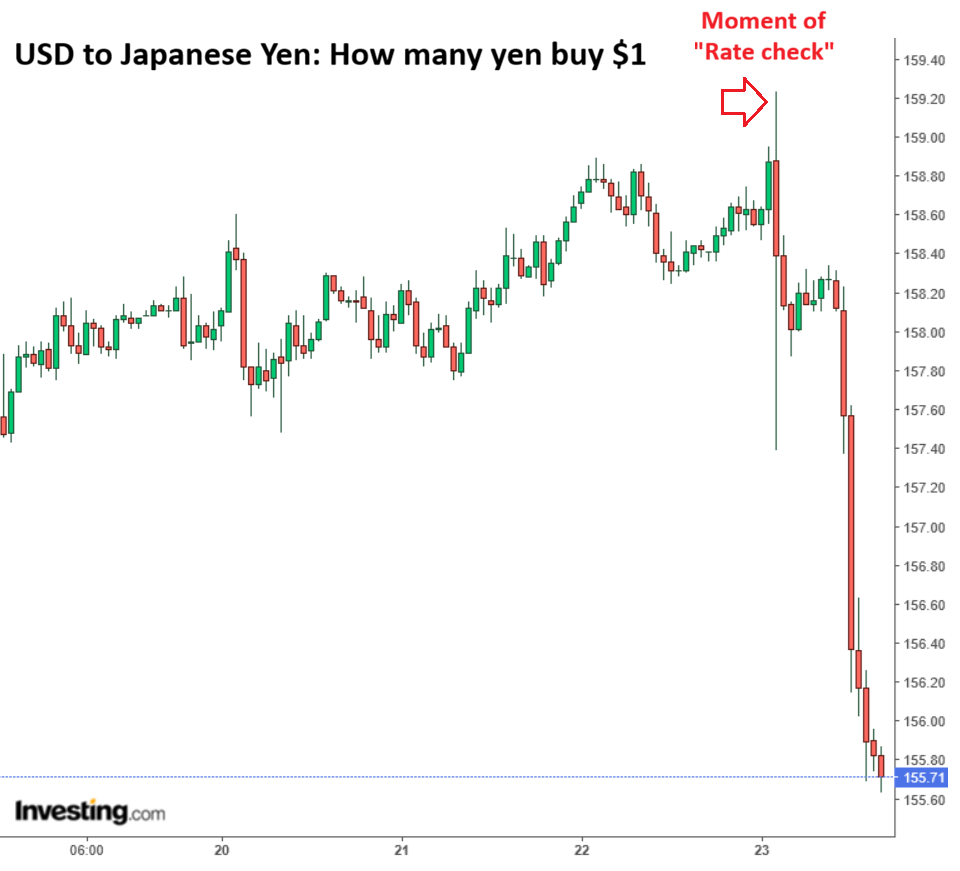
Core Viewpoint - The U.S. government is prepared to intervene in the currency market to support the yen against the dollar, following significant fluctuations in the Japanese bond market and the yen's depreciation [2][5]. Group 1: Currency Market Intervention - A "rate check" was conducted by Treasury Secretary Scott Bessent to stabilize the yen, which had fallen sharply against the dollar [1][2]. - Following the "rate check," the yen appreciated from 159.2 to 155.7 yen per USD within hours [3]. Group 2: Bond Market Dynamics - The Japanese bond market experienced a meltdown, with the 30-year Japanese Government Bond yield rising by 42 basis points to 3.91%, the highest since its introduction in 1999 [5]. - The 10-year U.S. Treasury yield increased to 4.30%, up 17 basis points in a week, impacting mortgage rates which rose to 6.20% from 6.01% [6]. Group 3: Government Actions and Market Reactions - Bessent communicated with Japanese officials to address market concerns, leading to a decrease in the 10-year yield from 4.30% to 4.23% after the "rate check" [7]. - The U.S. government-sponsored enterprises, Fannie Mae and Freddie Mac, initiated buybacks of mortgage-backed securities (MBS) to help lower mortgage rates, with a directive to buy back $200 billion in MBS [9][10].
American Greed: Show Me The Honest Dividends
Seeking Alpha· 2026-01-25 15:15
Core Insights - The article discusses the potential risks associated with investing in companies that exhibit strong earnings growth and positive forecasts, particularly when unexpected accounting or reporting issues arise [1]. Group 1: Company Insights - The focus is on companies with significant earnings growth and forecasts that suggest a transformative financial trajectory for investors [1]. - The article highlights the importance of due diligence in investment decisions, especially in light of potential regulatory scrutiny and accounting issues that can impact perceived company value [1]. Group 2: Industry Insights - The investment landscape is characterized by high-yield opportunities, with a focus on sustainable income strategies that target a safe yield of over 9% [1]. - The article emphasizes the role of community and education in investment strategies, suggesting that investors should not navigate the market alone [1].


‘World War III has already begun,’ Jamie Dimon claims. Fear mongering or legitimate concern? How to keep your money safe
Yahoo Finance· 2026-01-25 10:39
Group 1: Geopolitical Tensions and Economic Impact - The likelihood of war and increasing global political tensions have risen since October 2024, driven in part by U.S. foreign policy [2] - Jamie Dimon, CEO of JPMorgan, expressed concerns that potential conflicts with countries like China, Russia, Iran, or North Korea are more concerning than instability in global financial markets [3][4] - A 2025 S&P Global report indicated that geopolitical risks significantly impact the global economic outlook, influencing economic growth, inflation, financial markets, and supply chains [5][6] Group 2: Investment Strategies in Times of Crisis - Investors are advised against holding cash during times of conflict, as it is vulnerable to inflation and typically loses value during wars [11] - Diversification is essential, especially in anticipation of a potential 10 to 20% drawdown in equity markets within the next 12 to 24 months, as stated by Goldman Sachs CEO David Solomon [20] - Alternative asset classes, such as art, have shown to outperform traditional equities and provide unique portfolio diversification opportunities [21][22]

Could Fed Chair Powell's Successor Be...Jerome Powell?
Investopedia· 2026-01-24 21:08
Core Viewpoint - President Trump's public campaign to influence the Federal Reserve may inadvertently lead to Jerome Powell remaining in charge of a key policy committee for another term [2][11]. Group 1: Federal Reserve Leadership - Jerome Powell's term as chair officially ends in May, but he could legally remain on the policy committee, a scenario that was previously considered unlikely [3][12]. - Tensions between President Trump and Powell have escalated, leading to speculation that Powell may continue as a governor or even as chair of the Federal Open Market Committee (FOMC) after his chairmanship ends [4][11]. - Powell's potential continuation as a Fed governor would be a rare occurrence in the history of the Federal Reserve, indicating a commitment to the Fed's independence from political influence [5][11]. Group 2: Economic Implications - If Powell remains on the Fed, it could signal the central bank's determination to maintain its independence, but it may also perpetuate political conflict and uncertainty [5]. - Trump has pressured the Fed to lower interest rates, arguing that this would benefit household budgets and reduce federal interest payments [7]. - The Fed has cut interest rates three times recently to support the economy, but officials are expected to hold rates steady due to ongoing inflation concerns [8]. Group 3: Political Dynamics - The relationship between the Trump administration and the Fed has become strained, with legal actions taken against Fed leaders, which the White House claims are based on legal and ethical grounds rather than political motives [9]. - Trump's criticism of Powell has been frequent, and he has expressed a desire to remove him from his position, although he downplayed concerns about Powell potentially staying on [15].

The fight over stablecoin yield isn’t really about stablecoins
Yahoo Finance· 2026-01-24 21:08
Core Viewpoint - The debate over whether stablecoins should be allowed to pay yield is a significant issue that reflects broader changes in the U.S. financial system, focusing on consumer deposits and who benefits from them [1][2][6]. Group 1: Stablecoins and Consumer Deposits - The discussion surrounding yield-bearing stablecoins is fundamentally about deposits and the distribution of economic benefits derived from them [2][6]. - Historically, consumer deposits in the U.S. have earned little to no interest, with banks utilizing these deposits for lending and investment, thus capturing the majority of the economic upside [3][4]. - The traditional banking model has remained stable due to a lack of realistic alternatives for consumers, but advancements in technology are beginning to change this dynamic [4][5]. Group 2: Shifts in Consumer Expectations - There is a notable shift in consumer expectations regarding money, with a growing belief that balances should earn returns by default rather than as an exclusive feature for sophisticated investors [5][6]. - As this expectation becomes more widespread, it is likely to extend beyond stablecoins to all forms of digital value representation, challenging the notion that consumer balances should inherently yield low returns [6]. Group 3: Banking System Concerns - Banks argue that allowing consumers to earn yield directly on their balances could lead to a reduction in deposits within the banking system, potentially harming credit availability and financial stability [7]. - This concern is rooted in the historical role of banks as the primary conduit for transforming household savings into credit for the economy [7].