
碳足迹认证

Search documents
迦南智能:目前公司取得的是慈溪市零碳工厂,是慈溪市首次进行零碳工厂评价
Mei Ri Jing Ji Xin Wen· 2026-01-26 01:28
Core Viewpoint - The company has established a zero-carbon factory in Cixi City, marking the first evaluation of such a facility in the region [1] Group 1: Zero-Carbon Factory - The company has achieved recognition as a zero-carbon factory in Cixi City, which is the first of its kind in the area [1] - The company has developed an industrial digital energy platform and a carbon management platform, enabling comprehensive carbon accounting for all products produced over the past year [1] - The company plans to expand carbon accounting to additional products in the future [1] Group 2: Product Certification and Technology - Currently, the company's products have not received CBAM certification [1] - The company's technologies in electric energy metering and data collection serve as critical data sources for carbon accounting [1] - The carbon management platform can directly output carbon accounting data based on evaluation templates, which accelerates the certification process for new products and enhances their competitiveness [1]

2亿授信加持!新塍大米成嘉兴碳认证首个
Xin Lang Cai Jing· 2026-01-25 23:27
Core Viewpoint - The article highlights the achievement of "Xinchang Rice" in receiving the first carbon footprint certification for rice products in Jiaxing City, along with a significant financial support of 200 million yuan from Hecheng Rural Commercial Bank to promote green upgrades in the rice industry chain [1] Group 1: Certification and Financial Support - "Xinchang Rice" has been awarded the first carbon footprint certification for rice products in Jiaxing City, showcasing its commitment to sustainability [1] - Hecheng Rural Commercial Bank has provided a credit line of 200 million yuan to support the green transformation of the rice industry, focusing on ecological planting technology research and low-carbon processing equipment upgrades [1] Group 2: Green Finance and Ecological Value - The integration of green finance and carbon footprint certification is transforming intangible ecological value into tangible development capital, promoting a more sustainable agricultural model [1]
中国传统能源主产地实现绿色转型新跨越
Xin Hua Wang· 2026-01-14 08:13
Core Viewpoint - The article highlights the significant progress in green energy transformation in Inner Mongolia, particularly through the development of large-scale solar and wind energy projects, contributing to China's low-carbon goals and energy structure transition [1][2]. Group 1: Project Development - A solar photovoltaic project in the Kubuqi Desert has a total investment of approximately 5.5 billion yuan, covering nearly 29,000 acres, with a total installed capacity of 1.1 million kilowatts, expected to deliver 2.2 billion kilowatt-hours of green electricity annually [1]. - The project is part of a broader initiative to accelerate energy structure transformation in Inner Mongolia, aiming for the project to be connected to the grid by the end of 2025 [2]. Group 2: Renewable Energy Capacity - By the end of 2024, Inner Mongolia's renewable energy installed capacity is projected to reach 135 million kilowatts, surpassing that of coal-fired power [2]. - In 2022, the region's renewable energy generation exceeded 200 billion kilowatt-hours, with 60 billion kilowatt-hours exported [2]. Group 3: Hydrogen Production and Utilization - Inner Mongolia has innovated six market-oriented methods for renewable energy consumption, with hydrogen production from green electricity reaching 1.07 million tons per year [3]. - A hydrogen refueling station in Ordos can refuel a heavy-duty truck in just 15 minutes, producing 2,000 cubic meters of hydrogen per hour [3]. Group 4: Energy Infrastructure and Manufacturing - A new 500 kV transmission project in Ordos aims to address the challenge of transmitting 12 million kilowatts of renewable energy from the Kubuqi Desert [4]. - The renewable energy equipment manufacturing industry in Inner Mongolia is developing rapidly, with over 45 major energy and equipment manufacturing companies establishing regional headquarters in Hohhot [4]. Group 5: Export and Economic Impact - The company producing photovoltaic products plans to export 60% to 70% of its output, benefiting from a "green pass" that reduces carbon tariffs and enhances competitiveness [5]. - The government aims for the renewable energy equipment manufacturing industry to achieve an output value exceeding 270 billion yuan by 2025 [5].
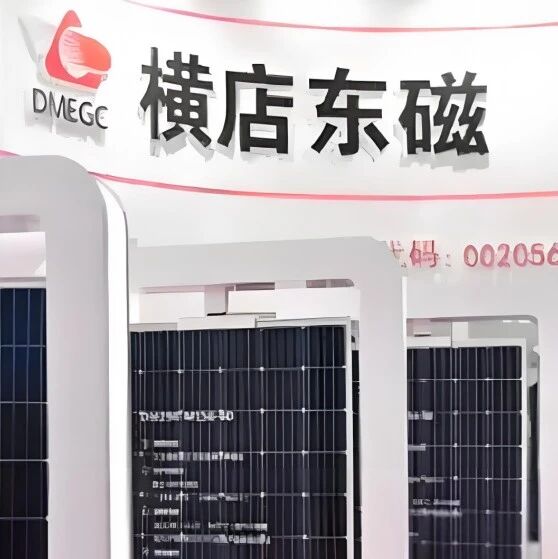
取消优惠税率资格!横店东磁因提供“错误文件”海外受罚,回应称“没影响” | 能见派
新浪财经· 2026-01-09 11:21
Core Viewpoint - The article discusses the trust crisis faced by Hongdian Dongci, a leading player in the photovoltaic industry, following the revocation of tax benefits for its solar components due to documentation errors related to carbon footprint certification [3][4]. Group 1: Impact of Certification Issues - Certisolis, a French certification body, has canceled the eligibility of four solar components from Hongdian Dongci for a reduced VAT rate of 5.5% due to errors in the documentation provided by the company [3][6]. - The immediate financial impact for Hongdian Dongci includes a shift from a 5.5% VAT rate to a 20% VAT rate, significantly increasing installation costs for end users [6][11]. - Analysts suggest that the repercussions of this incident may extend beyond Hongdian Dongci, potentially affecting the certification applications of other Chinese photovoltaic companies [4][6]. Group 2: Broader Industry Implications - The incident has raised concerns about the credibility of Certisolis, as it may necessitate a comprehensive review of compliance for many applications, increasing the workload for the certification body [6][7]. - Future applications for carbon footprint certification from Chinese manufacturers may face stricter scrutiny and requirements, particularly in light of the upcoming Net Zero Industry Act (NZIA) [7][9]. - The carbon footprint certification process evaluates the carbon emissions of photovoltaic products throughout their lifecycle, making it crucial for market competitiveness in Europe [10]. Group 3: Company Performance and Market Position - Hongdian Dongci's revenue from photovoltaic products has reached 80.54 billion yuan, accounting for 67.47% of its total revenue, with a net profit of 10.20 billion yuan [11]. - The company has maintained profitability with a gross margin of 16.7% in its photovoltaic segment, even as many competitors face losses [11][12]. - The overseas business contributes significantly to Hongdian Dongci's revenue, with 48.24% of its income coming from international markets, particularly North America and Europe [12]. Group 4: Future Market Challenges - The European Union's Net Zero Industry Act aims to increase local manufacturing of clean technologies, which could impact Hongdian Dongci's market access in Europe [12][13]. - The company is also navigating uncertainties in the U.S. market, where trade investigations could affect its operations in Southeast Asia [12][13]. - Rising inventory levels, which reached 49.67 billion yuan by the third quarter, indicate potential challenges in managing supply and demand [13].


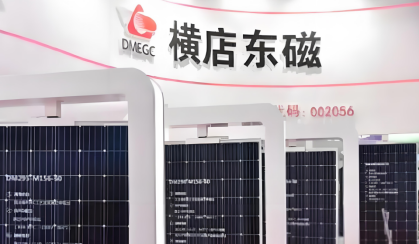
取消优惠税率资格! 横店东磁因提供“错误文件”海外受罚,回应称“没影响”|能见派
Xin Lang Cai Jing· 2026-01-09 01:27
Core Viewpoint - The company Hongdian Dongci, known as a "profit king" in the photovoltaic sector, is facing a trust crisis due to the cancellation of tax benefits for its solar components by the French certification body Certisolis, stemming from errors in documentation related to carbon footprint calculations [3][14]. Group 1: Impact on the Company - The cancellation of the 5.5% VAT tax rate for four solar components will lead to increased costs, as these components will now be sold at a 20% VAT rate, significantly raising installation costs for end users [6][16]. - Hongdian Dongci claims that this issue will not affect its overseas market performance, asserting that its financial results remain strong [4][14]. - The company has acknowledged the documentation errors and has withdrawn potentially affected components while notifying distributors that others can continue to be sold at the higher VAT rate [6][15]. Group 2: Broader Industry Implications - The incident may trigger a chain reaction affecting other Chinese photovoltaic companies, as Certisolis may need to reassess compliance for numerous applications, potentially damaging its credibility [5][14]. - The certification process for carbon footprint may become more stringent, complicating future applications for Chinese manufacturers seeking to enter European markets [7][16]. - The European market is increasingly prioritizing local production, as indicated by the upcoming EU "Net Zero Industry Act," which mandates that by 2030, at least 40% of solar panels must be manufactured within Europe [10][19]. Group 3: Financial Performance and Market Position - Hongdian Dongci's revenue from photovoltaic products has reached 80.54 billion yuan, accounting for 67.47% of its total revenue, with a net profit of 10.20 billion yuan [9][18]. - The company reported a 56.8% year-on-year increase in net profit for the first three quarters of 2025, amounting to 14.52 billion yuan [9][18]. - The company's overseas business accounts for 48.24% of its revenue, with North America being a significant profit driver [19]. Group 4: Inventory and Shareholder Actions - Since 2025, Hongdian Dongci's inventory has been rising, reaching 4.967 billion yuan by the third quarter, which is 19.37% of total assets, reflecting a 32.49% increase compared to the end of 2024 [11][20]. - The controlling shareholder, Hongdian Group, plans to reduce its stake by up to 16.26 million shares, representing 1% of the total shares, which could yield over 300 million yuan [12][20].
政策东风起,财富新赛道:绿色积分与消费商引领新型消费革命
Sou Hu Cai Jing· 2025-12-26 10:26
Core Viewpoint - The Chinese government is initiating a new phase of consumption development through policies that establish a "consumption rebate points" system, promoting green consumption and digital economy, creating significant market opportunities for ordinary people [1] Policy Support - The development of green consumption points is backed by continuous government policies, starting from the 2016 guidelines to the recent 2025-2027 action plan, which emphasizes the full implementation of the green points system [3] - The legal framework for consumption points has been established, enabling various incentive methods such as point redemption and discounts to expand the green consumption market [3] - Pilot programs in cities like Beijing and Shanghai demonstrate the practical benefits of green consumption, with projections indicating that the energy-saving and environmental protection industry will reach a scale of 15 trillion yuan by 2030 [3] Core Logic - Green consumption points are evolving from simple rewards to a recognized value of consumers' environmentally friendly behaviors, covering a wide range of low-carbon consumption activities [4][5] - Unlike traditional points, green points can be converted into vouchers or even equity shares, allowing consumers to become stakeholders in the companies they support [5][7] Consumption Business Model - The consumption business model allows ordinary people to participate without significant investment, through green consumption rebates and social sharing of green products [7] - The rise of digital consumption service providers supports this model by matching green products with consumer needs, facilitating monetization through data services and carbon asset management [7] Online and Offline Integration - Green consumption points are integrated into various consumption scenarios, creating a seamless online and offline ecosystem that enhances consumer experience [9] - Consumers can earn points through purchases in both physical stores and online platforms, promoting a lifestyle centered around green consumption [9] Action Guidelines - To capitalize on the emerging market, individuals are encouraged to join government-backed green consumption platforms, learn about digital tools, and incorporate green consumption into their daily lives [10]
红星产品获碳足迹认证
Bei Jing Shang Bao· 2025-12-24 12:16
Core Viewpoint - Beijing Hongxing Huairou Distillery and its brand products (Hongxing Yipin) have obtained carbon footprint certification from the internationally recognized inspection agency Bureau Veritas, marking a significant step in the company's green management following its recognition as a green factory in 2023 [1] Group 1 - The carbon footprint certification helps companies better understand their carbon emissions across the entire supply chain [1] - This certification serves as an important quantitative tool for formulating emission reduction plans [1] - The data provided by the certification will guide the company towards future low-carbon production [1]
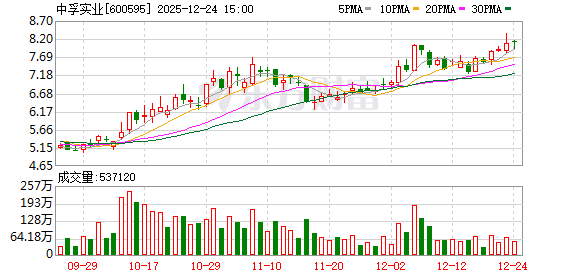
中孚实业:公司主要产品已按评价周期获得SGS碳足迹认证
Mei Ri Jing Ji Xin Wen· 2025-12-24 09:41
Group 1 - The company has been expanding its aluminum and deep processing business, exporting products to 45 countries and regions, including some EU countries [2] - The company is establishing a carbon emission data management and accounting system to comply with carbon footprint management and EU carbon tariff policies [2] - The company's main products have received SGS carbon footprint certification according to the evaluation cycle [2]

北京市平谷区市场监管局标准化赋能农业中关村产业发展“开花结果”
Zhong Guo Zhi Liang Xin Wen Wang· 2025-10-20 09:07
Core Insights - The Beijing Pinggu District Market Supervision Administration held a seminar to promote standardization services in agriculture, awarding a "Zero Carbon Plant Factory Certification" to the Air Nursery Technology Courtyard in Machangying [1][2] - The Air Nursery has adopted plant factory technology to precisely control environmental conditions for plant growth, enabling year-round rapid breeding and cultivation of high-end vegetables and medicinal food crops [1] - The plant factory operates under a zero-carbon philosophy, utilizing recyclable materials for equipment upgrades, solar panels for energy needs, and advanced LED lighting systems to achieve over 90% water savings [1] Summary by Sections Certification and Collaboration - A strategic cooperation agreement was signed among multiple parties, including the Machangying Town Government and certification bodies, to enhance the development of the Air Nursery [2] - The collaboration aims to address the challenge of limited market application of laboratory results, facilitating the rapid transformation of research outcomes into market-ready solutions [2] Industry Impact - The certification signifies that the plant factory has reached industry-leading standards in energy conservation and carbon reduction, providing a replicable model for sustainable urban agriculture [2] - The initiative supports the "Two Carbon Two Standards" framework, focusing on zero carbon certification and the establishment of group standards for plant factories and medicinal food crops [2] Future Directions - The Pinggu District Market Supervision Administration plans to continue supporting innovative projects and promote exemplary cases to encourage more enterprises to pursue high-standard, high-quality development paths [2]

电力装备绿色低碳管理实现新突破——中电联正式发布首批电力装备产品碳足迹认证成果
Zhong Guo Jing Ji Wang· 2025-10-10 09:34
Core Viewpoint - The release of the first batch of 51 carbon footprint certification certificates for power equipment marks a significant advancement in green low-carbon management within China's power equipment industry, laying a solid foundation for the visualization, management, and optimization of carbon footprints across the entire industrial chain [1][2]. Group 1: Carbon Footprint Certification - Carbon footprint certification quantifies and verifies greenhouse gas emissions throughout a product's lifecycle, which is crucial for implementing carbon footprint management in power equipment manufacturing and usage [1][2]. - The certification serves as a core tool for green supply chain management, enhancing carbon transparency and encouraging suppliers to engage in carbon management [1][2]. Group 2: Policy and Standards - Since 2022, China has been actively establishing a unified carbon footprint management system, with policies like the "2030 Carbon Peak Action Plan" emphasizing the need for lifecycle carbon footprint standards and labeling [2]. - The National Certification and Accreditation Administration has released guidelines to ensure data quality and comparability in carbon footprint certification, enhancing the credibility of certification results [2]. Group 3: Future Developments - The certification will gradually expand to cover more products, including smart meters and energy storage devices, ensuring comprehensive carbon management across all stages of power generation, transmission, distribution, and usage [3]. - There are plans to upgrade the existing database and platform capabilities, integrating real-time operational data and exploring technologies like blockchain for data sharing and traceability [3]. - The initiative aims to deepen international cooperation and recognition, facilitating a global certification process for Chinese enterprises [3]. - Future applications of carbon footprint data will extend to green procurement and financial instruments, creating a positive cycle between carbon data, finance, and emissions reduction [3][4]. Group 4: Industry Collaboration - The industry will focus on enhancing capabilities and collaboration among power companies, equipment manufacturers, certification bodies, and research institutions to improve carbon accounting and reduction capabilities [4]. - The certification center will continue to promote carbon footprint certification for power equipment, aiming to elevate the green level of the power supply chain and contribute to national carbon neutrality goals [4].