
水利工程建设

Search documents
滇中引水一期工程楚雄段全线贯通
Xin Hua Wang· 2025-10-28 10:33
新华社昆明10月28日电(记者丁怡全、樊曦)28日,随着中铁十六局承建的凤屯隧洞最后一段岩体 成功爆破,滇中引水一期工程楚雄段实现全线贯通,为工程全线通水筑牢基础。 凤屯隧洞由中铁十六局承建,位于云南省楚雄彝族自治州牟定县境内,全长9.87公里。隧洞穿 越"滇中红层"软岩区,最大埋深达630米。工程建设面临深埋隧洞施工难、地下水处理难、破碎断层穿 越难、软岩大变形应对难等施工难题。自隧洞开工建设以来,建设团队构建"超前预报—动态调整—精 准支护"技术体系,通过瞬变电磁法等技术手段构建地质"透视网",实时掌握围岩动态,克服了易坍 塌、突泥涌水等多种风险。 【纠错】 【责任编辑:焦鹏】 滇中引水工程是国务院要求加快推进建设的172项重大水利工程之一,工程设计从金沙江取水,途 经丽江市、大理州、楚雄州、昆明市、玉溪市,终点为红河州,输水线路全长约664公里。 ...
江苏省秦淮河防洪治理工程力争2029年主体工程完工,目标:中心城区流域防洪标准达200年一遇
Yang Zi Wan Bao Wang· 2025-10-21 05:20
Core Viewpoint - The Jiangsu Qinhuai River Flood Control Project is a significant infrastructure initiative aimed at enhancing flood management capabilities in the Qinhuai River basin, addressing historical flooding issues and improving water resource allocation and ecological protection in the region [3][4][9]. Construction Background - The Qinhuai River, a tributary of the Yangtze River, has a total watershed area of 3,103 square kilometers and a length of 175.4 kilometers. The river has historically faced severe flooding due to its downstream outlet being constrained by the Yangtze River's high tide levels, with flood discharge capacity currently falling short by 300 cubic meters per second compared to planning requirements [3][4][9]. Project Significance - This project is included in the Ministry of Water Resources' flood control plans and is crucial for improving the flood disaster reduction system in the Qinhuai River basin, optimizing water resource distribution, and supporting the economic and social development of Nanjing and surrounding areas [4][9][10]. Overall Layout - The Qinhuai East River project features a "2+1+2" layout, comprising the upstream Yunliang River, central river, midstream Xinkai River, and downstream Jiuxiang and Qixiang Rivers, with a total length of approximately 53 kilometers [5][9]. Construction Details and Investment - The first phase of the project involves the renovation of 15.96 kilometers of river channels, with a total estimated investment of 630.884 million yuan (approximately 63.09 billion yuan). Key components include the construction of a new dam and the reinforcement of 19 bridges affected by the river channel renovations [6][10]. Future Work Focus - The project will prioritize three areas: advancing construction for the 2025 early start node, progressing research and design work, and coordinating land approvals and archaeological investigations to ensure timely project execution [11].

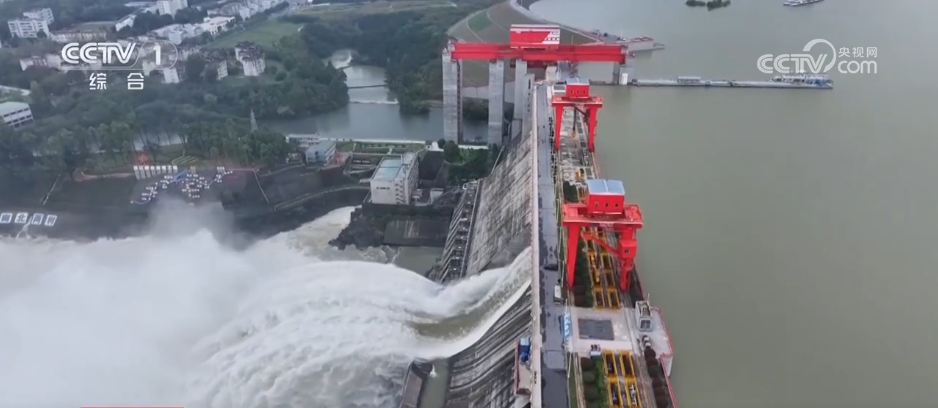
数说“十四五”水利事业“含金量” “幸福河湖”流淌出百姓“幸福生活”
Yang Shi Wang· 2025-10-21 01:51
Core Viewpoint - The article emphasizes the significant advancements in China's water conservancy infrastructure during the "14th Five-Year Plan," highlighting the construction of the world's largest and most comprehensive water management system, which benefits a vast population [1][21][22]. Summary by Sections Water Infrastructure Development - China has built 95,000 reservoirs, creating a robust safety barrier, and has implemented 200 major water diversion projects that support millions of households [1][21]. - The South-to-North Water Diversion Project has transferred over 83 billion cubic meters of water, benefiting 195 million people in major cities along the route [1]. Major Projects Under Construction - The "Yinjiang Supplementing Han" project, part of the South-to-North Water Diversion initiative, involves creating a nearly 200-kilometer underground corridor to facilitate water flow from the Yangtze River to the Danjiangkou Reservoir, with an annual capacity of 3 billion cubic meters [5][10]. - The construction of the Guxian Water Conservancy Hub in the Yellow River region is progressing, with efforts to address complex geological conditions [8][10]. Technological Innovations - The "Jianghan Ping'an" shield tunneling machine, equipped with advanced technologies, is being utilized for the underground construction of the Yinjiang project, showcasing innovations in engineering [7]. Environmental and Social Impact - The article highlights the ecological restoration of rivers and lakes, which has improved the living conditions for residents, creating green corridors and enhancing biodiversity [13][20]. - The revival of the Nandao Spring in Shanxi, which had previously dried up, illustrates the positive outcomes of water management efforts [16][18]. Investment and Economic Impact - Water infrastructure investment reached over 1 trillion yuan in 2022, marking a historic milestone and reflecting the government's commitment to enhancing water management capabilities [21]. - The rural water supply system has been significantly improved, with a projected 96% coverage of tap water in rural areas by the end of the "14th Five-Year Plan" [21].
打通“咽喉要道” 亭子口灌区一期工程最后一条高瓦斯隧洞贯通
Si Chuan Ri Bao· 2025-10-20 07:16
Core Viewpoint - The completion of the Yunwuzhai tunnel marks a significant milestone in the construction of the Tizikou irrigation district phase one project, which is crucial for supporting the economic and social development of drought-affected areas in northeastern Sichuan and revolutionary old districts [1] Group 1: Project Details - The Yunwuzhai tunnel has a total length of 2,928 meters and a designed water flow capacity of 6.65 cubic meters per second [1] - The Tizikou irrigation district phase one project consists of 17 channels, with a total length of 375.59 kilometers [1] - Upon completion, the project is expected to provide an average annual water supply of 396 million cubic meters [1] Group 2: Construction Challenges - The tunnel's geological conditions are complex, characterized by fractured rock, poor stability, abundant groundwater, and high gas risks, making construction difficult and safety risks high [1] - The project team has implemented strict safety measures, including the "one blast three checks" system and "three-person chain blasting system," along with advanced geological forecasting to ensure safety during construction [1] Group 3: Future Outlook - The completion of the tunnel is seen as a critical step in advancing the overall project construction, which is part of the "project attack year" initiative [1] - The project is a key component of Sichuan's "six horizontal and six vertical" backbone water network, aimed at enhancing water supply and supporting regional development [1]
陕西加快推进重大水利工程建设——打通“水脉”惠三秦
Shan Xi Ri Bao· 2025-10-19 23:00
Group 1: Project Progress and Impact - The second phase of the Yinhanshui project is progressing rapidly, with the northern trunk line expected to be fully connected by the end of this year [2] - The Yinhanshui project has supplied 1.19 billion cubic meters of water to Xi'an in the first half of this year, accounting for over 50% of the main urban area's water consumption [1] - Since the project's inception, it has supplied over 3 billion cubic meters of water to Xi'an, significantly enhancing its functions in water supply, power generation, flood control, and ecology [1] Group 2: Water Resource Management and Investment - Water resources are crucial for national economic and social development, with significant investments in water infrastructure in Shaanxi during the 14th Five-Year Plan period [3] - As of June 30 this year, Shaanxi has completed water investment totaling 192.85 billion yuan, with numerous key water projects underway [8] - The East Zhuang Water Conservancy Hub is the only water conservancy project in the country under construction that has water diversion and sediment regulation functions, with completion expected by the end of 2026 [8] Group 3: Agricultural Support and Irrigation - The Jiao Kou Water Diversion Irrigation District has provided stable water sources for agriculture, allowing crops to withstand drought conditions [4] - The irrigation district has diverted a total of 360 million cubic meters of water this year, irrigating 3.3 million acres, setting a record since its establishment in 1970 [7] - The provincial irrigation projects are essential for ensuring food security and supporting agricultural production in the region [6]
奋进的中国 我们的“十四五”|治水兴邦 数说五年水利之最
Yang Shi Wang· 2025-10-19 21:40
Core Insights - Over the past five years, China has significantly accelerated the construction of water conservancy projects, achieving a historic investment milestone of over 1 trillion yuan in 2022, marking a continuous three-year record-breaking trend [1] Infrastructure Development - China has enhanced its flood and drought disaster prevention system, with a flood control reservoir capacity of 185.6 billion cubic meters, protecting a population of 660 million [1] - The country has built 95,000 reservoirs, with a total capacity exceeding 1 trillion cubic meters, leading the world in the number and capacity of reservoirs, including high dams [1] Water Supply and Irrigation - A large number of water source, diversion, and irrigation projects have been constructed, with a total water supply capacity reaching 900 billion cubic meters [1] - China has established the world's largest rural centralized water supply system, with a projected rural tap water coverage rate of 96% by the end of the 14th Five-Year Plan [1] Comprehensive Water Management - The country has formed the largest, most comprehensive water conservancy infrastructure system globally, addressing flood control, water supply, irrigation, and ecological needs [1]
五年间创多项世界之最!数说中国水利“含金量”
Yang Shi Xin Wen Ke Hu Duan· 2025-10-19 07:03
Core Insights - During the "14th Five-Year Plan," China's water conservancy construction achieved multiple world records, showcasing the significant investment and development in this sector [1] Investment and Infrastructure - In the past five years, China has significantly advanced water conservancy infrastructure, with investment in water conservancy construction exceeding 1 trillion yuan in 2022, marking a historic milestone and breaking records for three consecutive years [1] - The total storage capacity of reservoirs in China has reached over 1 trillion cubic meters, with 95,000 reservoirs built, making it the highest in the world in terms of types, numbers, and high dam constructions [1] Disaster Prevention and Water Supply - China has improved its flood and drought disaster prevention system, with a flood control reservoir capacity of 185.6 billion cubic meters, protecting a population of 660 million [1] - The water supply capacity of water conservancy projects has reached 900 billion cubic meters, and by the end of the "14th Five-Year Plan," the rural tap water coverage rate is expected to reach 96%, establishing the largest rural centralized water supply system globally [1] Comprehensive Water Management - China has formed the world's largest, most comprehensive water conservancy infrastructure system, addressing all areas of demand including flood control, water supply, irrigation, and ecological needs [1]
省级水网先导区建设三年行动方案发布 到2027年新增供水能力12亿立方米
Si Chuan Ri Bao· 2025-10-15 06:36
Core Viewpoint - The Sichuan Provincial Water Resources Department has issued a three-year action plan aimed at enhancing water supply capacity and irrigation efficiency by 2027, with specific targets for water resource management and infrastructure development [1][2]. Group 1: Water Supply Capacity and Irrigation - The plan aims to increase water supply capacity by 1.2 billion cubic meters and expand effective irrigation area by 1.6 million acres by 2027 [1]. - The rural tap water coverage is targeted to reach 93%, and soil conservation rate is expected to improve to 80.5% [1]. Group 2: Key Focus Areas - The action plan focuses on five main areas: enhancing water resource allocation and supply security, strengthening flood control measures, improving water ecological protection, advancing smart water network engineering, and modernizing water management capabilities [1][2]. - Significant projects include the initiation of the "Yin-Da-Ji-Min" project and the construction of various irrigation districts and reservoirs, such as the Tizi Kou and Xiang Jia Ba irrigation districts [2]. Group 3: Smart Water Network Development - The plan emphasizes the integration of smart technology in water network projects, including the development of digital twin systems for major irrigation and reservoir projects [2]. - The initiative aims to enhance the intelligence of existing water infrastructure, including urban water supply systems and flood control measures [2]. Group 4: Provincial Water Network Strategy - The provincial water network strategy aims to optimize the layout, structure, and functionality of the water network, ensuring interconnectedness and coordinated management to enhance water security [3].
甘肃省水利厅召开全省重大水利项目建设推进会
Shui Li Bu Wang Zhan· 2025-10-10 04:22
Core Points - The Gansu Provincial Water Resources Department held a meeting to advance major water conservancy projects, emphasizing the importance of these projects to the provincial government and the need for effective implementation [1][2] - The provincial government has set a target of 23 billion yuan for fixed asset investment in water conservancy for the year, highlighting the urgency and political responsibility of local units [2] Group 1 - The meeting was chaired by Niu Jun, the Secretary of the Party Leadership Group and Director of the Gansu Provincial Water Resources Department, with participation from various officials and agencies [1] - Niu Jun stressed the need for local units to identify and address issues in project implementation, aiming for a unified approach to accelerate the construction of major water conservancy projects [1][2] - The meeting called for a collaborative effort among project entities and relevant departments to ensure smooth progress and effective communication [2] Group 2 - Project entities are required to take on primary responsibility, ensuring that all necessary pre-construction reports and approvals are completed [2] - The department's relevant offices are tasked with enhancing project supervision and management, including financial support and site inspections [2] - A "one chess game" mentality is encouraged among all involved parties to foster cooperation and collective effort in advancing major water conservancy projects [2]
水利部中秋节安排部署台风“麦德姆”暴雨洪水防御工作
Yang Shi Wang· 2025-10-06 05:19
Group 1 - The National Defense General's Deputy Commander and Minister of Water Resources held a special meeting to analyze the impact of Typhoon "Maidum" and arrange flood prevention measures [1] - Emphasis on enhancing forecasting and early warning systems, utilizing established monitoring networks to provide precise predictions of the typhoon's path and rainfall [1][2] - Focus on mountain flood disaster prevention by adjusting warning thresholds and ensuring timely communication of risks to vulnerable areas [1][2] Group 2 - Strengthening flood defense for small and medium rivers by prioritizing inspections in key areas and ensuring timely evacuation of at-risk populations [2] - Ensuring the safety of reservoirs during flood season by assigning responsibilities and implementing targeted safety measures for small and problematic reservoirs [2] - Ensuring the safety of ongoing water conservancy projects located within the typhoon's impact zone by enforcing strict safety protocols [2] Group 3 - Coordinating flood resource utilization by managing reservoir operations to maximize flood control capacity and ensure water supply safety [2]