Banking

Search documents
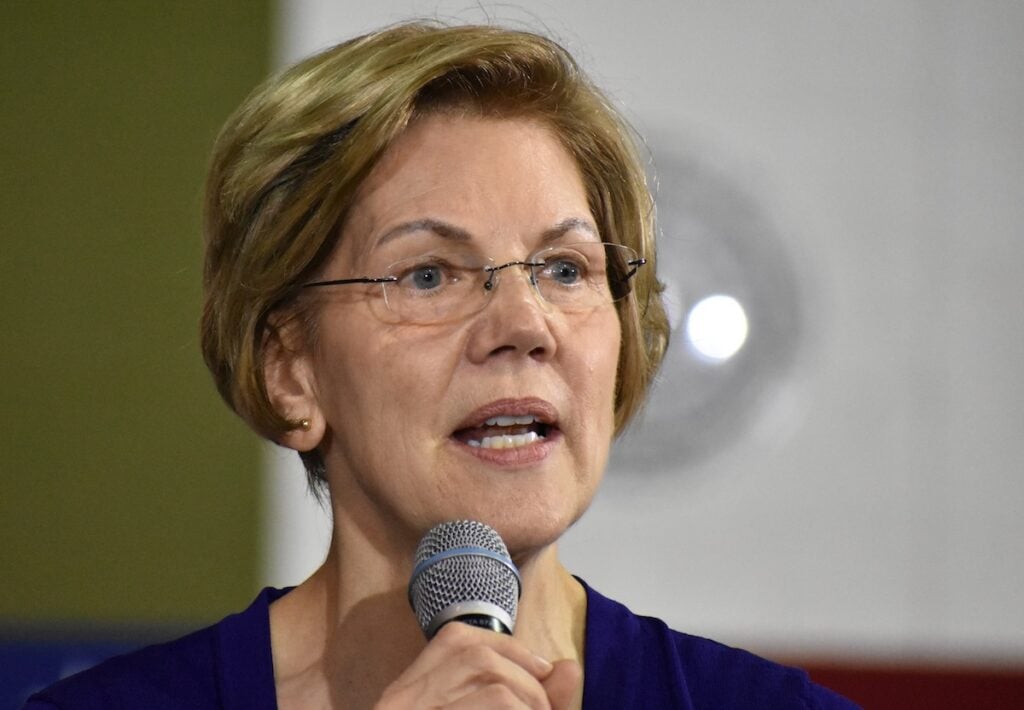
Elizabeth Warren Slams Scott Bessent: 'Huge Deal' If The World Stops Buying US Treasuries — Americans Will Pay Higher Interest Rates On Mortgages
Benzinga· 2026-01-22 02:51
Core Viewpoint - Senator Elizabeth Warren criticized Treasury Secretary Scott Bessent for minimizing the risks associated with declining global demand for U.S. Treasuries, emphasizing that this could lead to higher interest rates for consumers [2][4]. Group 1: Treasury Demand Concerns - The Danish pension fund, AkademikerPension, announced its decision to divest from U.S. Treasuries due to concerns over "poor U.S. government finances" and plans to invest in alternatives like cash and short-dated agency debt [4]. - Foreign governments now hold only 15% of U.S. Treasuries, a significant decrease from 40% in the 2010s, indicating a changing profile of U.S. government debt holders [4][5]. - For the first time in nearly three decades, foreign central banks held more gold than U.S. Treasuries, marking a notable shift in the global financial landscape [5]. Group 2: Market Reactions - The iShares Treasury Bond ETF (BATS: GOVT), which tracks U.S. Treasury bonds, saw a slight increase of 0.22% on Wednesday, closing at $23.00, although it has an unfavorable price trend in the short, medium, and long terms [6].

Trump's Greenland Tariff Retreat Sends Dow Futures Higher As 'TACO Trade Wins Again': Nikkei Rises As Weak Yen Boosts Japan Exports - Capital One Finl (NYSE:COF), GE Aerospace (NYSE:GE)
Benzinga· 2026-01-22 01:48
Market Reactions - U.S. stock futures rose after President Trump indicated a retreat from planned tariffs on the European Union, following a productive meeting with NATO Secretary General Mark Rutte, leading to a resurgence of the "TACO Trade" [1] - S&P 500 Futures increased by 0.30% to 6,931.00, Nasdaq Futures rose by 0.43% to 25,579.00, and Dow Futures gained 0.18% to 49,353.00 [1] International Market Impact - Asian markets surged, with Japan's Nikkei 225 up 1.20% to 53,409.16, driven by stocks with exposure to European markets [2] Economic Indicators - Japan's exports rose by 5.1% year over year in December, marking the fourth consecutive month of growth, although shipments to the U.S. fell by 11.1% [3] - The U.S. Dollar Index (DXY) remained flat at 98.787, down 0.01% for the day but up 0.86% over the past month [4] Upcoming Earnings and Reports - Investors are anticipating earnings releases from Procter & Gamble, General Electric, Intel, and Capital One Financial, along with GDP reports, Initial Jobless Claims, and Personal Consumption Expenditure reports [5]


I Have $30,000 in Credit Card Debt and $69,000 Left on My Mortgage. Is a Home Equity Loan a Mistake?
Yahoo Finance· 2026-01-21 21:31
Core Insights - The article discusses the potential benefits and risks of using home equity loans to pay off high-interest credit card debt, highlighting the financial implications for homeowners [4][6]. Group 1: Home Equity Loan Considerations - A homeowner with a mortgage balance of $69,000 and a property valued at $175,000 is considering a home equity loan to address $30,000 in credit card debt [3]. - The homeowner estimates they could borrow $50,000, which would allow them to eliminate credit card debt and fund home renovations, given the property value and mortgage balance [5]. - The appeal of home equity loans lies in their ability to convert high-interest credit card debt into lower-cost, fixed-rate loans, potentially lowering monthly payments and improving cash flow [6][7]. Group 2: Risks of Home Equity Loans - While consolidating credit card debt with a home equity loan may seem beneficial, it transforms unsecured debt into secured debt, increasing financial risk if unforeseen circumstances arise [6]. - The consequences of defaulting on a home equity loan can be more severe than missing credit card payments, as the home is at risk [6]. - Homeowners are encouraged to consult financial advisors to model different scenarios and assess whether consolidating debt will lead to improved long-term financial outcomes [7].
My Grandmother Offered Me a $500K Loan at 1% Interest. Should I Take It or Not?
Yahoo Finance· 2026-01-21 20:28
Core Insights - A family member offering a loan at 1% interest can significantly reduce mortgage interest payments compared to traditional bank loans, potentially saving over $370,000 in interest on an average mortgage of $381,000 [2] - The IRS views loans below the Applicable Federal Rate (AFR) as gifts, which can lead to tax implications for both the lender and borrower [3][4] Group 1: Loan Benefits - A 1% family loan can save substantial amounts in interest compared to current mortgage rates above 6% [2] - Even at the IRS minimum rate of 4.63%, borrowers can still save around $125,000 compared to bank loans [2] Group 2: IRS Regulations - The IRS sets minimum interest rates that must be charged on loans between family members, which for long-term loans is currently 4.63% [3] - Loans below the AFR are considered "below-market," and the difference is treated as a taxable gift, leading to potential tax liabilities for the lender [4] Group 3: Estate Implications - If the family lender passes away, the outstanding loan balance becomes part of their estate, complicating inheritance matters [5][6] - The unpaid loan can affect the distribution of the estate, potentially reducing the inheritance for other heirs [5]
Trump pushes for lower rates and ban on investor home purchases in bid to make homes more affordable
Yahoo Finance· 2026-01-21 18:59
Core Viewpoint - President Trump's administration is focusing on policies aimed at making homeownership more affordable for Americans, particularly through lowering interest rates and restricting institutional investors from purchasing single-family homes [1][2]. Group 1: Policy Proposals - Trump outlined four key policies during his address at the World Economic Forum, which are part of a broader initiative to tackle housing affordability ahead of the midterm elections [2]. - The administration aims to lower interest rates on home loans and credit cards to enhance financial flexibility for potential homebuyers [4]. Group 2: Current Housing Market Conditions - The U.S. housing market has been experiencing a sales slump since 2022, attributed to rising mortgage rates, high home prices, and a significant shortage of available homes [3]. - Sales of previously occupied homes in the U.S. remained at 30-year lows, indicating a challenging environment for aspiring homeowners [3]. Group 3: Government Actions - The federal government has been directed to purchase $200 billion in mortgage bonds, which Trump claims will help reduce mortgage rates [4]. - Fannie Mae and Freddie Mac reportedly have $200 billion in cash available for buying mortgage bonds, although economists suggest this may have a limited effect on mortgage rates [4]. Group 4: Federal Reserve Considerations - Trump has been advocating for the Federal Reserve to lower interest rates and plans to announce a new Fed chair to replace Jerome Powell [5]. - Historical context indicates that Fed rate cuts do not always lead to lower mortgage rates, as seen in the fall of 2024 when mortgage rates increased despite a rate cut by the Fed [6].
Trump Pressures Fed, Slams Big Landlords, Pushes Bold Plan To Cut Rates - iShares 20+ Year Treasury Bond ETF (NASDAQ:TLT)
Benzinga· 2026-01-21 18:46
Group 1: Federal Reserve and Interest Rates - President Trump is pressuring the Federal Reserve to lower interest rates, claiming that high borrowing costs are preventing ordinary Americans from homeownership [1][2] - Trump criticized Fed Chair Jerome Powell for maintaining tight monetary policy, suggesting that the U.S. should have the lowest interest rates globally [2][3] - Plans to announce a new Fed Chair are confirmed, with Trump expressing hope that the next chairman will perform better [3] Group 2: Housing Market Policies - The administration has directed government-backed institutions to purchase up to $200 billion in mortgage-backed securities to reduce long-term borrowing costs [4] - Trump signed an executive order banning large institutional investors from buying single-family homes, arguing that this practice distorts the housing market and drives up prices [5][6] - He emphasized that homes should be for people, not corporations, and called for Congress to make the ban on institutional purchases permanent [5][6] Group 3: Consumer Debt and Credit Card Rates - Trump urged lawmakers to cap credit card interest rates at 10% for one year, citing high consumer debt as a barrier to homeownership [7] - He highlighted that current credit card rates can reach as high as 32%, which he views as usury [7] Group 4: Existing Homeowners and Market Stability - While advocating for lower interest rates, Trump expressed concern for existing homeowners, stating that policies should not lead to a housing market crash [8][9] - He warned that drastically lowering housing prices could harm homeowners' equity and lead to financial distress [9] Group 5: Economic Growth and Market Reactions - Trump argued that strong economic growth does not necessarily lead to inflation, suggesting that proper growth can help manage price pressures [9][10] - Following Trump's comments, U.S. Treasury markets stabilized, with the 10-year yield around 4.27% [10][11] - Gold prices continued to rise, reaching record highs, indicating a shift towards safe-haven assets amid market uncertainty [12]

NewtekOne, Inc. Closes ALP Loan Securitization with Sale of $295 Million of Rated Notes
Globenewswire· 2026-01-21 18:03
Core Viewpoint - NewtekOne, Inc. has successfully closed a $295 million securitization backed by $342 million of Alternative Loan Program (ALP) loans, marking its 17th and largest rated securitization to date [1][2]. Securitization Details - The securitization, named NALP Business Loan Trust 2026-1, involved the sale of $251.88 million in Class A Notes, $35.88 million in Class B Notes, and $6.84 million in a Class C Note, collectively known as the Notes [2]. - The Notes are secured by $341.78 million in collateral, which includes $284.38 million of Company-originated ALP loans and a $57.4 million prefunding account for acquiring additional ALP loans [2]. - The securitization was oversubscribed by approximately ten times, with 32 institutions participating in the purchase of the Notes [2]. ALP Loan Characteristics - ALP loans are characterized as longer amortizing commercial and industrial (C&I) loans, with repayments primarily sourced from the underlying businesses rather than collateral [3]. - The Company mandates that equity owners with 20% or greater stakes personally guarantee the loans, and all business assets are pledged as collateral [3]. - ALP loans typically incur prepayment penalties of 5% for the first three years and 3% for months 36-48, appealing to borrowers seeking long-term amortization [3]. Financial Performance and Strategy - The Company has originated approximately $850 million in ALP loans since 2019, with only six defaults and one charge-off of $6 million, indicating a strong performance in loan origination [4]. - The Class A Notes received a rating of "A (low) (sf)" with a yield of 5.796%, while Class B and Class C Notes received ratings of "BBB (sf)" and "BB (sf)" with yields of 7.296% and 10.146%, respectively [5]. - The weighted average yield of the Notes was 6.08%, with a weighted average spread of 243 basis points, an improvement from the previous year's securitization [5]. Management Commentary - The CEO expressed satisfaction with the completion of the fourth securitization and emphasized the importance of ALP loans in the Company's financial solutions and performance [4]. - The Company aims to continue issuing securitizations backed by ALP loans, highlighting the favorable spreads between loan yields and debt coupons, which support the retirement of securitization debt [4]. - The Company positions itself as a long-term capital provider to independent business owners, contrasting with competitors that offer high-interest, short-term loans [6].


Hong Kong Set to Issue First Stablecoin Licenses in Q1 2026
Yahoo Finance· 2026-01-21 17:33
Core Insights - Hong Kong will issue licenses to stablecoin providers in Q1 2024, marking the first issuance since the new licensing regime took effect on August 1, 2023 [1] - The licensing process requires compliance with reserve asset regulations, redemption at par value, segregation of client funds, and adherence to anti-money laundering rules [1] - As of September 2025, 36 companies have applied for stablecoin licenses, with notable applicants including a joint venture between Standard Chartered, Animoca Brands, and HKT [2] - Hong Kong's Financial Secretary described the region's approach to digital assets as "proactive yet prudent," aiming to enhance transparency and efficiency in financial services [3] Industry Context - The global stablecoin market has a capitalization of $309 billion, attracting interest from major financial institutions such as JP Morgan, Bank of America, Paypal, and Visa [4] - There are calls within the crypto industry for the development of more resilient decentralized stablecoins that are less dependent on the dollar, as highlighted by Ethereum co-founder Vitalik Buterin [4][5] - The stablecoin sector is expected to grow and mature, unlocking real consumer applications and becoming increasingly relevant in daily life for millions [6]
I have $12K in my checking account, but the bank told me it’s too much. Is that true? How to make the most of your money
Yahoo Finance· 2026-01-21 17:01
Core Insights - A significant portion of Americans are seeking more affordable insurance options, with nearly 30% either dropping or downgrading their insurance policies in 2025, particularly in auto insurance [1][2]. Insurance Industry Trends - The average cost of auto insurance has increased by 88% over the last decade, reflecting a broader trend of rising vehicle ownership costs [2]. - Home insurance costs have also risen, with a 16% increase over the past decade, while the median sales price of U.S. houses has surged by 42% [8][9]. Consumer Behavior - Many consumers are looking to reduce their monthly expenses, particularly in areas where they have some control, such as insurance [3]. - The trend of shopping around for better insurance rates is becoming more common, with platforms available to compare rates from various providers [6][7]. Financial Management - Financial experts recommend maintaining one to two months' worth of expenses in checking accounts, but caution against keeping excessive funds that do not earn interest [10][12]. - The national average interest rate on checking accounts is only 0.07%, which is significantly lower than inflation rates, prompting a shift towards high-yield savings accounts [13][14]. Investment Opportunities - For those looking to grow their savings, diversifying into stocks and utilizing investment apps can provide higher returns [18][19]. - Apps like Acorns facilitate small, consistent investments, allowing users to build their investment portfolios gradually [19].
China Tried the ‘Sell America' Trade. Here's How That Worked Out.
Barrons· 2026-01-21 15:29
Group 1 - The article discusses the implications of a Deutsche Bank analyst's suggestion that European investors might leverage U.S. financial assets for political purposes, which was dismissed by Treasury Secretary Scott Bessent as "fake news" [2] Group 2 - The context of the discussion revolves around the broader economic and political relationship between China and the U.S., particularly in the realm of trade and investment strategies [2]