
Autonomous Driving

Search documents
哈工大提出LAP:潜在空间上的规划让自动驾驶决策更高效、更强大!
自动驾驶之心· 2025-12-03 00:04
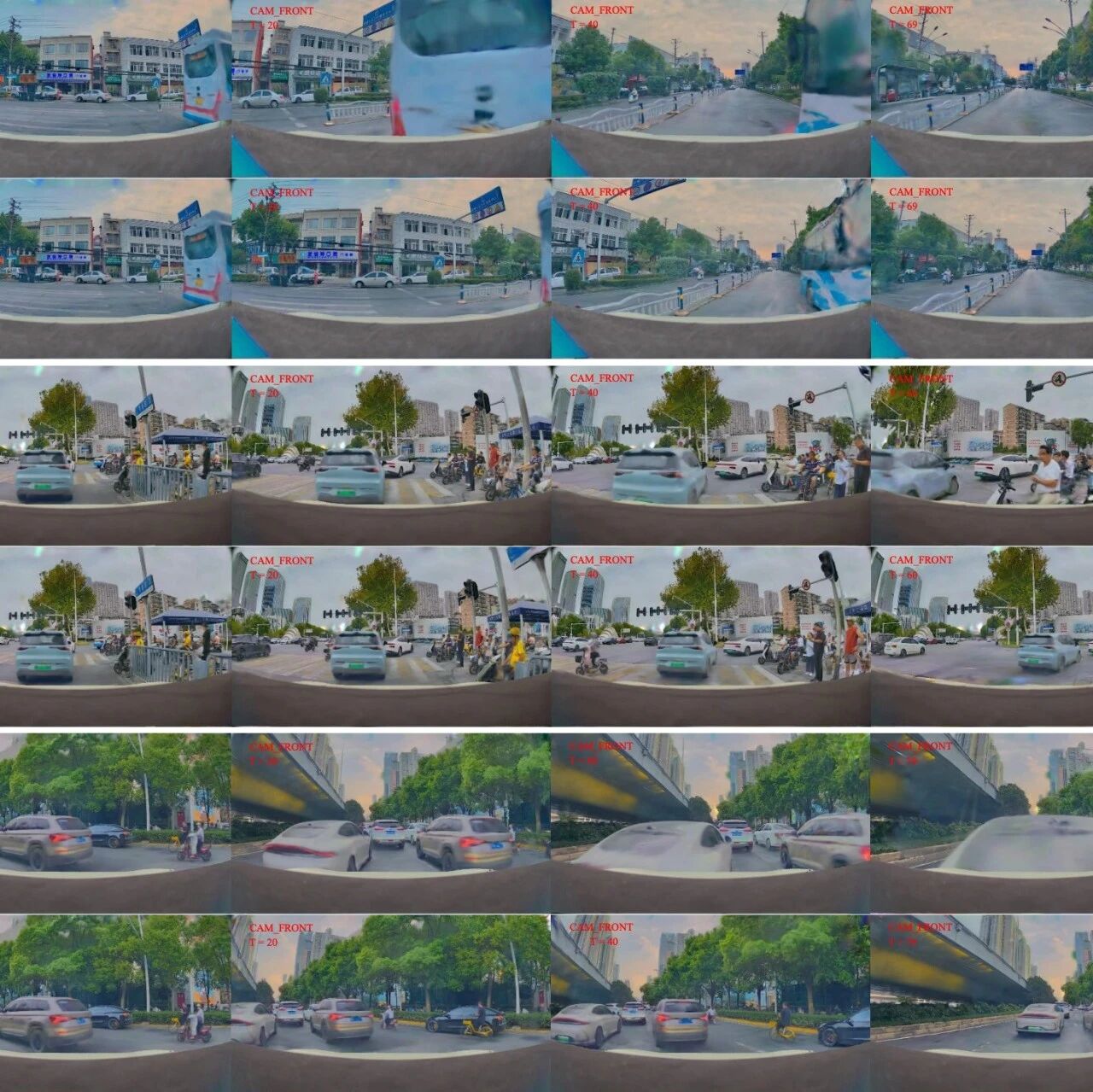
Core Insights - The article presents LAP (LAtent Planner), a framework designed to enhance autonomous driving by decoupling high-level intentions from low-level kinematics, allowing for efficient planning in a semantic space [2][39]. - LAP significantly improves modeling capabilities for complex, multimodal driving strategies and achieves a tenfold increase in inference speed compared to current state-of-the-art methods [1][22]. Background Review - The development of autonomous driving systems has faced challenges in robust motion planning within complex interactive environments, leading to the introduction of LAP to address these issues [2]. Methodology - LAP framework decomposes trajectory generation into two stages: planning in a high-level semantic latent space and reconstructing the corresponding trajectory with high fidelity [8][39]. - The framework utilizes a Variational Autoencoder (VAE) to compress raw trajectory data into a semantic latent space, enhancing the model's focus on high-level driving strategies [10][39]. Experimental Results - LAP achieved superior performance on the nuPlan benchmark, surpassing previous state-of-the-art methods by approximately 3.1 points on the challenging Test14-hard dataset [22][39]. - The inference speed of LAP is significantly improved, requiring only 2 sampling steps to generate high-quality trajectories, compared to 10 steps for previous methods [22][27]. Key Contributions - The framework effectively decouples high-level semantics from low-level kinematics using a VAE, facilitating better interaction between planning and contextual scene information [40]. - The introduction of fine-grained feature distillation bridges the gap between the latent planning space and the vectorized scene context, enhancing model performance [40]. - LAP achieves state-of-the-art closed-loop performance on the nuPlan benchmark while improving inference speed by a factor of 10 [40].


Wayve buys Germany’s Quality Match to bolster AI driving safety
Yahoo Finance· 2025-12-02 19:48
Core Insights - UK autonomous driving company Wayve has acquired German software development firm Quality Match to enhance the accuracy and safety of its AI-based driving systems [1] - The acquisition emphasizes Wayve's commitment to data accuracy as a fundamental aspect of safe and scalable autonomous driving [2] Company Overview - Quality Match, founded in 2019, specializes in data quality assurance for computer vision and artificial intelligence [1] - The company focuses on interpreting and analyzing datasets used to train AI models, particularly for advanced driver assistance and automated driving technologies [2] Acquisition Details - Financial details of the transaction have not been disclosed [1] - Quality Match's 20-member team will join Wayve, with CEO Daniel Kondermann becoming the director of data at Wayve [2] Strategic Importance - The acquisition is expected to strengthen the robustness, interpretability, and performance of Wayve's AI systems [3] - Kondermann expressed that joining Wayve presents an opportunity to apply their expertise in the autonomous driving domain, enhancing the development of safe and scalable AI [4] Operational Expansion - The acquisition deepens Wayve's presence in Germany, where it has opened an on-road testing and development center in Stuttgart and deployed a new fleet of test vehicles [5] - Wayve is also in discussions with Nvidia regarding a potential $500 million strategic investment in its next funding round, highlighting ongoing collaboration since 2018 [5]
What's a Waymo Anyway?
The Motley Fool· 2025-12-02 16:48
Core Insights - Waymo is currently leading the autonomous vehicle market by offering fully driverless rides in major cities, while competitors like Tesla remain in testing phases with safety drivers required [3][4][6] - The podcast discusses the differences in technology approaches between Waymo and Tesla, highlighting Waymo's comprehensive sensor suite versus Tesla's vision-only system [3][9] - The potential for rapid scaling in the autonomous taxi market is emphasized, with projections indicating significant growth from $1 billion in 2022 to over $100 billion by 2031 [7][12] Company Strategies - Waymo's strategy involves methodical deployment and meticulous mapping of operational cities, which contributes to their effective operations and consumer acceptance [3][9] - Tesla's approach focuses on cost reduction and rapid deployment, but it has not yet proven to be as effective in safety and technology as Waymo's strategy [7][9] - Other companies in the autonomous driving space, such as Mobileye and Aurora Innovation, are also mentioned for their unique approaches and potential contributions to the industry [15][16] Market Dynamics - The podcast notes that less than 1% of the U.S. population has experienced a driverless taxi ride, indicating that the market is still in the early adopter phase, allowing competitors time to catch up [6] - The discussion includes the importance of cost-effectiveness for both Waymo and Tesla as they scale their operations, with current vehicle costs for Waymo estimated to be between $100,000 and $150,000 [7][12] - The evolving landscape of ride-sharing is highlighted, with companies like Uber and Lyft potentially adapting to include autonomous vehicles in their offerings, but not necessarily being replaced by them [25][26] Future Outlook - The podcast suggests that while Waymo currently holds a lead, the future of the autonomous vehicle market remains uncertain, with various companies still vying for position [4][6] - The potential for new business models in ride-sharing and the integration of autonomous vehicles is discussed, indicating a shift from individual vehicle ownership to fleet operations [25][26] - The regulatory environment in markets like China and Europe is noted as being more developed, which could influence the pace of adoption and innovation in the U.S. [20][21]



X @TechCrunch
TechCrunch· 2025-12-01 21:04
Nvidia announces new open AI models and tools for autonomous driving research https://t.co/epQF1dvVUW ...

BofA Initiates Coverage of WeRide With Buy Rating and $12 Price Target
Financial Modeling Prep· 2025-12-01 21:01
Core Viewpoint - BofA Securities initiated coverage on WeRide Inc. with a Buy rating and a price target of $12 per ADR [1] Group 1: Company Overview - WeRide is described as an emerging global provider of Level 4 autonomous-driving solutions [2] - The company is projected to significantly expand its fleet and achieve profitability by 2029 [2] Group 2: Growth Catalysts - Key catalysts for growth include a broader international rollout of robotaxi operations supported by strategic partnerships and first-mover advantages [2] - Improved profitability in China is expected as the company scales its operations [2] - Accelerated adoption of WeRide's robobus, robovan, and robosweeper offerings is anticipated, all integrated within the WeRide One platform [2] Group 3: Valuation Methodology - BofA's price target of $12 per ADR is based on an average of price-to-sales (P/S) and discounted cash flow (DCF) valuation methodologies [3] - The equivalent target for Hong Kong-listed shares is HKD 31 [3]


明日开课!端到端量产究竟在做什么?我们筹备了一门落地课程...
自动驾驶之心· 2025-11-29 02:06
Core Viewpoint - The article emphasizes the importance of end-to-end production in the automotive industry, highlighting the scarcity of qualified talent and the need for comprehensive training programs to address various challenges in this field [1][3]. Course Overview - The course is designed to cover essential algorithms related to end-to-end production, including single-stage and two-stage frameworks, reinforcement learning applications, and trajectory optimization [3][9]. - It aims to provide practical experience and insights into production challenges, focusing on real-world applications and expert guidance [3][16]. Course Structure - Chapter 1 introduces the overview of end-to-end tasks, discussing the integration of perception and control algorithms, and the importance of efficient data handling [9]. - Chapter 2 focuses on the two-stage end-to-end algorithm framework, explaining its modeling and information transfer processes [10]. - Chapter 3 covers the single-stage end-to-end algorithm framework, emphasizing its advantages in information transmission and performance [11]. - Chapter 4 discusses the application of navigation information in autonomous driving, detailing the formats and encoding methods of navigation maps [12]. - Chapter 5 introduces reinforcement learning algorithms, highlighting their necessity in complementing imitation learning for better generalization [13]. - Chapter 6 involves practical projects on trajectory output optimization, combining imitation and reinforcement learning techniques [14]. - Chapter 7 presents fallback strategies for trajectory planning, focusing on smoothing algorithms to enhance output reliability [15]. - Chapter 8 shares production experiences from various perspectives, offering strategies for optimizing system capabilities [16]. Target Audience - The course is aimed at advanced learners with a foundational understanding of autonomous driving algorithms, reinforcement learning, and programming skills [17][18].

地平线RAD:基于3DGS 大规模强化学习的端到端驾驶策略
自动驾驶之心· 2025-11-29 02:06
Core Insights - The article discusses a novel approach to reinforcement learning (RL) for end-to-end (e2e) policy development in autonomous driving, utilizing 3D Graphics Simulation (3DGS) to enhance training environments [1][2] - The proposed method significantly reduces collision rates, achieving a threefold decrease compared to pure imitation learning (IL) [1] - Limitations of the 3DGS environment include a lack of interaction, reliance on log replay, and inadequate rendering of non-rigid pedestrians and low-light scenarios [1] Summary by Sections Methodology - The approach consists of three main phases: training a basic Bird's Eye View (BEV) and perception model, freezing perception to train a planning head using IL, and generating a sensor-level environment with 3DGS for mixed training of RL and IL [3][5][6] - The training process involves pre-training perception models, followed by IL training on human expert data, and finally fine-tuning with RL to enhance sensitivity to critical risk scenarios [10][12] State and Action Space - The state space includes various encoders for BEV features, static map elements, traffic participant information, and planning-related features [7] - The action space is defined with discrete movements for lateral and longitudinal actions, allowing for a total of 61 actions in both dimensions [8] Reward Function - The reward function is designed to penalize collisions and deviations from expert trajectories, with specific thresholds for dynamic and static collisions, as well as positional and heading deviations [17][19] - Auxiliary tasks are introduced to stabilize training and accelerate convergence, focusing on behaviors like deceleration and acceleration [20][23] Experimental Results - The results indicate that the proposed method outperforms other IL-based algorithms, demonstrating the advantages of closed-loop training in dynamic environments [28][29] - The optimal ratio of RL to IL data is found to be 4:1, contributing to improved performance metrics [28] Conclusion - The article emphasizes the practical engineering improvements achieved through the integration of 3DGS in training environments, leading to better performance in autonomous driving applications [1][2]
【小马智行(PONY.O)】广州城市UE首次转正,车队规模爬坡超预期——2025年三季报业绩点评(倪昱婧/邢萍)
光大证券研究· 2025-11-29 00:04
Core Viewpoint - The article highlights the strong performance and growth potential of Xiaoma Zhixing (Pony.ai) in the Robotaxi sector, driven by technological advancements and operational efficiencies, despite ongoing financial losses [4][5][6]. Financial Performance - In Q3 2025, Xiaoma Zhixing reported total revenue of $25.44 million, a year-on-year increase of 72% and a quarter-on-quarter increase of 19%. The gross margin improved by 9 percentage points year-on-year and 2 percentage points quarter-on-quarter to 18%. However, the Non-GAAP net loss attributable to shareholders widened by 33% year-on-year and 19% quarter-on-quarter to $54.72 million [4]. Business Segmentation - The revenue from Robotaxi services surged by 89% year-on-year and 339% quarter-on-quarter to $6.69 million, accounting for 26% of total revenue. Passenger fare revenue grew over 200% year-on-year. Robotruck service revenue increased by 9% year-on-year and 7% quarter-on-quarter to $10.18 million, while technology licensing and service application revenue skyrocketed by 355% year-on-year but decreased by 18% quarter-on-quarter to $8.57 million [5]. Cost Management - Xiaoma Zhixing's SG&A expense ratio decreased by 2 percentage points year-on-year and 18 percentage points quarter-on-quarter to 55%. As of the end of Q3 2025, the company had cash reserves totaling 4.184 billion yuan, with an additional 6 billion yuan raised post-Hong Kong IPO [5]. Global Expansion and Future Outlook - As of November 2023, Xiaoma Zhixing had a total of 961 Robotaxi vehicles, with 667 being the seventh generation, which has achieved profitability on a per-vehicle basis in Guangzhou. The management aims to exceed the target of 1,000 vehicles by the end of the year and expects to expand the Robotaxi fleet to over 3,000 vehicles by 2026 [6][7]. - The company has established a commercialized network for autonomous driving in four major first-tier cities and plans to expand operations to other domestic cities and international markets, having already obtained testing and operational licenses in several countries [6][7]. Technological and Operational Advantages - Xiaoma Zhixing has built core advantages in Robotaxi and Robotruck businesses through strong technology, ecosystem partnerships, and operational qualifications. The seventh-generation Robotaxi has reduced the cost of the autonomous driving suite by 70% compared to the previous generation, with an expected further reduction of 20% by 2026 [6][7].

Is Aurora Innovation (AUR) The Best Small-Cap Autonomous Driving Stock?
Yahoo Finance· 2025-11-27 20:08
Core Insights - Aurora Innovation Inc (NASDAQ:AUR) is recognized as one of the best small-cap stocks according to Reddit users, highlighting its potential in the self-driving technology sector [1][2]. Company Overview - Aurora Innovation is based in Pennsylvania and specializes in self-driving hardware, software, and data services for various vehicle types [2]. - The company has achieved a significant milestone, crossing 100,000 driverless miles on public roads while maintaining a perfect safety record for its driverless operations [2]. Future Expansion Plans - The CEO, Christopher Urmson, indicated plans to expand operations significantly by 2026, including critical routes such as Dallas to Laredo and Dallas to Atlanta, which will extend the driverless I-10 and I-20 corridor to approximately 2,000 miles [2]. - Upcoming launches include driverless operations from Fort Worth to El Paso and in the Phoenix area, with considerations for local weather conditions like dust storms [2]. Current Operations - Aurora currently operates five driverless trucks that are regularly delivering freight for customers [4]. - The company plans to deploy a fully driverless truck without an observer in the upcoming year [4]. Stock Performance - Despite its potential, Aurora's stock has experienced a decline of 36% year-to-date [4].

UISEE Technologies (Beijing) Co., Ltd.(H0168) - Application Proof (1st submission)
2025-11-27 16:00
The Stock Exchange of Hong Kong Limited and the Securities and Futures Commission take no responsibility for the contents of this Application Proof, make no representation as to its accuracy or completeness and expressly disclaim any liability whatsoever for any loss howsoever arising from or in reliance upon the whole or any part of the contents of this Application Proof. Application Proof of UISEE Technologies (Beijing) Co., Ltd. 馭勢科技(北京)股份有限公司 (the "Company") (A joint stock company incorporated in the Pe ...