
超市零售

Search documents
Brokers Suggest Investing in Kroger (KR): Read This Before Placing a Bet
ZACKS· 2025-08-13 14:31
Investors often turn to recommendations made by Wall Street analysts before making a Buy, Sell, or Hold decision about a stock. While media reports about rating changes by these brokerage-firm employed (or sell- side) analysts often affect a stock's price, do they really matter? Before we discuss the reliability of brokerage recommendations and how to use them to your advantage, let's see what these Wall Street heavyweights think about Kroger (KR) . Kroger currently has an average brokerage recommendation ( ...


永辉超市:8月21日将召开2025年半年度业绩说明会
Zheng Quan Ri Bao· 2025-08-13 13:41
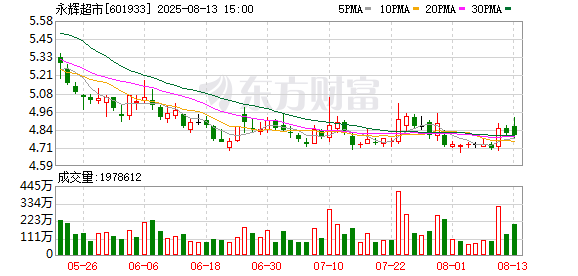
证券日报网讯 8月13日晚间,永辉超市发布公告称,公司计划于2025年08月21日(星期四)09:00- 10:00举行2025年半年度业绩说明会。 (文章来源:证券日报) ...

家乐福与苏宁易购债务和解
Sou Hu Cai Jing· 2025-08-13 09:06
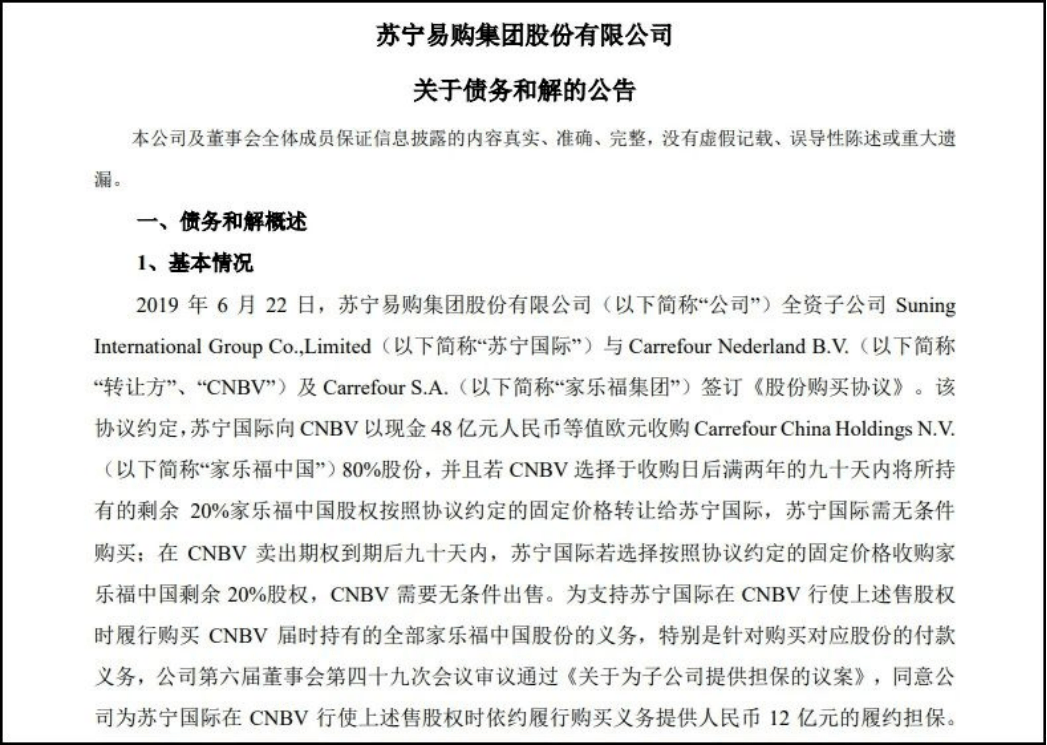
Core Viewpoint - The recent settlement between Suning.com and Carrefour Group marks the resolution of a long-standing equity dispute, with Suning agreeing to pay 220 million RMB to clear debts and gain full ownership of Carrefour China [1][4]. Group 1: Debt Settlement - Suning.com will pay 220 million RMB to Carrefour Group, which will waive related debts, allowing both parties to cease legal proceedings regarding the disputes [1][4]. - This settlement is expected to alleviate Suning's debt burden and reduce operational and management risks, while also releasing the company from guarantees related to the acquisition of Carrefour's remaining shares [4][11]. - The debt restructuring is projected to yield approximately 1.11 billion RMB in gains for Suning, based on a preliminary assessment of outstanding debts totaling around 1.33 billion RMB as of July 31 [4][11]. Group 2: Historical Context - Carrefour entered the Chinese market in 1995 and was one of the first foreign retail enterprises in the country, but by 2019, Carrefour China had been in a state of insolvency for two consecutive years [6][8]. - Suning acquired 80% of Carrefour China for 4.8 billion RMB in June 2019, with an agreement for Carrefour to sell the remaining 20% after two years [7][8]. - Following operational difficulties, Carrefour's remaining shares became a point of contention, leading to disputes over the acquisition of the last 16.67% stake [8][11]. Group 3: Financial Performance - As of the end of 2024, Suning's financial health is concerning, with a debt-to-asset ratio of 90.63% and significant overdue payments [8][11]. - Suning's Q1 2025 revenue was 12.894 billion RMB, a 2.5% increase from the previous year, with a net profit of 17.96 million RMB, marking a significant turnaround from a net loss of 96.87 million RMB in the same period last year [9][10]. - The company reported a 20.49% increase in revenue year-on-year, with net profit attributable to shareholders rising by 38.02% [10]. Group 4: Industry Implications - The settlement reflects a broader trend in the retail industry, where companies are forced to adapt to changing consumer behaviors and the impact of e-commerce [11][12]. - The challenges faced by Carrefour in China illustrate the difficulties foreign retail giants encounter in the market, particularly in adjusting to new consumer demands and operational models [11][12]. - The need for retail giants to optimize their debt structures and divest non-core assets has become essential for survival in the current market environment [12].

商超乱局:真降价,伪折扣
Hu Xiu· 2025-08-13 08:45
Core Viewpoint - Discounting is not merely a business model or format, but a management philosophy aimed at achieving high operational efficiency while maintaining low prices, which is essential for the value reconstruction of physical retail stores [1] Group 1: Preparation for Discounting - The traditional retail system is likened to a body with inflammation, where the decision to use antibiotics (discounting) must be carefully evaluated for its potential benefits and drawbacks [2][3] - The CEO of a discounting company emphasizes that a unified commitment from the entire organization is crucial for successful transformation [5] Group 2: Four Levels of Discounting - Discounting is fundamentally about enhancing the perception of affordability among customers, and achieving lower prices than competitors requires several strategic improvements [6][7] - **1. Improve Capital Efficiency**: Sufficient capital reserves are necessary, and the efficiency of capital usage must be maximized to ensure profitability [8] - **2. Enhance Operational Efficiency**: All departments must operate efficiently, with a focus on inventory turnover and management responsibilities shifting to stores [9][10] - **3. Improve Procurement Levels**: Understanding customer needs and managing procurement effectively is critical to avoid excess inventory and financial losses [11] - **4. Lower Selling Prices**: A discount store must adopt a pricing strategy that undercuts competitors while maintaining operational efficiency [12][13] Group 3: Challenges in Discounting - The term "naked procurement" has become negative as some retailers exploit discounting as a pretext to pressure suppliers for lower prices, which can lead to unsustainable practices [14][15] - A focus on maintaining commitments and contractual integrity with suppliers is essential for long-term success [15] Group 4: Reference Targets for Discount Stores - Employee wages should not exceed one day's sales, with a target of 140,000 in daily sales for a store with 40 employees earning 3,500 each [18] - Overall expense rates should not exceed 12% of sales, encompassing all fixed and variable costs [19] - The overall gross margin should be kept below 15%, with specific categories like fresh produce having even lower margins to maintain competitive pricing [20] - Fresh products should not exceed 40% of total sales to ensure profitability, emphasizing the importance of standard product sales [21][22] Group 5: Conclusion - In a competitive environment, the transition to discounting is viewed as a strategic gamble, where efficiency becomes the key to survival and success [23]
2.2亿元“一口价”后,苏宁、家乐福纠纷落幕
2 1 Shi Ji Jing Ji Bao Dao· 2025-08-12 12:36
Core Viewpoint - The ongoing conflict between Suning and Carrefour China has reached a resolution, with Suning acquiring 100% control of Carrefour China after settling outstanding debts and disputes for 220 million yuan, marking the end of Carrefour's operations in China [1][4]. Group 1: Acquisition and Financial Implications - Suning International signed a settlement agreement with Carrefour Group, paying 220 million yuan to resolve the remaining 16.67% equity acquisition payment and other claims, allowing Suning to fully control Carrefour China [1][4]. - The settlement allows Suning to eliminate over 1.3 billion yuan in potential debt liabilities and recognize a debt restructuring gain of over 1.1 billion yuan, significantly improving its financial statements [1][4]. - Carrefour's global strategy contraction and ongoing losses in the Chinese market led both parties to prefer a swift resolution to avoid prolonged arbitration and litigation costs [1][2]. Group 2: Historical Context of the Acquisition - The conflict originated from a 2019 agreement where Suning agreed to acquire 80% of Carrefour China for 4.8 billion yuan, with an option to buy the remaining 20% two years later [2]. - Carrefour China, once a strong player with nearly 30 billion yuan in revenue in 2018, faced operational decline, leading to difficulties in completing the remaining equity payment [2][5]. - Legal disputes escalated as Carrefour sought over 1 billion yuan in claims through arbitration in various jurisdictions, including Hong Kong and Paris [2][3]. Group 3: Operational Challenges and Future Outlook - Carrefour China faced significant operational challenges, including asset freezes and supply chain disruptions, leading to a decline in brand value and store closures [3][5]. - The transition of Carrefour stores to Suning's control will involve rebranding and potential restructuring into a self-owned retail brand to generate cash flow [6]. - The future of these stores in a competitive retail environment remains uncertain, as Suning aims to focus on its core business while addressing liquidity pressures [5][6].
三江购物:股东阿里泽泰提前终止减持计划,共减持2%公司股份
Mei Ri Jing Ji Xin Wen· 2025-08-12 11:53
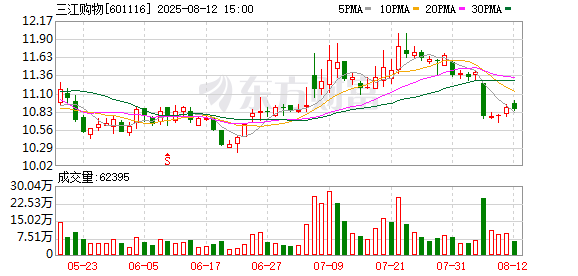
Core Insights - Sanjiang Shopping (SH 601116, closing price: 10.86 yuan) announced on August 12 that Alibaba Zhitai reduced its holdings by approximately 5.48 million shares through centralized bidding and block trading, accounting for 2% of the company's total share capital [2] Financial Performance - For the year 2024, Sanjiang Shopping's revenue composition is as follows: supermarket goods retail accounts for 98.11%, while other businesses account for 1.89% [2]

解锁啤酒节隐藏玩法!黄五箱、跨境免税店……快来青岛西海岸新区金沙滩啤酒城“淘宝”吧
Sou Hu Cai Jing· 2025-08-12 11:04
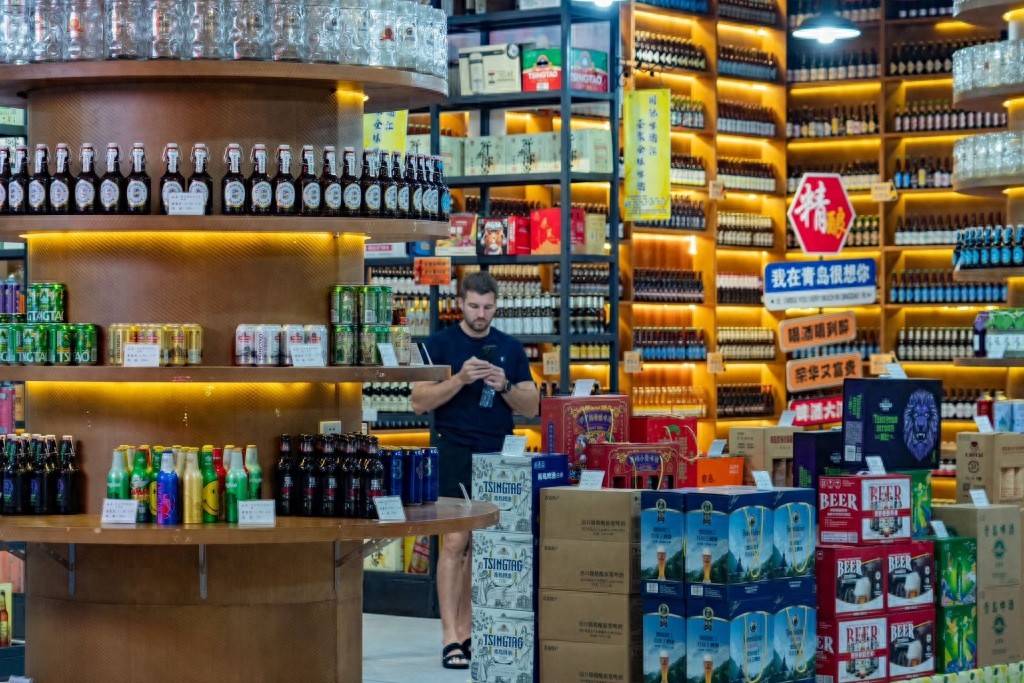
Core Insights - The 35th Qingdao International Beer Festival is currently taking place, featuring a vibrant atmosphere with various shopping opportunities for imported goods [1] Group 1: Event Overview - The festival is hosted at the Golden Beach Beer City in Qingdao's West Coast New Area, offering a unique experience combining beer enjoyment and shopping [1] - The event includes a variety of activities and attractions, enhancing the overall experience for visitors [1] Group 2: Shopping Experience - Huang Wuxiang Imported Goods Warehouse is highlighted as a treasure trove of imported products, offering a wide range of categories including beverages, food, and daily necessities at competitive prices [3] - The warehouse features over 100 subcategories across 13 major categories, catering to diverse consumer preferences [3] - HI Purchase Cross-Border E-commerce Duty-Free Mall provides a seamless shopping experience with nearly a thousand high-quality imported products available [5] Group 3: Product Offerings - The festival introduces nearly a hundred types of imported beers and offers tasting events for various food items, enhancing the shopping experience [7] - The International Beer Exchange at the festival showcases over 300 types of craft beers from more than 20 countries, ensuring a wide selection for consumers [7] Group 4: Additional Attractions - The festival also features a unique bookstore, "Ha Jiu Bookstore," which combines reading, socializing, and dining, creating a cultural hub for visitors [7]
山姆翻车惹众怒?用户不满根源在哪里?
Hu Xiu· 2025-08-12 10:05
一直在中国市场顺风顺水的山姆最近陷入到了巨大的争议当中,消费者主要吐槽的就是像好丽友、卫 龙、溜溜梅、徐福记这样的大众化品牌,现在充斥在山姆的货架当中。这件事情在社交平台上闹得沸沸 扬扬,很多人都觉得山姆的产品力不如以往了。这一期视频我来给大家分析一下对这次山姆事件的看 法。 ...
苏宁易购拟支付2.2亿元,与家乐福集团达成债务和解
Nan Fang Du Shi Bao· 2025-08-12 09:25
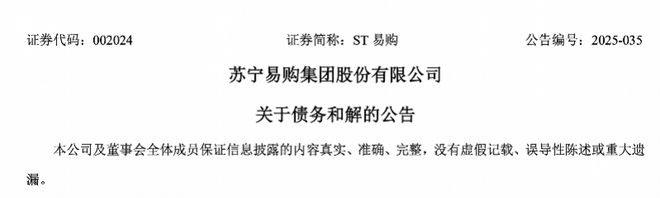
Core Viewpoint - Suning.com Group Co., Ltd. (ST Yigou) has announced a debt settlement with Carrefour, aiming to pay 220 million RMB to clear all related debts and cease the use of associated intellectual property rights [3][4][5] Group 1: Debt Settlement Details - ST Yigou will pay a total of 220 million RMB to Carrefour Netherlands, which will result in the complete settlement of previous debt obligations [4] - Following the settlement, ST Yigou will indirectly hold 100% equity in Carrefour China [4] - The debt settlement is expected to positively impact ST Yigou's financial status and operational results [3][6] Group 2: Financial Implications - The total debt amount owed by ST Yigou as of July 31 is approximately 1.331 billion RMB, with the debt restructuring expected to yield around 1.111 billion RMB in gains [6] - Prior to the settlement, ST Yigou faced significant financial challenges, with revenues dropping from 252.3 billion RMB in 2020 to 62.6 billion RMB in 2023 [7][9] Group 3: Historical Context - ST Yigou's acquisition of Carrefour China began in 2019, with an initial investment of 4.8 billion RMB for 80% equity, but the company has since struggled with liquidity issues [7][8] - The number of Carrefour stores in China decreased from 228 in 2020 to just 4 by the end of 2023, reflecting the company's operational challenges [9]
自有品牌是“陷阱”?
3 6 Ke· 2025-08-12 08:41
Core Viewpoint - The rise of private labels in retail is seen as a crucial strategy for brick-and-mortar stores to protect themselves against the competition from instant retail and online platforms, with companies like Aldi and Pang Donglai setting benchmarks in the industry through their strong private label development capabilities [1][4]. Group 1: Development of Private Labels - Metro was the first to gain customer trust with its private label in China, launching in 1996 and expanding rapidly by 2010 [2] - Costco and Sam's Club also successfully introduced their private labels in China, leveraging online platforms and strong product offerings to attract consumers [2] - Domestic retailers like Wumart and CR Vanguard have followed suit, creating their own private label brands to compete in the market [3] Group 2: Challenges and Strategies - Many domestic retailers struggle to create impactful private labels due to reliance on suppliers and lack of unique branding strategies, leading to prices that do not reflect the cost advantages of private labels [3][6] - Successful private label strategies, as seen with Aldi and Pang Donglai, involve direct procurement from manufacturers and the ability to set competitive prices, enhancing brand image and market position [4][5] - The development of private labels requires significant investment and a shift in operational strategy, with many retailers needing to adopt a long-term perspective to see returns [6][8] Group 3: Quality Control and Risks - The emphasis on low prices for private labels can compromise product quality, as retailers may cut corners on materials and quality control [7] - Retailers face significant risks if private label products fail to meet quality standards, which can damage their reputation and customer trust [7][11] - The need for a comprehensive quality control system is critical, as evidenced by recent quality issues faced by major retailers like Sam's Club [11] Group 4: Collaboration Between Manufacturers and Retailers - The trend of co-branding between manufacturers and retailers is emerging as a solution to leverage strengths from both sides, allowing for better product quality and competitive pricing [9][10] - Successful co-branding requires alignment on product understanding and quality assurance between both parties [10] Group 5: Future Outlook - The private label market in China is still in its early stages, with many retailers only beginning to explore this avenue [6] - The potential for private labels to transform the retail landscape is significant, but requires careful planning and execution to avoid pitfalls [8][11]