高等教育

Search documents
博通股份: 博通股份2025年半年度报告
Zheng Quan Zhi Xing· 2025-08-15 16:03
Core Viewpoint - The report highlights the financial performance and operational status of Xi'an Botong Information Co., Ltd. for the first half of 2025, indicating significant growth in revenue and net profit, primarily driven by the higher education sector. Group 1: Company Overview - Xi'an Botong Information Co., Ltd. focuses on higher education and computer information technology, with a 70% stake in Xi'an Jiaotong University City College [3][4]. - The company operates under the influence of the Xi'an Economic Development Group, which is its largest shareholder [3]. Group 2: Financial Performance - Total revenue for the first half of 2025 reached approximately CNY 148.70 million, a 5.23% increase from CNY 141.31 million in the same period of 2024 [7]. - The total profit amounted to CNY 18.12 million, reflecting a 42.15% increase compared to CNY 12.75 million in the previous year [7]. - Net profit attributable to shareholders was CNY 13.33 million, up 42.95% from CNY 9.33 million year-on-year [7]. - The net cash flow from operating activities was negative at CNY -119.46 million, worsening by 8.70% from CNY -109.90 million in the previous year [7]. Group 3: Business Operations - The higher education segment saw a revenue increase due to rising tuition fees and an increase in student enrollment, with main business income reaching CNY 147.34 million, a 5.70% increase from the previous year [8]. - The company has initiated the second phase of campus construction for the City College to meet the requirements for its transition to an independent private university [8][10]. Group 4: Industry Context - The company operates in a dynamic regulatory environment for private education, with recent amendments allowing private institutions to choose between non-profit and for-profit status [6][10]. - The education sector is experiencing increased competition and regulatory scrutiny, impacting enrollment and operational strategies [10]. Group 5: Future Outlook - The company is closely monitoring policy developments regarding the classification of private educational institutions and is preparing to adapt its operational strategies accordingly [10]. - The transition of the City College to an independent institution is currently under review by the Shaanxi Provincial Education Department, which is crucial for the company's future growth [10].

城市24小时 | 中西部非省会第一城的“大学梦”,终于要圆了?
Mei Ri Jing Ji Xin Wen· 2025-08-15 14:23
Group 1 - The Shaanxi Provincial Education Department has announced the public notice for the proposed name change of "Yulin College" to "Yulin University," which is now open for public supervision [1][2][3] - Yulin University is expected to become the second university in Shaanxi Province named after a city, following Yan'an University [2] - Yulin College is the only provincial undergraduate institution in Yulin City, primarily focused on engineering, and has been recognized as a first-class application-oriented undergraduate institution [2][3] Group 2 - The aspiration for Yulin College to become a university has been in planning for over a decade, with official support from the Shaanxi provincial government since 2013 [3] - The college aims to meet the standards for university status by its centennial in 2023, with goals to enhance its academic strength and social impact [3][4] - The elevation of Yulin College to university status is seen as a crucial step in addressing the educational shortcomings in Yulin, a city known for its economic strength but weaker higher education [3][4] Group 3 - Yulin, as a resource-based city, is diversifying its economy by promoting high-end, low-carbon coal chemical industries and expanding into renewable energy sectors [4] - Yulin College is aligning its academic programs with local industry needs, focusing on agriculture, energy, culture, and manufacturing to support regional development [4]

首医原校长吉训明调任北京协和医学院校长
Jing Ji Guan Cha Wang· 2025-08-15 11:11
首都医科大学是北京市重点高等院校,属于北京市政府、国家卫健委、教育部共建院校。有21所附属医 院,包括宣武医院、北京友谊医院、北京朝阳医院、北京同仁医院、北京天坛医院、北京安贞医院、北 京积水潭医院等。 经济观察报记者张英 8月15日,北京协和医学院官网显示,该校校长一职已由首都医科大学原校长吉训明担任。 此前,北京协和医学院校长是中国工程院院士、呼吸病学与危重症医学专家王辰。 吉训明是中国工程院院士、神经外科专家,2007年至2019年,任首都医科大学宣武医院副院长;2019年 12月,任首都医科大学副校长;2025年3月,吉训明接替生物学家饶毅,担任首都医科大学校长。 北京协和医学院是中国最高医学研究机构和领衔医学教育机构,由国家卫健委主管。目前已拥有21个研 究所、6家附属医院、10个学院、105个院外研发机构。其附属医院包括北京协和医院、中国医学科学院 阜外医院、中国医学科学院肿瘤医院、中国医学科学院整形外科医院、中国医学科学院血液病医院、中 国医学科学院皮肤病医院。 ...
重磅发布:2025软科世界大学学术排名
是说芯语· 2025-08-15 09:44
Core Viewpoint - The 2025 ShanghaiRanking's Academic Ranking of World Universities (ARWU) has been released, showcasing the academic performance of 1,000 leading research universities globally, with a notable increase in the number of Chinese universities on the list, reflecting their growing academic strength and international influence [4][14]. Summary by Sections Global Rankings - Harvard University retains the top position for the 23rd consecutive year, followed by Stanford University and Massachusetts Institute of Technology [8][9]. - In the Asia-Pacific region, Tsinghua University ranks 18th globally, maintaining its status as the top university in Asia [8][10]. Chinese Universities Performance - A total of 222 universities from mainland China made the list, an increase of 19 from the previous year, surpassing the United States, which has 183 universities [14][15]. - Thirteen Chinese universities are in the global top 100, with Tsinghua University rising to 18th, Peking University to 23rd, and Zhejiang University to 24th [14][19]. Notable Rankings of Chinese Universities - Tsinghua University: 18th (up 4 places) - Peking University: 23rd (up 1 place) - Zhejiang University: 24th (up 3 places) - Shanghai Jiao Tong University: 30th (up 8 places) - University of Science and Technology of China: 40th (up 2 places) - Fudan University: 41st (up 9 places) [14][19]. Growth of New Entrants - 22 universities from mainland China made their debut in the rankings, including Guangxi Normal University and Tianjin University of Technology, indicating a rise in academic standards [4][14]. Comparison with Other Regions - China has 13 universities in the top 100, second only to the United States, which has 37 [14][15]. - The number of Chinese universities in the top 500 is 113, while the total number in the top 1,000 is 244 [15][16]. Development of "Double First Class" Universities - Among the 101 universities in the global top 500 from mainland China, 83 are classified as "Double First Class," with significant advancements noted for Tongji University and Xiamen University, which entered the top 150 for the first time [18].



教育部公示2025年度普通高校申报本科专业130个
Xin Jing Bao· 2025-08-15 09:21
Core Points - The Ministry of Education's Higher Education Department announced the public notice for the 2025 undergraduate program application materials, with a total of 130 programs being applied for [1] - The most applied programs include Sports Training (42), Artificial Intelligence Education (26), and Discipline Inspection and Supervision (18) [1] - Gansu Police Academy submitted the highest number of applications with five programs, while Hubei Police Academy and Guangdong Police Academy each submitted three [1] Summary by Category - **New Programs**: The announcement includes new undergraduate programs, second bachelor's degree programs, adjustments to degree granting categories or study durations, and program cancellations [1] - **Application Trends**: In 2024, a total of 535 undergraduate programs were applied for, compared to 525 in 2023, indicating a growing interest in expanding academic offerings [1] - **Participation of Institutions**: Several universities in Beijing participated in this round of program applications, including Beijing Institute of Technology and Capital Normal University, which applied for Artificial Intelligence Education [1]
标志性,16家大学游戏专业扩容,含一家211学校
3 6 Ke· 2025-08-15 09:21
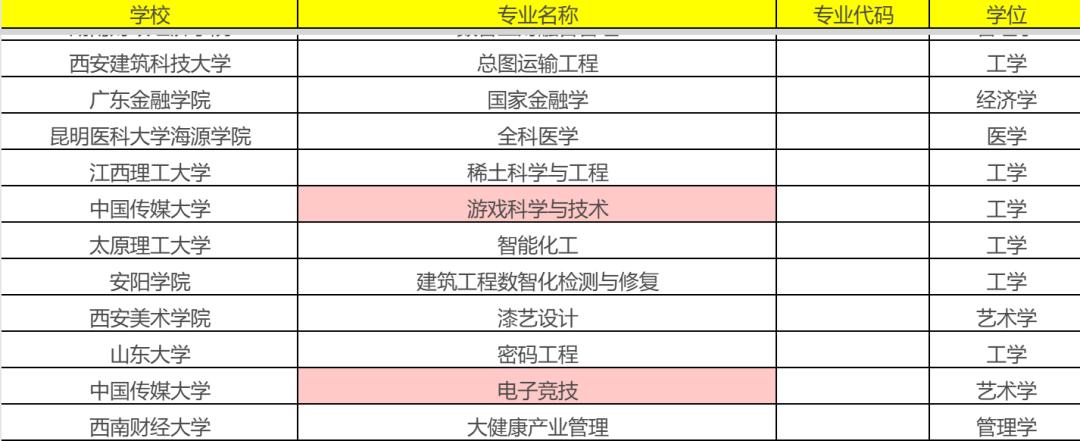
Group 1 - The Ministry of Education of China announced the public listing of new undergraduate programs for 2025, including Game Science and Technology (Engineering) and Esports (Arts) at Communication University of China [1] - A total of 29 new programs were approved for inclusion in the 2025 undergraduate program directory, with 51 universities participating, including the newly added Game Art Design program [5] - The announcement period for the new program applications is from August 14 to September 13, 2025 [4] Group 2 - Communication University of China has been a pioneer in game-related education since 2004, with over 500 undergraduate students currently enrolled in game-related programs [9][11] - The trend of formalizing game education is gaining momentum, reflecting the industry's growth and the potential value of video games, which may lead to more universities developing game-related programs [11][12] - The Ministry of Education emphasizes the need for higher education to align with national strategies, market demands, and technological advancements, promoting a responsive and adaptive approach to program offerings [10]
博通股份:上半年净利润1333.29万元 同比增长42.95%
Zheng Quan Shi Bao Wang· 2025-08-15 07:57
报告期营收增长主要系子公司城市学院高等教育业务收入增加所致,上半年城市学院实现营业收入1.49 亿元,比上年同期增加5.36%。 人民财讯8月15日电,博通股份(600455)8月15日晚间发布2025年半年报,上半年营业收入1.49亿元, 同比增长5.23%;归母净利润1333.29万元,同比增长42.95%。 ...
江苏上榜高校数全国第一!2025软科世界大学学术排名发布
Xin Hua Ri Bao· 2025-08-15 06:53
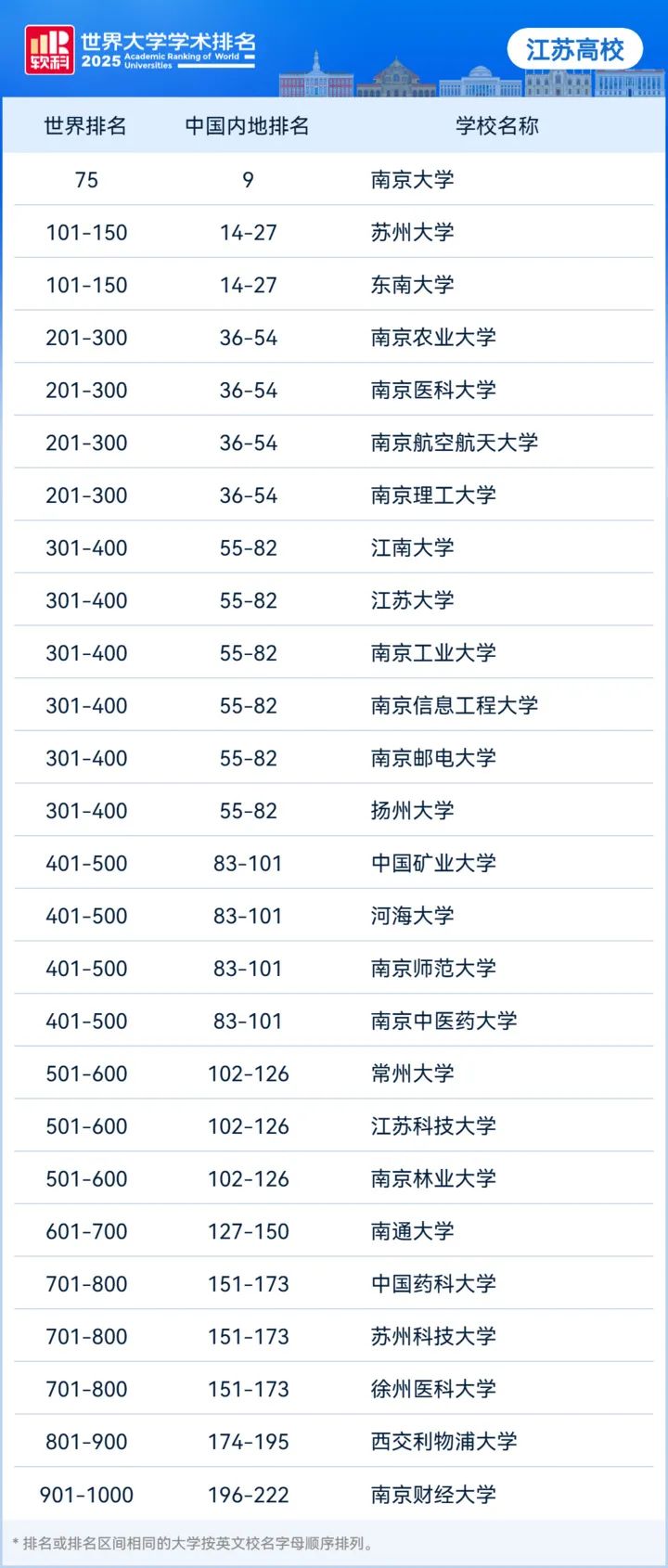
Core Insights - The "2025 Soft Science World University Academic Ranking" has been released, showcasing the top 1000 research universities globally, with 222 universities from mainland China included, maintaining 13 in the top 100 compared to last year [1] Group 1: Rankings and Performance - Tsinghua University has entered the top 20 for the first time, ranking 18th globally and 1st in Asia [1] - Peking University ranks 23rd, Zhejiang University 24th, Shanghai Jiao Tong University 30th, and University of Science and Technology of China 40th, with all top five Chinese universities showing improvements from last year [1] - Nanjing University leads Jiangsu province at 75th globally, rising 7 places from last year, while several other Jiangsu universities also improved their rankings [2][3] Group 2: New Entrants and Growth - 22 universities from mainland China, including Guangxi Normal University and Tianjin University of Technology, made their debut in the rankings, indicating a rise in academic standards and international influence [1] - Jiangsu province has 26 universities on the list, the highest in the country, reflecting its strong educational foundation [1] Group 3: Educational Development in Jiangsu - Jiangsu province has implemented various measures to enhance higher education, including increased funding and educational reforms, leading to a well-structured and distinctive higher education system [5] - The province's government has launched initiatives to support universities in achieving world-class status, with a focus on artificial intelligence as a key driver for educational quality [5]


近1亿元!山西农业大学采购大批仪器(含设备更新及重点实验室建设)
仪器信息网· 2025-08-15 03:58
Core Viewpoint - Shanxi Agricultural University has announced multiple government procurement intentions for laboratory instruments, with a total budget of 0.98 billion yuan, indicating a significant investment in research and development capabilities [2][3]. Summary by Sections Procurement Intentions - The university plans to procure four types of laboratory instruments, including ion exchange chromatography, terahertz spectroscopy detection systems, atomic force microscopes for engineering materials, flow cytometers, and real-time fluorescent quantitative PCR instruments, with the expected procurement period from April to August 2025 [3][4]. Instrument Descriptions - **Terahertz Spectroscopy Detection System**: An advanced analytical technology based on terahertz electromagnetic radiation, applicable in materials science, biomedical fields, safety inspections, drug testing, and agricultural quality control, with a frequency range of 0.1 THz to 10 THz [4]. - **Ion Exchange Chromatography**: A liquid chromatography technique based on electrostatic interactions, widely used in biochemistry, pharmaceuticals, environmental analysis, and food science for the separation and purification of ionic or ionizable molecules [5]. - **Real-time Fluorescent Quantitative PCR Instrument**: A precision instrument for real-time monitoring of DNA/RNA amplification during PCR, essential in molecular biology, medical diagnostics, biotechnology, food safety, and environmental monitoring [6]. Research and Development Capacity - Shanxi Agricultural University, established in 1907, is a prominent agricultural institution with a strong focus on agricultural science, integrating multiple disciplines such as biology, environment, and materials science, aimed at promoting agricultural technology innovation and rural revitalization [8][9]. - The university hosts national and provincial key laboratories and engineering research centers, undertaking numerous significant research projects with internationally influential outcomes [9][10]. - The university's research teams focus on solving critical agricultural issues, translating laboratory results into practical applications to ensure national food security and promote sustainable development [10].

为什么港校今年这么“吃香”
3 6 Ke· 2025-08-15 03:20
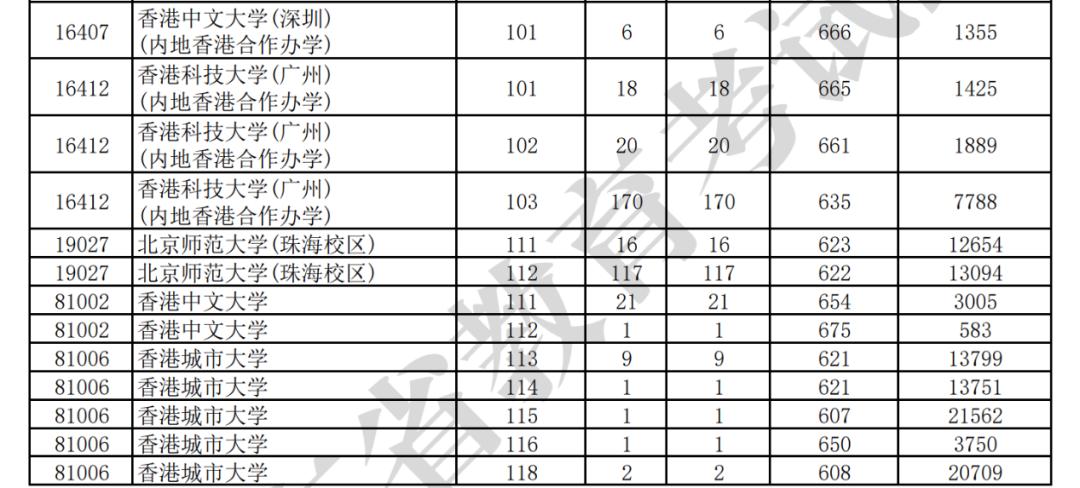
"清北or港大?" 每年高考录取季,这道选择题都会被反复提及。 今年,一则消息引发热议:广州一位全省前十的高分考生放弃清华北大,选择香港大学牙医学院。 这也是时隔7年,港大牙医学院再次向中国内地招生——该学科在QS排名中常年稳居全球前三、亚洲第一。 尽管录取门槛居高不下,香港高校的吸引力仍在持续攀升。 2025年,包括港大在内的15所香港高校面向中国内地招收本科生,申请人数预计再创新高。 广州这位考生也是当下内地高分考生扎堆选择港校的一个缩影。 社交媒体上,"拒绝清北选择港大,我后悔了吗?""为什么放弃清北来港大?"等帖子引发广泛讨论,许多过来人分享自己的经历。 一项关于"港大vs清北"的民间投票更直观地反映了这一风向——超过1.5万人参与,其中60%的投票者倾向于选择港大。 近年来,凭借地缘优势、国际化教育模式等竞争力,香港高校已成为中国内地顶尖学子的热门选择,但近年来录取门槛也水涨船高。 粤渝提前批2所港校全超600分 今年,港校依然是中国内地高考生的热门选择之一,分数线也再上一个台阶。 广东省2025年提前批本科普通类(历史)(物理)非军检、面试院校投档情况显示,2所香港高校的投档最低分全部超过600分 ...