
农业科技创新

Search documents
果盘子里话消费
Ren Min Ri Bao· 2026-02-27 03:10
Core Viewpoint - The emergence of high-priced fruits as everyday consumer goods indicates that consumption upgrades are not only driven by stronger purchasing power but also by improved supply-side quality [1][3]. Group 1: High-Priced Fruits and Consumer Behavior - High-priced fruits such as black strawberries (30 yuan each), finger lemons (200 yuan per pound), and pink pineapples (800 yuan each) have gained popularity, with many items showing "out of stock" status on e-commerce platforms, indicating consumer willingness to pay for novelty [1]. - The high prices of these fruits are attributed to factors such as breeding and cultivation technology limitations, reliance on imports, and associated logistics and tariff costs, leading to their perceived scarcity and emotional consumption trends [1]. Group 2: Consumer Expectations and Market Dynamics - Consumers are increasingly expecting that novel fruits will offer both high quality and reasonable prices, a trend supported by recent reductions in cherry prices due to free trade agreements and improved cold chain logistics [2]. - Historical examples show that expensive fruits can become affordable and popular in China, suggesting that with market demand, policy support, and technological advancements, high-priced fruits may eventually fall within acceptable price ranges for consumers [2]. Group 3: Supply-Side Innovations and Future Outlook - Continuous efforts in agricultural technology innovation and improvements in cold chain logistics are essential for making quality fruits accessible to more consumers, as seen with advancements in blueberry cultivation and local durian production [3]. - The "14th Five-Year Plan" emphasizes the need to boost consumption, highlighting that the transition of high-priced fruits to everyday items reflects a broader trend of consumption upgrading, which requires a focus on quality and brand strength in the fruit industry [3].
果盘子里话消费(微观)
Ren Min Ri Bao· 2026-02-26 22:12
Core Viewpoint - The emergence of high-priced fruits as everyday consumer goods indicates that consumption upgrades are not only driven by stronger purchasing power but also by improved supply-side quality [1][3]. Group 1: High-Priced Fruits and Consumer Behavior - High-priced fruits such as black strawberries (30 yuan each), finger lemons (200 yuan per pound), and pink pineapples (800 yuan each) have gained popularity, with many items showing "out of stock" status on e-commerce platforms, reflecting consumer willingness to pay for novelty [1]. - The high prices of these fruits are attributed to breeding and cultivation technology limitations, reliance on imports, and associated logistics and tariff costs, leading to their perceived scarcity and emotional consumption trends [1]. Group 2: Consumer Expectations and Market Dynamics - Consumers are increasingly looking for new fruit varieties that offer both quality and reasonable prices, as evidenced by the recent drop in cherry prices due to trade agreements and improved logistics [2]. - The market has seen previously expensive fruits, like certain watermelons, become affordable and popular in China, indicating potential for price reductions in high-priced fruits as agricultural technology advances [2]. Group 3: Supply-Side Innovations and Market Sustainability - Continuous efforts in agricultural technology innovation and improvements in cold chain logistics are essential for reducing cultivation and distribution costs, thereby making quality fruits more accessible to consumers [3]. - The "14th Five-Year Plan" emphasizes boosting consumption, suggesting that the transition of high-priced fruits to everyday items reflects a broader trend of consumption upgrade driven by supply-side enhancements [3].
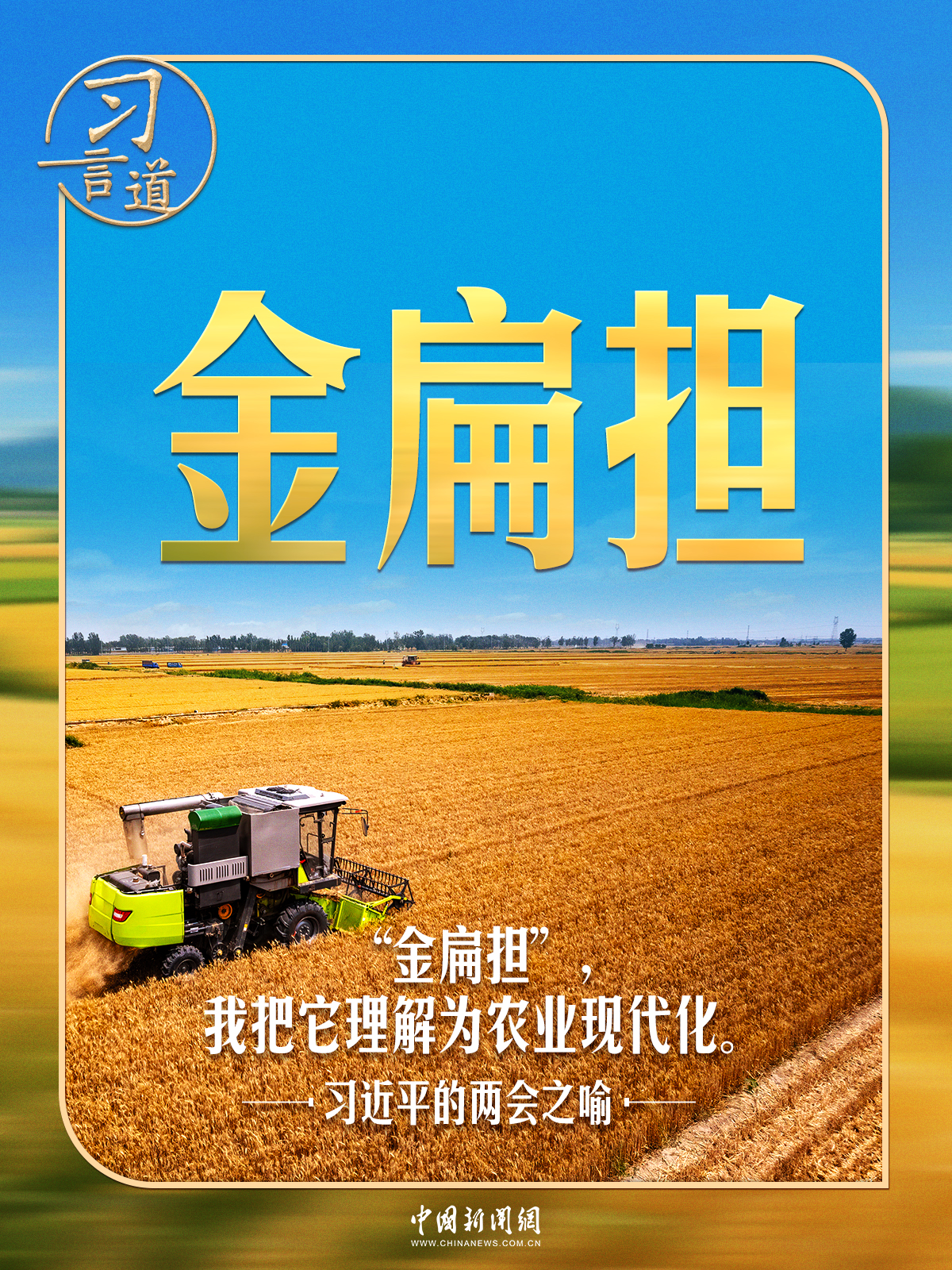
习近平的两会之喻|“金扁担”,我把它理解为农业现代化
Zhong Guo Xin Wen Wang· 2026-02-26 13:03
Core Viewpoint - The article emphasizes the importance of agricultural modernization in China, as articulated by President Xi Jinping, who relates it to the aspirations of rural communities for a better life and economic prosperity [2][11]. Group 1: Agricultural Modernization - Agricultural modernization is seen as a solution to deep-rooted issues in agricultural development, focusing on improving product structure, risk resistance, and modernization levels [2][3]. - Technological advancement and innovation are crucial for increasing agricultural productivity, with a call for enhanced mechanization and smart farming practices [3][4]. Group 2: Industry Revitalization - The revitalization of local industries is a priority, with a focus on developing unique local products to boost rural economies [4][5]. - Xi Jinping has highlighted successful local agricultural initiatives, such as apple farming in Shaanxi, as models for agricultural modernization [4]. Group 3: Rural Development - There is a need for comprehensive rural modernization, which includes improving infrastructure, public services, and living conditions in rural areas [8][9]. - The government aims to ensure that farmers not only increase their income but also enhance their knowledge and skills [6][11]. Group 4: Clear Path Forward - The direction for agricultural and rural modernization is clearly defined, aiming for farmers to share in the benefits of development and improve their quality of life [10][11].

人民日报:申请7项专利的蔬菜大棚
Ren Min Ri Bao· 2026-02-26 07:57
Group 1 - The newly established Hainan Typhoon Season Emergency Supply Vegetable Base in Tunchang is designed to address challenges posed by high temperatures and frequent typhoons, featuring innovative zigzag greenhouse designs that improve ventilation and temperature control [1][2] - The base has applied for seven utility model patents for its greenhouse design, which allows for better heat dissipation compared to traditional arched greenhouses, thus preventing crops from wilting in high temperatures [1] - The structural framework of the greenhouse is specifically designed to withstand typhoons, allowing for quick replanting after storms, ensuring a stable supply of vegetables during adverse weather conditions [1] Group 2 - The Tunchang Agricultural Development Company reports that the time to harvest leafy vegetables has been reduced from 45 days to as fast as 30 days, with yields reaching 1,500 to 2,000 pounds per acre [2] - During the typhoon season, the base plans to quickly plant 15 types of fast-growing, storage-resistant vegetables to ensure local supply stability when ferry services are disrupted [2] - The transformation of previously barren land into a reliable source of fresh vegetables is highlighted, emphasizing its role in safeguarding the local food supply [2]
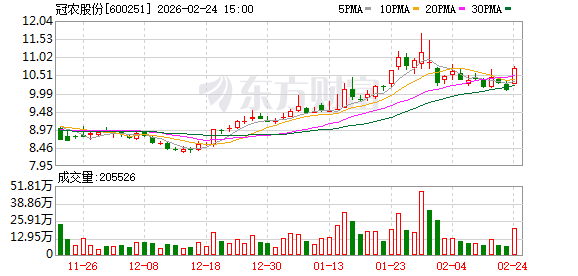
冠农股份:公司围绕农业新质生产力培育与农业科技创新方向稳步探索推进
Zheng Quan Ri Bao· 2026-02-24 11:10
Core Viewpoint - The company is actively responding to the central government's directives on agricultural innovation and is exploring new agricultural productivity through technology [2] Group 1: Company Initiatives - The company's wholly-owned subsidiary, Guannong Digital Agriculture Technology Co., Ltd., has developed the "Little Iron Bull" digital agriculture comprehensive service platform to enhance raw material quality [2] - The platform provides services in planting management, agricultural machinery operations, and raw material harvesting, aiming to improve service efficiency and precision for farmers [2] - The company plans to continuously track industry technology trends and steadily advance the application and layout of relevant technologies to enhance its development quality and effectiveness [2]

改革者 正青春|如何为番茄安装上“中国芯”?
Xin Lang Cai Jing· 2026-02-22 12:47
Core Viewpoint - The article emphasizes the importance of seed industry revitalization as a key component of agricultural modernization in China, highlighting the efforts of companies like Sanmu Seed Company in Shouguang to innovate and improve seed varieties, particularly in high-end vegetable sectors like tomatoes [1][2]. Group 1: Seed Industry Development - The "14th Five-Year Plan" suggests deepening the implementation of seed industry revitalization actions, recognizing seeds as crucial to agriculture [1]. - The Shouguang region is referred to as the "Home of Chinese Vegetables," with a focus on enhancing independent breeding capabilities and transitioning towards becoming a "Silicon Valley" for vegetable seeds in China [2]. Group 2: Technological Innovation - The team at Sanmu Seed Company employs a combination of traditional breeding and molecular breeding techniques, creating thousands of hybrid combinations annually to develop new tomato varieties [1][2]. - The application of molecular breeding has significantly accelerated the breeding process, improving precision and efficiency in both germplasm identification and new variety cultivation [1]. Group 3: Market Impact and Recognition - The "Baolu" series of new tomato varieties and ecological high-efficiency cultivation techniques have been promoted over an area of more than 700,000 acres, saving farmers approximately 26 million yuan annually in seed costs [2]. - The research achievements of the company have been recognized with the first prize for technological progress in Shandong Province, serving as a significant encouragement for further innovation [2].
省农科院 科技创新与成果转化双突破
Xin Lang Cai Jing· 2026-02-19 03:33
Group 1 - The core viewpoint of the article highlights the significant achievements of the Heilongjiang Academy of Agricultural Sciences during the 14th Five-Year Plan period, showcasing advancements in agricultural innovation and technology [1][2] Group 2 - During the 14th Five-Year Plan, the Academy achieved a global first with the complete assembly of the pig T2T genome, filling an international gap in pig genome analysis [1] - The Academy's dynamic rice variety design and application, along with technology for enhancing saline-alkali grassland productivity, were recognized in the provincial science and technology progress award shortlist [1] - The 4YX-5/6 fresh corn combine harvester was awarded as a major agricultural technological achievement in 2025 [1] - The Academy's technology transfer reached a total of 8.89 billion yuan, marking a 76.5% increase year-on-year, and it has ranked first in technology transfer index among provincial research institutes for three consecutive years [2] - The Academy has been approved for 2 national-level platforms and 62 provincial-level platforms, with a 10.3% year-on-year increase in platform numbers [2] - The Academy aims to enhance its agricultural research capabilities and achieve a top-tier status among provincial agricultural research institutes by 2030, in preparation for its 70th anniversary [2]
科技创新与成果转化双突破
Xin Lang Cai Jing· 2026-02-18 23:27
Core Insights - The Heilongjiang Academy of Agricultural Sciences has demonstrated significant innovation capabilities during the 14th Five-Year Plan period, achieving notable advancements in agricultural research and technology [1][2] Group 1: Innovation Achievements - The Academy successfully completed the world's first T2T whole genome assembly of pigs, filling an international gap in pig genome analysis [1] - The design and application of dynamic plant-type rice varieties and technologies for enhancing productivity in saline-alkali grasslands have been recognized in the provincial Science and Technology Progress Award [1] - The 4YX-5/6 type fresh corn combine harvester was awarded as a major technological achievement in Chinese agriculture for 2025 [1] Group 2: Technology Transfer and Impact - The Academy's technology transfer has seen a significant increase, with a total of 889 million yuan in cumulative results transferred, marking a 76.5% year-on-year growth [2] - The Academy has been ranked first in technology transfer index among provincial research institutions for three consecutive years [2] - A national-level cold-region agricultural industry intellectual property operation center has been established, being the only one in the province [1] Group 3: Future Development Plans - The Academy aims to enhance its innovation capabilities and reform initiatives over the next five years, focusing on becoming a modern first-class agricultural research institution [2] - Eight major projects will be implemented to boost agricultural technology innovation and the practical application of research results [2] - By 2030, the Academy aspires to rank among the top provincial agricultural research institutions in China, preparing for its 70th anniversary [2]
“古灵精怪”农产品批量上线
Xin Lang Cai Jing· 2026-02-15 22:17
Core Insights - The article highlights the achievements of agricultural innovation teams in Liaoning province, showcasing unique agricultural products and technological advancements in the sector [1][2] Group 1: Agricultural Innovations - Unique agricultural products such as sweet melons with a sugar content of 19.5 degrees, small apples weighing over 20 grams, and white strawberries are results of agricultural technology innovation [1] - A total of 105 core technologies were tackled by innovation teams, resulting in 13 technology achievement awards [1] - The maize team's haploid breeding technology achieved a haploid induction rate of 15.6% and a line formation rate of 70%, reaching an advanced international level [1] Group 2: Integrated Technology Solutions - The 15 teams developed 84 integrated technology models to support the entire agricultural industry chain [2] - The rice team's high-quality production technology was selected as a key technology by the Ministry of Agriculture and Rural Affairs [2] - The fruit tree team's drone technology for pest control in apple cultivation achieved over 90% effectiveness and is widely promoted in apple-growing regions [2] Group 3: Future Goals and Collaboration - The provincial agricultural department aims to align with the national modern agricultural technology system, breaking down barriers between departments, regions, and disciplines [2] - The innovation teams will focus on stabilizing food supply, enhancing the entire industry chain, and promoting green and efficient agricultural development [2] - Goals include supporting the development of trillion-yuan industrial clusters and hundred-billion-yuan characteristic industries [2]

青平:2026年乡村振兴绘就壮美画卷
Xin Lang Cai Jing· 2026-02-14 15:33
Core Viewpoint - The document outlines the importance of agricultural modernization and rural revitalization in China, emphasizing the need to prevent poverty and enhance agricultural productivity and quality as part of the broader goal of achieving a strong agricultural nation by 2026 [1][4]. Group 1: Poverty Prevention and Support - The document stresses the necessity of maintaining a bottom line to prevent large-scale poverty, advocating for a robust and regular support policy system integrated into rural revitalization efforts [1]. - By the end of 2025, over 7 million individuals at risk of poverty will be identified and supported, with significant improvements in education, healthcare, housing safety, and drinking water security for the formerly impoverished population [1]. Group 2: Technological Support and Quality Improvement - The emphasis is placed on enhancing agricultural productivity and quality through a new round of initiatives aimed at increasing grain production capacity by 100 billion jin, alongside promoting superior crop varieties and quality improvements [2]. - As of last year, significant advancements in agricultural technology have been noted, including over 300,000 agricultural drones and a mechanization rate of 76.7% for crop farming [2]. Group 3: Rural Construction and Development - The document advocates for a people-centered approach to rural construction, emphasizing the need for tailored strategies that respect the unique characteristics of each village [3]. - It highlights the importance of optimizing village layouts and construction methods based on local resources and needs, ensuring that rural development is not a one-size-fits-all approach [3]. Group 4: Long-term Commitment and Strategic Implementation - A call for sustained efforts and precise strategies is made to achieve significant progress in rural revitalization, aiming for a prosperous agricultural sector, beautiful rural areas, and wealthy farmers [4].