Semiconductors

Search documents
英伟达200亿收购,被调查,涉嫌垄断
半导体行业观察· 2026-03-21 02:53
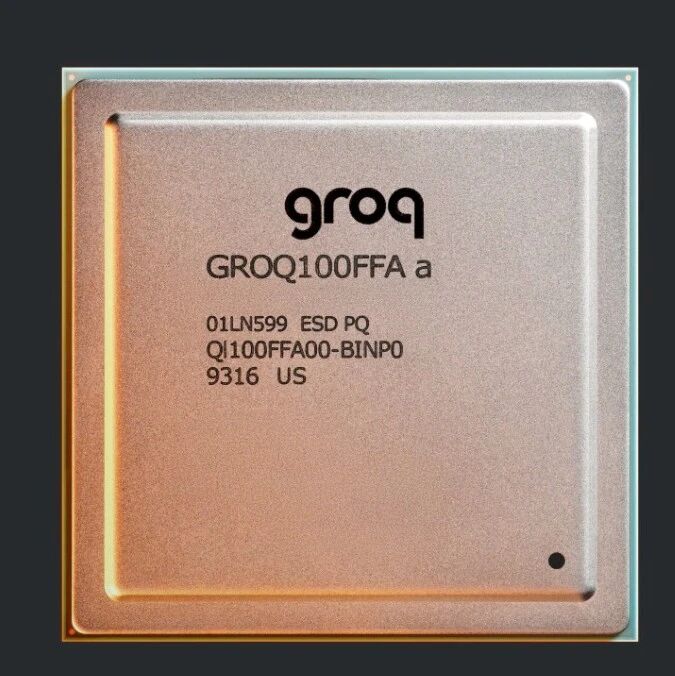
Core Viewpoint - Nvidia's acquisition of AI startup Groq for $20 billion is under investigation by two Democratic senators, questioning whether the deal violates antitrust laws and potentially consolidates Nvidia's dominance in the AI computing market [2][3] Group 1: Acquisition Details - The senators, Elizabeth Warren and Richard Blumenthal, expressed concerns that the deal's structure appears designed to "evade antitrust scrutiny" [2] - Nvidia's spokesperson clarified that the company has not acquired Groq but has obtained a non-exclusive license for Groq's intellectual property and hired engineering talent from Groq [2] - The deal is expected to be completed by the end of 2025, expanding Nvidia's investments in AI-related companies and providing access to new technology [2] Group 2: Market Implications - Nvidia's chips dominate the training of large language models, which are foundational to AI, while Groq focuses on inference, a more competitive area [3] - The senators highlighted that Nvidia's technology is crucial for the development of advanced AI, effectively controlling which companies can compete in the AI sector [3] - At Nvidia's annual conference, CEO Jensen Huang announced the integration of Groq's technology into a new AI computing platform [3]


21社论丨应关注AI算力涨价的市场影响
21世纪经济报道· 2026-03-21 01:11
Group 1 - The core viewpoint of the article indicates that the cloud computing industry is transitioning from a price decline driven by economies of scale to a price increase driven by supply-demand imbalance, as evidenced by recent price hikes from major cloud service providers [1][2] - Major cloud computing companies in China have announced price increases for AI computing power and storage products, following similar moves by global leaders like AWS and Google Cloud, marking a significant shift in pricing strategy [1][2] - The demand for AI applications has fundamentally changed, with a notable increase in token consumption as AI moves from simple chat applications to more complex multi-step execution applications, leading to a surge in demand for computing resources [1][2] Group 2 - The rise in hardware prices is attributed to multiple new demands, particularly the explosive growth in storage chip requirements, which has created supply bottlenecks, especially in AI server memory configurations [2] - The current price increase is primarily a short-term effect of demand congestion, as capital rapidly flows into validated technologies, while the production of AI chips remains highly concentrated among a few companies, limiting the ability to quickly increase supply [2] - The AI computing industry exhibits monopolistic characteristics, with a few major players dominating the hardware and service sectors, contrasting sharply with the more distributed structure of the consumer electronics industry, which has broader economic impacts [3]

韩国芯片,赚麻了!
芯世相· 2026-03-21 01:06
Core Viewpoint - The South Korean semiconductor industry has experienced a dramatic turnaround from despair in 2022 to significant growth in 2023, largely driven by the AI boom and strategic investments in high-bandwidth memory (HBM) technology [5][6]. Group 1: Industry Overview - In early 2022, the South Korean semiconductor sector faced severe challenges, with a continuous decline in export value and storage chip prices plummeting [5]. - By March 2023, South Korea's chip exports exceeded $20 billion for three consecutive months, with February's exports surging by 160.8% year-on-year, marking a historic high of $25.16 billion [5][6]. - The semiconductor sector's contribution to South Korea's total exports rose from 16.3% to 34.7% year-on-year, becoming a crucial economic driver [5]. Group 2: Strategic Investments - The AI wave has prompted major tech companies like Microsoft, Meta, Amazon, and Google to plan investments of approximately $650 billion in AI infrastructure by 2026, with a significant portion directed towards GPUs and HBM, where South Korea holds a dominant position [5][6]. - SK Hynix and Samsung, the two leading HBM manufacturers, control nearly 80% of the global market share, with SK Hynix's entire HBM production capacity for 2026 already sold out [6]. Group 3: Risk and Reward - In 2022, while competitors reduced production and cut costs, SK Hynix and Samsung chose to increase their investment in HBM technology, with SK Hynix boosting its R&D spending by 30% [7][8]. - This strategic decision to focus on HBM, despite the industry's downturn, positioned them favorably for the subsequent AI boom, as traditional memory could not meet the demands of AI models [8][10]. Group 4: Collaborative Efforts - SK Hynix established a dedicated AI storage R&D team in 2020, focusing on collaboration with NVIDIA, which has led to a close partnership where engineers from both companies work side by side [9][10]. - This collaboration has allowed SK Hynix to respond quickly to NVIDIA's needs, enhancing their competitive edge over rivals like Micron, which lacks such close integration [11][13]. Group 5: Historical Context - The success of South Korea in the HBM sector is attributed to a long history of strategic, aggressive investments during industry downturns, a practice initiated in the 1980s by Samsung's founder [17][18]. - Both Samsung and SK Hynix have consistently chosen to invest heavily during market slumps, allowing them to emerge stronger and capture market share when conditions improve [19][20].
2 Unstoppable Artificial Intelligence (AI) Stocks to Buy Right Now for Less Than $1,000
The Motley Fool· 2026-03-21 00:30
Core Insights - The rapid adoption of artificial intelligence (AI) is creating significant wealth-building opportunities for investors, particularly in the semiconductor sector, where leading stocks are currently undervalued relative to their expected earnings growth [1] Group 1: Broadcom - Broadcom is positioned to benefit from the AI infrastructure boom, with top AI companies projected to spend $410 billion on capital expenditures in 2025, an 80% increase from 2024 [2] - In the fiscal first quarter of 2026, Broadcom's AI chip revenue grew by 106% year over year, with management forecasting a further acceleration to 140% growth in the second quarter of 2026 [3] - The stock's PEG ratio is currently 0.73, indicating that the market may be underestimating the long-term demand for Broadcom's data center products, suggesting potential upside for long-term investors [5] Group 2: Taiwan Semiconductor Manufacturing (TSMC) - TSMC holds a leading position in the chip foundry market with a 72% market share as of Q3 2025, supplying chips for major tech companies, including Amazon [7] - TSMC's revenue grew by 36% to $122 billion in 2025, with management guiding for approximately 30% growth in 2026, and an outlook for AI chip revenue to grow at an annualized rate of 50% through 2030 [9] - TSMC's PEG ratio is 0.79, indicating an attractive valuation and potential for long-term upside, despite risks such as geopolitical tensions between Taiwan and China [11]



【地平线机器人-W(9660.HK)】25全年营收高速增长,关注J6P放量&新产品发布迭代进展——2025年业绩点评(付天姿/王贇)
光大证券研究· 2026-03-21 00:04
Core Viewpoint - The company exceeded revenue expectations for 2025, driven by strong demand for the J6 chip and rapid growth in high-end solutions, despite a decline in gross margin due to changes in revenue composition [4]. Revenue Performance - The company achieved a revenue of 3.758 billion RMB in 2025, a year-on-year increase of 57.7%, surpassing Bloomberg's consensus estimate of 3.590 billion RMB [4]. - The gross margin for 2025 was 64.5%, a decrease of 12.8 percentage points year-on-year, primarily due to an increase in the revenue share from automotive product solutions, which have lower margins [4]. Research and Development - R&D investment significantly increased to 5.154 billion RMB in 2025, up 63.3% year-on-year [4]. - The adjusted operating loss expanded to 2.372 billion RMB, compared to a loss of 1.495 billion RMB in 2024, with a net loss of 10.469 billion RMB largely due to fair value changes in preferred shares and other financial liabilities [4]. Product Solutions - The company delivered over 4 million sets of product solutions in 2025, generating revenue of 1.622 billion RMB, a year-on-year increase of 144.2% [5]. - The contribution of product solutions to total revenue rose from 27.9% in 2024 to 43.2% in 2025, with a gross margin of 34.5%, down 11.9 percentage points year-on-year [5]. - The J6 series products maintained a leading market share in advanced driver assistance systems, capturing 47.7% of the market for basic auxiliary driving solutions among self-branded car manufacturers [5]. Licensing and Service Business - Revenue from licensing and service business reached 1.935 billion RMB in 2025, a year-on-year increase of 17.4%, with a gross margin of 94.5%, up 2.5 percentage points [7]. - The growth in revenue was attributed to an increase in IP licensing and a rise in Tier-1 customers [7]. Non-Automotive Solutions - Revenue from non-automotive solutions surged to 201 million RMB in 2025, a year-on-year increase of 179.9%, driven by higher shipments of non-automotive processing hardware and peripheral devices [8]. - The gross margin for non-automotive solutions was 18.1%, down 5.3 percentage points year-on-year, and the company’s stake in D-Robotics was diluted, leading to its classification as an associate company [8].

CINNO Research | 破壁前行:逆全球化背景下中国智能终端企业的战略升维路径
CINNO Research· 2026-03-20 23:03
Core Viewpoint - The article discusses the strategic upgrades that Chinese smart terminal companies must undertake in response to the uncertainties of the global economic environment, particularly in the context of de-globalization and rising costs in the supply chain [4][5]. Group 1: Uncertainty as a New Normal - Uncertainty has become a norm in the global industry, with the previous trade order dominated by the West undergoing significant changes [5]. - The instability of policies in Western countries, particularly the U.S., and the ongoing technological restrictions on China are highlighted as major factors affecting the global supply chain [5]. - Geopolitical conflicts, such as tensions in the Middle East, are creating new risks for global energy supply, necessitating a shift in corporate strategies to build resilience against these uncertainties [5] Group 2: Cost Changes Impacting the Industry - The rise in storage prices, particularly for DRAM, is expected to increase by over 105% by 2026, significantly impacting the cost structure of smart terminal products, where storage costs account for nearly 40% [8]. - The energy crisis, exacerbated by geopolitical tensions, is predicted to lead to a rise in raw material prices and manufacturing costs, with terminal product prices expected to increase by over 25% [9]. Group 3: Strategic Upgrades for Chinese Enterprises - Chinese enterprises need to shift from cost competition to value chain competition, focusing on innovation and product differentiation to escape price wars [12]. - The AR glasses market is projected to see significant growth, with domestic manufacturers breaking international monopolies, and expected shipments reaching nearly 6 million units by 2030 [13]. - The domestic storage market is anticipated to grow, with Chinese manufacturers expected to capture over 15% of the market share due to rising prices and supply chain shifts [14]. - The display panel industry has seen a successful transition, with over 70% of global production now in China, showcasing the potential for similar advancements in other sectors [15]. Group 4: Ecosystem Development - Future competition will focus on ecosystem building rather than individual products, with smart devices forming interconnected systems to enhance user engagement [16]. - The concept of "smart economy" is emerging, indicating a paradigm shift where AI becomes integral across industries, with significant implications for production and societal organization [18]. Group 5: Leading Standards - The competition is evolving towards standard-setting, with Chinese companies moving from the end of the value chain to the forefront of rule-making [19]. - The global landscape is shifting from product exports to the output of capabilities and standards, positioning Chinese firms to lead in technological standards [20]. - Investment in the AI industry is rapidly increasing, with nearly 900 billion yuan allocated since 2023, indicating a robust growth trajectory for AI-related sectors [21]. Conclusion - To thrive in a complex global environment, Chinese enterprises must achieve strategic upgrades across three dimensions: supply-side value chain competition, demand-side ecosystem building, and rule-side standard leadership [22].

Why Is NVIDIA (NVDA) One of the Best Long Term Stocks to Invest In According to Billionaires?
Yahoo Finance· 2026-03-20 21:59
Group 1 - NVIDIA Corporation (NASDAQ:NVDA) is projected to have a revenue opportunity exceeding $1 trillion from its Blackwell and Rubin AI chips by the end of 2027, excluding networking chips and new processors from a recent licensing deal [1] - European chipmakers Infineon, NXP, and STMicroelectronics have partnered with NVIDIA to supply hardware for humanoid robots, with NVIDIA serving as the central computing platform [2] - NVIDIA designs and manufactures computer graphics processors, chipsets, and multimedia software, operating in the Compute & Networking and Graphics Processing Unit (GPU) segments [3] Group 2 - The partnerships with European chipmakers highlight the overlap between automotive technology and advanced robotics, indicating a significant market potential for NVIDIA's technology [2]
Stock Market Today, March 20: S&P 500 Drops for Third Day, Fourth Week in a Row
Yahoo Finance· 2026-03-20 21:26
Market Overview - The S&P 500 fell 1.50% to 6,507.49, the Nasdaq Composite slid 1.98% to 21,653.71, and the Dow Jones Industrial Average lost 0.96% to 45,577.46 due to war-driven oil volatility, rising yields, and record options expiration fueling broad risk-off trading [1] - This marks the third consecutive day and the fourth straight week of declines for the S&P 500 amid ongoing uncertainty over the Iran war [3] Company Performance - Nike reached a new 52-week low near $52, attributed to a challenging market environment, impacting the consumer discretionary sector [2] - Caesars Entertainment has shown continued outperformance relative to the S&P 500 amid ongoing buyout rumors [2] - Planet Labs experienced a significant increase of 26% after reporting breakeven adjusted EPS in Q4 and a revenue growth of 41%, both surpassing Wall Street expectations [2] Investment Sentiment - The current market conditions are pressuring growth stocks as yields rise, with investors shifting towards more defensive stocks to seek refuge from volatility [4] - Long-term market leaders like Nike, Home Depot, and O'Reilly Automotive are trading near 52-week lows, indicating potential investment opportunities despite macroeconomic challenges [4] - The Motley Fool Stock Advisor has identified 10 stocks that are recommended for investment, which do not include the S&P 500 Index, suggesting alternative investment opportunities [5]
Up 33% YTD, This Stock Isn’t Making Headlines, But Investors Keep Buying
Yahoo Finance· 2026-03-20 21:07
Core Viewpoint - Lam Research is positioned to benefit from the growing demand in the semiconductor industry, particularly in memory manufacturing and advanced packaging, driven by AI infrastructure needs and significant capital expenditures from key customers like Micron [3][6][15]. Segment Performance - Foundry revenue constituted 59% of systems revenue, indicating a shift towards foundry demand, particularly in China [1]. - Memory revenue accounted for 34%, with DRAM revenue increasing by 23% and NAND by 11%, highlighting strong demand in the memory sector [1][2]. Financial Performance - For full-year 2025, Lam reported a 27% year-over-year growth in revenue, reaching $20.6 billion, and a 49% increase in EPS to $4.89, with a gross margin of 49.9% [2]. - The December quarter revenue reached $5.34 billion, marking the 10th consecutive quarter of revenue growth [2]. Market Dynamics - The HBM market is projected to grow at a compound annual growth rate (CAGR) of 28.4% from 2025 to 2033, reaching $64.8 billion, indicating a strong demand for advanced memory solutions [8]. - Wafer fabrication equipment (WFE) spending is expected to reach $110 billion in 2025 and $135 billion in 2026, reflecting the rapid expansion of the semiconductor equipment market [9]. Strategic Positioning - Lam Research is expanding its served available market (SAM) by aligning its portfolio with next-generation technologies, including DRAM manufacturing and leading-edge foundry logic [9]. - The company has a strong financial position with $6.2 billion in cash and equivalents, returning 85% of free cash flow to shareholders through dividends and buybacks [10]. Analyst Sentiment - Analysts expect Lam's earnings to grow by 28% in fiscal 2026 and 30% in fiscal 2027, with LRCX stock trading at 42.8 times forward earnings, reflecting positive investor sentiment [11]. - The consensus rating for LRCX stock is "Strong Buy," with potential upside of 23% based on the average target price of $279.87 [12][13].

Tower Semiconductor: Buy The Story, Respect The Risks (NASDAQ:TSEM)
Seeking Alpha· 2026-03-20 21:00
Core Insights - Tower Semiconductor Ltd. (TSEM) is an Israeli-based specialty semiconductor foundry that has recently begun to attract more investor attention as the market evolves [1] Company Overview - TSEM is listed on Nasdaq and has been relatively unnoticed in the semiconductor industry until now [1] Market Trends - The increasing interest in TSEM reflects a broader trend in the semiconductor market, where investors are seeking opportunities in specialty foundries [1]