高速公路建设

Search documents
长深高速扩建工程上跨京九铁路连续梁顺利合龙
Zhong Guo Xin Wen Wang· 2025-09-29 09:57
Core Points - The completion of the main span of the New Layer Bridge, part of the Changshen Expressway expansion project, marks a significant milestone for the project, laying a solid foundation for future operations [1][3] - The New Layer Bridge, a key control project, spans 190 meters and is designed as a prestressed concrete variable cross-section box girder structure, ensuring safety and efficiency during construction [1][3] Project Details - The bridge crosses the Jingjiu Railway at a 30-degree angle, with a clearance of over 11.96 meters from the bridge bottom to the track surface, meeting railway safety standards [1][3] - The Changshen Expressway expansion project, approximately 116.6 kilometers long, is a key project in Guangdong's 14th Five-Year Plan, enhancing connectivity between the Guangdong-Hong Kong-Macao Greater Bay Area and central regions like Jiangxi [3] - The project is currently in the final stages of construction, focusing on bridge deck, pavement, and ancillary works, aiming for full operation soon [3]


“四变八”成雅高速扩容启动 预计通行能力将提升约50%
Si Chuan Ri Bao· 2025-09-29 00:34
Core Points - The Chengya Expressway expansion project has officially entered the construction phase, marking a significant infrastructure development in Sichuan Province as part of the national "14th Five-Year Plan" [2] - The project involves a total estimated investment of nearly 30 billion yuan, with a planned completion date in 2029 [2] - The expansion will increase the expressway's capacity by approximately 50% by widening the lanes from a dual six-lane and four-lane configuration to a dual eight-lane configuration [3] Group 1: Project Overview - The Chengya Expressway, originally opened in 2000, will be expanded to approximately 159 kilometers, including a new Lu Mountain branch line of 24.367 kilometers [2] - The main line will undergo significant upgrades, including the reconstruction of 20 interchanges and the addition of 4 new interchanges [2] - The new Lu Mountain branch will reduce travel time between Lu County and Mingshan District from 1 hour to 20 minutes, addressing the lack of direct expressway connections [2] Group 2: Technological and Operational Enhancements - The expansion will incorporate smart highway features, enhancing operational management through digital and intelligent systems, including dynamic lane control and emergency response measures [3] - The project aims to create a safer, more convenient, and comfortable expressway experience for travelers, integrating tourism and transportation [3] Group 3: Construction Strategy - The construction will focus on minimizing traffic disruption by implementing design and traffic organization strategies, such as single-side widening and phased construction [4] - The project will ensure that the existing road base remains stable while integrating new construction, addressing potential settlement issues through advanced engineering techniques [4] - All construction units have commenced work on various segments of the project, with simultaneous development of supporting infrastructure to ensure effective logistics and support [5]
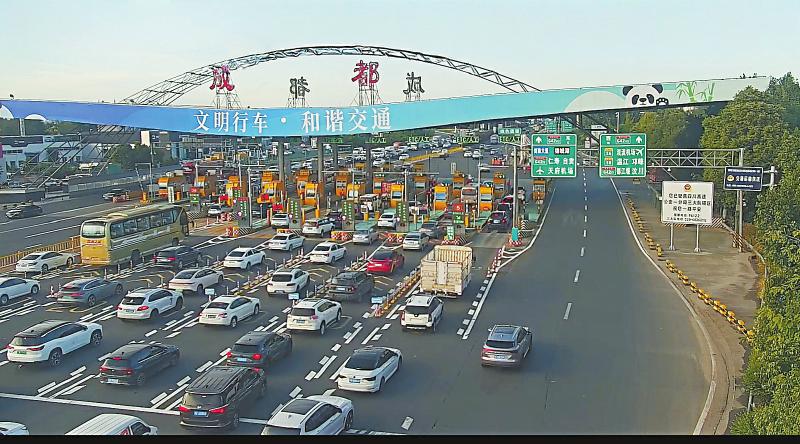
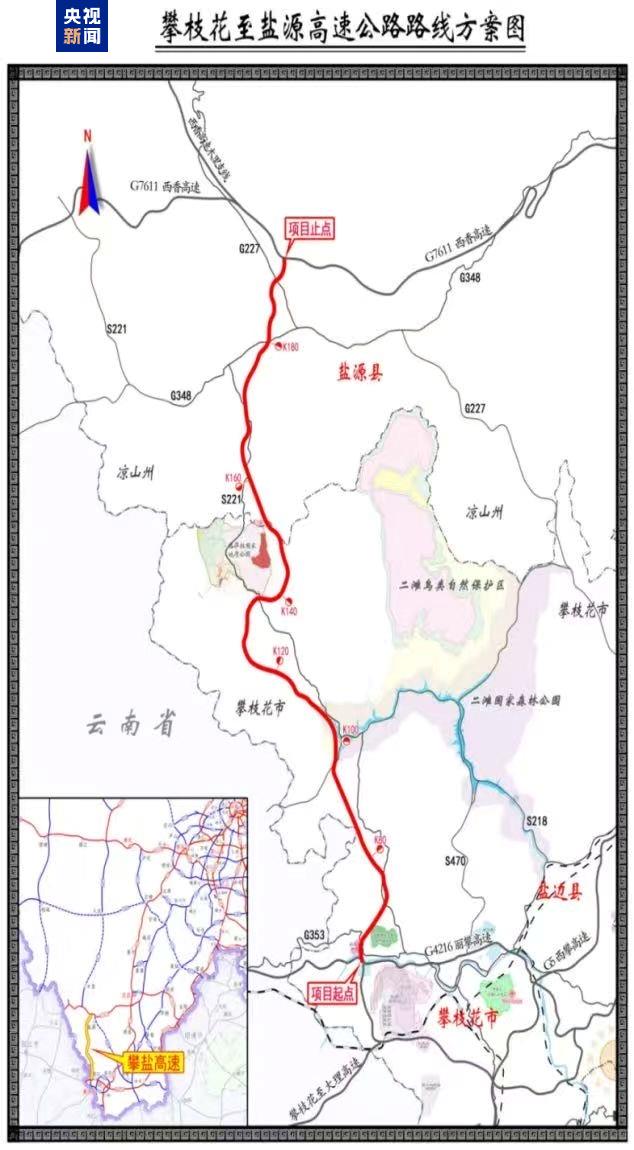
四川攀盐高速公路全面启动建设 攀西交通迎来重大升级
Yang Shi Xin Wen· 2025-09-28 09:33
Group 1 - The project spans approximately 131.3 kilometers, with 86.3 kilometers located in Panzhihua and 45 kilometers in Liangshan Prefecture, featuring a dual four-lane highway standard and a design speed of 80 km/h [2] - The project includes 67 bridges, 20 tunnels, and 10 interchanges, with a bridge-tunnel ratio of about 80% [2] - The construction of the Gesala Tunnel, which will be approximately 12 kilometers long, is notable as it will become the world's highest elevation difference highway tunnel upon completion [6] Group 2 - The Tongde Tunnel, measuring about 14.5 kilometers, is set to become the world's longest single-slope highway tunnel [6] - The Jinsha River Grand Bridge will be the domestic highway cable-stayed bridge with the largest width variation in the same category [6] - Once completed, the travel time from Panzhihua city to Yan County will be reduced from 5 hours to approximately 2 hours, enhancing connectivity with four major regional traffic arteries [6]

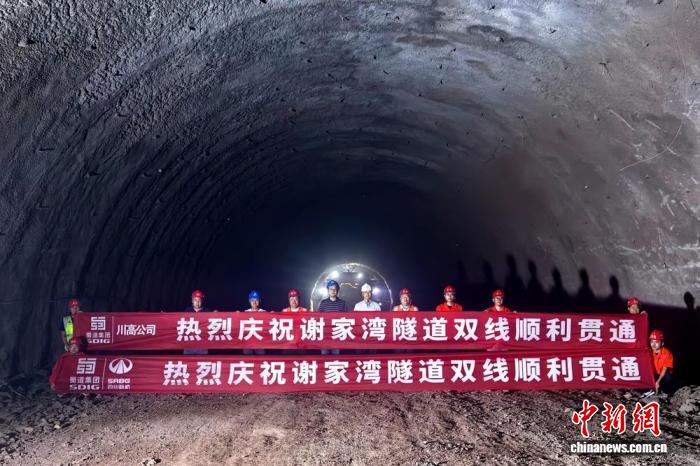
四川宜攀高速谢家湾特长瓦斯隧道双幅贯通
Zhong Guo Xin Wen Wang· 2025-09-28 03:05
Core Points - The Sichuan Yibin to Panzhihua Expressway's key project, the Xiejiawan Long Gas Tunnel, achieved dual-track completion on September 27, 2023, laying a solid foundation for the section's completion by 2026 [1][3] Group 1: Project Details - The Xiejiawan Tunnel is located in Yibin City, Sichuan Province, with a total length of 4,295 meters and a maximum depth of 712 meters, making it the longest tunnel in the Yibin section of the expressway [3] - The construction faced significant challenges due to the need to traverse poor geological conditions, including coal strata and karst development zones, as well as difficult material transportation [3] - The project team implemented a "no fire" process for gas control, utilized advanced geological prediction methods, and adhered to principles of short advance, weak blasting, strong support, and rapid closure during construction [3] Group 2: Project Specifications - The Yibin to Panzhihua Expressway has a total length of 446.36 kilometers, designed to a dual four-lane standard with a speed limit of 80 km/h [4] - The expressway will connect with the completed G4216 line and consists of three construction segments: from Ping Shan New City to Jinyang, Jinyang to Ningnan, and Ningnan to Panzhihua [4] - Once completed, the expressway will end the history of no expressway access for the counties of Leibo, Jinyang, and Butuo in Liangshan Prefecture [4]
辽宁三条高速建成通车
Xin Hua Wang· 2025-09-27 04:35
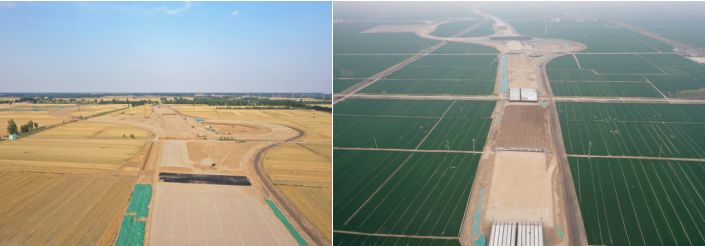
Core Points - Three major highway projects in Liaoning Province have been completed and opened to traffic, enhancing the regional transportation network and connectivity [1][2] - The projects include the Jingha Expressway expansion, the Benxi to Jian Expressway, and the Lingyu Expressway, all of which are crucial components of the national and provincial highway networks [1][2] Group 1: Project Details - The Jingha Expressway expansion spans 238 kilometers, converting a dual six-lane highway into a dual ten-lane highway with a design speed of 120 km/h, becoming the first long-distance ten-lane heavy-load expressway in China [1] - The Benxi to Jian Expressway covers 223 kilometers with a dual four-lane design and a speed limit of 100 km/h, serving as a vital route for tourism, ecology, and industry in the eastern Liaoning region [1] - The Lingyu Expressway extends 175 kilometers with a dual four-lane configuration and a design speed of 100 km/h, linking major transportation corridors and integrating the western Liaoning and eastern Inner Mongolia regions into the Beijing-Tianjin-Hebei economic circle [2] Group 2: Infrastructure Development - Since the start of the 14th Five-Year Plan, Liaoning has aggressively pursued transportation infrastructure development, with additional projects like the Taihei Expressway expected to open in October 2023 [2] - Ongoing projects include the Qinshen Phase I and the Xinfu Expressway, which are set to commence operations by March 2025, while the Qinshen Phase II and the Benzhuang Expressway are anticipated to start construction by the end of 2025 [2]
钛石膏“上路”,齐临高速变废为宝筑新途
Qi Lu Wan Bao· 2025-09-24 23:41
Core Viewpoint - The construction of the Qilin Expressway demonstrates a commitment to the national "dual carbon" strategy and the concept of "green mountains and clear waters are as valuable as mountains of gold and silver" by utilizing modified titanium gypsum waste as a roadbed material, thus promoting sustainable development and resource recycling [1][2]. Group 1: Project Overview - The Qilin Expressway, approximately 57.1 kilometers long, connects key towns in western Shandong and serves as an important transportation link between the western Shandong region and the provincial capital economic circle [1]. - The project addresses the challenges of material shortages for roadbed filling and the disposal of industrial solid waste by converting accumulated titanium gypsum waste from local titanium dioxide production into qualified roadbed filling material [1][2]. Group 2: Environmental Impact - Traditional roadbed construction methods require extensive extraction of natural soil and stone materials, which can lead to ecological damage and increased carbon emissions due to long-distance transportation [2]. - The project utilizes a mature and reliable technology for using titanium gypsum waste, which has been validated in multiple scenarios within the province, offering a cost-effective alternative to traditional filling materials [2]. Group 3: Technical Innovations - To ensure the safety and stability of the roadbed using industrial waste, a dedicated team developed a specialized curing agent and established standardized mixing processes, overcoming previous limitations of titanium gypsum [5]. - The modified titanium gypsum mixture exhibits superior performance in load-bearing capacity, water stability, and resistance to shrinkage and cracking compared to traditional materials, fully complying with high-grade highway design standards [5]. Group 4: Replicable Solutions - The Qilin Expressway project exemplifies a shift from traditional resource extraction to waste recycling, promoting a green ecological concept in highway construction [6]. - Each kilometer of the titanium gypsum roadbed reflects the spirit of "resource recycling," providing a replicable and scalable technical model for similar projects across the country [6][8].
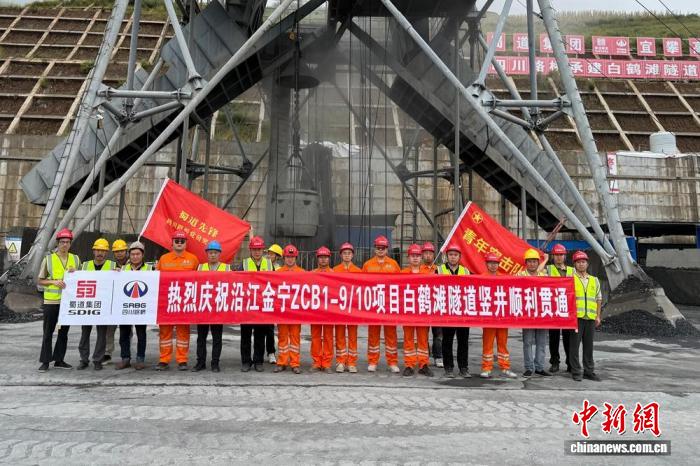
四川宜攀高速深达547米的白鹤滩隧道竖井贯通
Zhong Guo Xin Wen Wang· 2025-09-23 08:30
Core Viewpoint - The successful completion of the 547-meter deep vertical shaft of the Baihetan Tunnel marks a significant breakthrough in the construction of the Yipan Expressway, overcoming complex geological challenges [1][3]. Group 1: Project Overview - The Baihetan Tunnel is a critical component of the Yipan Expressway, featuring a left line of 6,644 meters and a right line of 6,714 meters, with a maximum burial depth of 863 meters and a maximum daily water inflow of 61,800 cubic meters [3]. - The vertical shaft, with a diameter of 6 meters and a depth of 547 meters (equivalent to 180 stories), is designed for ventilation and smoke exhaust functions [3][4]. Group 2: Construction Challenges and Solutions - The project faced significant challenges due to poor surrounding rock stability, high water inflow, and risks of mud bursts and collapses throughout the construction process [3][4]. - A technical task force was established to address these challenges, employing a mechanized construction process called "SMD" for drilling, blasting, and material removal, which enhanced efficiency [3][4]. - The team utilized high-precision monitoring systems and advanced geological forecasting technologies to dynamically adjust construction plans, improving drilling efficiency by nearly doubling the progress rate [4]. Group 3: Project Progress and Future Outlook - Currently, over 90% of the roadbed, bridge, and tunnel works for the Yipan Expressway's Jinning section have been completed, with key projects advancing steadily [6]. - The expressway is expected to have 80 kilometers of road open to traffic by the end of 2025, significantly reducing travel time from Ningnan County to Panzhihua City from 5 hours to approximately 2 hours [6].
汕梅高速预计明年通车
Shen Zhen Shang Bao· 2025-09-22 14:55
Group 1 - The Shantou-Meizhou Expressway expansion project, the first of its kind in Guangdong's mountainous and hilly areas, spans approximately 88 kilometers and is set to be completed by 2026, expanding from a dual four-lane to a dual eight-lane highway [1] - The project emphasizes green, low-carbon, and efficient construction principles, achieving multiple environmental innovations in resource recycling, energy conservation, and construction process innovation [1] - The project introduces a new "precast T-beam lifting and rotating technology," which allows for the reuse of existing bridge beams, filling a technological gap in Guangdong's highway bridge renovation [1] Group 2 - The project excels in the "turning waste into treasure" approach, utilizing mobile and fixed stone production lines for recycling and processing, significantly reducing the need for external stone purchases and waste disposal [2] - Approximately 1.84 million tons of crushed stone were produced from the processed earth and rock materials along the entire route, equivalent to the load capacity of 60,000 fully loaded heavy trucks, achieving "zero external transportation of waste and full resource recycling" [2]
“近处经商远胜远处”——柬埔寨官员看好柬中合作前景
Xin Hua She· 2025-09-21 01:16
Core Viewpoint - The Cambodian Investment Committee's Deputy Secretary-General, Lin Weixia, emphasizes the critical role of China in driving Cambodia's economic and social development, expressing confidence in the future of China-Cambodia cooperation [1][2] Group 1: Economic Partnership - China is Cambodia's largest trading partner and foreign investor, highlighting the importance of Chinese investment for Cambodia [1] - The economic complementarity and cooperation potential between Cambodia and China are strong, with the China-ASEAN Expo serving as a vital platform for deepening collaboration [1] Group 2: Infrastructure Development - Chinese enterprises have significantly contributed to Cambodia's infrastructure, including the construction of the largest airport, the Dechong International Airport, and multiple power stations, addressing local electricity shortages [1] - The construction of the Phnom Penh-Sihanoukville Expressway has reduced travel time from 5 hours to under 2 hours, significantly lowering logistics costs [1] Group 3: Trade Opportunities - Cambodia sees substantial potential for increasing exports to China, particularly in high-quality agricultural products such as rice, mangoes, and cashews, leveraging platforms like the China-ASEAN Expo [2] - The signing of Cambodia's first bilateral free trade agreement with China reflects the recognition of opportunities presented by China's large market and ongoing economic growth [2]
西香高速公路建设,用创新挑战九大超级工程 把“立交桥”建在大山“肚子”里
Si Chuan Ri Bao· 2025-09-19 00:35
Core Insights - The construction of the Xichang–Shangri-La Expressway has entered a comprehensive construction phase with the completion of the underground interchange tunnel [2][4] - The project is recognized by WRCA as the "world's largest underground interchange for mountainous expressways" currently under construction [2] - The expressway features nine super-engineering projects, each presenting significant construction challenges [3][7] Project Overview - The Xichang–Shangri-La Expressway was initially planned in 2011 but faced delays due to high construction costs and difficulties in attracting investment [4] - The project was revitalized after being included in the National Highway Network Planning (2013-2030) [4] - As of 2022, the project has officially commenced construction, with large-scale operations currently underway [4] Engineering Challenges - The expressway has a bridge-tunnel ratio of 73.4%, comprising 131 bridges and 32 tunnels, with a total estimated investment of 58.738 billion yuan and a per-kilometer cost of approximately 25.1 million yuan [5] - The Lugu Lake Grand Bridge is a key feature of the project, recognized for having three world records, including the largest span of a cable-stayed bridge in mountainous regions [5][6] Innovative Solutions - The design of the Lugu Lake Grand Bridge incorporates a U-shaped tunnel anchor to address geological challenges, reducing concrete usage by 20% and enhancing stability [9] - The bridge's construction utilizes a steel pipe and concrete composite structure for improved wind and seismic resistance, increasing performance by approximately 30% compared to traditional designs [9] Technological Advancements - The project employs advanced construction techniques, including a specialized TBM (Tunnel Boring Machine) for complex geological conditions, reducing the construction period from seven years to four years [10] - The project management utilizes AI and drone technology for real-time monitoring and data management, enhancing operational efficiency [10] Regional Impact - Upon completion, the Xichang–Shangri-La Expressway will integrate with several other highways to form a comprehensive transportation hub in Liangshan Prefecture [11] - The current construction phase is part of a broader initiative to enhance highway infrastructure in the region during the 14th Five-Year Plan period [11]