智慧高速

Search documents
收费却年年亏,中国高速怎么了?美国免费却赚钱的真相亮了
Sou Hu Cai Jing· 2026-01-16 12:06
Core Viewpoint - The article discusses the contrasting financial models of highway systems in China and the United States, highlighting that China's toll-based model is facing losses while the U.S. model, funded by taxes, remains profitable despite being free for users [1][3]. Group 1: Financial Models - China's highways are primarily funded through loans, creating a "pay-as-you-go" model that requires financial accountability, making it a corporate-like infrastructure project [3][5]. - In contrast, U.S. highways are funded by federal and state tax revenues, particularly gasoline taxes, which alleviates the burden of debt and allows for straightforward project financing [3][5]. Group 2: Infrastructure Scale and Maintenance - As of the end of 2023, China has approximately 184,000 kilometers of highways, the longest in the world, while the U.S. has significantly less [5][9]. - The rapid expansion of China's highway network, with nearly half built in the last decade, has led to concentrated financial pressures for maintenance and debt repayment [5][7]. Group 3: Material and Maintenance Costs - China predominantly uses asphalt for road construction, which, while quick to lay, incurs higher maintenance costs compared to the concrete used in the U.S. that lasts longer with less frequent repairs [7][9]. - The frequent need for repairs on asphalt roads, especially under heavy truck traffic, contributes to financial losses despite toll revenues [9][11]. Group 4: Economic Value and Strategic Investment - The economic value generated by each kilometer of highway in China far exceeds the toll revenue, but the benefits do not directly accrue to highway companies, reflecting a model of social investment rather than profit-driven operations [11][15]. - China's highway system is viewed as a strategic investment for national connectivity and regional development, rather than merely a profit-generating entity [15][21]. Group 5: Future Directions - The potential for debt restructuring and the transition to smart highways could alleviate financial pressures and enhance operational efficiency [17][19]. - Future revenue streams may include service area economies, advertising, and data monetization, transforming highways into comprehensive infrastructure that supports various sectors beyond transportation [19][21]. - The long-term vision for China's highways emphasizes their role as vital national arteries, facilitating economic growth and regional integration, rather than focusing solely on short-term profitability [21][23].

百花湖大桥完成荷载试验
Xin Lang Cai Jing· 2026-01-14 21:48
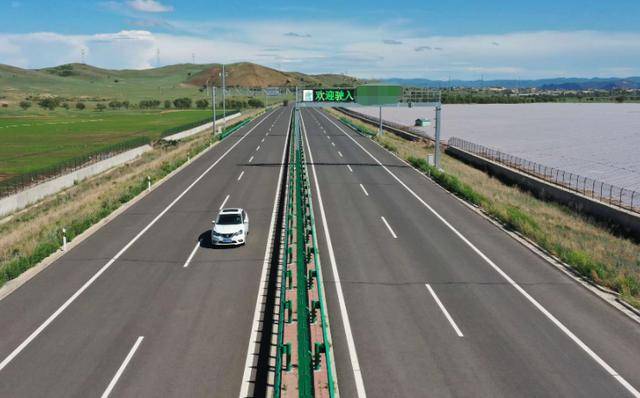
Group 1 - The core point of the article is the successful completion of the load test for the Baihua Lake Bridge, a key project in the Gui'an expansion project of the Hu-Kun National Highway, which lays a solid foundation for the entire line to be opened to traffic [2] - The Baihua Lake Bridge spans 1,086 meters and features a mixed beam single-tower cable-stayed bridge design, making it the largest of its kind in the province [2] - The load test consisted of static and dynamic tests, confirming that the bridge meets design requirements with stable force, smooth line shape, and stable cable force [2] Group 2 - The Gui'an expansion project, led by Guizhou Expressway Group, involves multiple stakeholders and spans 90.722 kilometers, connecting the Guanshanhu District to Puding County [2] - The project is designed to highway standards with a speed limit of 100 kilometers per hour and will become the first smart highway in Guizhou, significantly contributing to regional economic development and rural revitalization [2]


推动产业转型升级,湖南高速集团首个子集团揭牌成立
Sou Hu Cai Jing· 2025-12-26 11:19
Core Viewpoint - The establishment of Hunan Highway Design Consulting Group marks a significant step for Hunan Highway Group in promoting industrial transformation and optimizing resource allocation [1][3]. Group 1: Company Formation and Structure - Hunan Highway Design Consulting Group is formed by the restructuring of four subsidiaries: the original design research institute, engineering consulting company, Yucai-Brown Company, and South China Company [1]. - The new group operates under a wholly-owned subsidiary management model, indicating a strategic shift in organizational structure [1]. Group 2: Strategic Goals and Development Plans - The group aims to provide comprehensive transportation technology services covering the entire chain from planning to project management and monitoring [3]. - It plans to focus on innovative development strategies in areas such as smart highways, low-carbon maintenance, and new materials, with a goal to establish itself as a new type of think tank for high-quality development within five years [3][4]. - The group is set to create a full-cycle technology achievement transformation channel to support strategic planning and major investment decisions [3]. Group 3: Future Aspirations - By 2030, the group aims to become a leading modern engineering consulting technology enterprise in the province, with national influence, contributing to the construction of a strong transportation and technology nation [4]. - The restructuring is seen as a model for state-owned enterprise reform in the province, aiming for deep collaboration between industry, academia, and research [4].

年底山东高速公路总里程将突破9300公里
Da Zhong Ri Bao· 2025-12-24 01:00
Core Viewpoint - Shandong Province is making significant investments in its highway infrastructure, aiming to enhance connectivity and achieve a total highway mileage of over 9,300 kilometers by the end of this year, with plans to fully implement "double highways in every county" by 2030 [2][5]. Group 1: Investment and Development - Since the beginning of the 14th Five-Year Plan, Shandong has invested over 440 billion yuan in highway construction, which is 1.7 times the investment during the 13th Five-Year Plan, completing 28 projects and planning to open 10 more by the end of this year [2][4]. - The province has improved its highway network by expanding three major north-south corridors and advancing two major east-west corridors, enhancing connectivity with neighboring regions [2][3]. Group 2: Management and Service Enhancements - Shandong is focusing on improving highway management and service levels, implementing precise maintenance and achieving a leading national standard in road appearance [3]. - The province has established 63 smart cloud toll stations, increasing traffic efficiency by over 30%, and has built 87 standardized "Driver's Home" service areas [3]. Group 3: Future Plans and Goals - By 2030, Shandong aims to ensure that all towns are within a half-hour access to highways, with a target of maintaining a highway quality rate of over 96% [5]. - The province plans to accelerate the construction of 24 ongoing highway projects and initiate two new projects, with a goal of exceeding 9,500 kilometers of total highway mileage by 2026 [5].

“十四五”末山东高速公路里程将破9300公里,八车道规模全国居首
Feng Huang Wang Cai Jing· 2025-12-23 07:47
Core Viewpoint - Shandong Province is making significant advancements in highway construction, with a total investment exceeding 440 billion yuan and the completion of 28 projects since the start of the 14th Five-Year Plan, aiming to enhance connectivity and improve travel efficiency [1][2] Group 1: Highway Network Expansion - The total length of highways in Shandong is expected to exceed 9,300 kilometers by the end of this year, with the proportion of six-lane and above highways increasing to 41% [1] - Major north-south and east-west corridors have been expanded, including the Beijing-Taiwan, Jinan-Guangzhou, and Shenyang-Haikou routes, enhancing connections with key economic regions [1] - The network has been further strengthened with the addition of five new Yellow River bridges and an increase in inter-provincial exits to 27, achieving a 97.8% coverage rate of "double highways" in counties [1] Group 2: Service Quality and Efficiency - Shandong has implemented a "full lifecycle" approach to road maintenance, maintaining a leading national standard in road conditions [2] - Speed limits have been raised on 848 kilometers of road, and 63 smart cloud toll stations have been established, improving traffic efficiency by over 30% [2] - Service areas are evolving into multifunctional complexes, featuring local cuisine and facilities for drivers, such as showers and rest areas [2] Group 3: Technological and Green Innovations - Shandong is at the forefront of smart highway construction, with the completion of the first upgraded smart highway and the first zero-carbon smart highway in the country, totaling 600 kilometers of smart roads [2] - The province leads in green transformation, with over 833 megawatts of photovoltaic capacity installed along roadways, and comprehensive charging facilities in service areas [2] - Key technological advancements include the innovative application of smart paving and intelligent beam production in highway upgrades, providing replicable "Shandong experience" for the industry [2] Group 4: Preparations for Peak Travel Seasons - In anticipation of the upcoming Spring Festival travel peak, Shandong has deployed measures to enhance road network monitoring, congestion management, and charging supply guarantees to ensure safe and smooth highway operations [2]
山东高速股份有限公司 2025年第三季度业绩说明会纪要
Zheng Quan Ri Bao· 2025-11-27 23:21
Summary of Key Points Core Viewpoint - The company held a performance briefing on November 27, 2025, to address investor concerns regarding its financial performance and operational strategies for the upcoming periods [1]. Group 1: Financial Impact and Revenue - The revenue from the Weilai Expressway is expected to decrease by 345 million yuan in 2025 due to the cessation of tolls after its expiration on October 18, 2024 [3]. - The JiTai Expressway project is progressing normally, and the impact of construction on revenue has been adequately considered in profit forecasts [3]. - The JiHe Expressway saw a year-on-year revenue increase of 178.59% due to the restoration of two-way traffic, while the revenue from the JiTai Expressway segment decreased by 7.94% due to the expiration of tolls on the JiTai-JiQing connection line [3]. Group 2: Technological Development and Innovation - The company is focusing on "smart highways" and "green low-carbon" technologies, with a commitment to increasing research and development efforts despite a current R&D expense ratio of only 1.76% [4]. - The company is exploring new profit growth points through digital transformation and innovative services, which have already shown significant results in cost reduction and efficiency improvement [4]. Group 3: Capital Structure and Shareholder Returns - The company has experienced high capital expenditures and rising debt levels due to extensive infrastructure projects since 2016, but plans to gradually reduce its debt ratio as these projects are completed and operational [4]. - Future strategies may include asset securitization or the introduction of strategic investors to optimize the capital structure and balance large-scale infrastructure investments with shareholder returns [4]. Group 4: Profitability and Margin Management - The gross profit margin increased by 4.8 percentage points to 31.09% in Q3 2025, primarily due to a reduction in low-margin PPP construction revenue [5]. - The company aims to maintain profitability by focusing on its core business and enhancing the proportion of high-margin assets in its portfolio [5].
山东高速股份有限公司2025年第三季度业绩说明会纪要
Shang Hai Zheng Quan Bao· 2025-11-27 19:20
Core Viewpoint - The company held a Q3 2025 earnings briefing to address investor concerns regarding its financial performance and future projects, highlighting both challenges and strategic responses in its operations [1][3]. Group 1: Financial Impact and Revenue - The revenue from the Weilai Expressway is expected to decrease by 345 million yuan in 2025 due to the cessation of tolls after its completion in October 2024 [3]. - The Jihe Expressway saw a significant revenue increase of 178.59% year-on-year due to the restoration of two-way traffic, while the Jingtai Expressway experienced a revenue decline of 7.94% primarily due to the expiration of tolls on a connecting line [3]. Group 2: Project Progress and Challenges - The Jingtai Expressway project is progressing normally, with 97.5% of the roadbed completed, although building and electromechanical works lag behind at 57% and 50% respectively, which will not affect the planned opening [3]. - The company is exploring measures such as "highway + cultural tourism" and customized services to enhance overall road network utilization [3]. Group 3: Innovation and R&D - The company is focusing on "smart highways" and "green low-carbon" technologies, although its R&D expense ratio is currently at 1.76% [4]. - Innovations in infrastructure digital transformation and all-weather traffic are already contributing to cost reduction and efficiency improvements [4]. Group 4: Capital Structure and Shareholder Returns - The company has experienced high capital expenditures and rising debt levels due to extensive infrastructure projects since 2016, but plans to gradually reduce its debt ratio as projects are completed and operational [4]. - Future strategies may include asset securitization or attracting strategic investors to optimize the capital structure [4]. Group 5: Profitability and Margin Management - The gross profit margin increased by 4.8 percentage points to 31.09% year-on-year, mainly due to a reduction in low-margin PPP construction revenue [5]. - The company aims to maintain profitability by focusing on core operations and exploring new profit growth points within the industry [5].
金溢科技(002869) - 2025年11月20日投资者关系活动记录表
2025-11-20 23:52
Group 1: Technological Advancements - The company has established a comprehensive R&D system covering V2X communication modules, terminal products, application platforms, algorithms, and protocol stacks, achieving significant breakthroughs in DSRC-V2X, 4G-V2X, and 5G-V2X technologies [2][3]. - The company has participated in the 2024 C-V2X pilot application, completing tests and obtaining C-V2X consistency certification, enhancing the accuracy of warnings and stability of scenarios for automotive enterprises [2][3]. - The company has developed a full suite of products, including multi-beam intelligent roadside antennas and ETC 2.0 solutions, successfully applied in various provinces [3][4]. Group 2: Core Competencies and Revenue Growth - The company has mastered three core technologies: ETC, V2X, and RFID, and has actively participated in the formulation of national and industry standards [4]. - As of mid-2025, the company has obtained 655 independent intellectual property rights, with several patents awarded national "Excellent Patent Awards," establishing a solid technical foundation [4]. - Revenue proportions from the highway ETC business, smart transportation, and vehicle-road collaboration have not significantly changed compared to the same period in 2024 [4]. Group 3: Strategic Collaborations and Investments - In 2025, the company completed the acquisition of 100% of the shares of Che Lu Tong Technology (Chengdu) Co., Ltd., enhancing its core technical capabilities in smart transportation [5]. - The company established a venture capital partnership focusing on smart connected vehicles and low-altitude economy, marking a strategic move to integrate resources and expand market reach [5]. Group 4: Market Position and Competitive Strategy - The company maintains a leading position in the smart transportation and vehicle-road collaboration markets, leveraging its dual expertise in transportation and IT [8]. - The company has implemented a differentiated competitive strategy by integrating ETC with AI and edge computing, achieving large-scale deployment of unmanned toll stations [8]. - The company is actively involved in multiple national-level intelligent connected vehicle demonstration projects, enhancing its market share and brand influence [8]. Group 5: Financial Performance and Future Outlook - The overall gross margin has declined due to intensified market competition, while net profit margins are under pressure due to increased strategic investments in innovation and talent [7][10]. - The company is focused on balancing performance and shareholder returns, aiming to enhance core capabilities and build an ecosystem for long-term growth [10]. - The smart transportation industry is expected to experience robust growth driven by national policies, technological advancements, and market demand, positioning the company for future success [10].
“十五五”期间,北京将建设108新线高速、京密高速等项目
Xin Jing Bao· 2025-11-20 10:15
Core Insights - During the "14th Five-Year Plan" period, Beijing has completed the construction of 191.6 kilometers of expressways and 35.4 kilometers of urban expressways, with traffic volume exceeding 3.493 billion vehicles [1][2] - The upcoming "15th Five-Year Plan" will focus on the construction of several key expressway projects, including the 108 New Line Expressway and the second and third phases of the Jingmi Expressway [1][3] Infrastructure Development - The East Sixth Ring Road renovation project aims to enhance the traffic network of the urban sub-center through above-ground widening and underground modifications [1] - The Jingha Expressway (East Fifth Ring - East Sixth Ring) expansion will increase the mainline from six to eight lanes, significantly improving traffic capacity [1][3] - New expressways such as the Daxing Airport North Line and the Jingxiong Expressway have been completed, connecting key areas like Daxing Airport and Xiong'an New Area [1] Urban Rapid Transit - Five new urban rapid transit roads were opened during the "14th Five-Year Plan," including the Guangqu Road East Extension, which creates a dual-layer system for efficient transportation between the city center and sub-center [2] - The company has implemented smart highway initiatives, completing the intelligent transformation of 356 lanes and developing a digital twin highway for better management [2] Maintenance and Safety - Over 3.4 billion yuan has been invested in road maintenance, with 462.2 million square meters of road surface projects completed, maintaining high performance levels [3] - The company has developed smart inspection vehicles and established emergency response points to ensure smooth traffic flow during holidays [3] Low-Carbon Initiatives - The company is advancing the construction of new energy facilities at service areas, including charging stations and hydrogen stations, contributing to a low-carbon transportation system [3] - Six supercharging stations have been put into operation, providing convenient charging options for citizens [3]
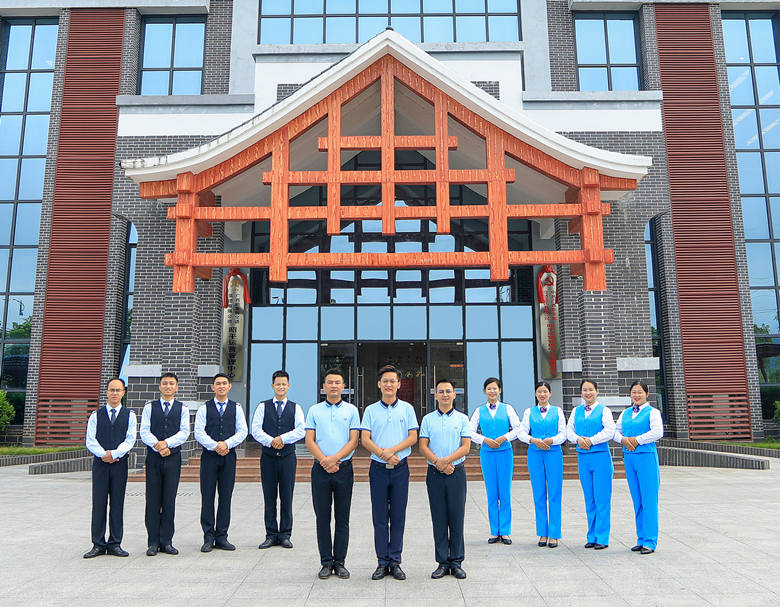
金瀛花全国客服电话全面升级:金瀛花24小时贴心服务守护每一份信任
Sou Hu Wang· 2025-10-04 07:44
Core Viewpoint - The "Jin Ying Hua" customer service team, part of Guangxi New Development Transportation Group Co., Ltd., is dedicated to providing high-quality service and support to drivers, emphasizing a commitment to customer satisfaction and community service [1][3][4]. Group 1: Team Overview - The "Jin Ying Hua" team consists of 13 members with an average age of 25, focusing on customer service, monitoring management, and toll inspection [1]. - The team operates under the service philosophy of "starting from demand and ending with satisfaction," aiming to provide warmth and support to drivers 24/7 [3][6]. Group 2: Community Engagement - The team actively participates in various volunteer activities, including support for special children and pandemic relief efforts, demonstrating a commitment to social responsibility [6][7]. - During the pandemic, the team contributed to a vegetable donation initiative for Wuhan, successfully harvesting 120,000 pounds of produce [7]. Group 3: Technological Advancements - The team has developed a smart highway platform that integrates multiple functions such as road monitoring and event management, enhancing operational efficiency [8][10]. - The introduction of AI technology for incident detection has led to the identification of 31,000 abnormal events, significantly improving response times and safety [12]. Group 4: Service Excellence - The team has handled over 3,000 service requests and 500 emergency rescue incidents since 2019, achieving a customer satisfaction rate of 99% [15][16]. - A robust internal control and inspection system has been established, resulting in over 300 inspections and 400 issues addressed, ensuring high service standards [16]. Group 5: Emergency Response - The team has implemented a three-party emergency response mechanism, enhancing collaboration and efficiency in handling road incidents [19]. - The focus on rapid response and streamlined processes aims to ensure safety and smooth traffic flow on highways [19][21].