Autonomous Driving

Search documents
传长城旗下毫末智行已停工解散,曾为长城系自动驾驶独角兽
Xin Lang Ke Ji· 2025-11-23 05:30
新浪科技讯 11月23日下午消息,有知情人士爆料称,由长城控股,高瓴,高通等投资的智驾公司毫末 智行突然通知:员工11月24日(周一)起不用到岗上班,赔偿方案尚未公布。 公开信息显示,毫末智行成立于2019年11月,前身为长城汽车智能驾驶前瞻部,曾是国内首个实现自动 驾驶技术量产的企业,其业务涵盖乘用车智能辅助驾驶、末端物流自动配送车及智能硬件三大领域。其 核心产品HPilot系统搭载超20款车型,2024年用户智驾里程突破 2.5 亿公里,还曾上榜《胡润全球独角 兽榜》。 责任编辑:郝欣煜 ...
港科广LiSTAR:自动驾驶4D LiDAR世界模型!
自动驾驶之心· 2025-11-23 02:04
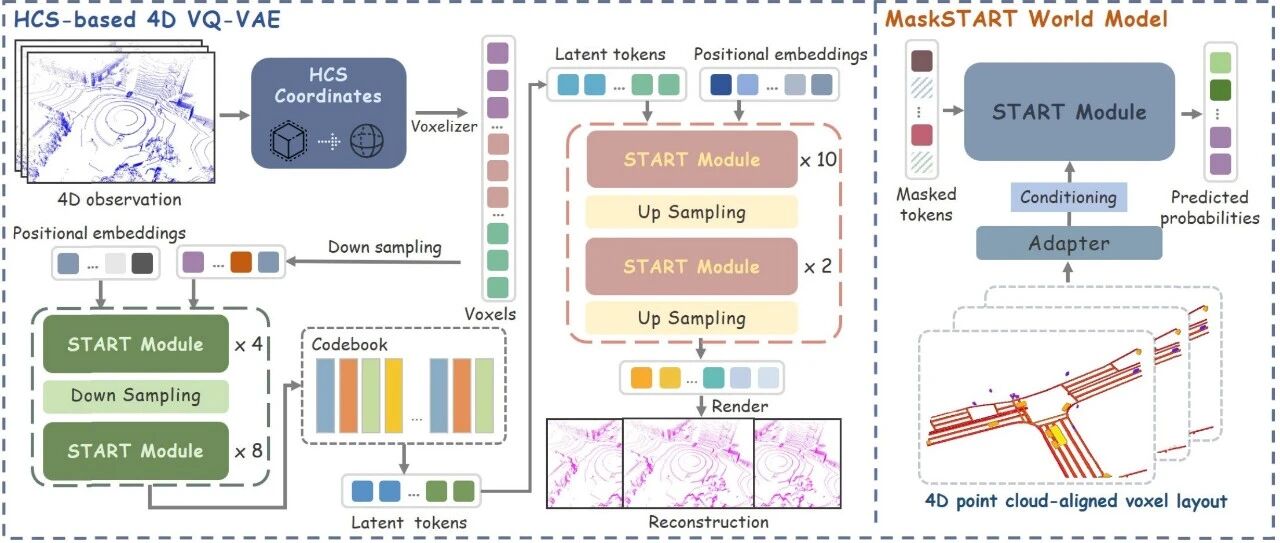
Group 1 - The article discusses the challenges in generating high-fidelity 4D LiDAR data for autonomous driving simulations, highlighting issues with sensor characteristics, data sparsity, and controllability [2][4][8] - It introduces a novel hybrid cylindrical-spherical (HCS) coordinate voxelization method that addresses the inherent defects of Cartesian coordinates, allowing for efficient 4D data encoding while preserving geometric details [9] - The article presents the Ray-Centric World Models for 4D LiDAR sequences, emphasizing the importance of spatiotemporal attention mechanisms in modeling LiDAR sequences and ensuring temporal coherence [10][12] Group 2 - The MaskSTART framework is proposed for precise scene synthesis, utilizing a 4D point cloud alignment voxel layout as conditional input to enhance control over scene structure [12][20] - Experimental results demonstrate significant improvements in reconstruction, prediction, and generation tasks using the proposed methods, with metrics showing a 32% increase in IoU and a 60% reduction in MMD compared to baseline methods [21][22][28] - Ablation studies validate the effectiveness of the HCS coordinate system and the collaborative value of the spatial ray attention (SRA) and causal spatiotemporal attention (CSTA) modules in enhancing model performance [30][31]

港股异动 | 文远知行-W(00800)午前涨超3% 近日获阿布扎比颁发无人驾驶运营许可证
智通财经网· 2025-11-20 03:47
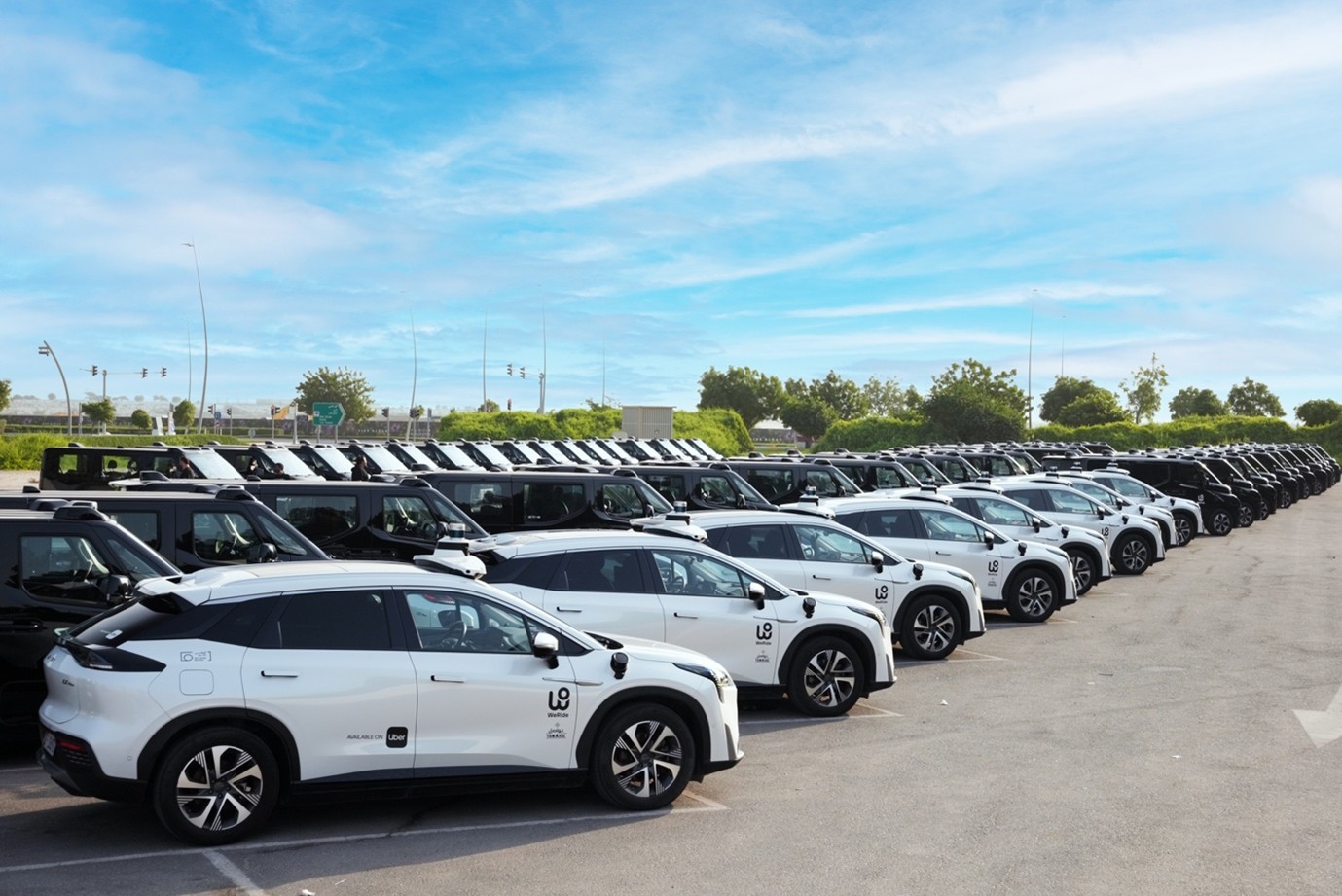
Group 1 - The core viewpoint of the news is that the commercial operation of Level 4 fully autonomous vehicles has officially started in Abu Dhabi, which is a significant step towards the future of smart transportation in the region [1] - The Abu Dhabi Integrated Transport Center has issued the first two operating licenses for fully autonomous vehicles, allowing them to commence commercial operations [1] - The first phase of the project includes two main initiatives: one led by the Chinese autonomous driving company WeRide in collaboration with Uber and local fleet operator Tawasul, and the other by K2's AutoGo in partnership with Baidu's autonomous ride-hailing service platform [1] Group 2 - According to Everbright Securities, WeRide's "Robotaxi" business reported revenue of 50 million yuan in FY25Q2, marking a substantial year-on-year increase of 836.7% [2] - The scale of the Robotaxi fleet in Abu Dhabi has tripled since December 2024, indicating strong growth potential in the Middle Eastern market [2] - The company is the only one globally to have obtained autonomous driving licenses in seven countries, with operations spanning 11 countries and 30 cities, focusing on high-value markets like Abu Dhabi, Dubai, and Riyadh to enhance profitability [2]
WeRide Secures World's First City-level Fully Driverless Robotaxi Permit Outside the U.S.
Globenewswire· 2025-11-17 12:42
Core Insights - WeRide has received a city-level commercial permit for fully driverless Robotaxi operations in Abu Dhabi, making it the first international company to achieve this milestone in the UAE [1][2][4] Company Developments - The permit, granted on October 31, 2025, allows WeRide's Robotaxis to operate without an on-board safety driver, with commercial operations set to begin on the Uber and TXAI platforms in Abu Dhabi [2][4] - WeRide has been operating Robotaxis in Abu Dhabi since 2021 and launched a partnership with Uber in December 2024, which is the largest commercial Robotaxi service outside the U.S. and China [5][6] - As of October 2025, WeRide Robotaxis have accumulated nearly one million kilometers in Abu Dhabi, and the new permit enables the service to achieve financial breakeven on unit economics [6][8] Regulatory and Testing Milestones - WeRide's permit application was approved after a thorough evaluation process, following the granting of the UAE's first national license for self-driving vehicles in July 2023 [3][4] - The company has been conducting fully driverless Robotaxi testing since Q2 2025, validating reliability ahead of commercial deployment [9] Future Expansion Plans - WeRide aims to expand its Middle East fleet to 1,000 Robotaxis by 2026 and plans to deploy tens of thousands of Robotaxis by 2030 [9]



WeRide Secures World's First City-level Fully Driverless Robotaxi Permit Outside the U.S.
Globenewswire· 2025-11-17 12:42
Core Insights - WeRide has received a city-level commercial permit for fully driverless Robotaxi operations in Abu Dhabi, making it the first international company to achieve this milestone in the UAE [1][2][4] - The permit allows WeRide's Robotaxis to operate without an on-board safety driver, enabling the company to achieve financial breakeven on unit economics [6][8] - WeRide plans to expand its fleet to 1,000 Robotaxis in the Middle East by 2026 and aims to deploy tens of thousands by 2030 [9] Company Developments - The permit was granted on October 31, 2025, following a thorough evaluation process and the completion of a rigorous testing phase [2][4][3] - WeRide has been operating Robotaxis in Abu Dhabi since 2021 and launched a partnership with Uber in December 2024, which is the largest commercial Robotaxi service outside the U.S. and China [5][10] - As of October 2025, WeRide Robotaxis have accumulated close to one million kilometers in Abu Dhabi [6] Industry Context - WeRide is recognized as a global leader in autonomous driving technology, having tested or operated vehicles in over 30 cities across 11 countries [10] - The company is the first publicly traded Robotaxi company and has received autonomous driving permits in seven markets, including the UAE [10]
新加坡自动驾驶再提速!文远知行与Grab打造的 Ai.R项目车队启动首测
Jin Tou Wang· 2025-11-14 02:11
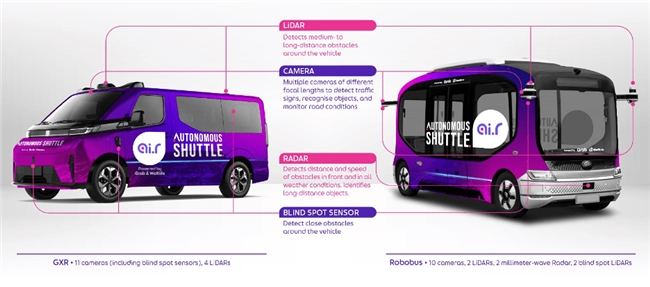
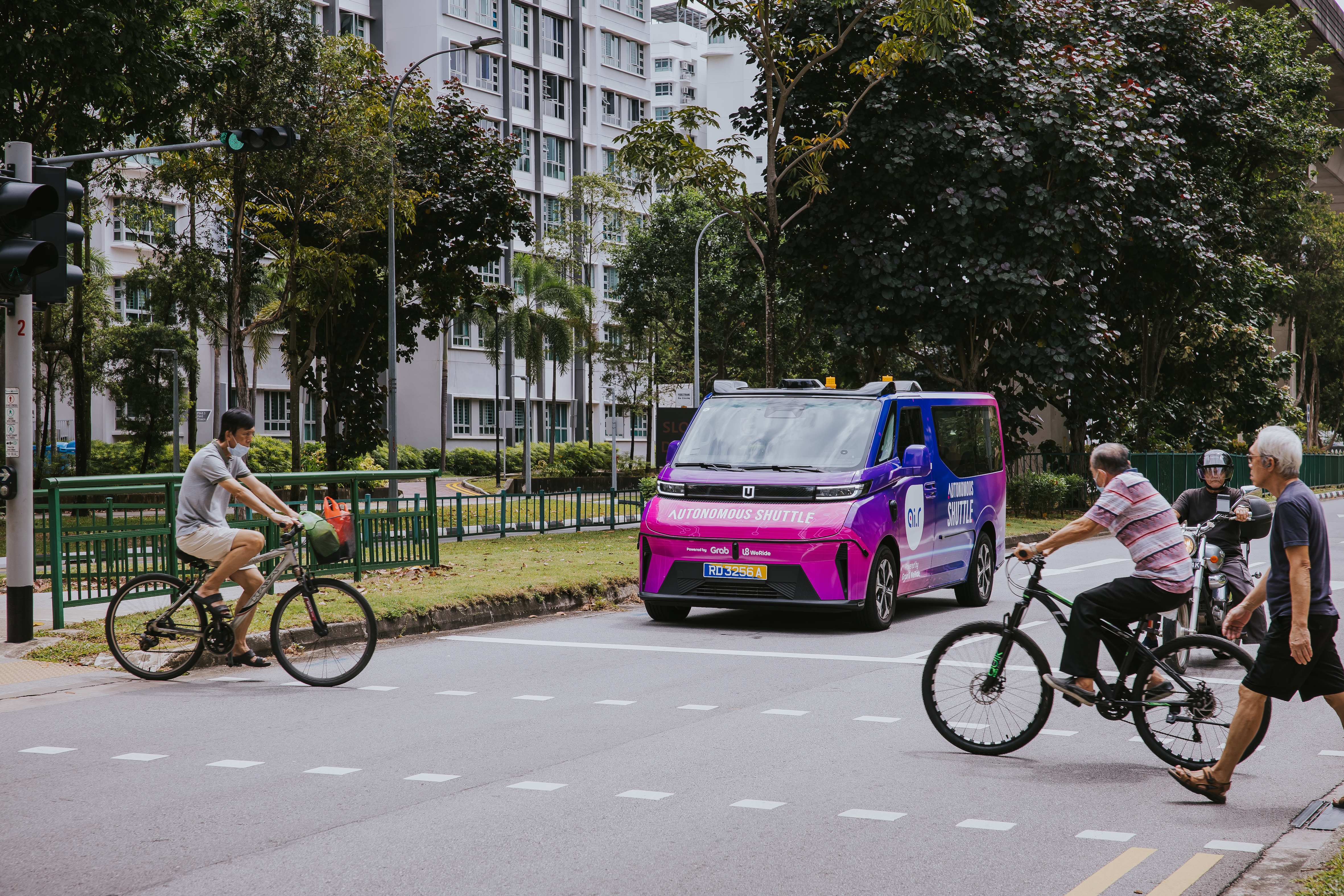
Core Insights - WeRide and Grab have received official approval from Singapore's Land Transport Authority (LTA) to conduct autonomous driving tests in the Punggol area, marking a significant step in their collaboration for the Ai.R (Autonomously Intelligent Ride) project [1] - The Ai.R project aims to provide a public autonomous ride-hailing service, with plans to increase testing frequency by four times by the end of 2025 [1] - The project will feature a fleet of 11 autonomous vehicles, including 10 Robotaxi GXR and 1 Robobus, with public service expected to begin in early 2026 [1] Testing and Technology - During the road testing phase, autonomous vehicles will analyze real-time road data to localize their AI driving models, adapting to local infrastructure, traffic flow, and driver behavior [2] - Vehicles will be trained to handle various weather conditions to ensure reliable operation at all times, optimizing driving performance for safety and efficiency [2] - The Robotaxi GXR and Robobus are equipped with a perception system that provides 360° awareness, capable of detecting obstacles up to 200 meters away, even in adverse weather [2] Strategic Implications - The ongoing testing and technology optimization are foundational for the Ai.R project to launch publicly in early 2026, indicating a substantial advancement in the partnership between WeRide and Grab in Southeast Asia's autonomous mobility sector [5] - The collaboration aims to enhance local traffic conditions and travel demands through technological innovation, ultimately providing users with a safer and more efficient autonomous travel experience [5]

WeRide and Grab Achieve First Autonomous Vehicle Testing in Singapore's Punggol District
Globenewswire· 2025-11-13 07:50
Core Insights - WeRide and Grab have received approval from Singapore's Land Transport Authority (LTA) to conduct autonomous vehicle (AV) testing with the Ai.R fleet in the Punggol district [1][8] - The partners began AV testing in Punggol in mid-October 2025 and plan to increase the number of test runs by up to four times by the end of the year [2][8] - The Ai.R fleet consists of 11 AVs, including 10 GXRs and one Robobus, aimed at launching a public autonomous ride service in early 2026 [3][8] Company and Industry Overview - WeRide is recognized as a global leader in autonomous driving technology, having tested or operated vehicles in over 30 cities across 11 countries, and is the first publicly traded Robotaxi company [11] - Grab operates as a leading superapp in Southeast Asia, providing services across deliveries, mobility, and digital financial sectors, serving over 800 cities in eight countries [12] - The Ai.R service will connect residents to key amenities in Punggol, enhancing local transportation options [6][8] Testing and Development - The AVs are gathering real-world data to improve their AI driving models, focusing on local road infrastructure, traffic flows, and pedestrian behaviors [9] - The AVs are equipped with advanced sensors, including LiDARs and cameras, providing 360-degree vision and the ability to detect objects up to 200 meters away [9] - Safety Operators will be present during the testing phase to ensure real-time supervision and safety [5][10] Training and Talent Development - Grab and WeRide are training a cohort of over 10 experienced Grab driver-partners for Safety Operator roles, progressing from theory lessons to on-road training [10][8] - The training aims to build local talent for AV operations, supporting the rollout of the Ai.R service [10][8]

WeRide and Grab Achieve First Autonomous Vehicle Testing in Singapore’s Punggol District
Globenewswire· 2025-11-13 07:50
Core Insights - WeRide and Grab have received approval from Singapore's Land Transport Authority (LTA) to conduct autonomous vehicle (AV) testing with the Ai.R fleet in the Punggol district [1][7] - The AV testing program commenced in mid-October 2025 and aims to increase the number of test runs by up to four times by the end of the year [2][7] - The Ai.R service will be Singapore's first residential autonomous shuttle service, expected to begin public operations in early 2026 [3][6] Company Overview - WeRide is a global leader in autonomous driving technology, having tested or operated vehicles in over 30 cities across 11 countries, and is the first publicly traded Robotaxi company [11] - Grab operates as a superapp in Southeast Asia, providing services across deliveries, mobility, and digital financial sectors, serving over 800 cities in eight countries [12][15] Testing and Operations - The Ai.R fleet consists of 11 AVs, including 10 GXRs and one Robobus, designed to serve two dedicated shuttle routes in Punggol [3][6] - During testing, AVs gather real-world data to enhance AI driving models, focusing on local road conditions and user behaviors [8] - The AVs are equipped with a sensor suite for 360-degree vision, capable of detecting objects up to 200 meters away, even in adverse weather [9] Safety and Training - Safety Operators will be present on all AVs during testing and initial public rides to ensure real-time supervision [5][10] - GrabAcademy and WeRide are training over 10 experienced Grab driver-partners as Safety Operators, with the first cohort now in on-road training [10][11] Service Connectivity - The autonomous shuttle service will connect residents to key amenities, including the Punggol Coast MRT station and local malls [6]
萝卜快跑服务次数全球第一,李彦宏称无人车将成全新移动生活空间
Sou Hu Cai Jing· 2025-11-13 03:06
Core Insights - The core viewpoint of the article is that autonomous driving is bringing disruptive changes to urban life, affecting transportation, mobility, and even the entire social ecosystem [1]. Group 1: Industry Impact - According to Baidu's founder, Li Yanhong, autonomous driving will transform not only transportation but also the social ecology [1]. - Research data from investment firm ARK indicates that by 2030, the cost of robotaxi services in the U.S. could drop to approximately $0.25 per mile, leading to a 5 to 7 times increase in ride-hailing demand [1]. Group 2: Company Performance - The latest data shows that the autonomous ride-hailing service, "萝卜快跑" (LuoBo Kuaipao), has surpassed 250,000 fully autonomous orders per week, with total global ride-hailing services exceeding 17 million [1]. - The service operates in 22 cities worldwide, with fully autonomous driving mileage exceeding 140 million kilometers and total autonomous driving mileage surpassing 240 million kilometers [1].


萝卜快跑服务次数全球第一!李彦宏:无人车将成全新移动生活空间
Xin Lang Ke Ji· 2025-11-13 02:44
Group 1 - Baidu founder Li Yanhong stated that autonomous driving is bringing disruptive changes to urban life, affecting transportation, mobility, and even the entire social ecosystem [1] - According to research data from investment firm ARK, by 2030, the cost of robotaxi in the U.S. is expected to drop to approximately $0.25 per mile, leading to a 5 to 7 times increase in ride-hailing demand [1] - Li emphasized that when ride-hailing becomes sufficiently cheap and convenient, demand will be stimulated, and autonomous vehicles will create a new mobile living space with numerous possibilities [1] Group 2 - Latest data shows that the number of fully autonomous orders for "萝卜快跑" has exceeded 250,000 per week, with total global ride-hailing services surpassing 17 million, making it the global leader [3] - The service covers 22 cities worldwide, with fully autonomous driving mileage exceeding 140 million kilometers and total autonomous driving mileage surpassing 240 million kilometers [3]