
Farming

Search documents
Rooted in Tomorrow: Where Tradition Meets Technology | Dhandu Surya Sumanth | TEDxYouth@CIRS
TEDx Talks· 2025-10-30 15:30
Agriculture & Technology Intersection - Agriculture has evolved from a way of life interwoven with culture and festivals to an economic activity facing challenges like population growth, urbanization, and resource depletion [3][5] - Technology offers opportunities to make agriculture more sustainable and productive, addressing challenges faced by farmers [7][8] - Satellite images and drones can monitor crop health, enabling early detection of pest infestations for farmers [8][9] - IoT sensors and AI-based weather predictions provide farmers with data on moisture content, precision sowing, and risk coverage [10] - AI models can assess crop damage and provide farmers with resilience and compensation within 24-48 hours [11][12] Sustainable Practices & Traditional Wisdom - Rajasthan is using IoT drip irrigation systems to save 60% of water usage in agriculture [13][14] - Sikkim has become one of the first states to turn mostly organic using traditional composting methods and modern technology [14] - Andhra Pradesh has started a project called zerobudget natural farming, mixing natural organic wisdom with satellite data [15] - Traditional knowledge of farmers is invaluable and cannot be replaced by technology; technology should enhance, not replace, traditional practices [16][17] - The industry emphasizes the importance of sustainability and urges the younger generation to use technology to address problems in agriculture and food production [19][20]


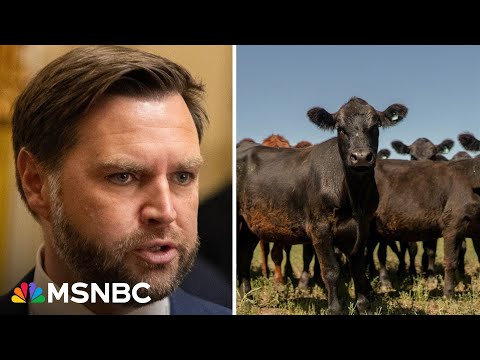
GOP senators confront VP Vance 'quite directly' about Argentine beef
MSNBC· 2025-10-29 11:36
Political & Policy Landscape - Republican senators confronted JD Vance about potential beef imports from Argentina, highlighting concerns for American ranchers [1][2] - Senators from agriculture-heavy states are vocal about the administration's stance on issues impacting their constituents, including tariffs and trade [2][3] - Frustration exists among some Republicans regarding the administration's policies, including healthcare cuts and tariffs, indicating internal divisions [3][4] Economic Impact & Industry Concerns - Potential beef imports and tariffs are impacting farmers and ranchers, leading to concerns about industry profitability [1][5] - High healthcare premiums are affecting constituents' take-home income, prompting increased political engagement [5] Congressional Dynamics - Congress serves as an early indicator of constituent concerns, as representatives respond to pressure from their districts [5] - Republican senators are directly addressing concerns with administration officials like JD Vance, signaling significant pressure from their constituents [2][5]
AI光影·新疆七十年|天山南北的丰饶赞歌
Yang Shi Wang· 2025-10-28 13:24
Core Insights - Xinjiang has transformed from a "desert wasteland" to a "grain warehouse" with significant agricultural advancements [2] - The irrigated area has expanded from over 27 million mu in 1955 to over 95.2 million mu today, with total grain production increasing from 1.1 million tons at the founding of New China to 23.302 million tons in 2024 [2] - Xinjiang is the only province in China to achieve a cumulative grain increase of over 10 billion jin in three years, marking a historic shift from "internal balance" to "national supply" [2] Agricultural Development - The region's agricultural success is attributed to the efforts of "turning desert into arable land" and the implementation of "smart irrigation" technologies [2] - Advanced technologies such as intelligent sensor networks and drone clusters are now utilized for precise agricultural management, replacing traditional labor-intensive farming methods [2] - Xinjiang boasts an average of over 4 mu of arable land per capita and continues to expand its oasis areas, contributing to its status as a significant grain-producing region in the country [2]

What a US-China trade deal framework could mean for farmers, markets
Youtube· 2025-10-27 22:36
Group 1: US-China Trade Relations - The upcoming meeting between President Trump and President Xi Jinping is generating optimism in the markets, with expectations of a substantial framework for a deal [1][2] - Key provisions being discussed include the removal of potential tariff increases, which would have seen a 100% increase in tariffs scheduled for the weekend [2] - There is an expectation of a delay on China's export controls on rare earth minerals, which had previously escalated tensions [3][20] - Substantial Chinese purchases of American soybeans are anticipated, which would significantly benefit US farmers currently selling zero soybeans to China [3][4][14] - The deal regarding the spin-off of TikTok is reportedly finalized, pending approval from both leaders [4][5] - Chinese confirmation of these provisions is still awaited, with state media indicating a basic consensus but lacking specific details [5][6] Group 2: US-Canada Trade Relations - Tensions are rising between the US and Canada, highlighted by Trump's announcement of an additional 10% tariff on Canada, which adds to the existing 35% tariffs [9][10] - The imposition of tariffs is linked to a negative advertisement that criticized Trump's tariff policies, indicating a deterioration in trade relations [8][22] Group 3: US-Mexico Trade Relations - In contrast to Canada, trade relations with Mexico appear more stable, with a tariff deadline that could have increased tariffs now off the table, allowing for continued negotiations [11][12]
'We’re all feeling it': Wisconsin Lawmaker SLAMS Trump over Argentine beef import, tariffs
MSNBC· 2025-10-27 18:40
Trade & Agriculture - The decision to import beef from Argentina is facing criticism from both Democrats and Republicans, with American ranchers expressing concerns about potential threats to their livelihoods [1] - A Trump official claimed similar hardships at struggling ranchers and farmers [1] - The announcement of a deal with China is expected to bring relief to soybean farmers [3] - Wisconsin has zero purchase orders from China for soybeans [6] - Farmers are experiencing negative impacts from tariffs on farming inputs like fertilizer and tractors [6] - Small farmers are affected by retaliatory tariffs, such as increased costs for milk bottles from Canada [7][8] - Iowa and Nebraska's economies have been significantly impacted due to Trump's tariff taxes [10][11] Political & Economic Impact - A Congressman criticized a person worth $500 million acting as a soybean farmer as insulting [4][5] - Concerns are raised about the demolition of the East Wing of the White House and the transparency of donor contributions [12][13] - The administration is accused of "pay-to-play" practices, with concerns about special interests influencing government decisions [17][18]
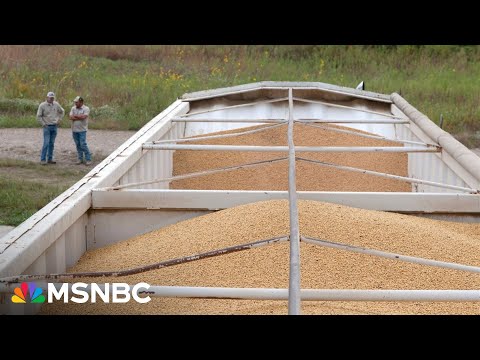
Drought is causing high beef price: Senator defends Trump's Argentina plan
MSNBC· 2025-10-24 17:39
Beef Market & Trade - The administration plans to lower consumer beef prices through increased beef imports [1] - The US imports about 12% of its beef, mainly hamburger, and exports 12% of high-value beef products [4][13] - Argentina's beef contribution is minimal, accounting for only one-tenth of 1% of the market [4] - Reduced cattle imports from Mexico (typically 120 万 cattle) due to screw worm and decreased imports from Brazil due to tariffs impact beef supply [5] Factors Affecting Beef Prices - Drought conditions have led to the smallest cattle herd in over 70 years, impacting beef supply [6] - It takes approximately 3 years to rebuild the cattle herd [7] - Packing plants, controlling about 90% of the industry, may be influencing beef prices [8] - Farmers receive $2 per pound for beef, while it sells for $15, indicating a significant margin for intermediaries [9] Geopolitics & Trade - The president considers a potential $20 billion or more bailout of Argentina, viewing it as a strategic move against China's influence in South America [11][12] - Allowing Argentina to sell beef in the US could replace some imports from Brazil and strengthen ties in South America [13] - Securing the border and lowering gas prices are seen as successes of the administration [16]

Trump's idea to buy beef from Argentina will hurt U.S. ranchers, Republican lawmakers warn
CNBC Television· 2025-10-24 14:30
Political Landscape - Congressional Republicans are in disagreement with President Trump regarding cattle imports [1] - The disagreement represents a rare split between Republicans and President Trump [3] - Republicans are concerned about the potential impact on American cattle farmers [1][2] Trade Policy - President Trump considered importing more cattle from Argentina to help Argentina and lower beef prices [1] - The proposed policy change has triggered concern among American cattle farmers [1] Economic Impact - American cattle farmers fear that importing cattle would negatively impact them [1]

X @Bloomberg
Bloomberg· 2025-10-24 10:30
Most US ranchers backed Trump. Now, he's promising to help farmers in Argentina at their expense. It's a betrayal, writes @patricialopez_4 (via @opinion) https://t.co/X1QA4ecfyh ...
'Where's the beef?': Hosts respond to Trump's plan to import beef from Argentina
MSNBC· 2025-10-24 01:54
Government Intervention & Trade - The US government is considering quadrupling its annual purchase of Argentine beef, potentially impacting domestic food prices [1] - This move is designed to lower food prices, but faces opposition from American cattle farmers and Republicans [1] - Nebraska Senator Deb Fischer expressed concern that government intervention in the beef market will hurt cattle ranchers [1] - One soybean and cotton farmer criticized the administration for not prioritizing American farmers [1] Economic Impact & Consumer Behavior - Beef prices have risen 12% at the grocery store, driven by factors including reduced herds [2] - Hamburger Helper sales have increased by 14.5% as consumers seek to stretch their food dollars [2] - Beef prices have risen 51% since February 2020 [2] - The administration's mass deportation efforts have undermined industries like agriculture and construction [2] Political Implications - The President's actions contradict campaign promises of affordability and addressing the cost of living [2] - Republicans face potential challenges in primaries due to concerns about rising costs of living and the impact on farmers and ranchers [2]

农机上了山 高粱再增产
Ren Min Ri Bao· 2025-10-23 21:10
Core Insights - The article highlights the significant improvements in agricultural productivity in Guizhou Province, particularly in the village of Maopo, due to the implementation of high-standard farmland construction and modern agricultural practices [1][2]. Group 1: Agricultural Productivity - Zhang Panchih, a farmer in Maopo Village, reported a harvest of 15,000 jin (approximately 7,500 kg) of sorghum from 16 mu (approximately 1.07 hectares), an increase of nearly 2,000 jin (approximately 1,000 kg) compared to the previous year [1]. - The average yield per mu of the newly constructed farmland has increased by over 50 kg, contributing to a more sustainable agricultural environment [2]. Group 2: Land and Irrigation Improvements - The local government has focused on land remediation, transforming fragmented "patchwork fields" into contiguous fertile land, with soil depth exceeding 30 cm [1]. - The irrigation system has been modernized, with new channels and pipelines reducing labor and ensuring a stable water supply, which has been crucial for this year's abundant rainfall [1]. Group 3: Mechanization and Labor Efficiency - The introduction of agricultural machinery, such as rotary tillers and drones for pest control, has significantly reduced labor costs, saving farmers over 1,000 yuan in manual labor expenses [1]. - Farmers now experience a time savings of more than 50% in farming activities due to mechanization [1]. Group 4: Economic Diversification - After harvesting sorghum, farmers like Zhang Panchih are diversifying their crops by planting fast-growing varieties such as pea shoots, which can yield additional income of over 30,000 yuan [2]. - The successful implementation of high-standard farmland has encouraged young people to return to rural areas, revitalizing the local agricultural economy [2].