Oil and Gas

Search documents
World's most vital oil chokepoint back in focus amid possible U.S. intervention in Iran
CNBC· 2026-01-12 06:08
Core Insights - The Strait of Hormuz is under scrutiny due to potential U.S. intervention in Iran, which could disrupt a critical energy chokepoint through which nearly a third of the world's seaborne crude flows transit [2][4]. Group 1: Market Impact - A disruption in the Strait of Hormuz could lead to a global oil and gas crisis, especially if the Iranian regime feels threatened [3]. - Approximately 13 million barrels per day of crude oil transited the Strait in 2025, representing about 31% of global seaborne crude flows [4]. - Analysts predict that oil prices could spike by $10 to $20 per barrel in the event of a complete closure of the Strait, while a fear of closure could raise prices by a few dollars per barrel [7]. Group 2: Risk Assessment - Military action against Iran carries significantly higher risks compared to Venezuela due to the volume of crude and refined product supply involved [6]. - Experts estimate a 70% likelihood of selective U.S. strikes on Iran, which could lead to immediate oil price spikes [6]. - Despite the potential for disruption, most analysts believe catastrophic outcomes remain low-probability events, as Iran may not fully close the Strait due to regional power dynamics and U.S. naval presence [8]. Group 3: Supply Dynamics - The oil market is currently leaning towards oversupply, with an estimated excess supply of 2.5 million barrels per day in January and over 3 million barrels per day in February and March [9]. - Any closure of the Strait would likely be met with a show of force by the U.S. and allies to restore oil flows [9]. Group 4: Geopolitical Context - The geopolitical situation in the Middle East is more complex than in Latin America, making it difficult for the U.S. to adopt a Venezuela-style strategy towards Iran [11]. - The current U.S. strategy appears to focus on consolidating power in the Western Hemisphere rather than direct military action against Iran [11].

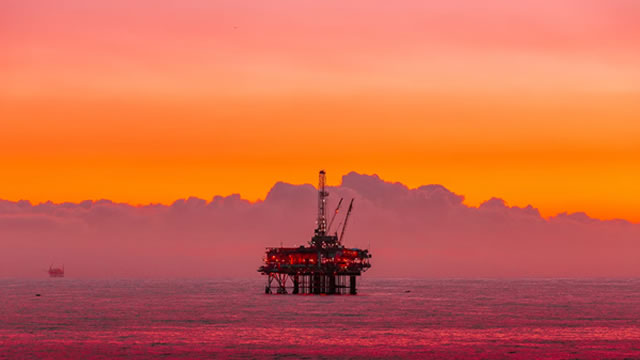
Trump said he's 'inclined' to keep ExxonMobil out of Venezuela
Business Insider· 2026-01-12 05:02
Group 1: ExxonMobil's Position on Venezuela - President Trump expressed an inclination to keep ExxonMobil out of Venezuela, citing dissatisfaction with the company's response to his $100 billion investment plan for the Venezuelan oil industry [1][2] - Exxon's CEO, Darren Woods, stated that Venezuela is currently "uninvestable" due to the existing legal and commercial frameworks, indicating a lack of readiness for investment [2][3] - ExxonMobil has a historical presence in Venezuela, having operated there twice, but faced asset seizures on both occasions, which contributes to the company's cautious stance on reentering the market [3] Group 2: Industry Reactions and Developments - Other oil executives, such as Chevron's vice chairman Mark Nelson, expressed optimism, announcing plans to double production with partners in Venezuela "effective immediately" [4] - The context of these discussions includes recent military actions in Venezuela, where U.S. forces captured President Nicolás Maduro, who is facing legal issues in the U.S. [4] - Exxon's stock price has remained stable, showing an increase of over 16% in the past year, reflecting investor sentiment despite the geopolitical uncertainties [5]

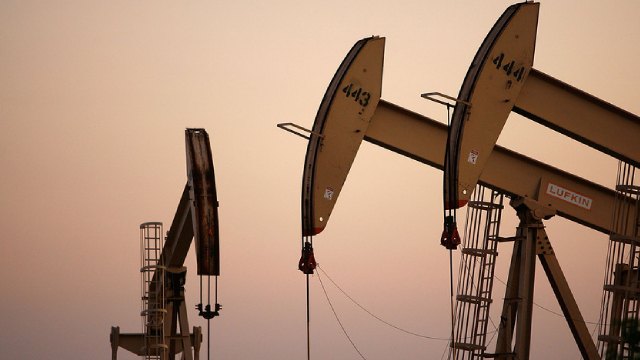
Trump Weighs Military Action In Iran: Crude Rallies As Geopolitical Risk Returns To World's Busiest Oil Route - United States Oil Fund (ARCA:USO)
Benzinga· 2026-01-12 04:51
Group 1: Energy Market Dynamics - Crude oil prices have been increasing, with WTI March futures rising 1.47% over the past week to $59.17 per barrel, and natural gas February futures up 2.30% to $3.242 per MMBtu [1] - The Strait of Hormuz is a critical chokepoint for global energy, with approximately one-third of global seaborne oil shipments and 19% of natural gas passing through it [2] - An average of 20 million barrels per day flowed through the Strait of Hormuz in 2024, highlighting the region's significance to global energy security [3] Group 2: Potential Supply Disruptions - Goldman Sachs analysts warned that Brent crude oil could spike to $110 per barrel if the Strait of Hormuz were to be disrupted, emphasizing strong economic incentives for the U.S. and China to prevent such disruptions [4] - Despite a projected surplus of 3.84 million barrels per day in 2026, this may not be sufficient to offset the impact of significant supply shocks from disruptions in the Strait of Hormuz [5] Group 3: U.S. Political Context - President Trump indicated that the U.S. would support Iranians amid protests, suggesting potential military action could occur before negotiations, which may impact geopolitical stability in the region [7]
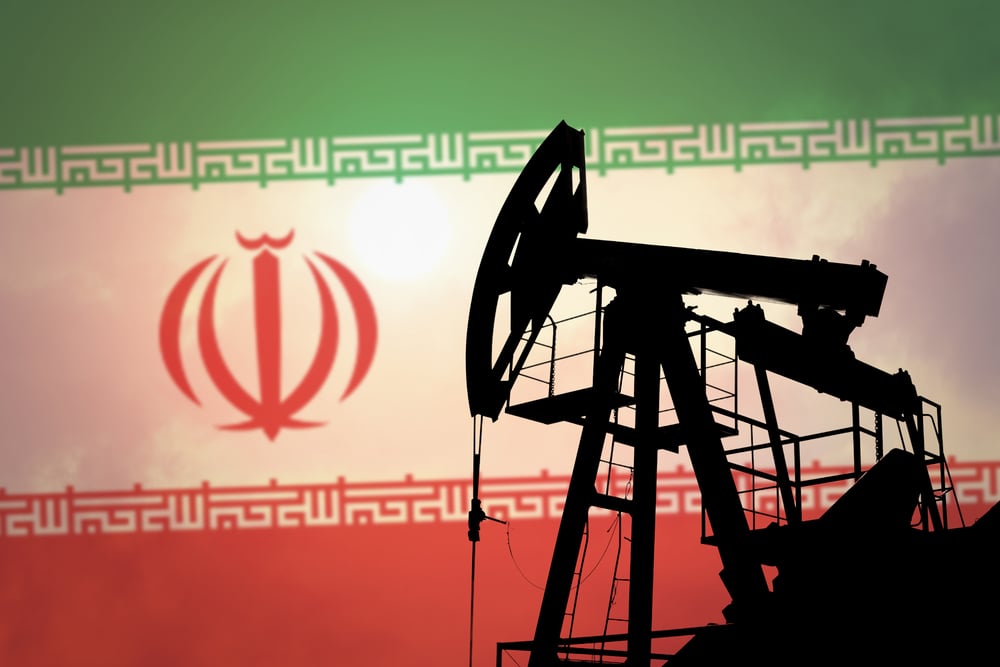
Goldman projects lower oil prices in 2026 as supply swells
Reuters· 2026-01-12 04:51
Core Viewpoint - Oil prices are expected to decline this year due to an increase in supply leading to a market surplus, despite ongoing geopolitical risks that may cause volatility [1] Supply and Demand - A wave of supply is anticipated to create a surplus in the oil market this year [1] Geopolitical Risks - Geopolitical tensions related to Russia, Venezuela, and Iran are expected to continue influencing market volatility [1]

Trump says he's ‘inclined to keep Exxon out' of Venezuela after CEO's skepticism
MarketWatch· 2026-01-12 03:59
Core Viewpoint - President Donald Trump has threatened to exclude Exxon Mobil from future oil deals in Venezuela due to the company's perceived lack of enthusiasm during a recent meeting [1] Group 1 - Exxon Mobil's engagement in Venezuela's oil sector is under scrutiny following a meeting where the company did not show sufficient interest [1] - The potential exclusion from oil deals could impact Exxon Mobil's operations and revenue in a region with significant oil reserves [1]

A trader’s guide to Venezuela as Trump eyes its oil
BusinessLine· 2026-01-12 03:28
Investment Opportunities in Venezuela's Oil Industry - President Trump's initiative aims to attract billions of dollars from US energy companies to revitalize Venezuela's oil sector, which is believed to have the world's largest oil reserves [1][4] - The plan includes US companies potentially rebuilding Venezuela's oil infrastructure and reviving production, with an initial offer of up to 50 million barrels of oil valued at approximately $3 billion [5][6] Challenges and Risks - Significant questions remain regarding the timeline and costs associated with increasing energy production, with concerns that the political will in both the US and Venezuela may wane over time [2] - The current global oil market is characterized by oversupply, with declining capital spending in oil due to abundant supply and lower-than-expected demand [3] - Experts estimate that restoring Venezuela's oil production could require investments of up to $100 billion over the next decade, raising doubts about the feasibility of such a turnaround [9] Major Players and Market Dynamics - Chevron is currently the only major US oil producer operating in Venezuela, with the potential to increase its cash flow by up to $700 million annually if production levels are restored [7] - Previous operators like Exxon Mobil and ConocoPhillips face challenges in recovering assets worth over $9 billion due to past seizures, complicating their return to the market [8] Refining and Related Opportunities - US refiners are already seeing increased interest, with about 140 million barrels of Venezuelan crude processed in 2025, representing 0.8% of total US throughput [11] - Companies like Valero Energy and PBF Energy could benefit from increased Venezuelan crude flows, while Phillips 66 may see upside from the need for imported diluent [12] Broader Investment Themes - The potential for increased tanker operations could benefit companies like DHT Holdings and Frontline, especially if Chevron charters compliant vessels to replace those circumventing US sanctions [13] - Beyond oil, Venezuela's rich mineral deposits present opportunities for mining companies, although the current state of the industry poses significant challenges [16][17] Infrastructure and Long-Term Investments - Rebuilding Venezuela's infrastructure is viewed as a long-term opportunity, with historical precedents suggesting that recovery in post-crisis markets can take years [18] - Investors are advised to consider high-quality regional companies with indirect exposure to Venezuela, treating direct investments as long-dated options [19] Defense and Food Sector Implications - Increased geopolitical uncertainty may benefit defense companies, with potential gains for firms like Lockheed Martin and Northrop Grumman [20] - Opportunities in food exports may arise if Venezuela's economy recovers, with companies like Bunge Global and Archer-Daniels-Midland positioned to benefit [21] Debt and Macro Considerations - The removal of Maduro has sparked interest in Venezuela's defaulted debt, with potential for higher recovery values as part of a debt restructuring [22][23] - The geopolitical shakeup could influence macro-oriented investments, with implications for oil prices and consumer confidence [24][25]



石油分析_2026 年展望_供应强劲推动价格下行;地缘政治风险仍存-Oil Analyst_ 2026 Outlook_ Prices Trend Down on Strong Supply; Geopolitical Risks Remain
2026-01-12 02:27
Summary of the Oil Market Outlook Conference Call Industry Overview - The report focuses on the oil industry, specifically the outlook for oil prices and supply dynamics for 2026 and beyond, as analyzed by Goldman Sachs Global Investment Research. Key Points and Arguments Price Trends and Forecasts - Oil prices declined by 14% year-over-year in 2025, averaging $68 per barrel due to strong supply despite geopolitical tensions [7][9] - Forecasts for 2026 average prices are $56 for Brent and $52 for WTI, with a projected surplus of 2.3 million barrels per day (mb/d) [7][23] - Prices are expected to bottom at $54 for Brent and $50 for WTI in Q4 2026 as inventory builds increase [39] - A price recovery is anticipated starting in 2027, with revised forecasts of $58 for Brent and $54 for WTI due to slowing non-OPEC supply growth and solid demand [43][50] Supply Dynamics - The report predicts a combined production decline from Russia, Venezuela, and Iran of 0.7 mb/d by December 2027, with oil on water decreasing by 33 million barrels [4][72] - US liquids supply reached a record high, increasing by 0.8 mb/d year-over-year in October [34] - The report highlights that OPEC's production increases in 2025 were strategic to support market stability later in the decade [28] Geopolitical Risks - Geopolitical risks remain significant, with potential supply disruptions from sanctioned countries like Iran and Russia likely to cause price spikes [52][65] - However, US policymakers' focus on maintaining strong energy supply is expected to limit sustained price increases [65] Recommendations - Investors are advised to short the 2026Q3-Dec2028 Brent timespread to capitalize on the anticipated surplus [78] - Oil producers are recommended to hedge against potential price declines in 2026, as the market may be underpricing inventory builds [79] Long-Term Outlook - The long-term outlook remains constructive, with expectations of a price recovery later in the decade driven by ongoing demand growth and necessary investments in long-cycle production [50][75] - The report notes that technological advancements may lead to continued production beats, potentially keeping prices lower than previously forecasted [71][75] Additional Important Insights - The report emphasizes the importance of OECD commercial stocks in influencing price dynamics, as they tend to be more significant than inventory trends elsewhere [39] - The analysis includes various price risk scenarios based on changes in sanctioned supply and global economic conditions, indicating a complex interplay of factors affecting future oil prices [68][69] This summary encapsulates the critical insights from the conference call, providing a comprehensive overview of the oil market outlook as presented by Goldman Sachs.
Trump says he might keep Exxon out of Venezuela
Reuters· 2026-01-12 00:46
Core Viewpoint - U.S. President Donald Trump may block Exxon Mobil from investing in Venezuela following the CEO's remarks labeling the country as "uninvestable" during a recent White House meeting [1] Group 1 - Exxon Mobil's CEO expressed concerns about Venezuela's investment climate, indicating it is not viable for investment [1] - The potential intervention by President Trump highlights the political risks associated with foreign investments in Venezuela [1]
Oil climbs, intensifying unrest in Iran spark supply concerns
Reuters· 2026-01-12 00:19
Core Viewpoint - Oil prices are rising due to concerns over potential supply disruptions from Iran amid escalating protests, despite efforts to restore oil exports from Venezuela [1] Group 1 - Oil prices extended gains on Monday, indicating a bullish trend in the market [1] - The intensifying protests in Iran are raising fears of supply disruptions from this OPEC producer [1] - Efforts to quickly resume oil exports from Venezuela are ongoing, but the impact on overall supply remains uncertain [1]
The Trump Market: Where Tweets Are Policy and Volatility Is Just a Feature
Stock Market News· 2026-01-11 18:00
Group 1: Tariffs and Pharmaceutical Sector - President Trump has threatened pharmaceutical tariffs of up to 250% and 500% on India over Russian oil purchases, indicating a shift in the administration's approach to tariffs as a tool for industry reshaping rather than negotiation [2] - Johnson & Johnson (JNJ) has secured an exemption from certain tariffs by committing to lower drug prices, joining 14 other major pharmaceutical companies in the "TrumpRx" program, which aims to align US drug prices with European counterparts [3] - Moody's Analytics reported a "collapse in pharmaceutical imports" as companies stockpiled goods in anticipation of tariffs, demonstrating the market's tendency to react preemptively to presidential announcements [3] Group 2: Energy Sector and Venezuela - Following the capture of Venezuelan President Nicolás Maduro, President Trump declared a national emergency and announced new sanctions, leading to a surge in US energy stocks, with Chevron (CVX) rising 5% and Exxon Mobil (XOM) increasing by 2.2% [4] - However, by January 10, 2026, analysts expressed skepticism about the viability of Venezuelan oil investments, citing a lack of legal pathways and the need for significant infrastructure rebuilding [5] - Venezuelan government bonds saw a rally, with a bond maturing in 2027 increasing from 31.5p to over 40p on the dollar, indicating market interest despite the geopolitical instability [5] Group 3: Credit Card Industry - President Trump proposed a one-year, 10% cap on credit card interest rates, aiming to save Americans "tens of billions of dollars," which has raised concerns among banking executives [6][7] - The banking industry, including the Bank Policy Institute and the American Bankers Association, warned that such a cap could lead consumers to less regulated alternatives and reduce credit availability [8] - Major credit card companies like American Express (AXP) and JPMorgan Chase (JPM) experienced stock declines of -1.92% and -0.18% respectively, reflecting market apprehension about the proposed cap [8] Group 4: Defense Sector - President Trump's executive order threatening to restrict stock buybacks and dividends for defense contractors initially caused a drop in defense stocks, but a subsequent announcement of a $1.5 trillion defense budget for fiscal year 2027 led to a rally in the sector [9][10] - Northrop Grumman (NOC) saw a premarket increase of 6.8%, while Lockheed Martin (LMT) rose 6.7%, indicating strong market response to the budget announcement [10] - The iShares US Aerospace & Defense ETF gained approximately 55% over the past year, significantly outperforming the S&P 500's 17% increase, highlighting robust demand in the defense sector [10] Group 5: Market Reactions and Trends - The US stock market exhibited polarized performance on January 8, 2026, with the DOW gaining 60.94 points (+0.12%) while the S&P 500 and NASDAQ Composite fell [13] - By January 9, 2026, the indices largely recovered, with the S&P 500 climbing 0.6% and the DOW adding 0.5%, indicating a rotation out of high-growth technology into heavy industry [14] - Analysts forecast a 10% increase for the S&P 500 in the remainder of 2026, although they acknowledge that presidential tariffs pose a significant source of uncertainty for market performance [15]